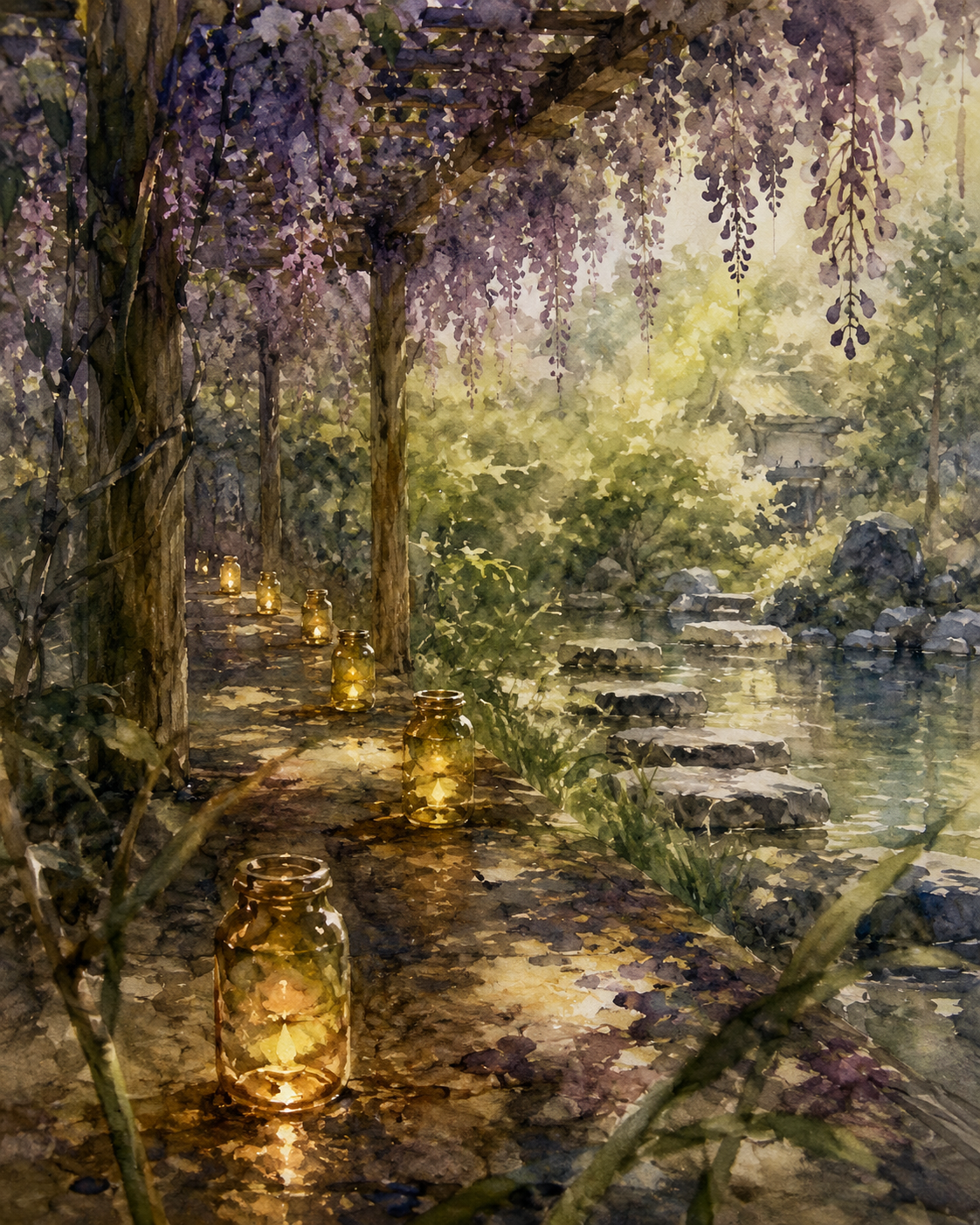
Little Jars Guide the Way through Wisteria Shade
Critique
Introduction This painting lines a wisteria path with glass jars in daylight. The vessels turn a route into a sequence of gathered light. Their intimacy contrasts with the garden's flowering abundance. Description Several clear jars stand along damp stones from the lower foreground into the distance. Each contains a warm golden light, while curved surfaces reflect blue sky, purple flowers, and green leaves. Wisteria hangs overhead beside a pond. The path curves toward a bridge and trees softened by bright haze. Petals scatter around the jars and drift on water. Metal rims, handles, and droplets catch sharp white highlights. Analysis The repeated cylinders create a measured recession, shrinking toward the bridge. Their verticals counter the path and shore curves. Circular rims, light halos, blossoms, and ripples establish unity. Gold punctuates lavender and blue-green, remaining visible without overpowering daylight. Sharp strokes define glass edges, metal, and petals; washes soften foliage, sky, and reflection. Transparency lets the path continue through the vessels, preserving spatial flow. Interpretation and Evaluation The jars suggest light collected and placed at intervals as acts of care. Because day already illuminates the garden, their glow is symbolic and relational rather than merely functional. The composition is lucid, its restrained palette coherent, and glass, metal, wet stone, flowers, and water show strong technique. Repeating modest containers instead of one spectacular lamp is inventive. The sequence makes guidance cumulative: each small assurance prepares the next. Conclusion At first the jars appear decorative, but sustained viewing makes their spacing central. They measure the path through attention rather than distance alone. The painting presents welcome as a series of humble lights, transparent enough to belong to the landscape they guide us through.
Same Subcategory
Similar Artworks
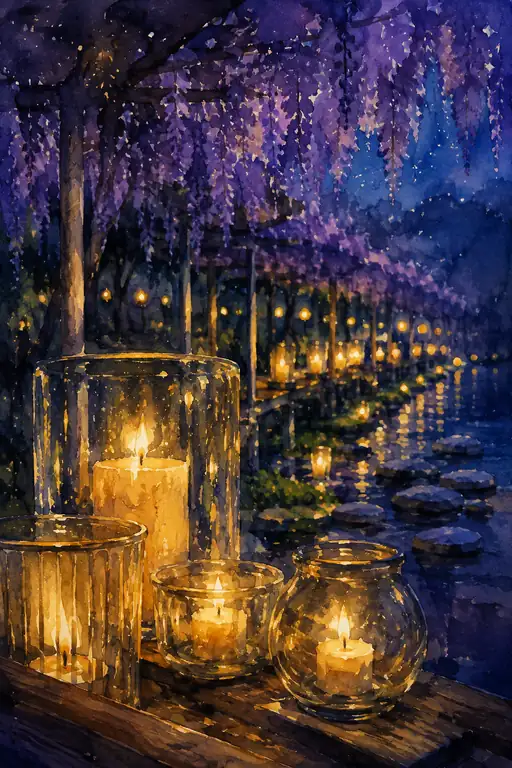 Four Candles Begin the Wisteria Night
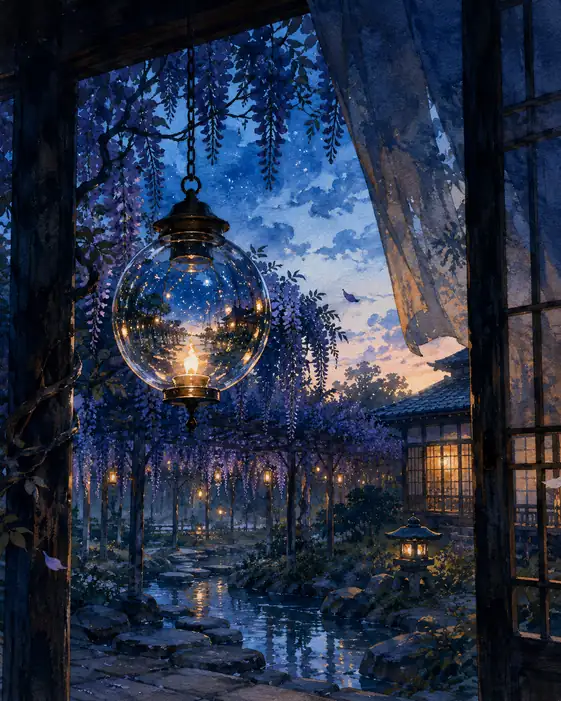 A Glass Lantern Keeps the Blue Hour's Stars
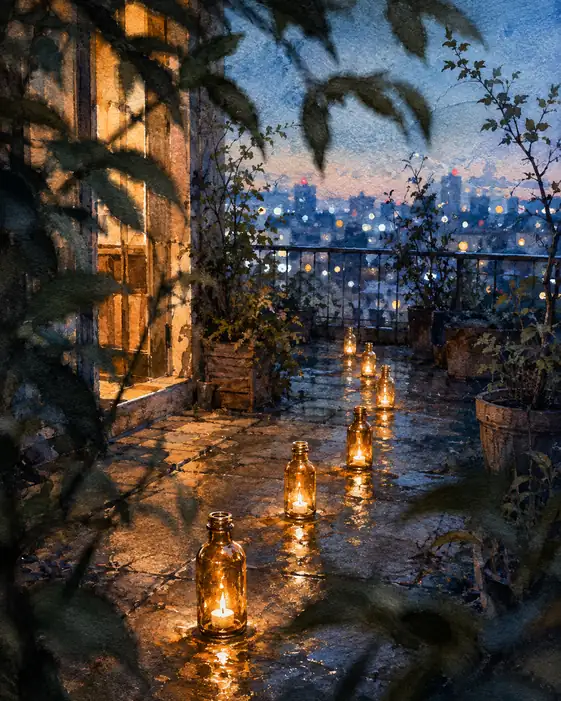 Seven Bottled Flames Lead Evening Home
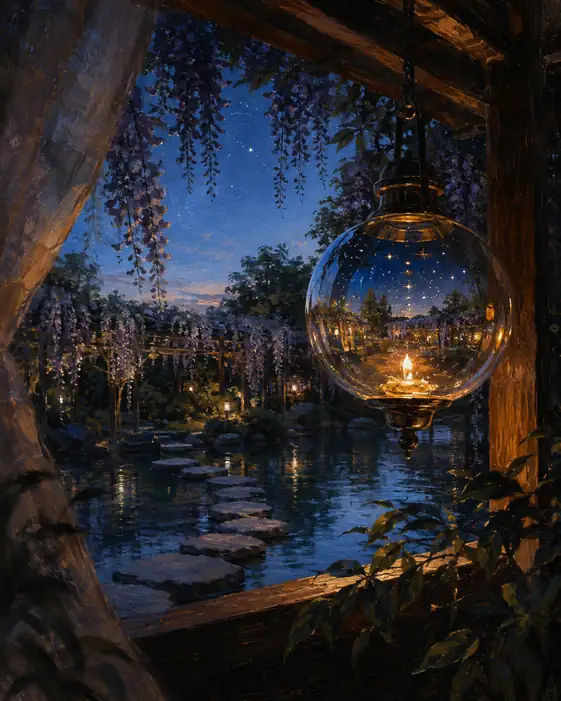 The Garden's Stars Gather inside One Lamp
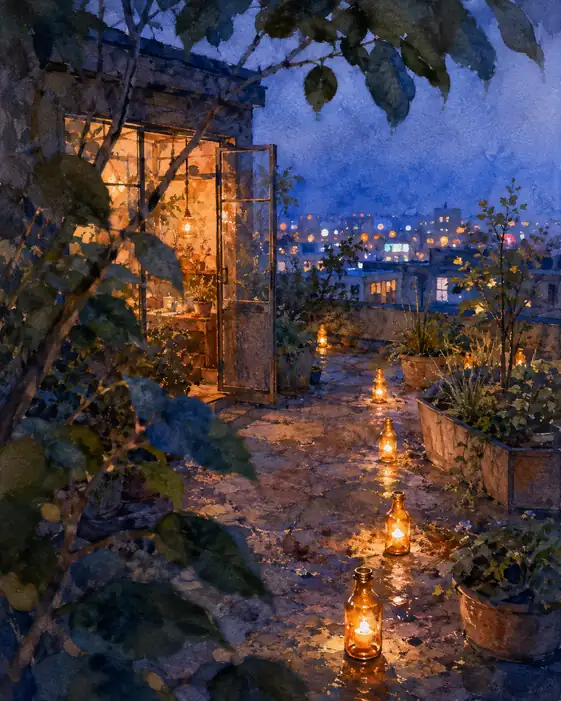 Bottled Lights Welcome the Blue Evening In
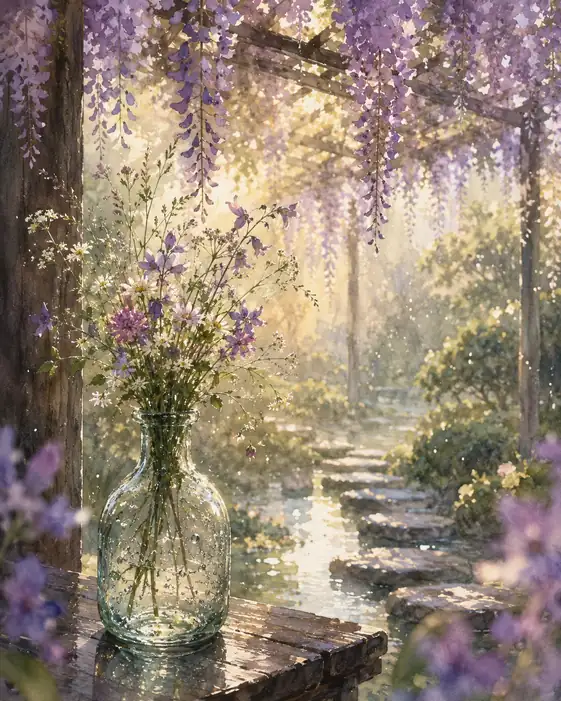 Wildflowers Hold the First Light of the Wisteria Path
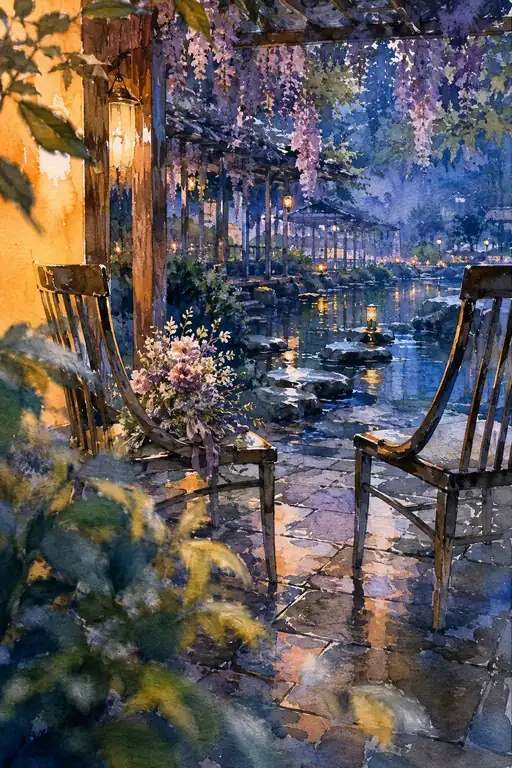 Two Empty Chairs Await the Wisteria Night
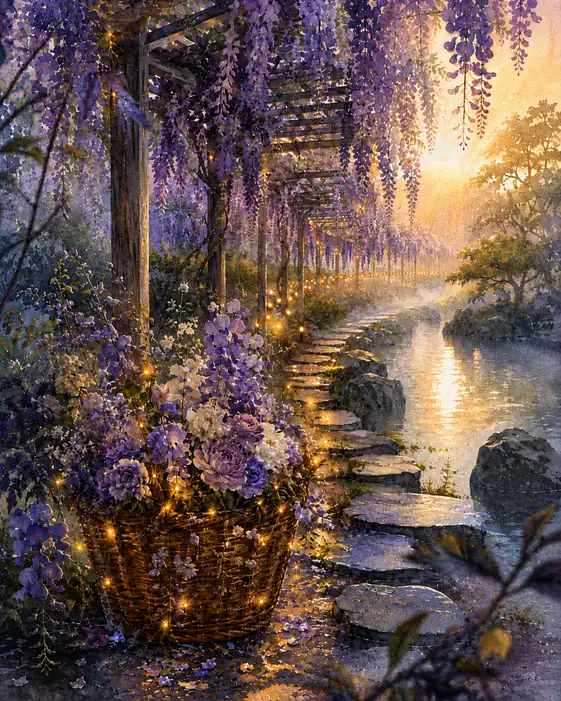 The Wisteria Path Wakes with a Thousand Stars
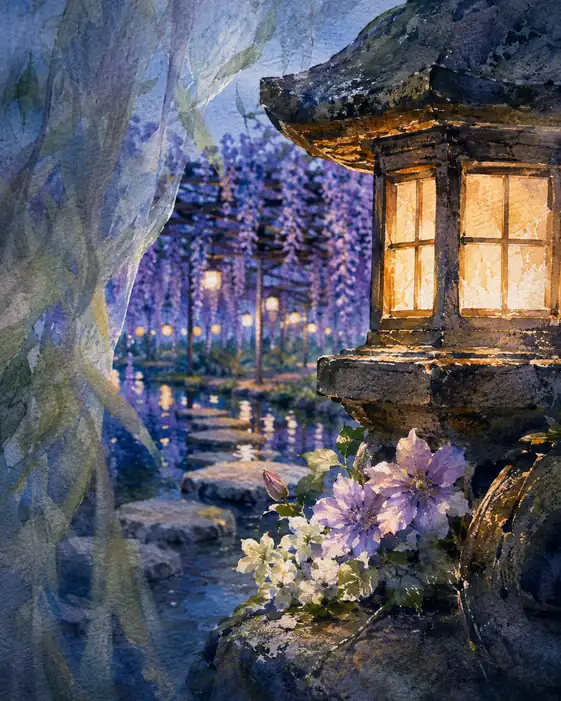 Beyond the Veil, Wisteria Lights the Way
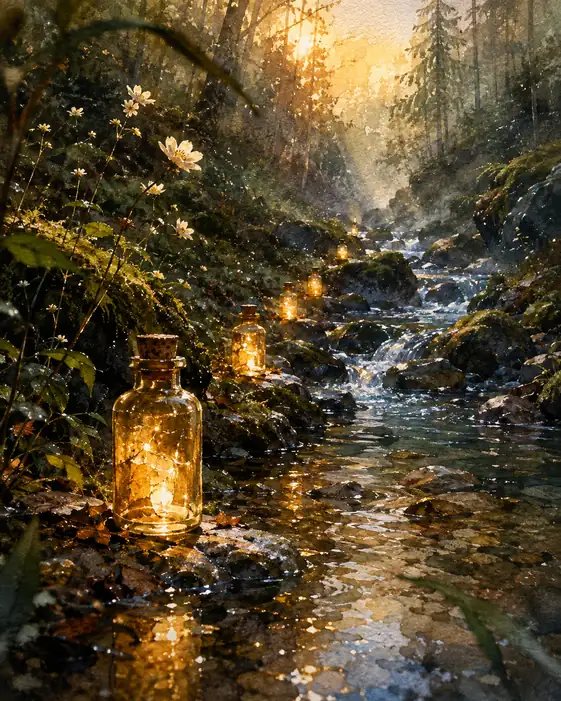 Bottled Stars Follow the Stream toward Dawn