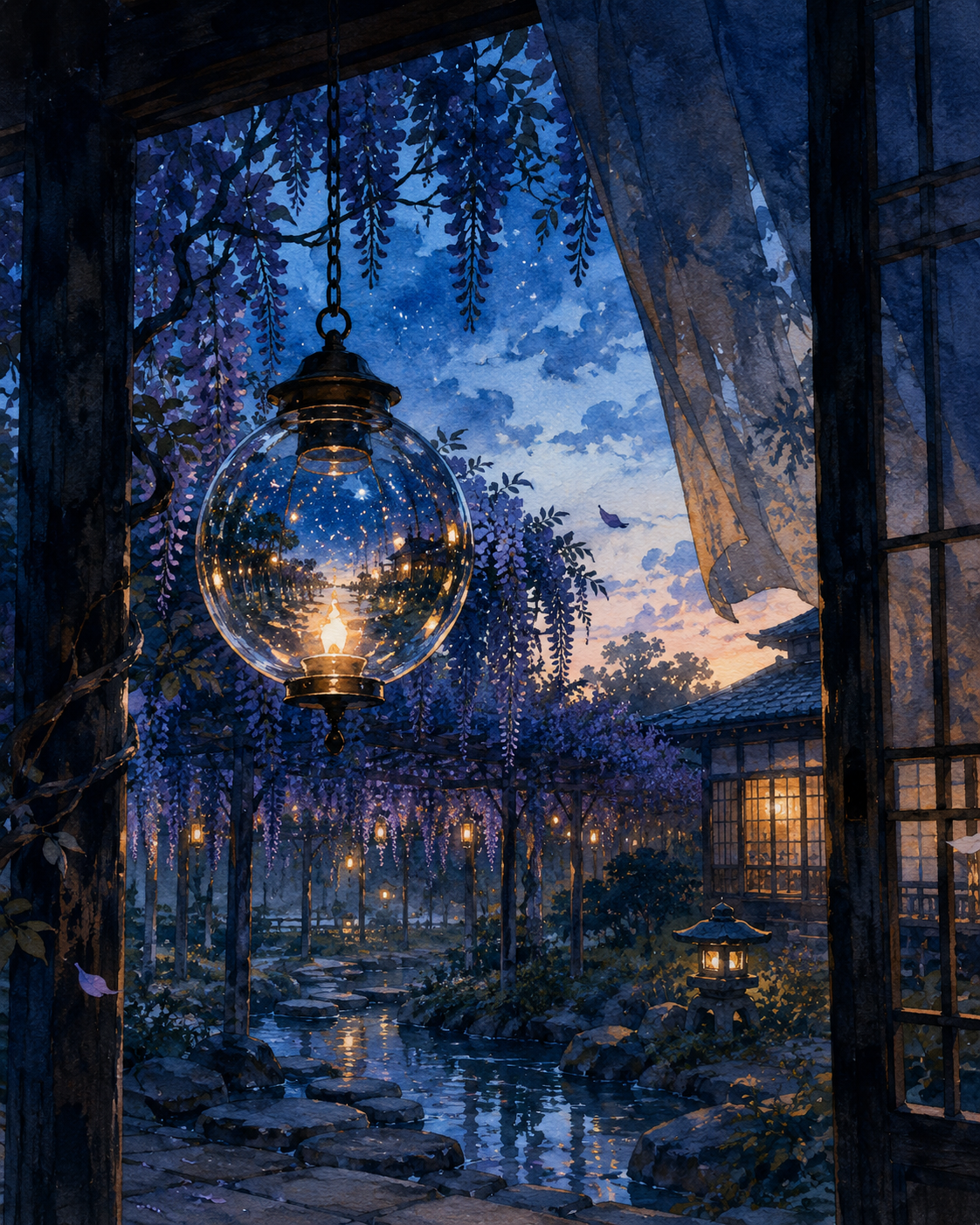
A Glass Lantern Keeps the Blue Hour's Stars
Critique
Introduction This painting suspends a glass globe above a wisteria path at night. The lamp appears celestial, concentrating reflections into glass. Its light directs without dispelling darkness. Description The lamp hangs near the upper center from a metal fitting. Curved glass encloses an amber flame and reflects purple flowers, blue sky, and lights. Wisteria descends around it above a path and pond. Under the globe, a bridge and pinpoints dissolve into the tree line. Gold reflections break across blue water, while petals drift and gather on damp stones. Analysis The globe provides a circle and vertical axis. Path and shore move diagonally beneath it toward the bridge, while hanging flowers repeat its downward suspension. Amber travels from the central flame to distant lamps and water against violet-blue shadow. Sharp highlights establish the glass surface; softer internal forms create depth beyond it. Metal, petals, and stone receive firmer strokes, whereas foliage and reflection dissolve into washes. Repeated circles unify lamp, halos, and ripples. Interpretation and Evaluation The globe suggests a portable or contained cosmos, yet reflections keep it connected to the garden rather than sealed apart. Its light offers orientation, not total control over night. The composition is clear, the complementary palette coherent, and glass, metal, flowers, stone, and water show strong technique. Enlarging a familiar hanging lamp until it resembles a moon is inventive and emotionally effective. Darkness around it preserves mystery. Conclusion At first the lamp functions as the obvious source of welcome, but sustained viewing reveals how much of the garden it receives and returns. Illumination becomes exchange rather than conquest. The painting gives a modest light cosmic resonance while keeping it grounded in a walkable path.
Same Subcategory
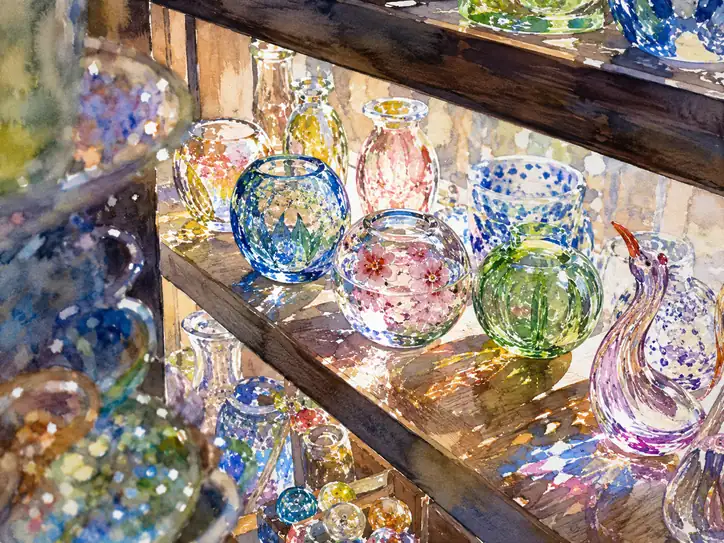 Colored Whispers of Glass and Light
Similar Artworks
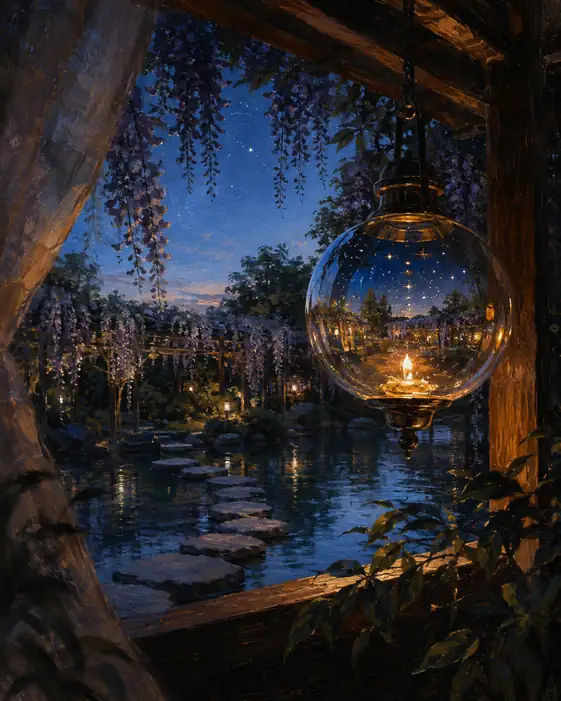 The Garden's Stars Gather inside One Lamp
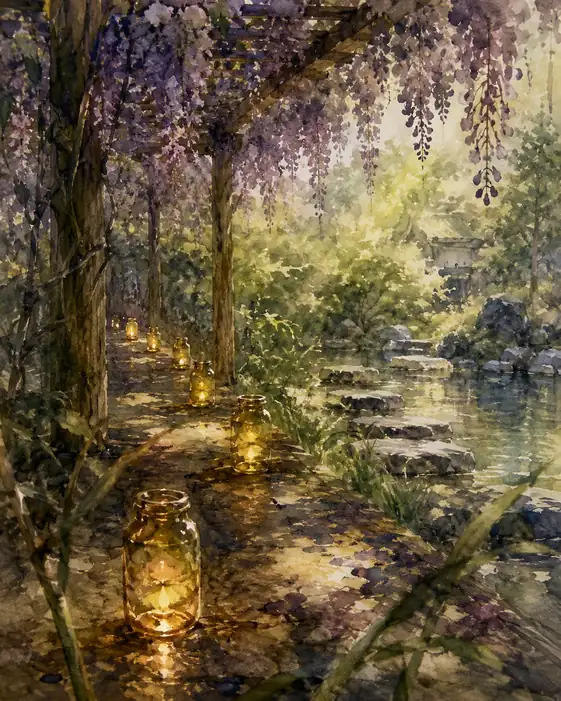 Little Jars Guide the Way through Wisteria Shade
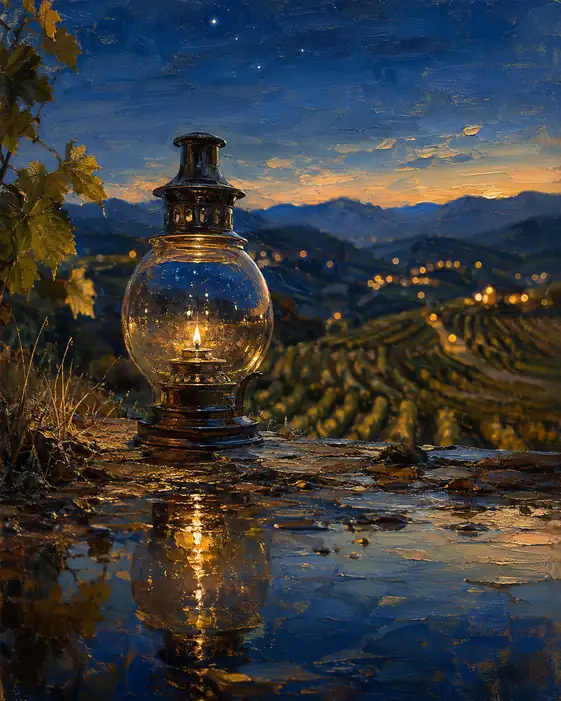 One Lamp Keeps Vigil over the Sleeping Vineyard
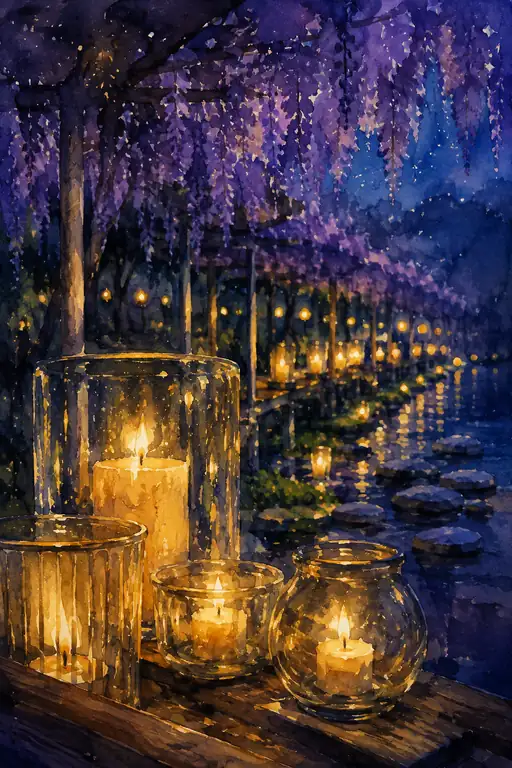 Four Candles Begin the Wisteria Night
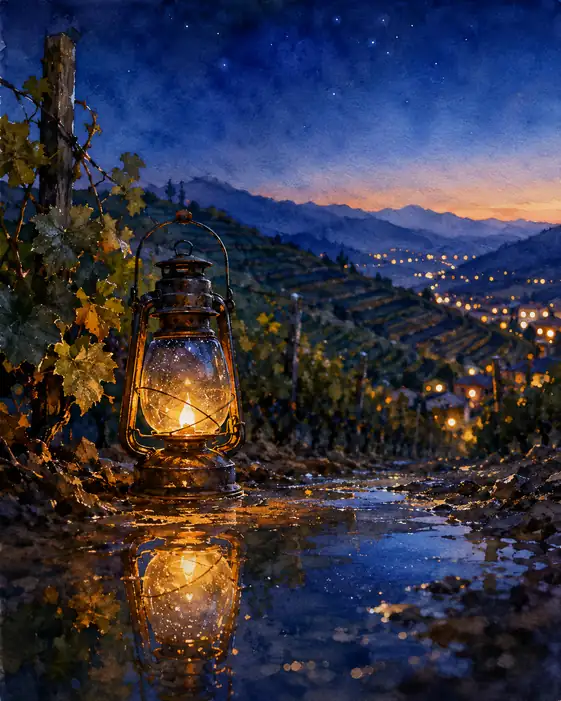 One Lantern Keeps the Vineyard Stars Awake
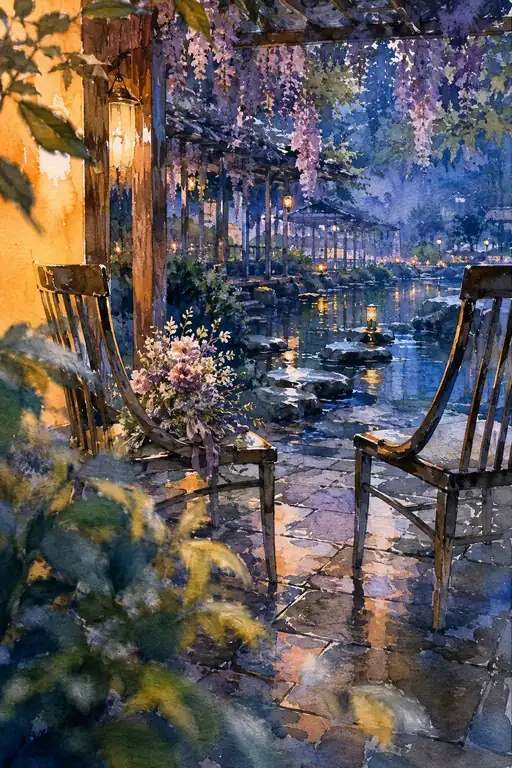 Two Empty Chairs Await the Wisteria Night
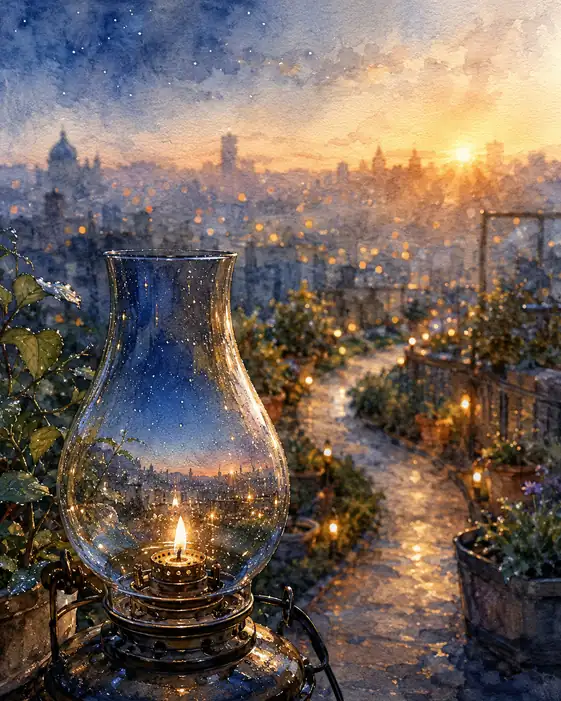 One Lamp Holds Both Sunrise and Stars
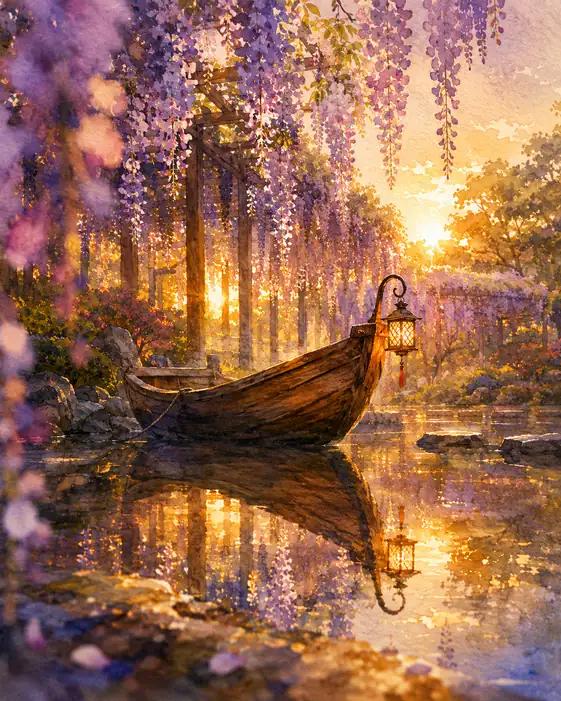 The Boat Waits Where Sunset Tangled with Wisteria
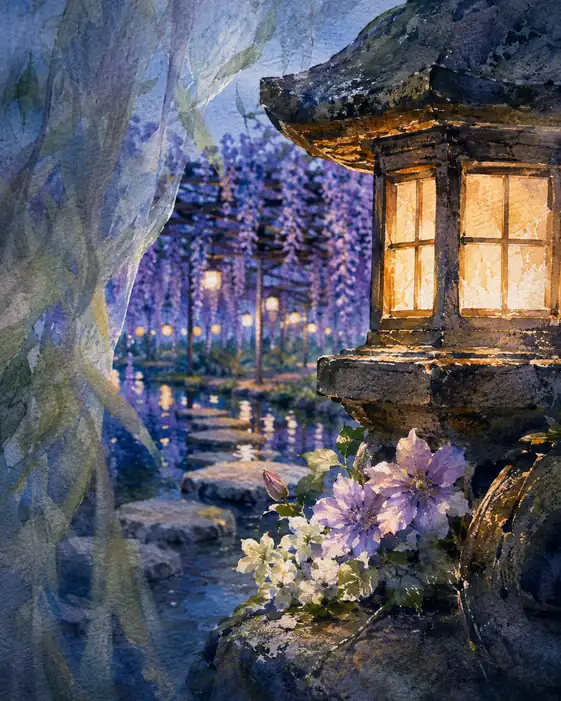 Beyond the Veil, Wisteria Lights the Way
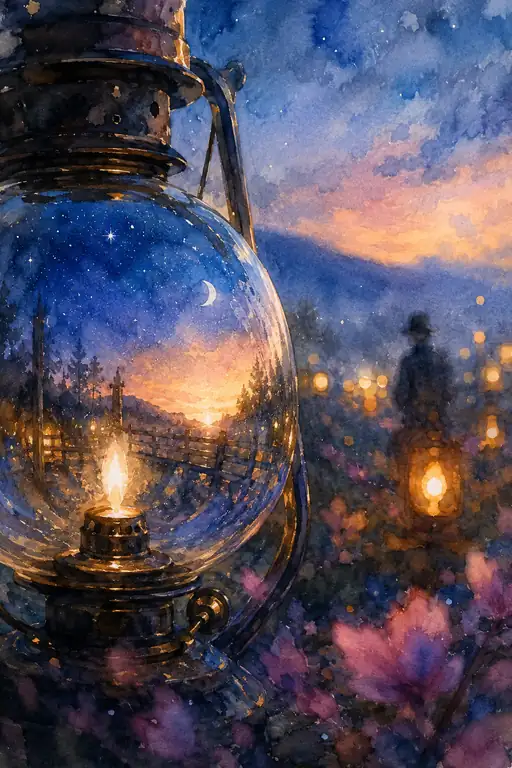 The Lantern Holds Both Crescent and Sunset