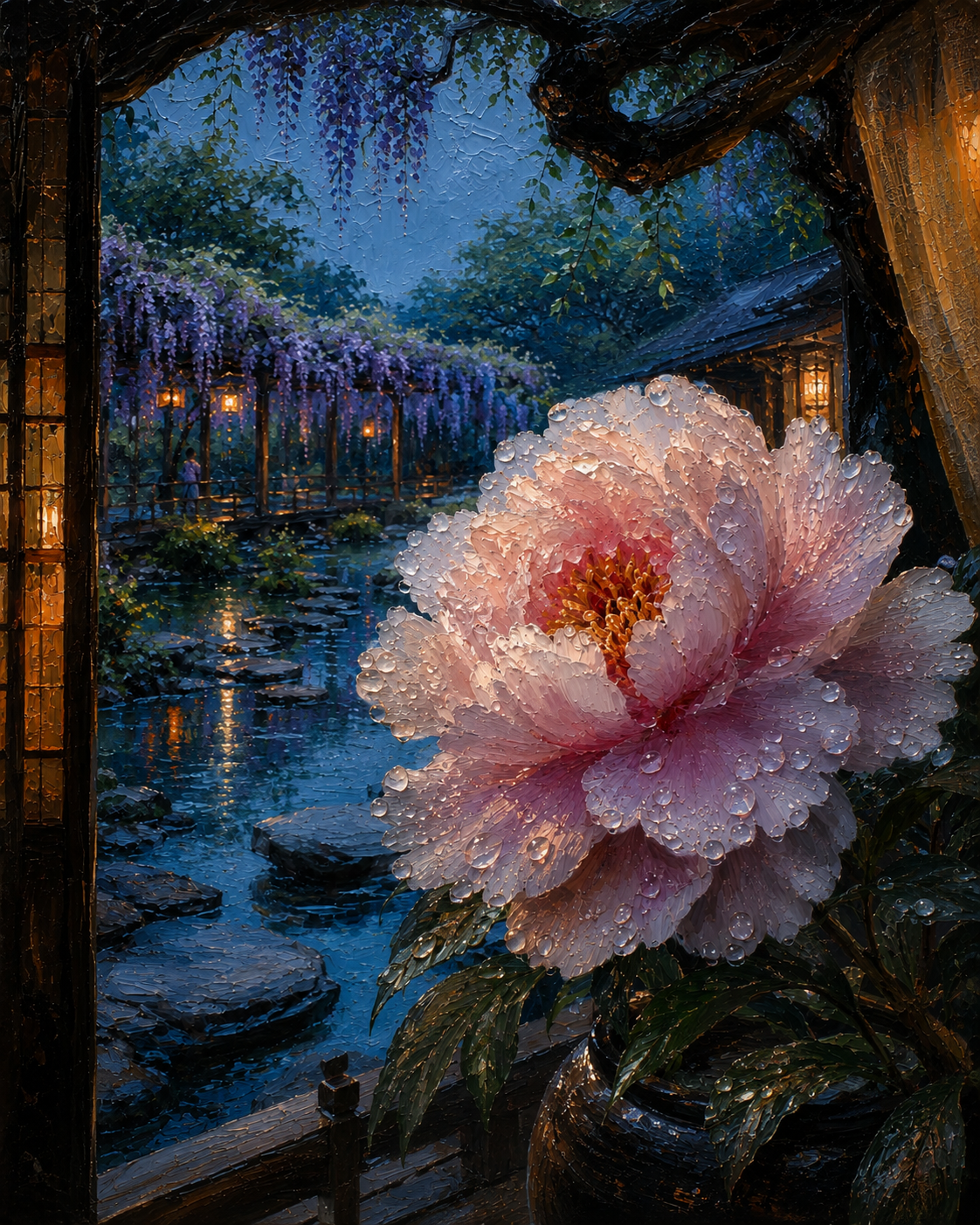
A Dewlit Peony Opens the Garden Night
Critique
Introduction This painting enlarges a peony in a vase against a wisteria pond at night. The bloom becomes a threshold between still life and landscape. Color, reflected light, and glass create intimacy within nocturnal space. Description The glass vase stands on a stone ledge at lower left, holding a coral-pink peony with dark leaves. Droplets cling to layered petals and the vessel. Stems bend through water, displaced by refraction. Behind them, purple wisteria hangs above a path and pond. Lamps recede toward a bridge among trees. Blue water carries broken reflections and scattered petals. Analysis The peony's rounded mass anchors the foreground against diagonal recession. Petal spirals draw vision inward, while leaves and stems release it toward the garden. Pink advances through blue-violet shadow, balanced by distant amber points. Sharp strokes define droplets, rims, and leaf edges; washes soften inner petals, water, and foliage. Curves in flower, vase, shore, bridge, and ripples unify near detail with depth. Refraction keeps the transparent vessel active. Interpretation and Evaluation The vase suggests an act of bringing the garden close without possessing its entirety. Water preserves the cut flower briefly, while dew and falling petals register continuing change. The composition is controlled, the nocturnal palette coherent, and glass, water, petals, leaves, and reflections show strong technique. Joining one cultivated arrangement to abundant exterior flowering is restrained and inventive. Dark intervals prevent richness from becoming decorative excess. Conclusion At first the peony dominates through scale and color, but sustained viewing follows its echoes into the pond. Vase water and garden water become related fields of reflection. The painting presents beauty as temporary concentration: a small transparent container can focus, but never contain, an entire night.
Same Subcategory
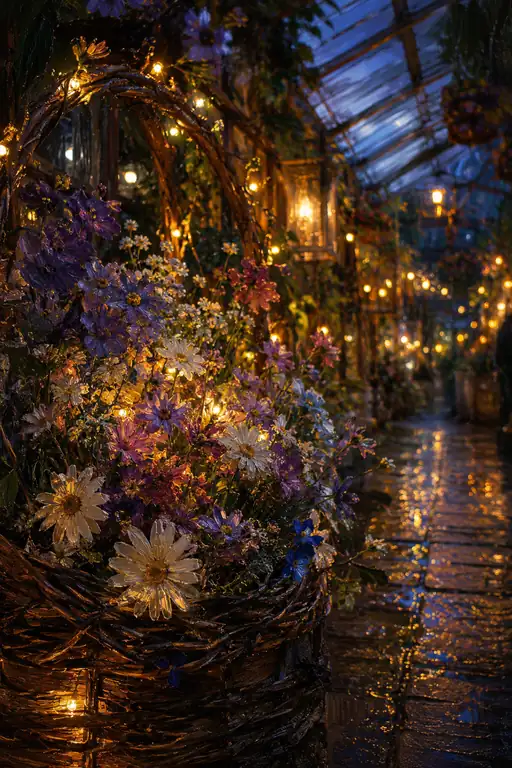 The Flower Arch Where Evening Lights Gather
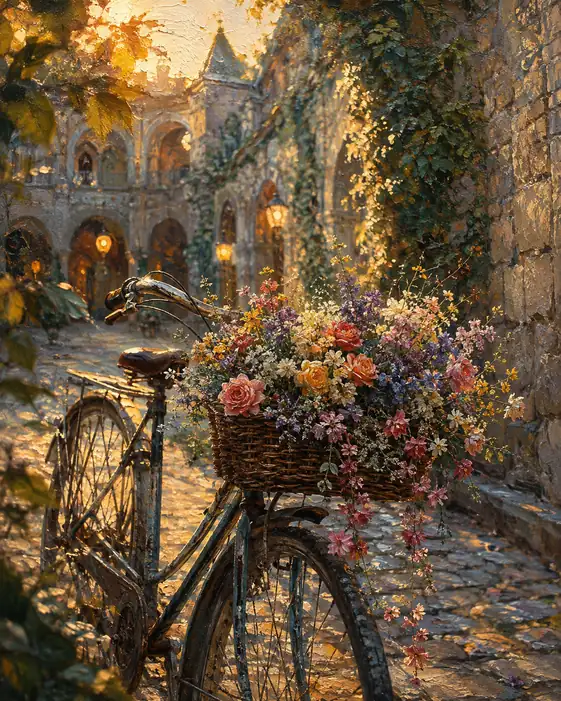 The Flower Peddler’s Courtyard at Sunset
Similar Artworks
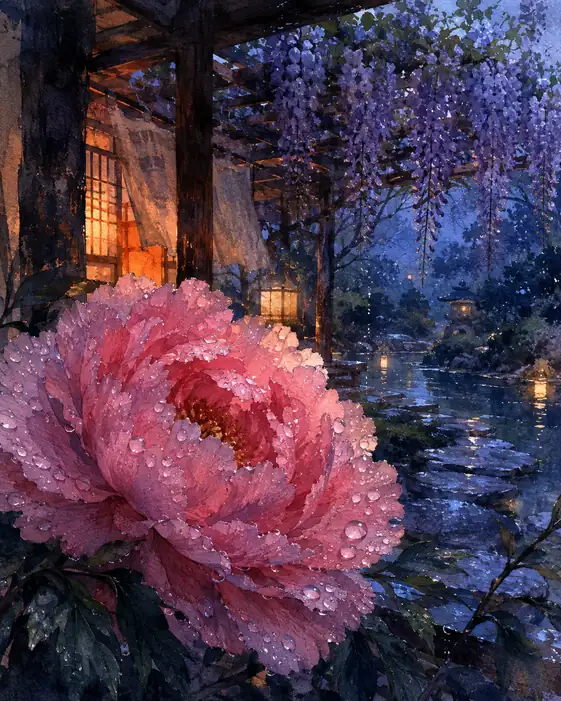 A Peony Gathers the Blue Garden's Rain
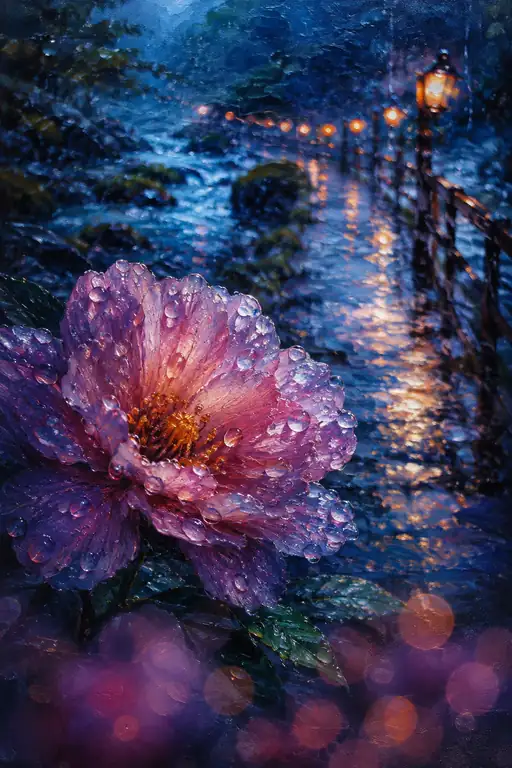 A Rain-Crowned Camellia Watches the Lantern Path
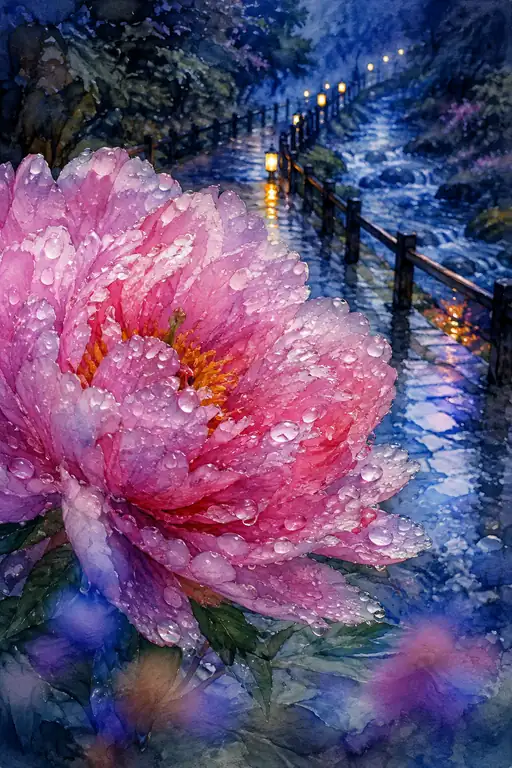 The Peony Wears a Necklace of River Rain
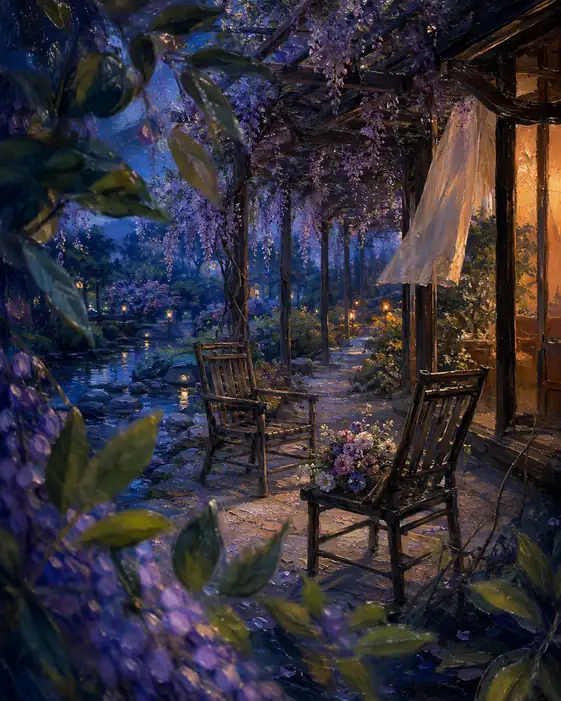 Two Chairs Keep the Garden's Evening Secret
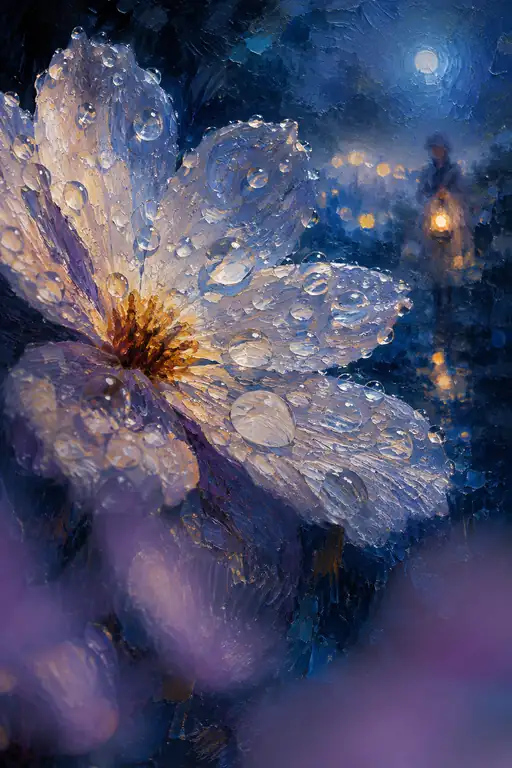 Moonlit Dew Crowns the Midnight Flower
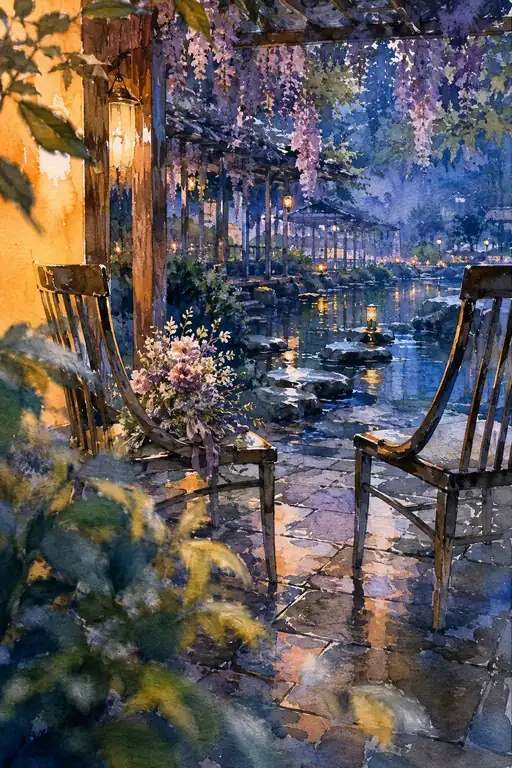 Two Empty Chairs Await the Wisteria Night
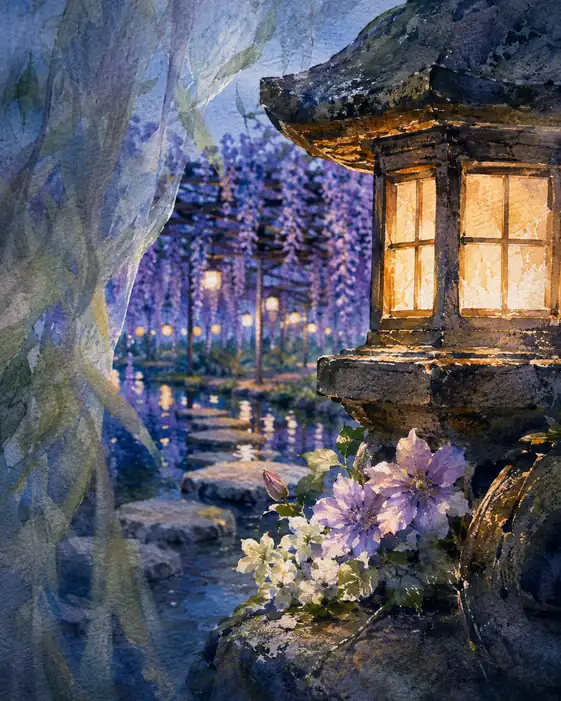 Beyond the Veil, Wisteria Lights the Way
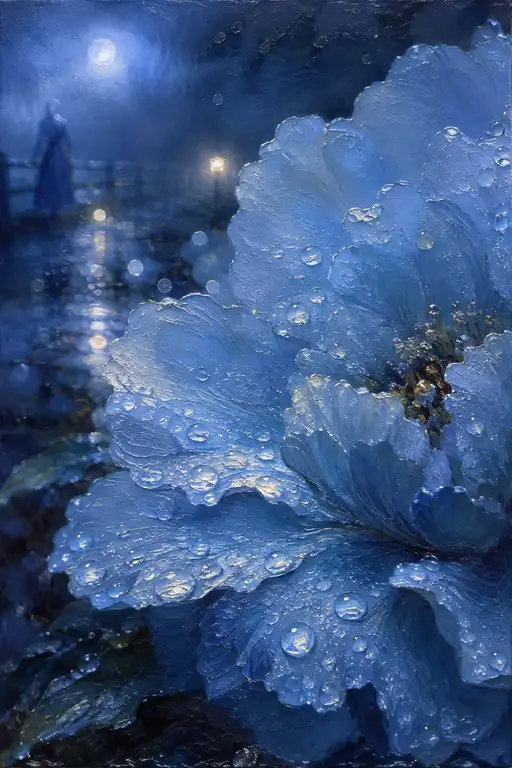 Blue Petals Gather the Moon's Tears
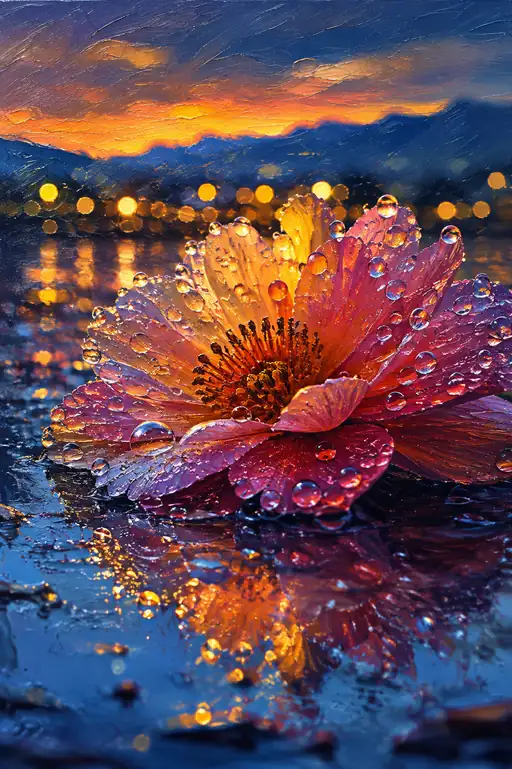 A Rain-Jewelled Blossom Mirrors the Burning Sky
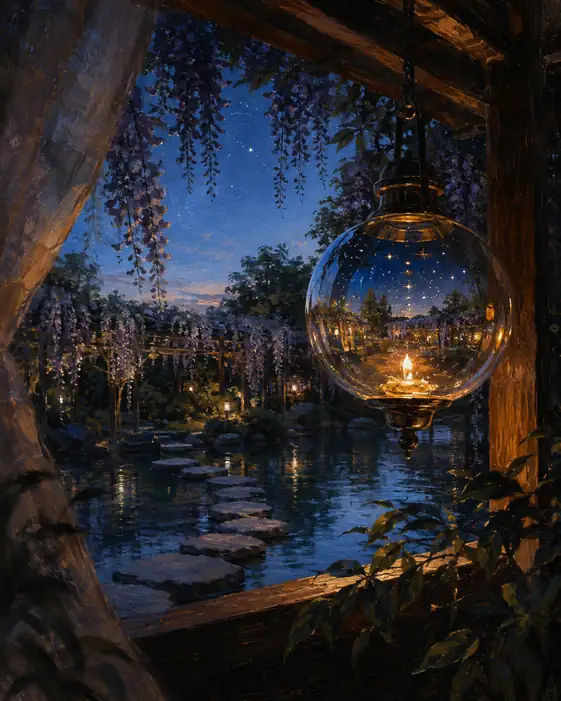 The Garden's Stars Gather inside One Lamp