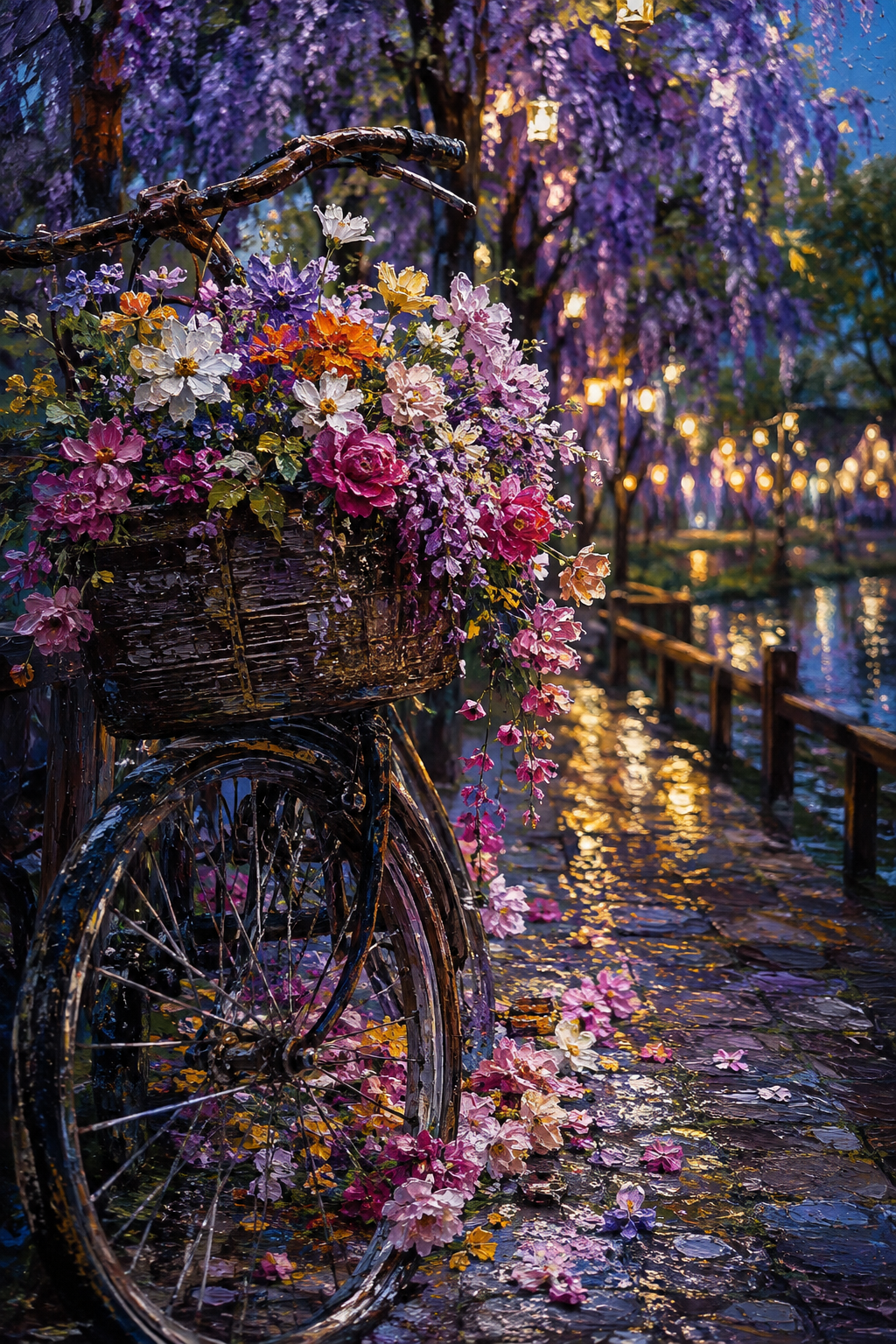
A Bicycle Overflows into the Lantern Rain
Critique
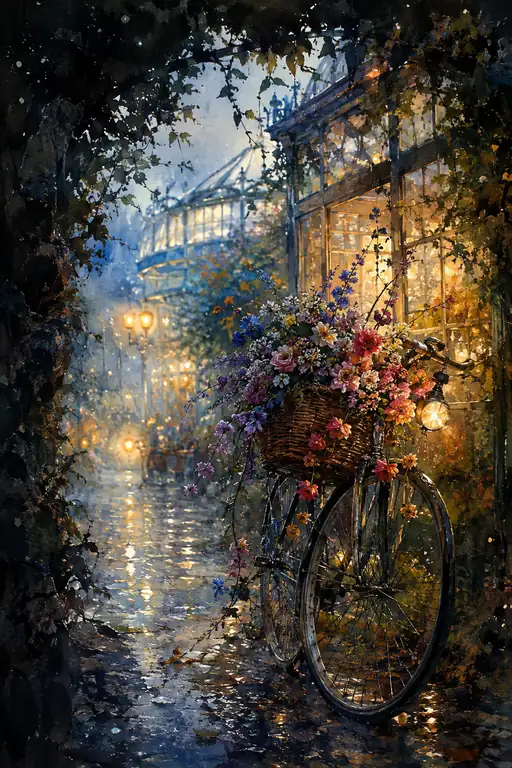
Introduction This painting rests a flower-laden bicycle beside a wisteria pond at night. The vehicle suggests travel, while its state creates a pause within the garden. Utility and abundance meet without losing their character. Description The bicycle stands diagonally across the lower foreground. Its dark frame, silver rims, pedals, and handlebars catch blue and amber highlights. A front basket overflows with cream, pink, and violet flowers among green leaves. Wisteria hangs overhead, framing a pondside path that recedes toward a bridge and small lamps. Deep-blue water carries broken reflections. Petals gather around the tires and drift across the path. Analysis The two wheels establish repeated circles that counter the path's recession and the flowers' downward rhythm. The diagonal frame directs vision from rear wheel to basket, then outward toward the bridge. Pale blossoms and amber lamps punctuate the dominant violet-blue field. Thin lines describe spokes and metal, denser strokes build the bouquet, and smooth washes soften water and trees. Reflected colors on the frame integrate the bicycle into the night. Interpretation and Evaluation The parked bicycle implies a rider nearby but leaves both person and destination unspecified. Flowers transform transport into an offering without erasing wear and mechanical structure. The composition is balanced, the nocturnal palette coherent, and metal, wicker, petals, stone, and water show strong technique. Pairing practical mobility with temporary blossoms is inventive. The bicycle's physical geometry restrains the garden's romantic richness. Conclusion At first the image appears to record a stop during a journey, but sustained viewing makes the pause itself central. Wheels remain ready while flowers and reflections mark passing time. The painting presents travel as an ability to notice and briefly belong to a place.
Same Subcategory
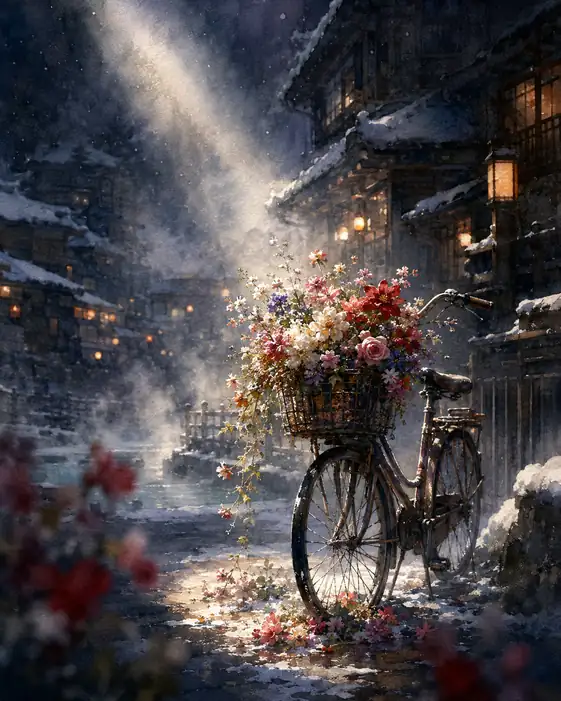 The Bicycle Bloomed Under a Winter Sunbeam
Similar Artworks
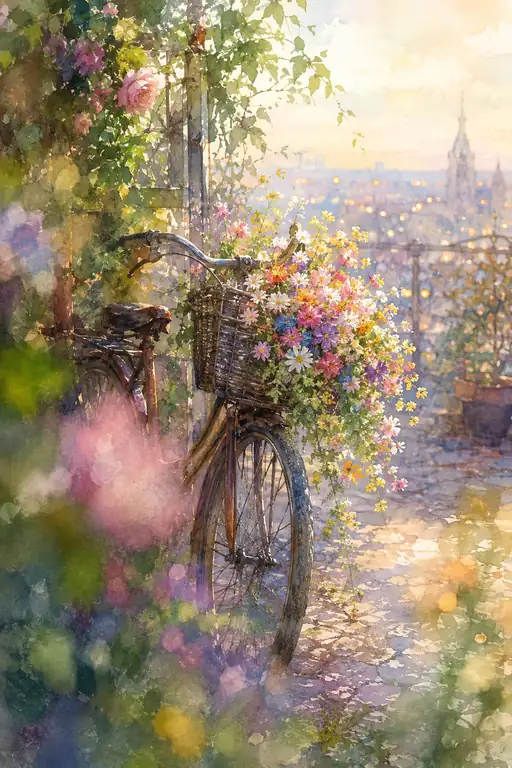 A Bicycle Brings Spring to the Rooftops
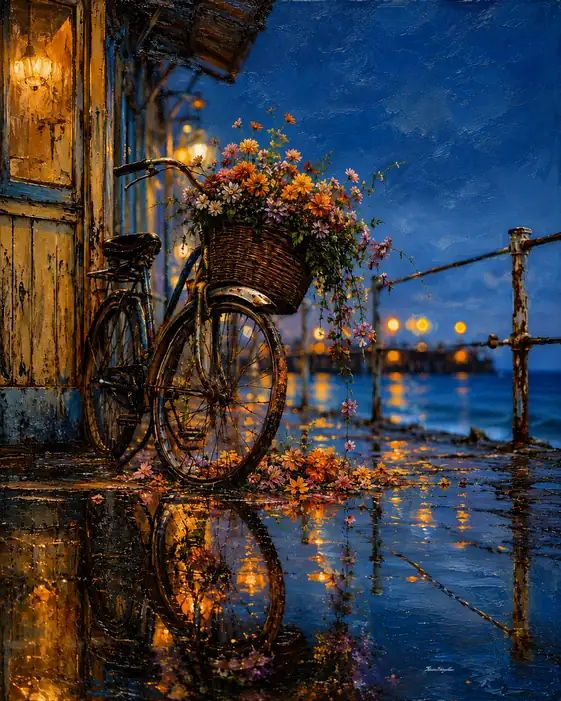 The Flower Bicycle Waits beside the Evening Sea
 A Bicycle Overflows with the Greenhouse Evening
 The Bicycle That Spilled a Garden of Light
 Sunset Rests in the Bicycle's Basket
 The Flower Bicycle Finds a Road of Water
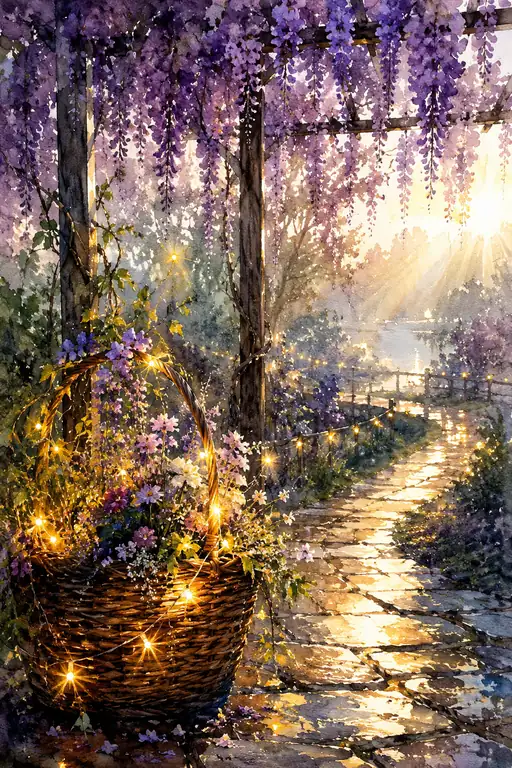 A Basket of Starlight Beneath the Wisteria
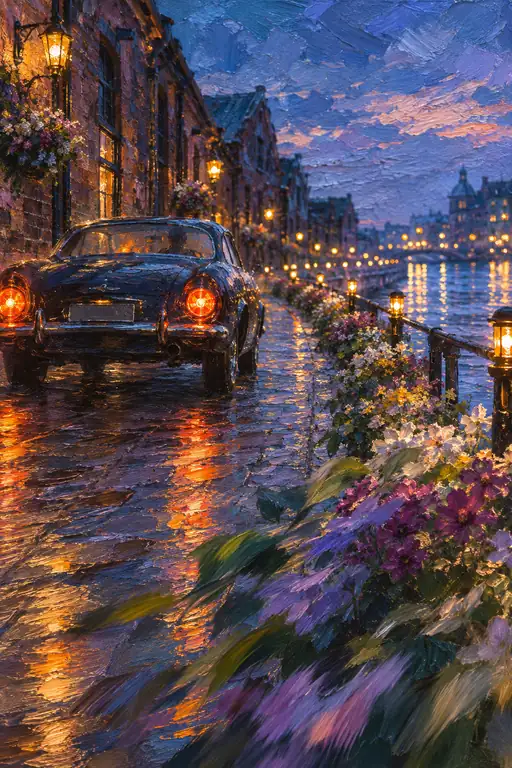 The Road Shines Before the Midnight Drive
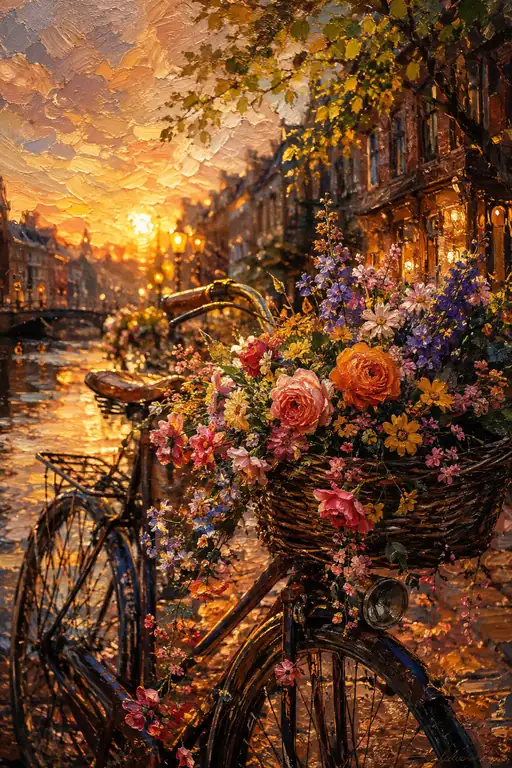 A Bicycle Carrying the Last Garden Home
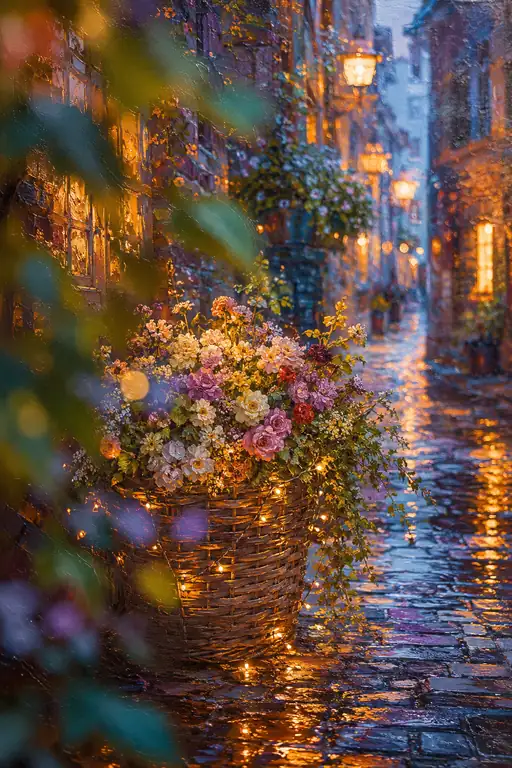 The Basket of Golden Dreams