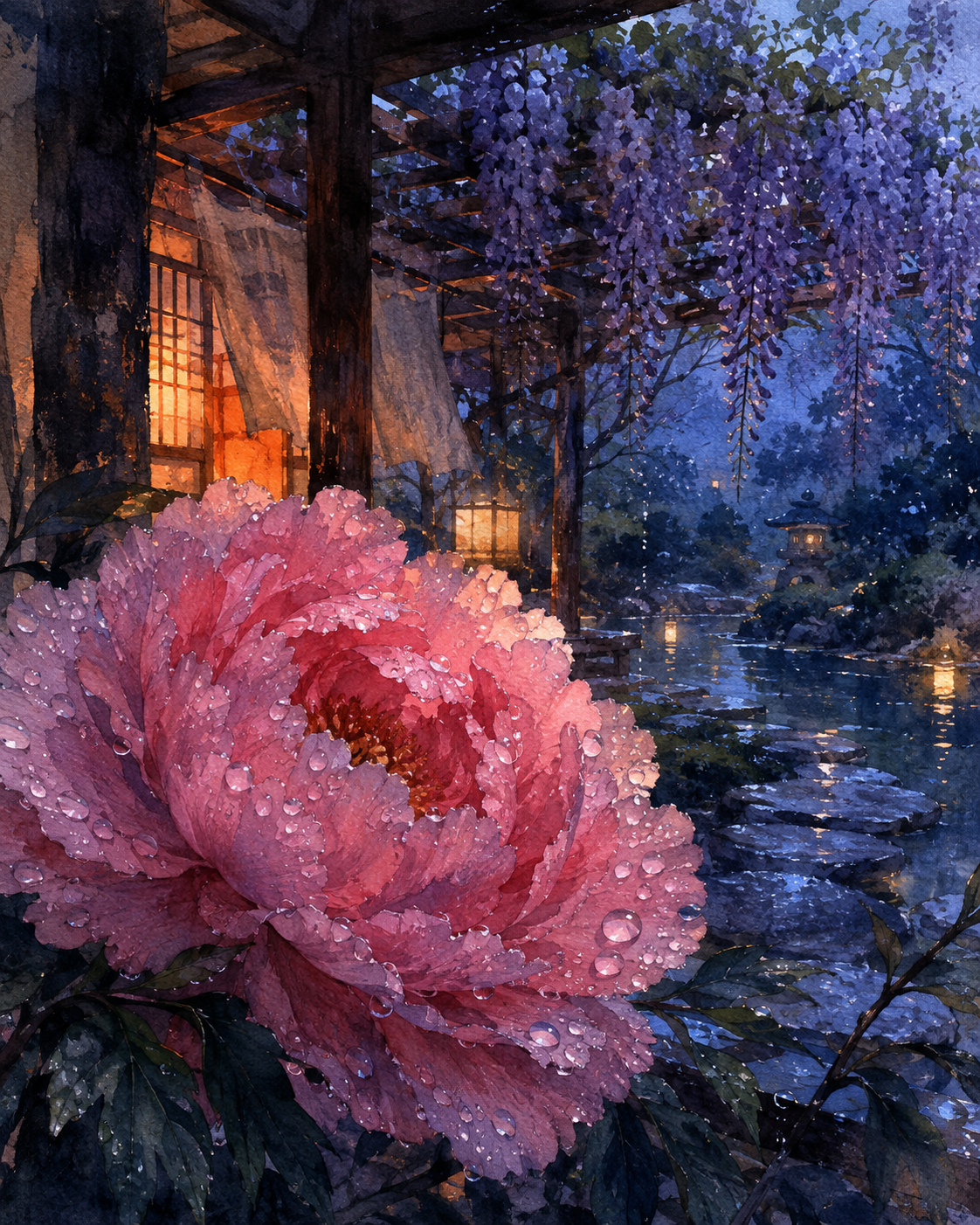
A Peony Gathers the Blue Garden's Rain
Critique
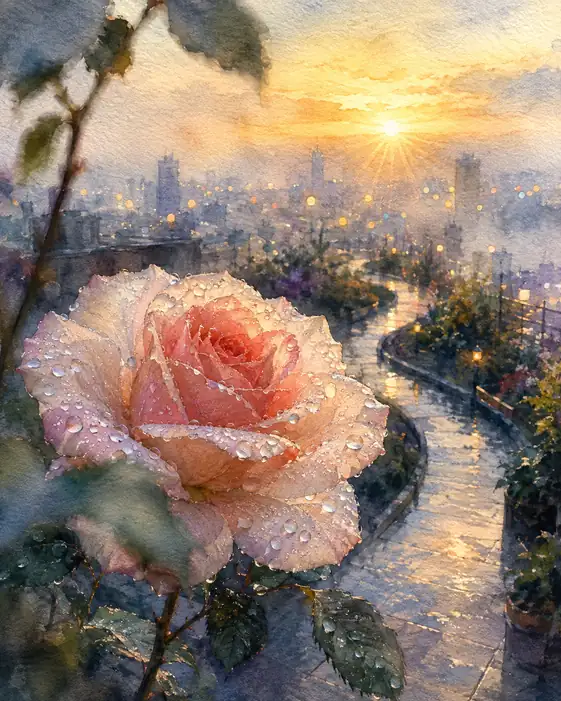
Introduction This painting enlarges a dew-covered pink peony against a wisteria pond at night. The flower becomes still life and landscape, its layered petals echoing the garden's depth. Cool darkness and concentrated color create intimacy without reducing space. Description The peony fills the lower left, its coral-pink petals opening in overlapping folds. Droplets cling to their edges and catch white, blue, and amber light. Dark leaves support the bloom. Behind it, purple wisteria descends above a pond and curving path. Lanterns recede toward a bridge among trees. Moonlit blue spreads across water, broken by reflections, petals, and ripples. Analysis The flower's rounded mass anchors the foreground against diagonal recession. Spiraling petals pull vision inward, while their edges release it toward wisteria and water. Pink advances through blue-violet shadow, and amber lights balance its warmth at a distance. Crisp strokes define droplets and rims; washes soften inner shadows and the garden. Repeated arcs in petals, shoreline, bridge, and ripples unify detail with broad space. Interpretation and Evaluation Dew makes the flower appear newly revealed yet vulnerable to change. Its scale does not dominate absolutely, because the garden continues beyond it as another flowering field. The composition is controlled, the nocturnal palette harmonious, and wet petals, leaves, and water show strong technique. Treating one bloom as an entrance into landscape is inventive. Dark intervals between petals prevent richness from becoming merely decorative. Conclusion At first the peony commands attention through color and detail, but viewing sends the eye outward along its echoes in the garden. The work links a droplet's brief brilliance to wider reflections. Beauty appears as a change of scale: the smallest surface can contain an entire night's atmosphere.
Same Subcategory
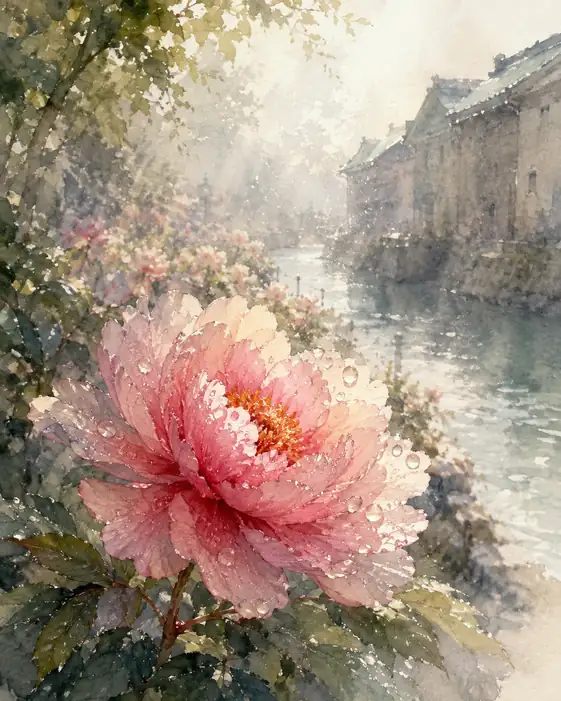 The Canal Morning Held in a Peony
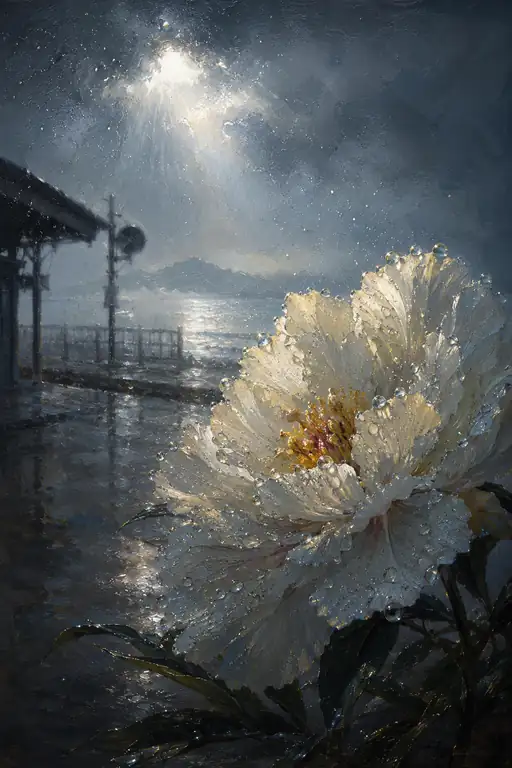 The White Peony Wears the Storm's Jewels
Similar Artworks
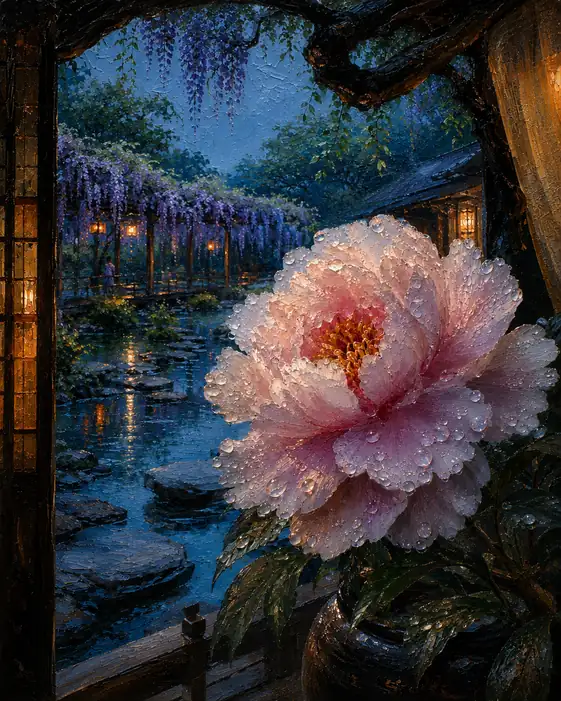 A Dewlit Peony Opens the Garden Night
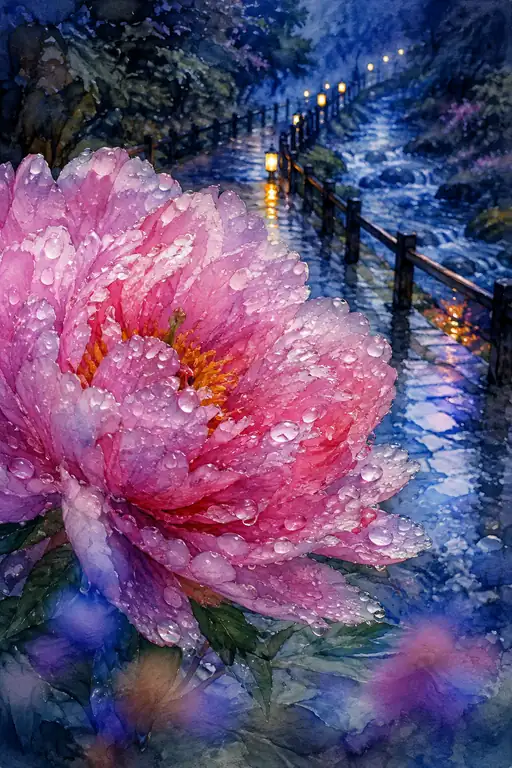 The Peony Wears a Necklace of River Rain
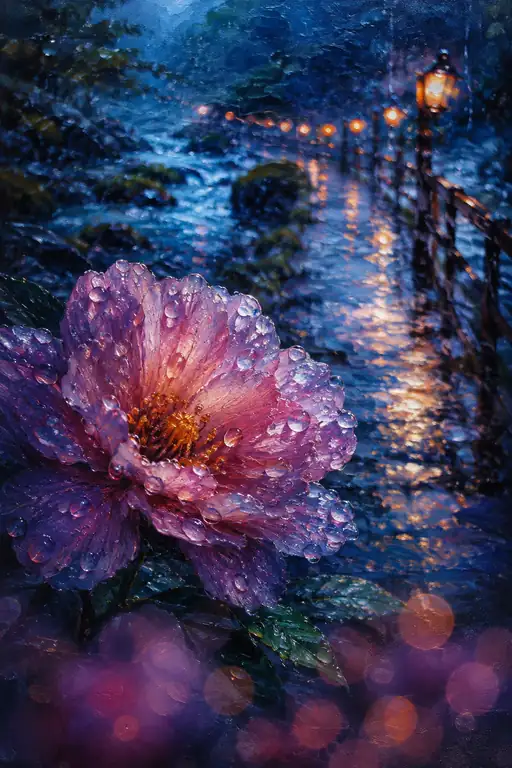 A Rain-Crowned Camellia Watches the Lantern Path
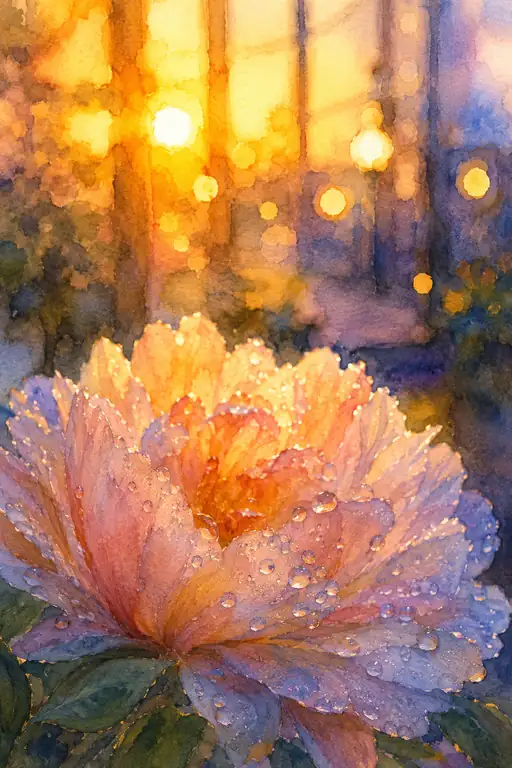 Tears of the Luminous Dawn
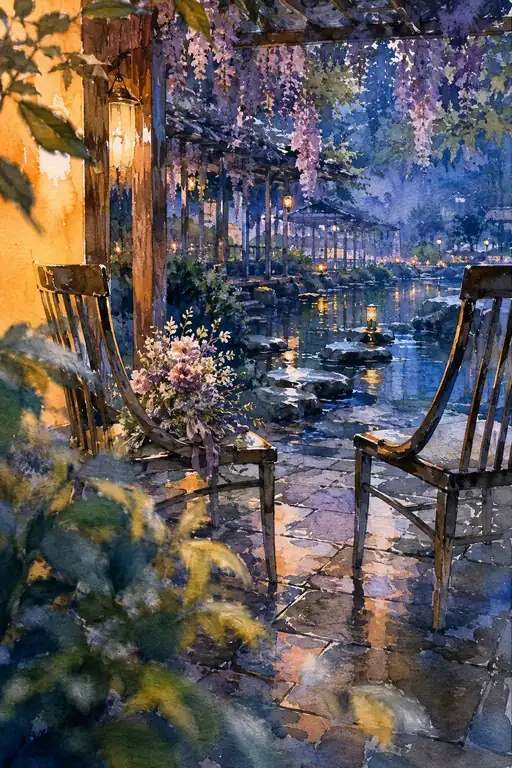 Two Empty Chairs Await the Wisteria Night
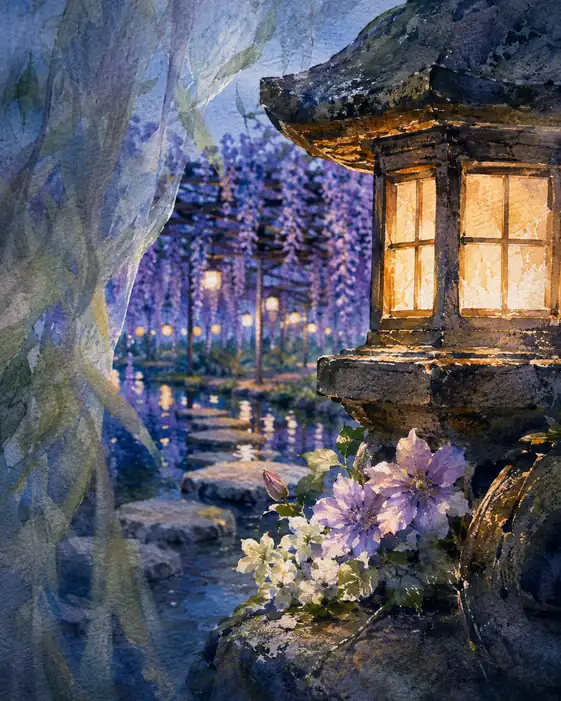 Beyond the Veil, Wisteria Lights the Way
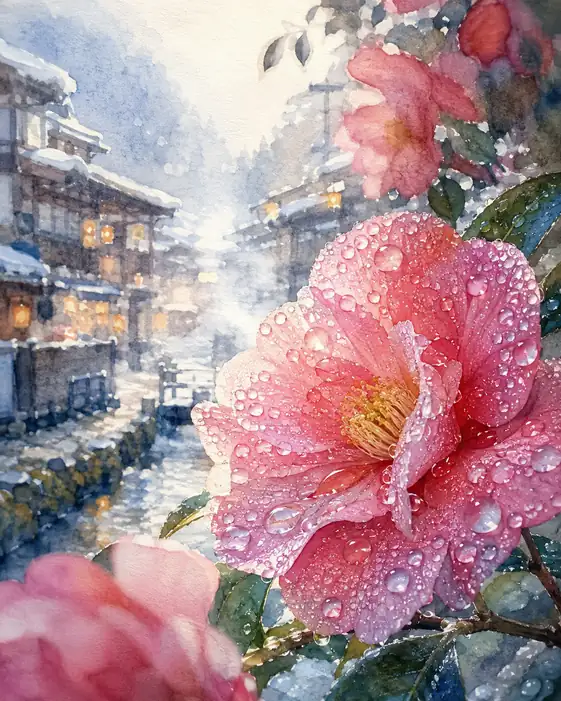 A Camellia Holds the Snow Village in Every Drop
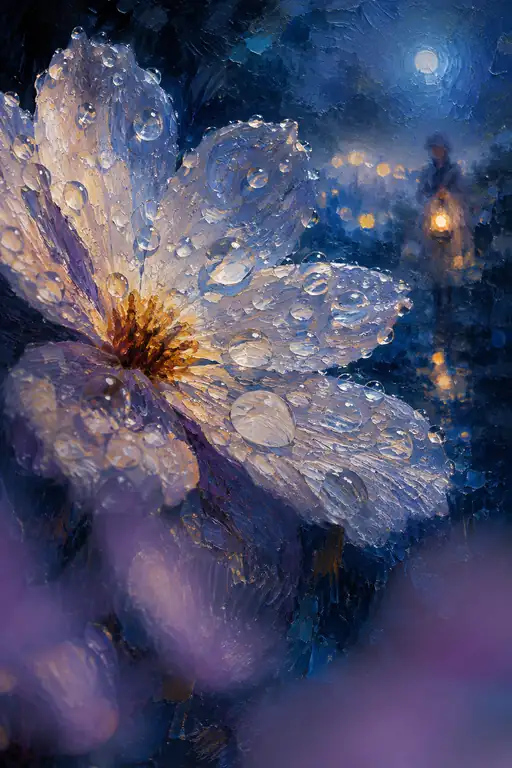 Moonlit Dew Crowns the Midnight Flower
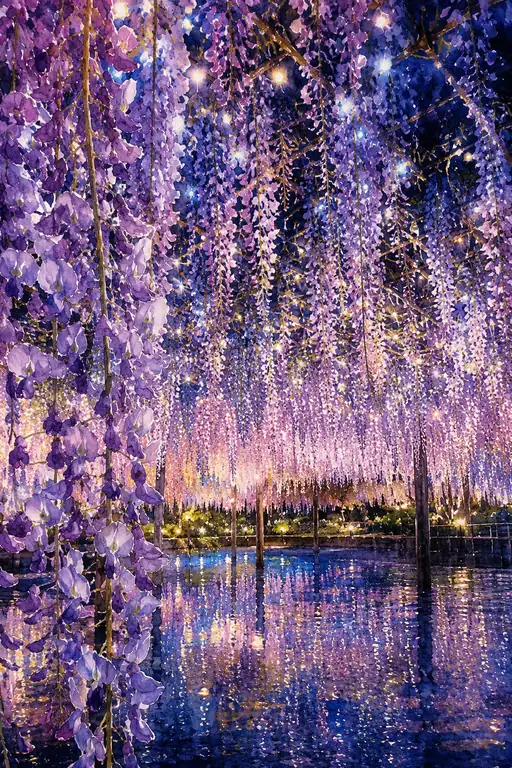 A Cascade of Whispering Dreams
 A Rose Drinks the Dawn from Every Raindrop