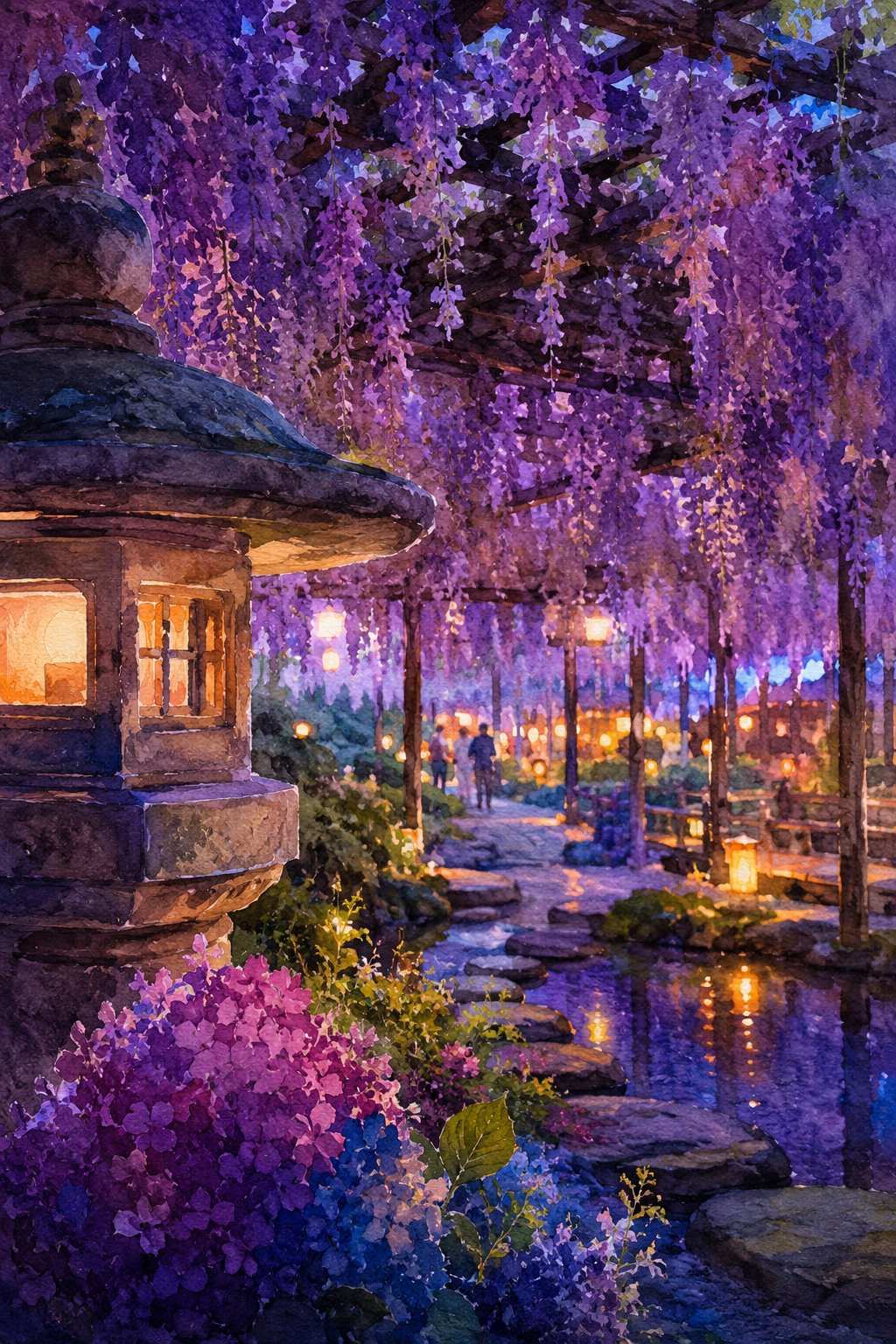
A Light Warming the Violet Rain
Critique
Introduction This painting depicts a stone lantern beside a wisteria pond at dusk. With no figure present, light, vines, and a curving path carry its emotional movement. The garden feels tended yet overtaken by seasonal abundance. Description The lantern rises left of center from a mossy base. Its square opening contains a golden flame beneath a weathered cap. Lavender and blue wisteria descends from overhead trellises among green leaves and pink blossoms. A pale path curves around dark water toward a bridge. Distant lamps glow among trees, while the sky shifts from peach to violet. Petals speckle the paving and pond. Analysis The lantern acts as a vertical hinge between dense flowers and the path's recession. Its cap repeats the bridge's horizontal, while hanging clusters create downward rhythm around both. Gold and peach punctuate a blue-violet field, guiding vision from flame to horizon. Granular marks build stone, broken touches form flowers, and smooth washes describe water and sky. Reflections double the lights without fixing them, while the curved shore prevents rigidity. Interpretation and Evaluation The empty path encourages imagined movement, while the lantern offers orientation rather than a destination. Wisteria records seasonal brevity; weathered stone implies duration. Together they make the garden a negotiation between change and continuity. The composition is lucid, the restricted palette harmonious, and moss, petals, and water are handled skillfully. Modest rather than spectacular illumination gives the familiar motif restraint. Conclusion At first the lantern seems to be the subject, but path and repeated lights extend its meaning through the garden. Guidance appears as a sequence of small assurances rather than one revelation. Balanced textures and dusk colors make stillness feel active, inhabited by possible passage.
Same Subcategory
 Sunset Garden and Evening Flight
Similar Artworks
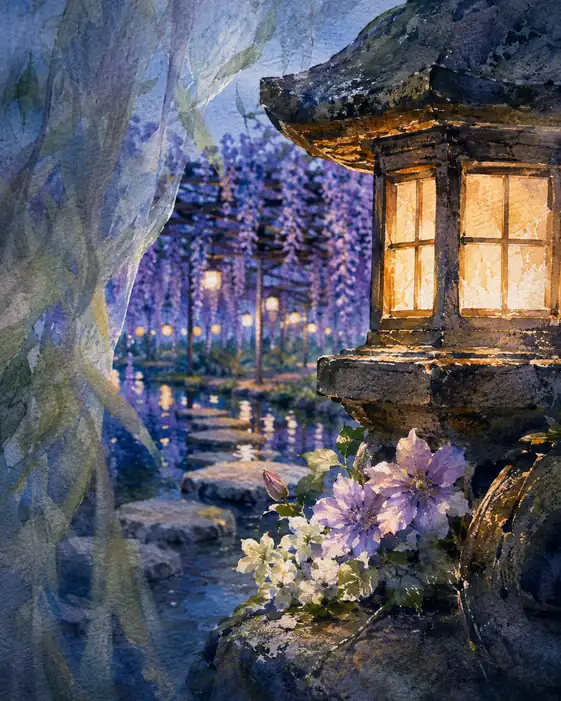 Beyond the Veil, Wisteria Lights the Way
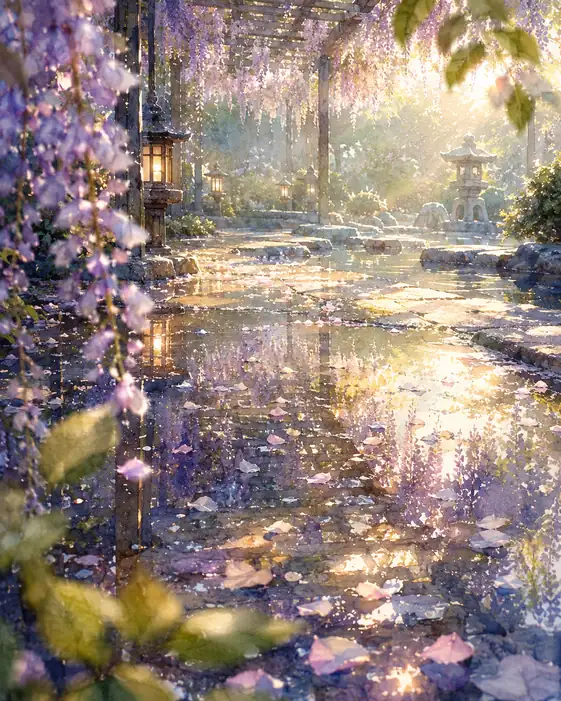 Petals Turn the Morning Pool into Sky
 Wisteria Mirrored in Golden Morning Light
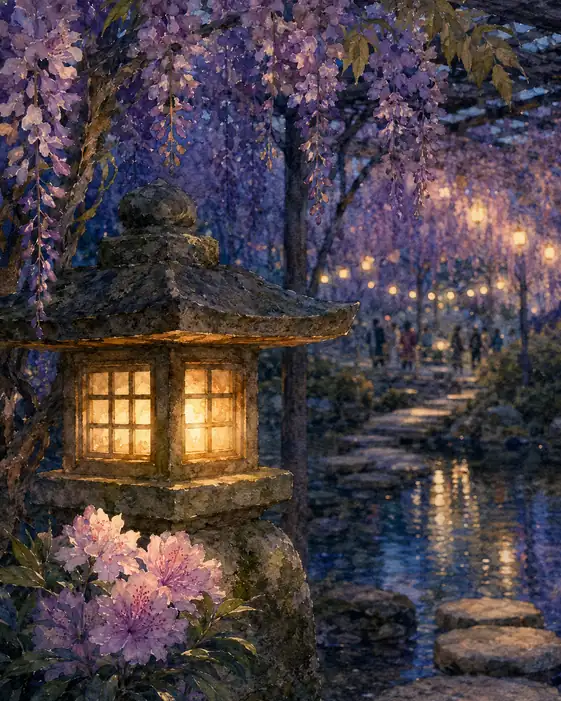 Wisteria Leads the Lamps Across the Water
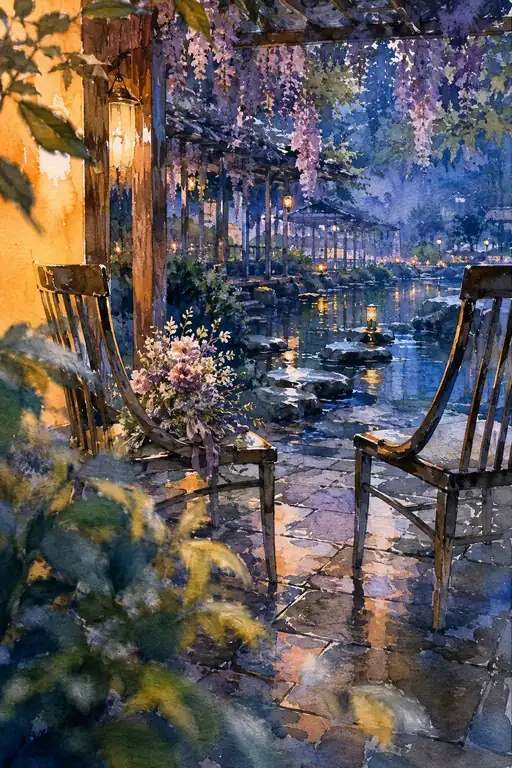 Two Empty Chairs Await the Wisteria Night
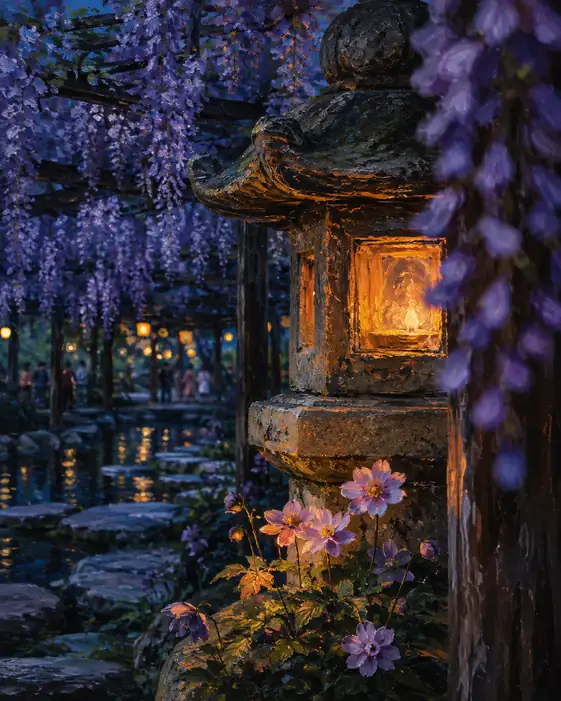 Little Blossoms at the Wisteria Gate
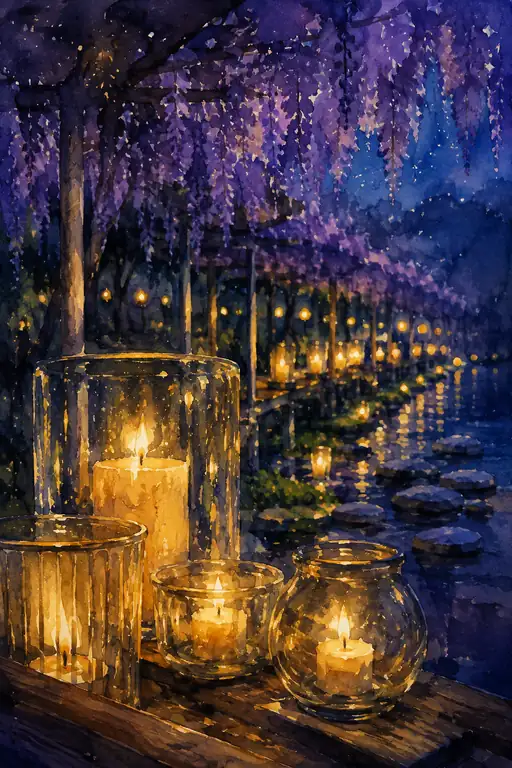 Four Candles Begin the Wisteria Night
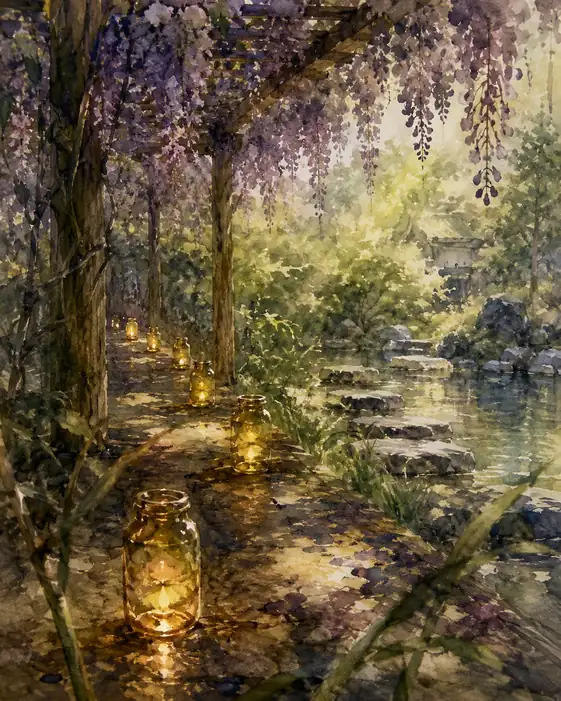 Little Jars Guide the Way through Wisteria Shade
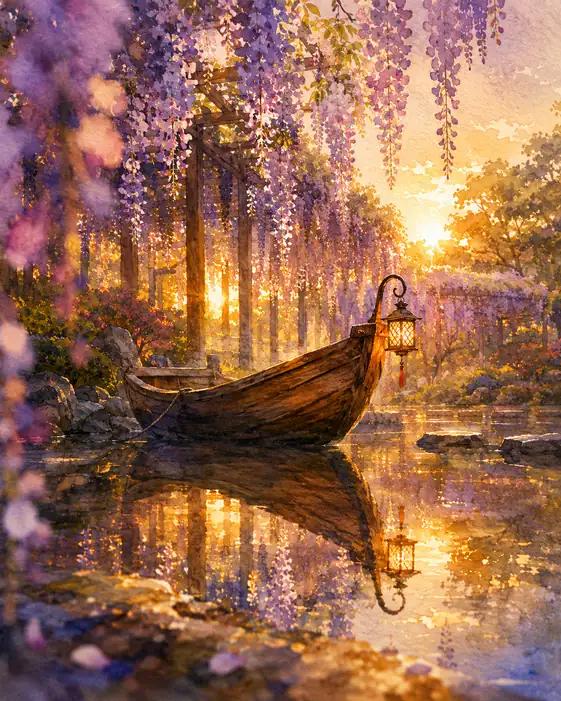 The Boat Waits Where Sunset Tangled with Wisteria
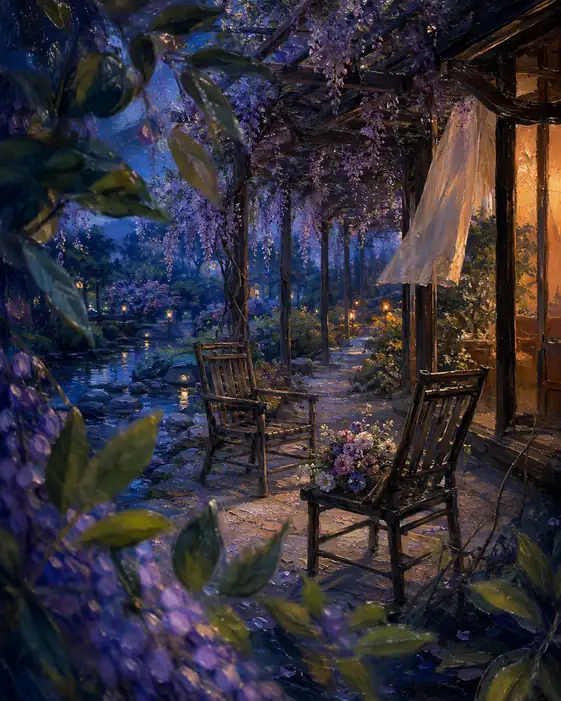 Two Chairs Keep the Garden's Evening Secret