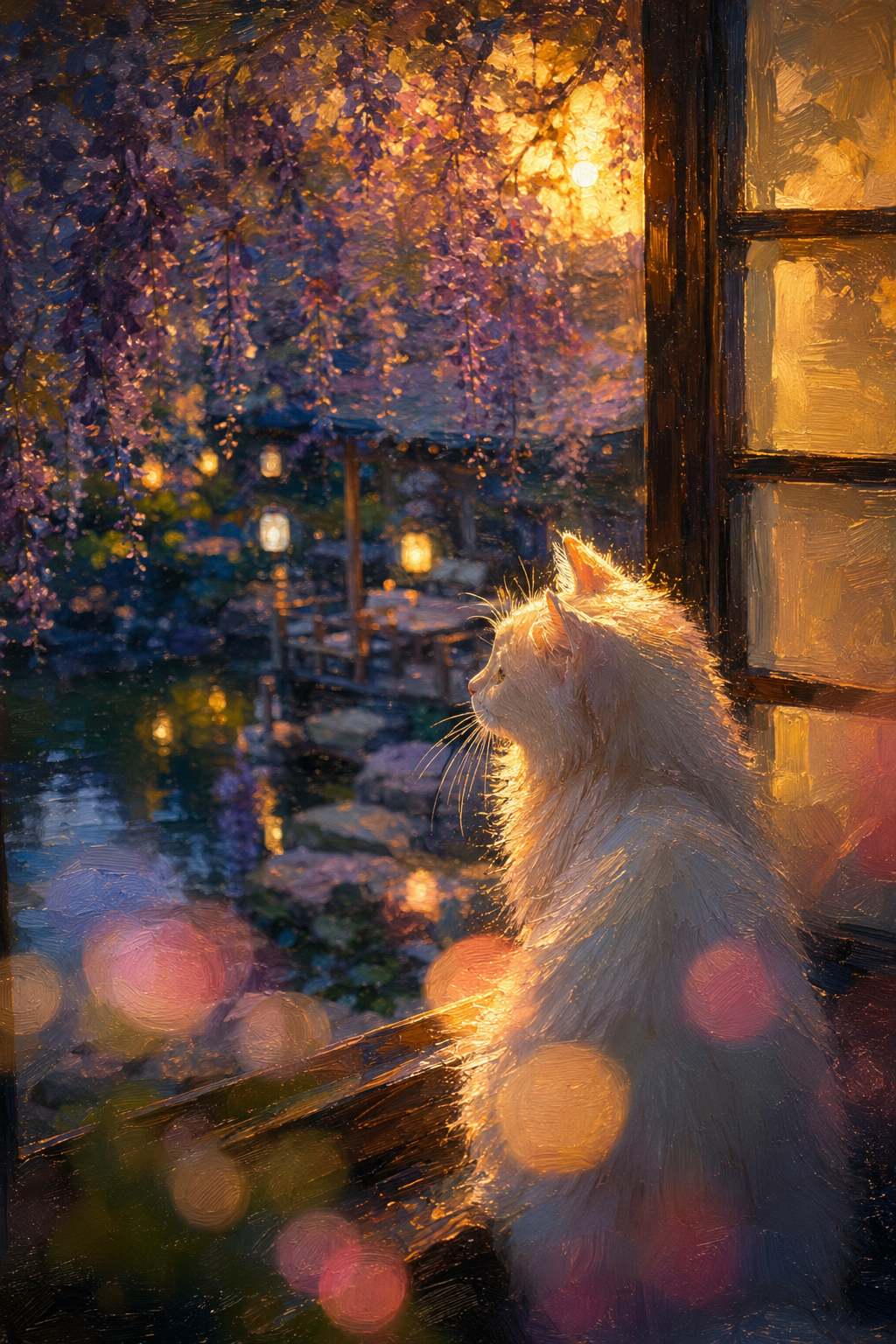
The White Cat Waits for Wisteria Twilight
Critique
Introduction This painting shows a white cat at a window overlooking a wisteria garden at night. The animal's attention gives the landscape a witness. Interior shelter and space remain connected by the open frame and drifting blossoms. Description The cat occupies the lower right, its back and profile outlined by light. Cream fur carries blue, lavender, and warm reflections, while ears face the garden. A wooden frame divides the view. Outside, purple wisteria hangs above a path and pond. Amber lanterns recede toward a bridge, a moon appears between branches, and petals rest on the sill and float in the air. Analysis The cat's pale silhouette balances dense flowers at upper left. Window bars establish verticals and horizontals, while path and pond curve into depth. Ovals in the cat, moon, lantern halos, and ripples soften that architecture. White fur gathers colors from interior and garden, bridging them. Strokes define whiskers and flower clusters; washes merge foliage, sky, and reflection. Amber points guide vision through violet-blue space. Interpretation and Evaluation The cat becomes an image of alert stillness rather than a narrative character. Its threshold position suggests curiosity held within familiarity. The open window prevents shelter from becoming separation: petals, light, and gaze cross it. The asymmetrical composition is balanced, the nocturnal harmony convincing, and fur, timber, flowers, and water show strong technique. Choosing an ordinary animal as the sole observer gives the romantic setting freshness and restraint. Conclusion Initially the cat seems to decorate a moonlit view, but sustained attention makes its looking central. The work asks viewers to share patient, wordless attention. Joining domestic calm with a flowering night, it presents wonder as something discovered from a familiar place.
Same Subcategory
Similar Artworks
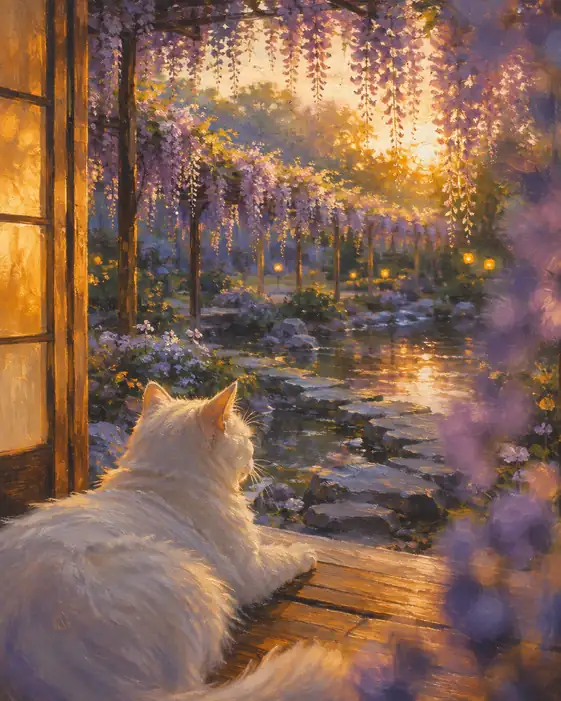 Sunset Comes Home to the Watching Cat
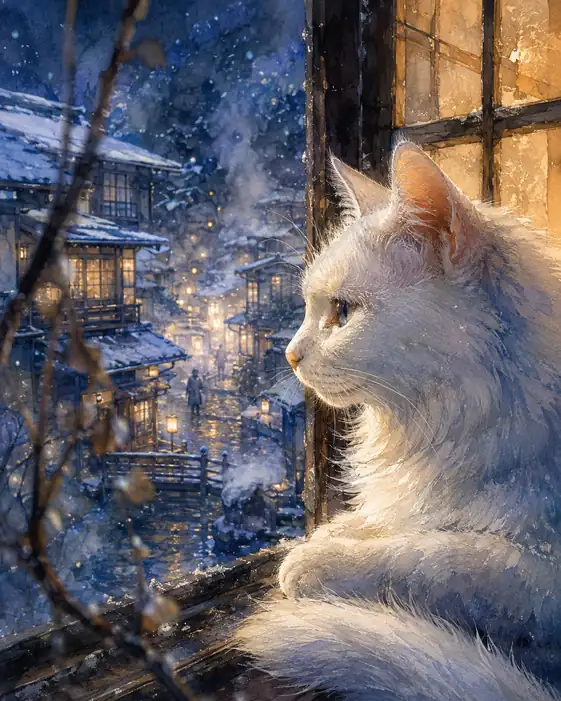 The White Cat Watches Snowfall Fill the Village
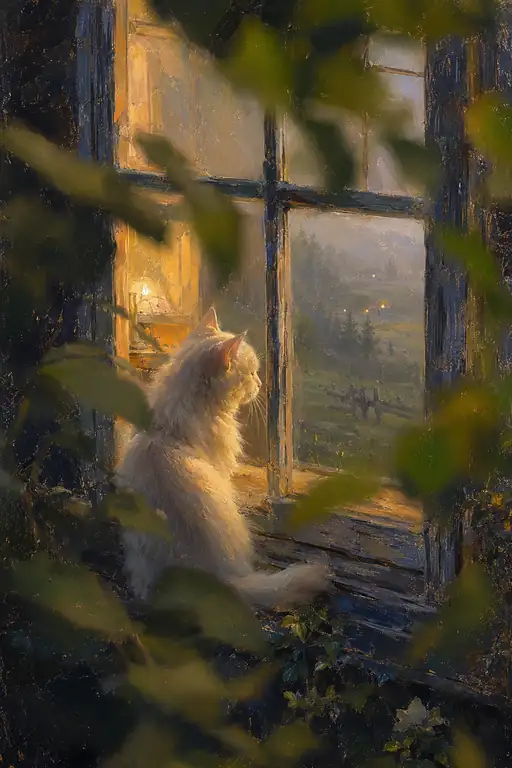 The Cat Who Watched Evening Cross the Fields
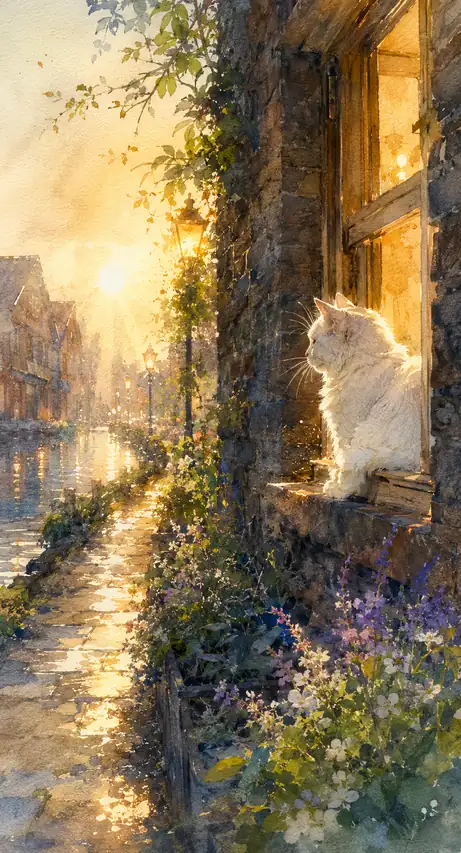 Sunset Finds the Cat at the Canal Window
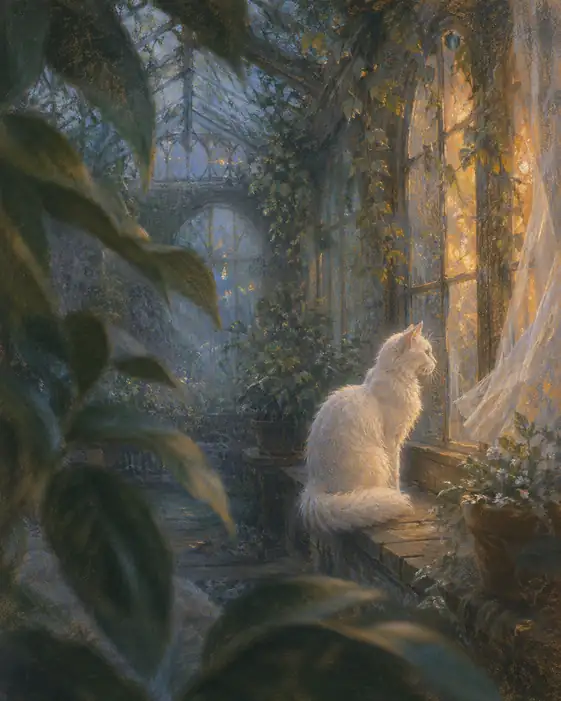 The Greenhouse Cat Waits for the Curtain of Light
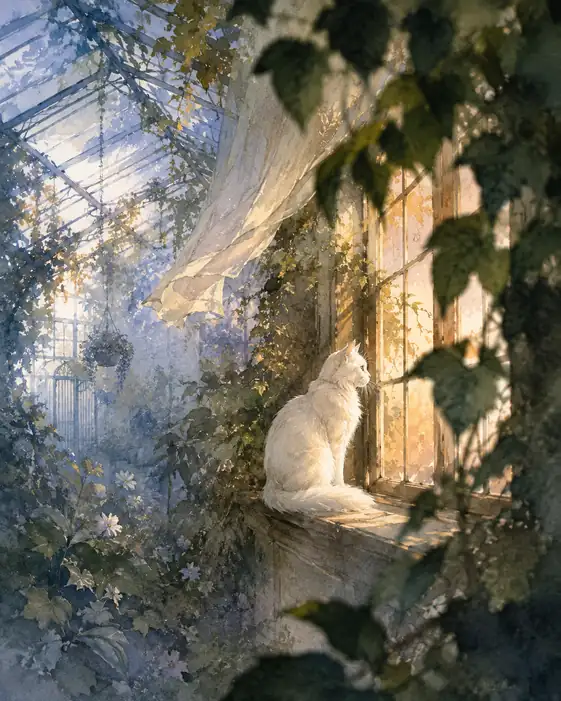 The White Cat Watches Morning Enter the Glasshouse
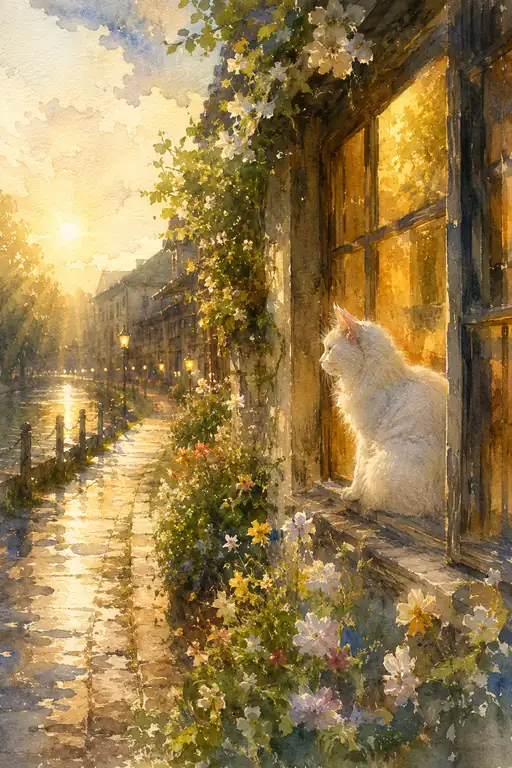 The White Cat Who Watches Morning Arrive
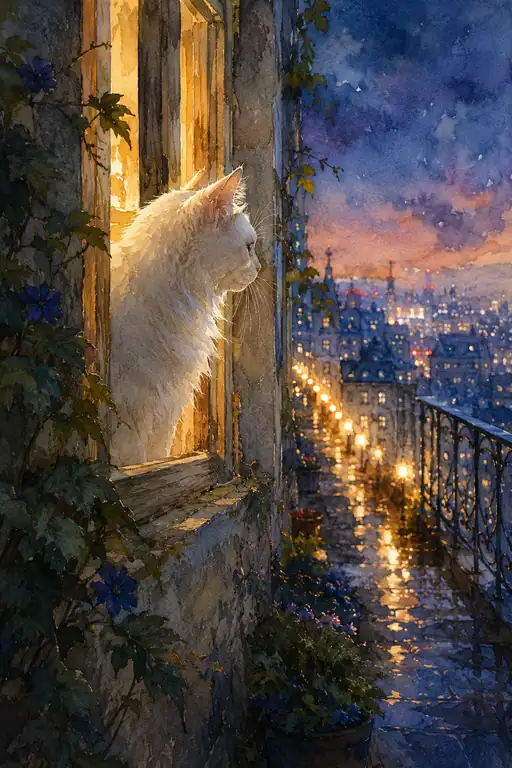 The White Cat Counts the City's Evening Lights
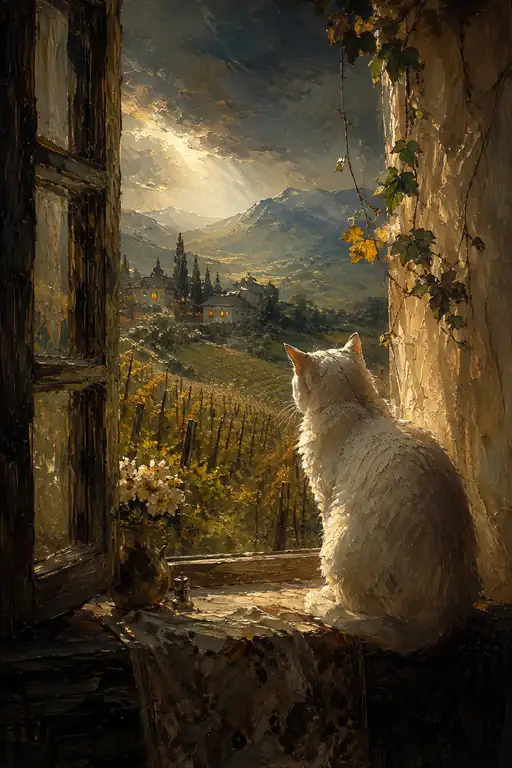 The White Cat Waits for Sunlight over the Vines
 The Flower-Crowned Dog Greets the Setting Sun