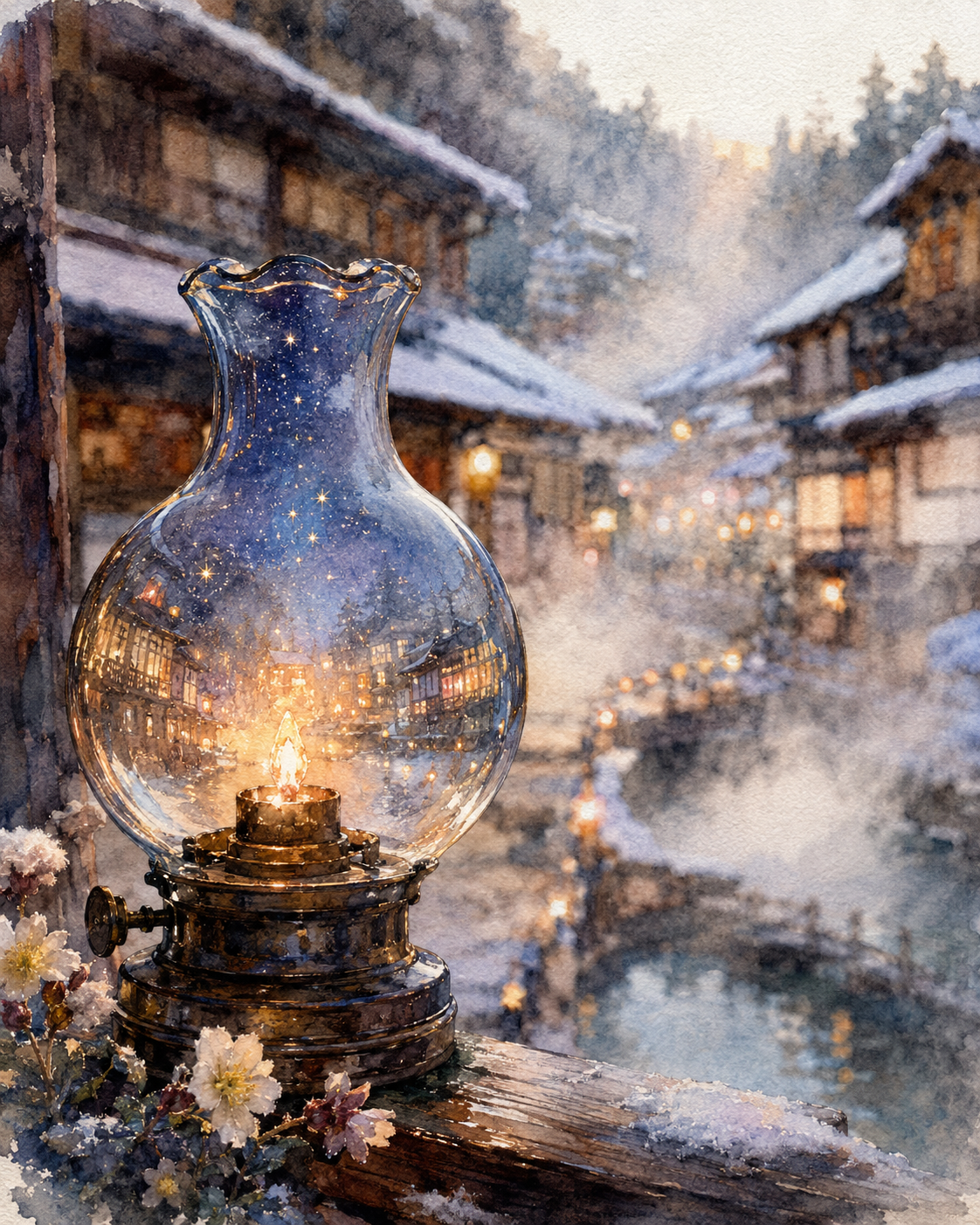
The Lamp Keeps a Snowy Village in Its Glass
Critique
Introduction This painting enlarges an oil lamp against a snowy canal village at dusk. Its globe gathers surrounding lights and sky, making a humble object appear protective and expansive. Physical cold meets a concentrated promise of warmth. Description The lamp stands on a dark wooden sill at left. A brass burner and black cap hold rounded glass around an amber flame. Highlights, smoke, and distorted reflections animate the surface. Behind it, a canal runs between snow-covered timber houses. Windows and lamps glow along the banks, bare branches cross a blue-violet sky, and broken gold reflections travel over dark water. Analysis The globe supplies the dominant circle, countered by the vertical chimney and horizontal sill. Canal edges and roofs recede from the lamp into central distance, connecting intimate scale with landscape. Amber repeats in flame, windows, and water, while blue and mauve preserve winter atmosphere. Sharp brass contrasts with soft reflections and dissolved buildings. Transparent washes distinguish the chimney's surface, interior flame, and scenery beyond. Interpretation and Evaluation The lamp suggests portable shelter: a small mechanism capable of changing the emotional temperature of a view. Because the village repeats its light, comfort becomes communal rather than isolated. The composition is stable, the complementary palette coherent, and metal, glass, snow, and water are rendered skillfully. Enlarging the lamp without losing the village is inventive. Soot and worn wood ground the symbolism in use. Conclusion At first the work contrasts warm flame with cold evening. Longer viewing reveals answering lights linking one object to many homes. The lamp becomes less an escape from winter than a model of endurance within it, giving ordinary illumination dignity.
Same Subcategory
 Vessels of Amber Light
 Tide Kept Within the Glass
Similar Artworks
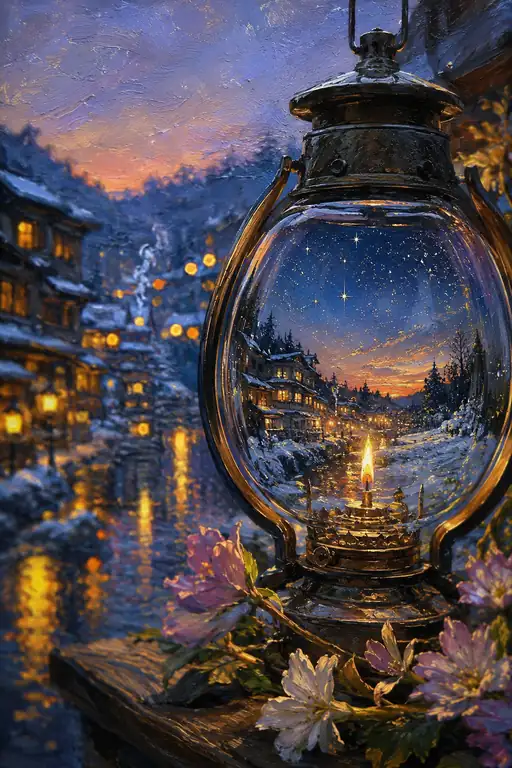 A Lantern Holds the Village's Starry Dusk
 The Lantern Boat Drifts Beneath the Winter Moon
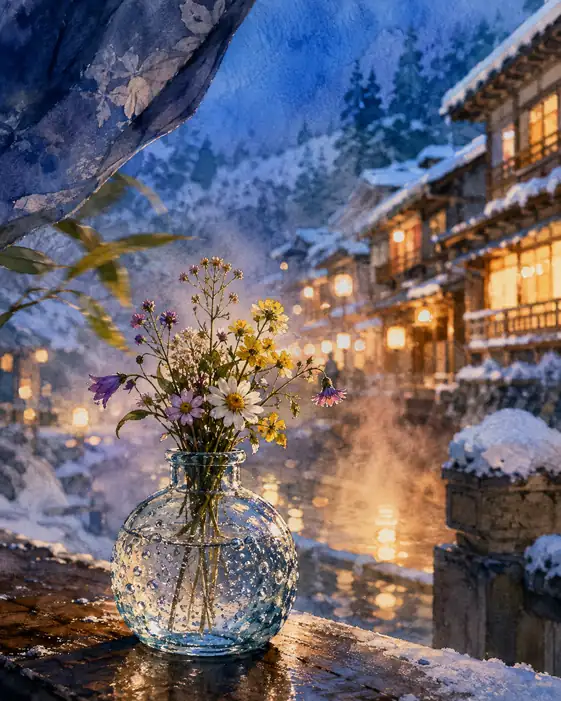 Wildflowers Watch the Hot-Spring Evening Steam
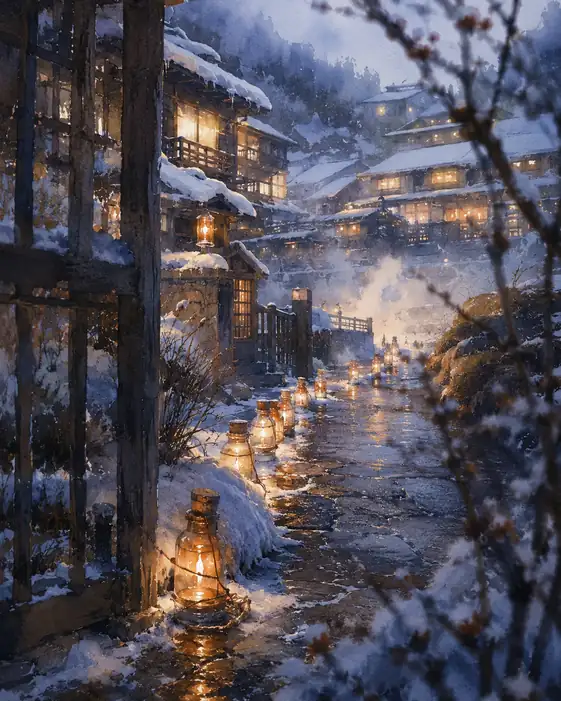 Little Bottles Light the Path to the Springs
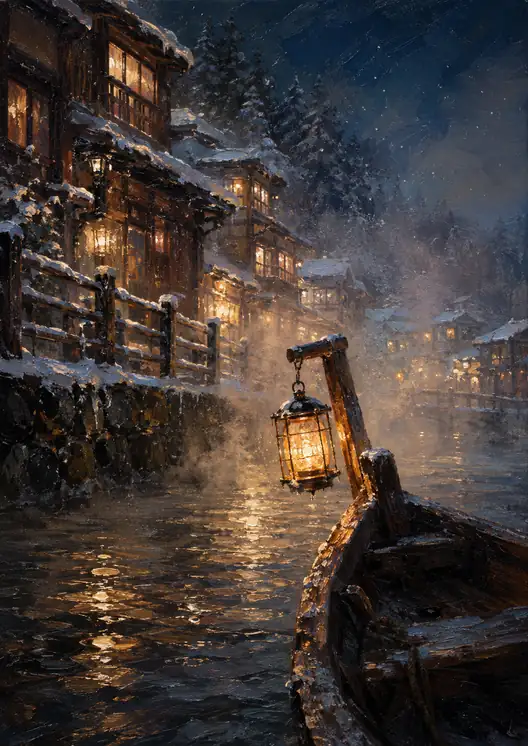 The River Carries One Lantern Home
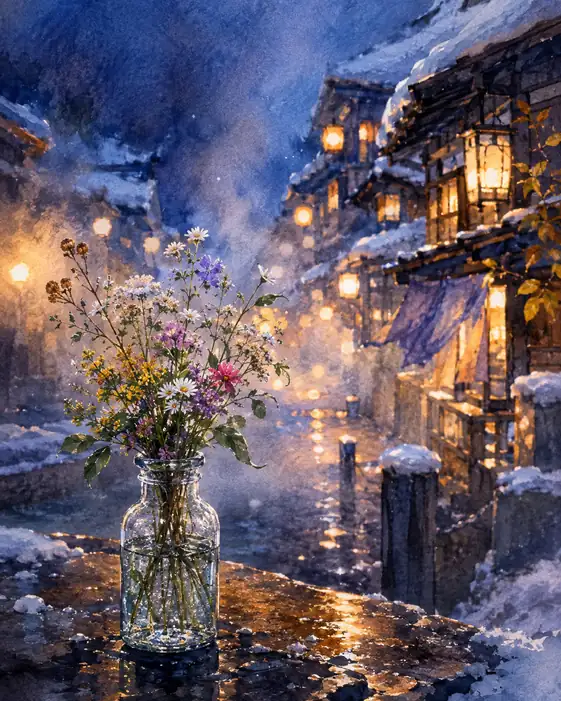 Wildflowers Gather the Lanterns of a Snowy Evening
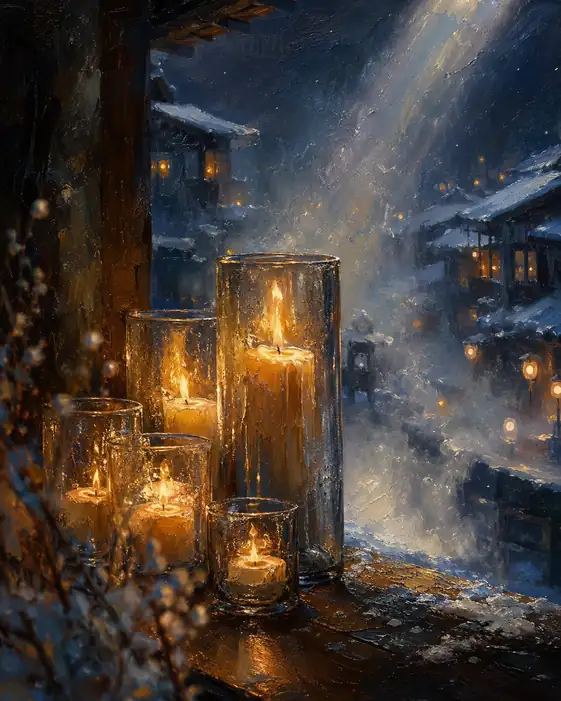 Five Flames Keep Winter from the Window
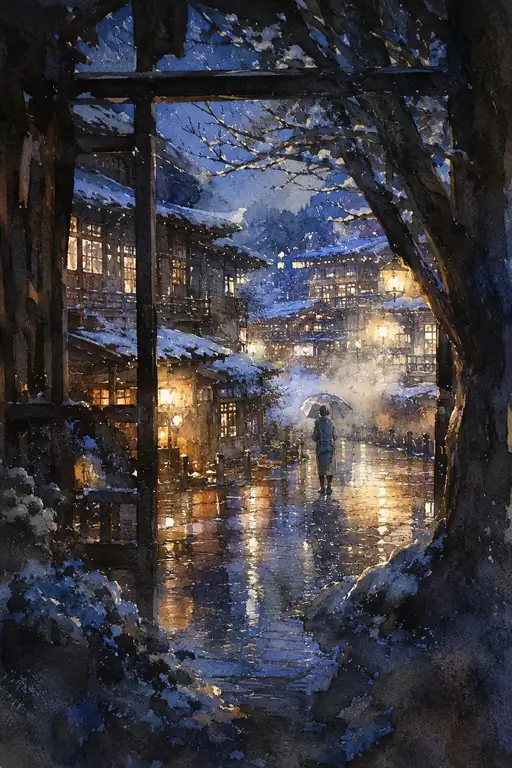 Through the Snowy Gate, She Follows Warmth
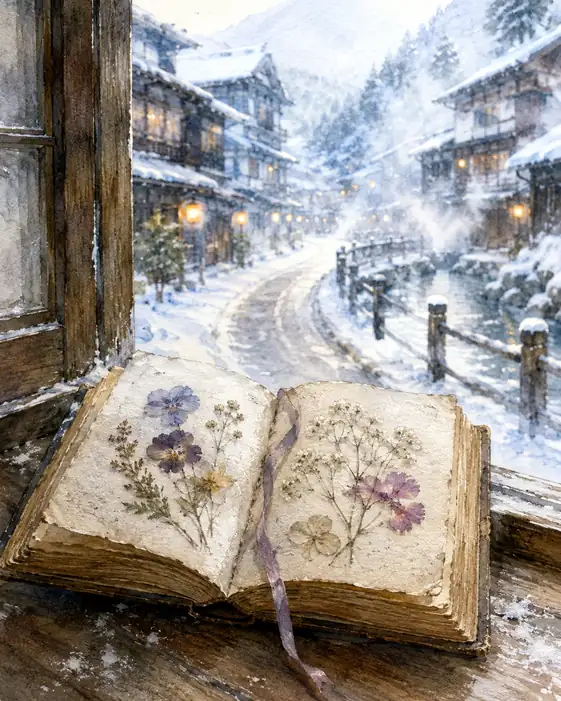 Winter Reads the Flowers' Secret Diary
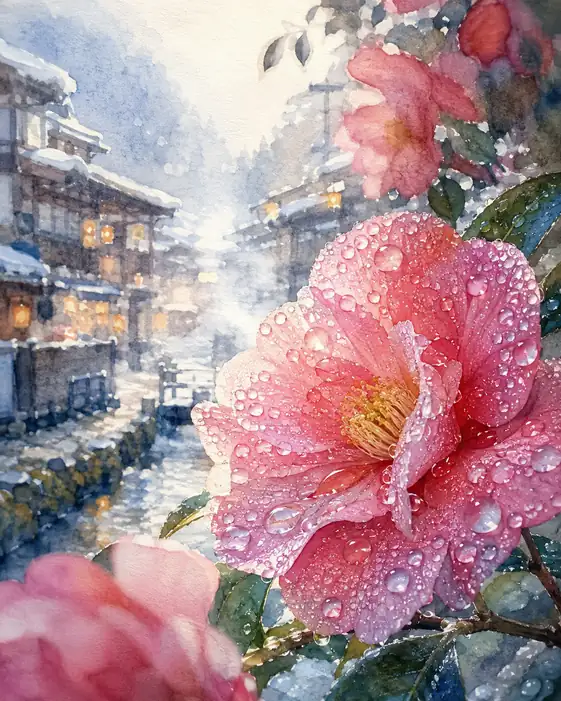 A Camellia Holds the Snow Village in Every Drop