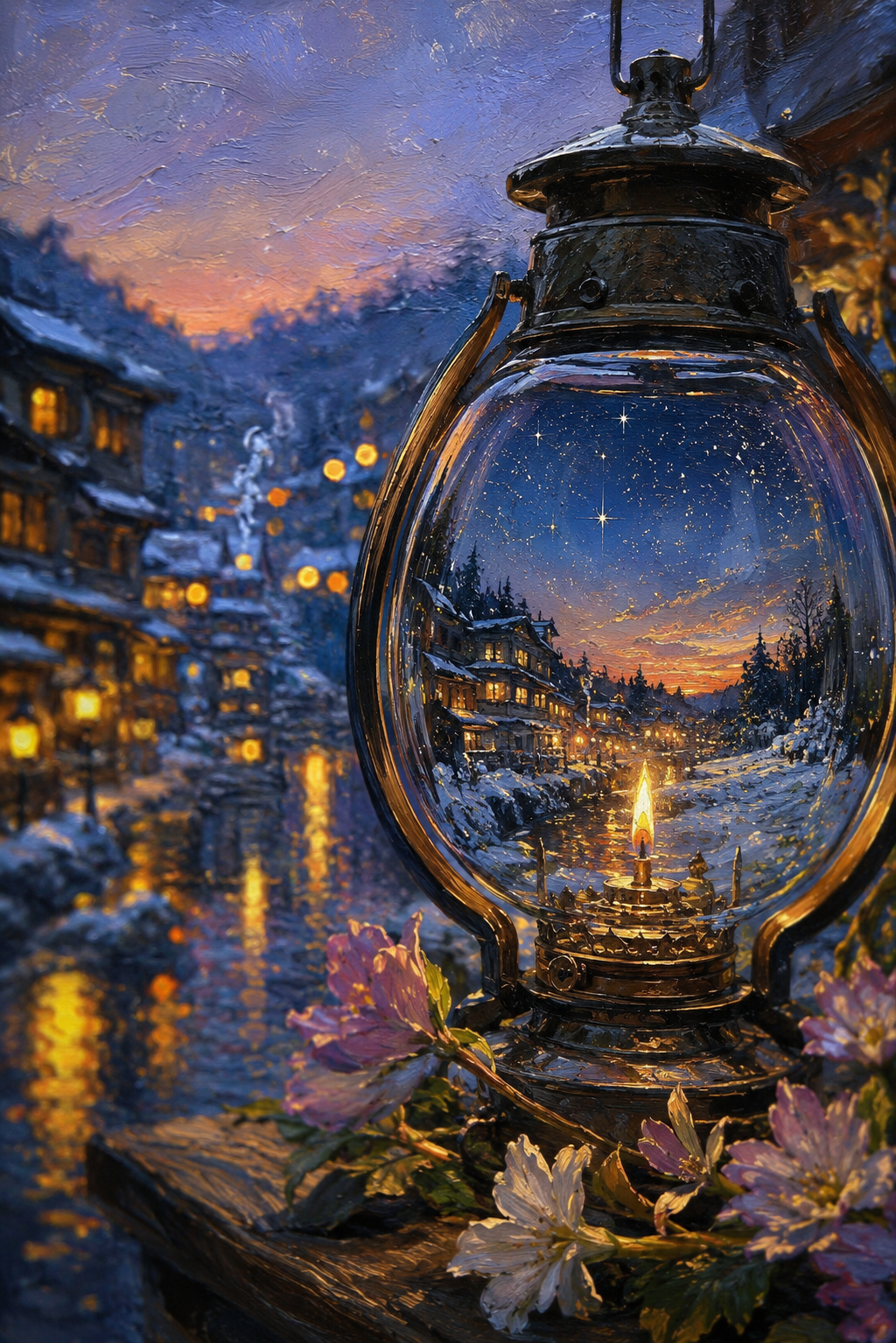
A Lantern Holds the Village's Starry Dusk
Critique
Introduction This painting places an oversized lantern beside a snowy canal village, while its glass appears to contain another luminous landscape. Joining a practical object with an impossible vista turns illumination into a subject of wonder. Description The lantern stands on a snow-dusted wooden ledge at left. Its black cap and ribs enclose curved glass glowing orange and gold. Inside, a tiny settlement, water, trees, and a low sunset seem folded into the lamp. Behind it, a canal recedes between snowy timber houses. Windows shine along the banks, bare branches cross a violet-blue sky, and reflections break across dark water. Analysis The lantern's vertical form anchors the composition, while canal edges and roofs lead toward the central distance. Rectangles in the panes, windows, and houses create unity. Warm color travels from the enclosed sunset to village lights and water, countered by blue and white shadows. Sharp highlights and softened internal forms separate glass from imagined depth. Dense foreground marks give metal and snow weight; looser strokes dissolve the distance. Interpretation and Evaluation The inner landscape suggests that light preserves memory, longing, or refuge. The village repeats its glow, preventing the object from becoming wholly private. The composition is balanced, the complementary palette controlled, and the rendering of glass, metal, snow, and reflection skillful. The nested view is inventive, converting a familiar lamp into both frame and world. Worn wood and cold air keep the symbolism grounded. Conclusion At first the lantern reads as warmth against winter, but sustained viewing reveals a meditation on places carried within ordinary things. Inner horizon and outer canal echo without becoming identical. Light does not merely reveal a destination; it becomes the destination being protected.
Same Subcategory
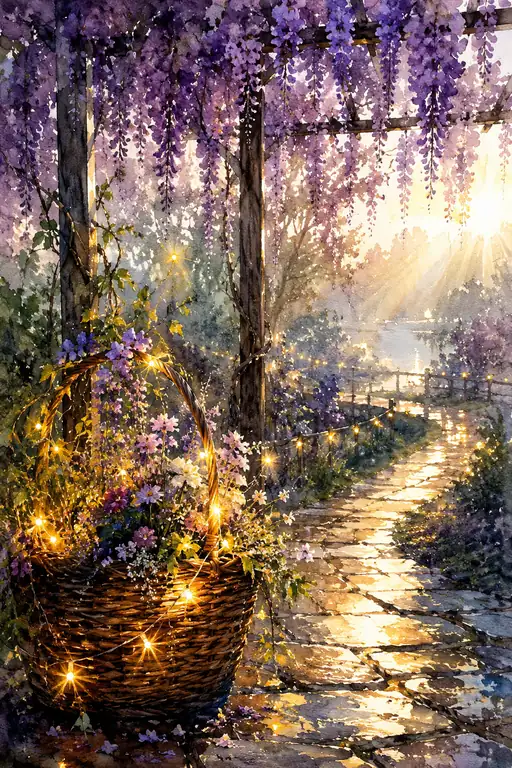 A Basket of Starlight Beneath the Wisteria
Similar Artworks
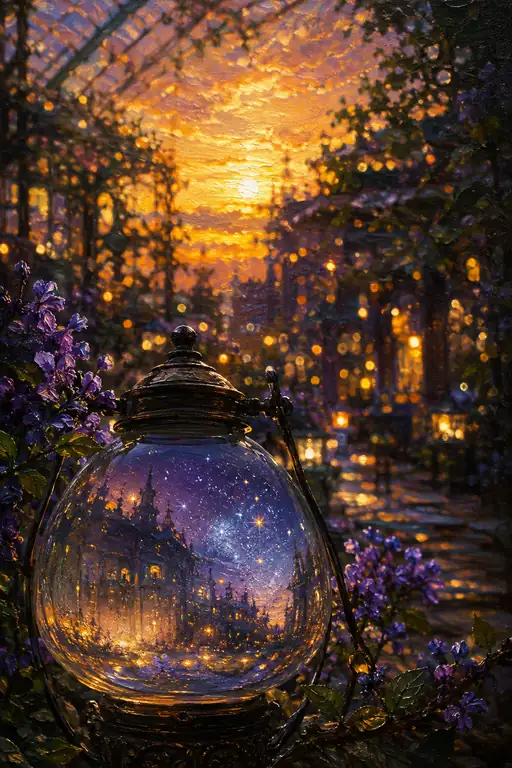 The Lantern Shelters a City Beneath the Milky Way
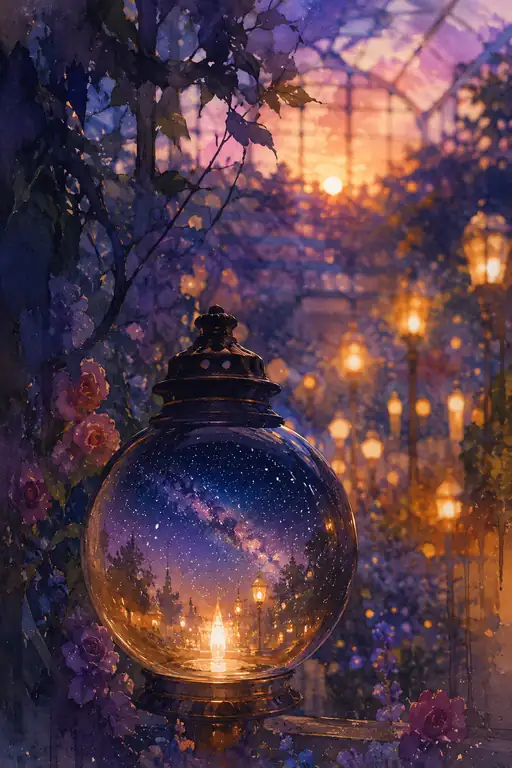 A Starlit Town Dreaming Inside the Garden Lamp
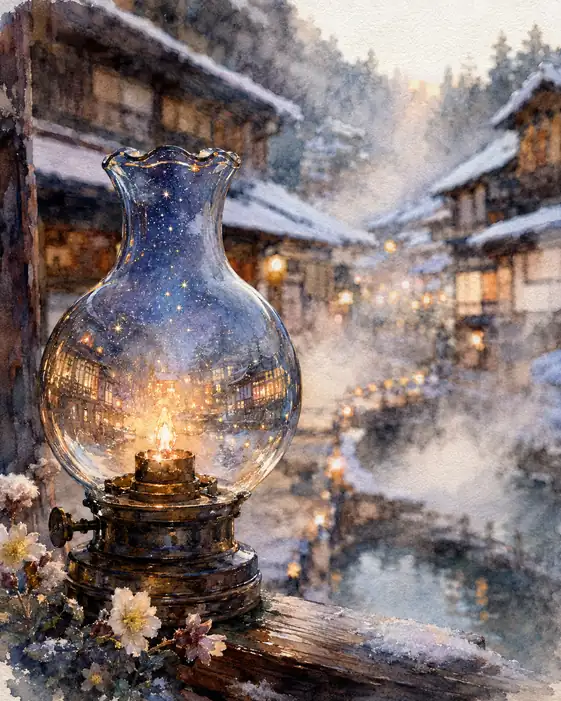 The Lamp Keeps a Snowy Village in Its Glass
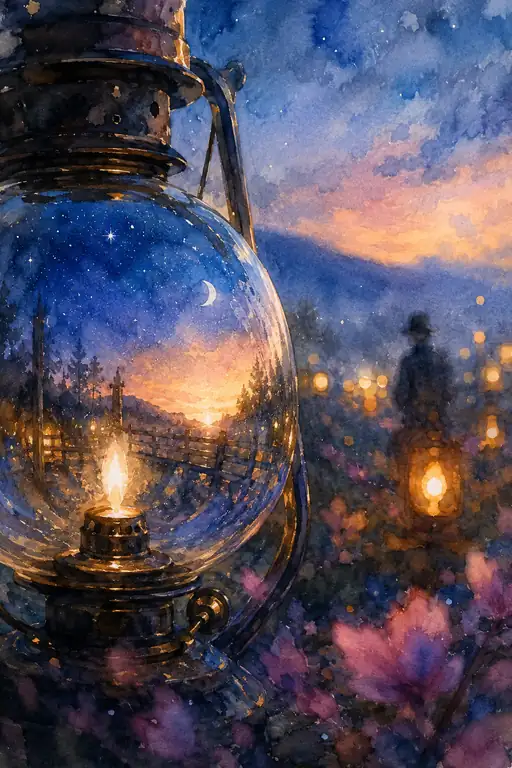 The Lantern Holds Both Crescent and Sunset
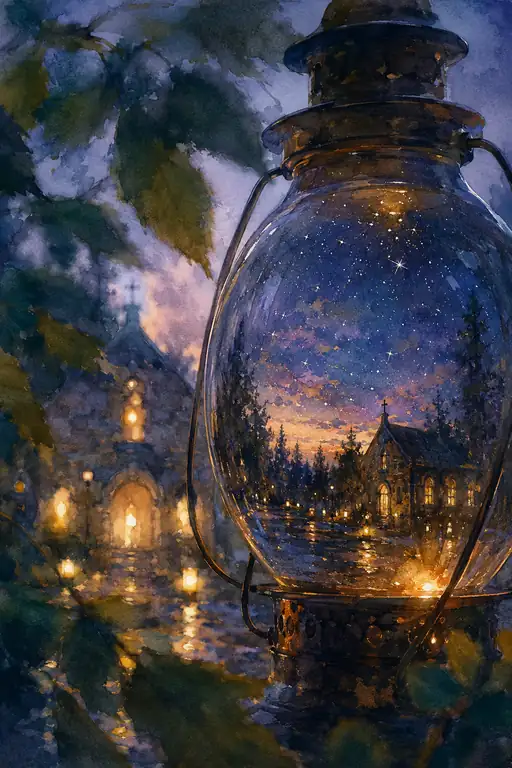 A Village Sky Kept Under Glass
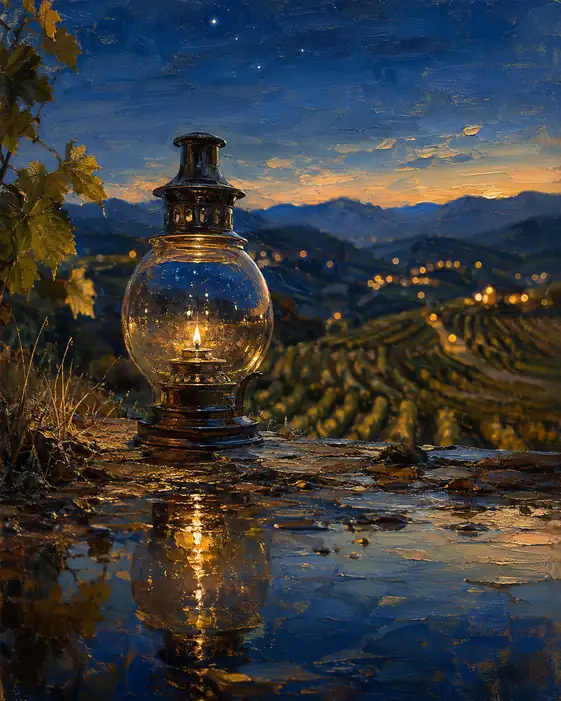 One Lamp Keeps Vigil over the Sleeping Vineyard
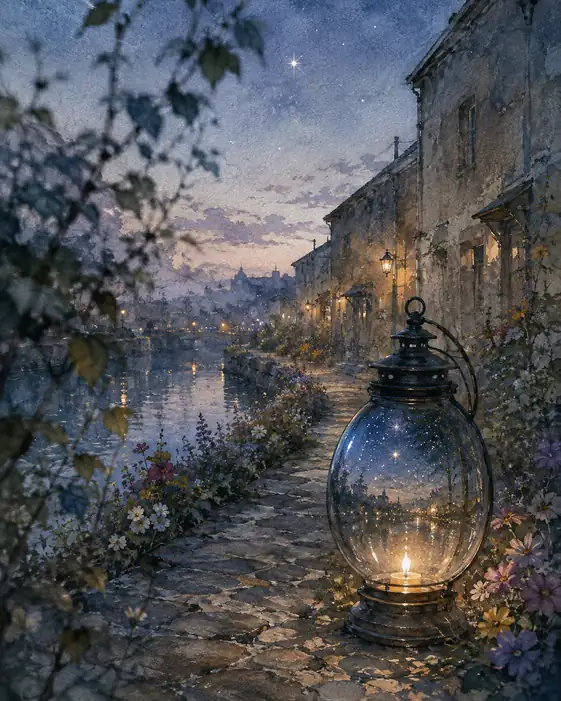 The Lantern That Gathered a Fallen Star
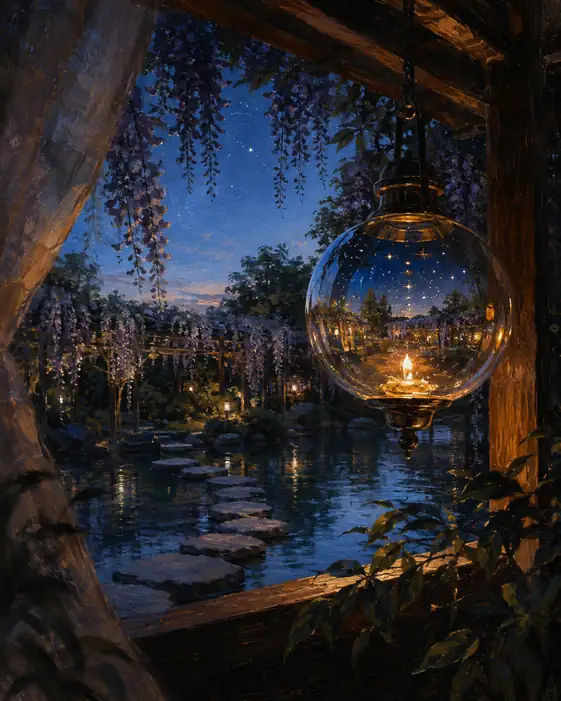 The Garden's Stars Gather inside One Lamp
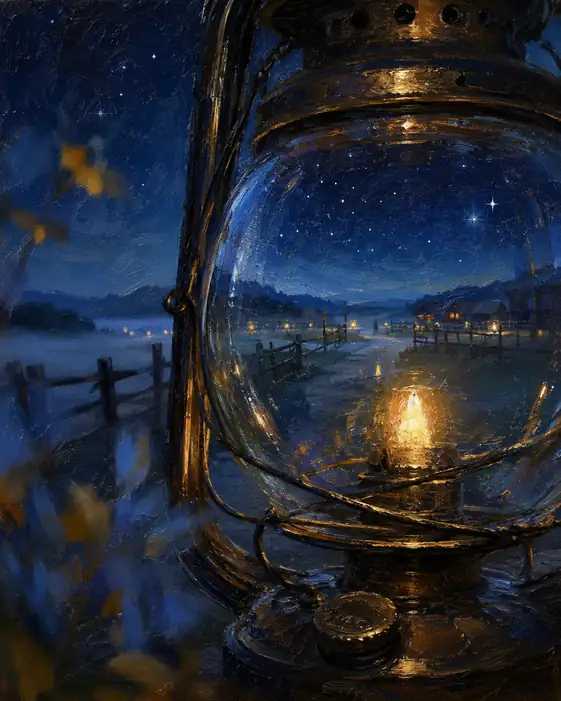 A Village of Stars Inside the Lantern Glass
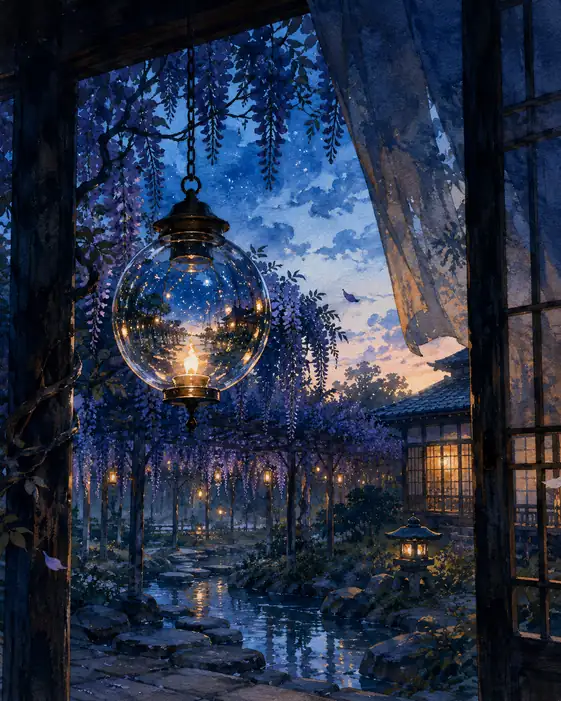 A Glass Lantern Keeps the Blue Hour's Stars