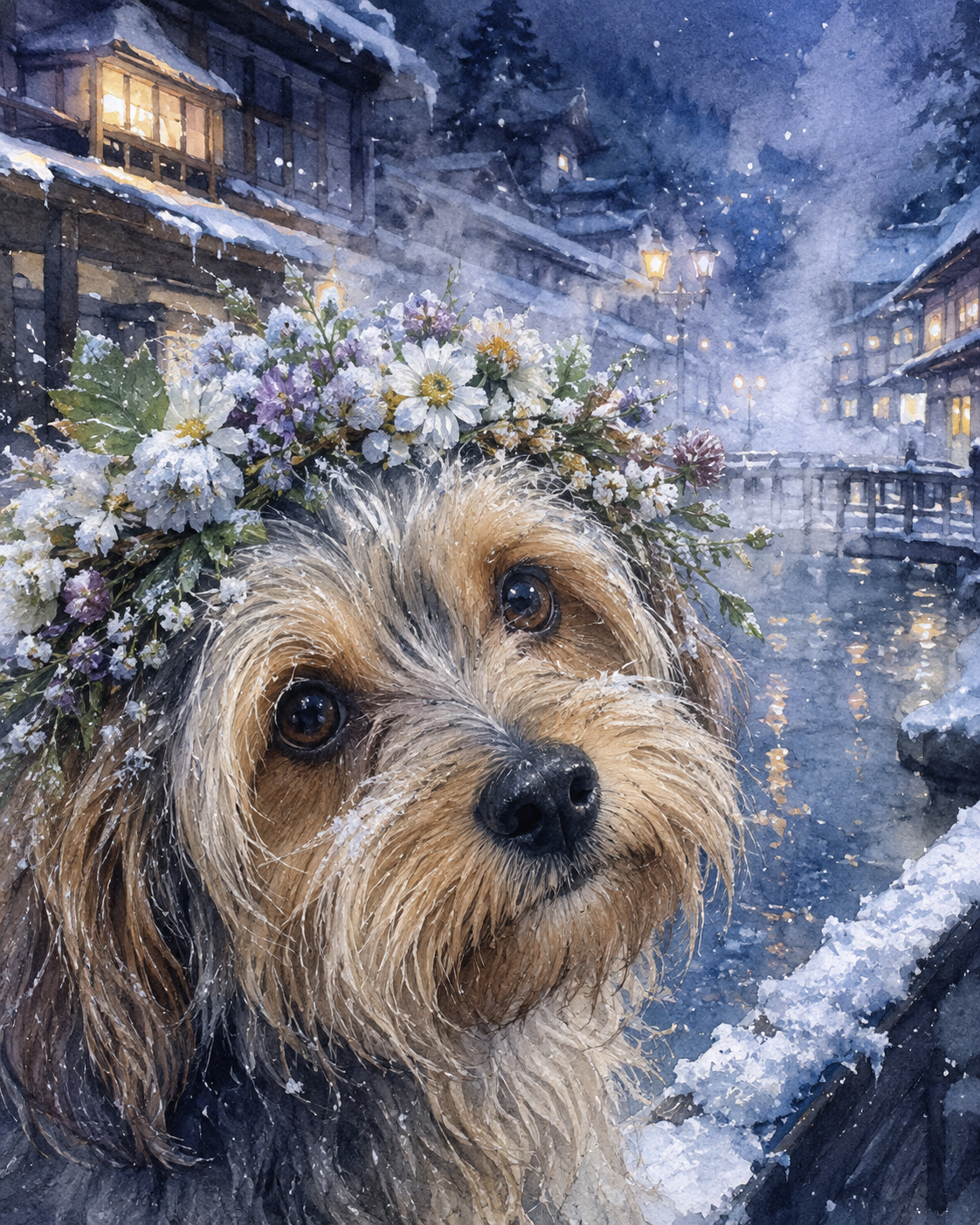
The Snow Gave Her a Crown of Wildflowers
Critique
Introduction This watercolor brings a shaggy dog crowned with snow-dusted flowers into extreme foreground against a winter canal town. Its gaze and tilted head transform the landscape into a setting for individual presence. Description The dog's tan, cream, and brown face fills most of the left and lower frame. Glossy eyes look upward, a black nose projects at center, and damp whiskers break into fine strands. White daisies and pale purple blossoms form a loose wreath, collecting snow. Behind it, timber houses, railings, lamps, and a canal recede through blue-gray snowfall; gold reflections ripple between the banks. Analysis Radical scale establishes the animal as focal point, while its tilted muzzle introduces movement. Circular eyes, nose, and flower centers create compact foreground rhythm. These crisp accents contrast with softened rectangles of distant windows and buildings. Warm ocher fur and amber lights sit within cool blue and violet surroundings. Fine lines describe hairs and wet whiskers, whereas translucent washes dissolve snow, steam, and architecture. Blurred distance reinforces depth and the dog's tactile presence. Interpretation and Evaluation The floral crown may imply play or care, but the animal's attentive expression and wintry restraint avoid comedy. Fragile blossoms connect the living subject with falling snow, making tenderness central. Close cropping is bold, color relationships controlled, and fur, moisture, and reflected light accomplished. Combining an intimate animal portrait with an atmospheric street gives the work charm without sacrificing formal coherence. Conclusion At first the dog offers instant appeal; sustained viewing reveals how carefully its gaze reorganizes the entire town around an encounter. The painting succeeds because affection is carried by composition and texture rather than by sentiment alone.
Same Subcategory
Similar Artworks
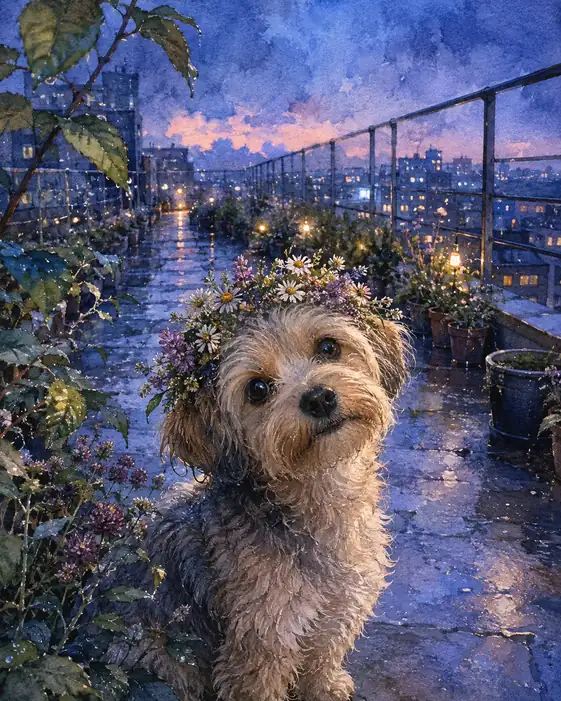 The Flower-Crowned Dog Finds the Rain's Last Star
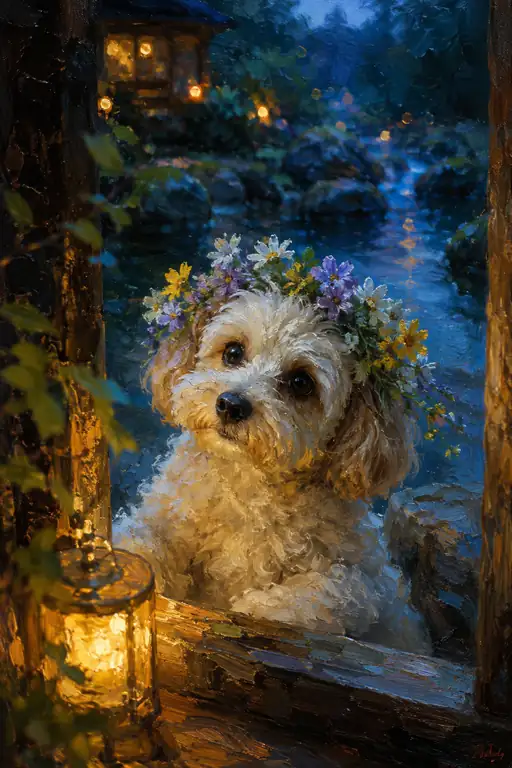 The Flower-Crowned Dog Returns with the Blue Evening
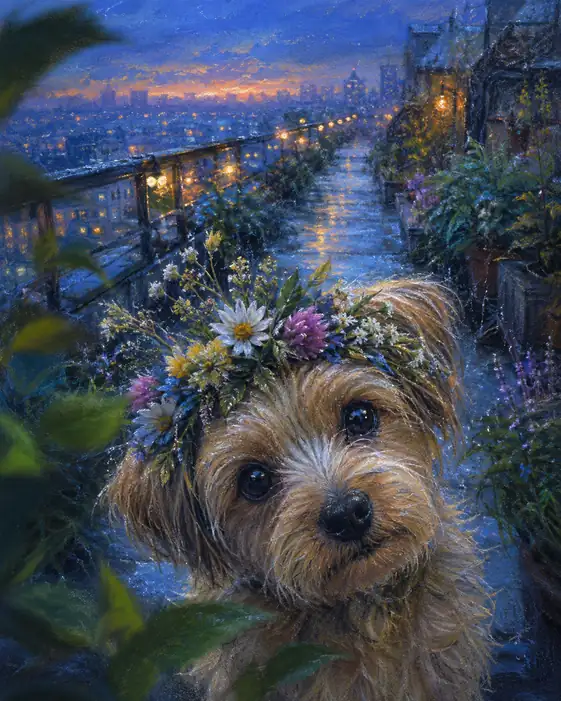 The Flower-Crowned Dog Brings Rain from the City
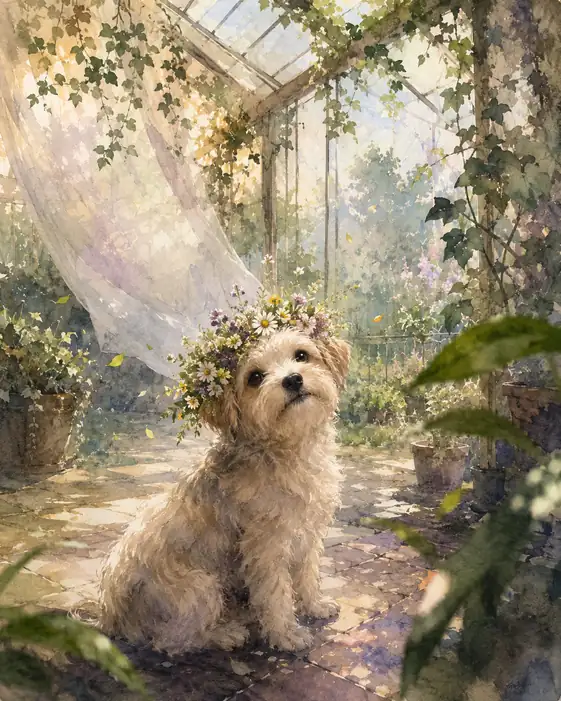 The Little Dog Who Became the Greenhouse Spring
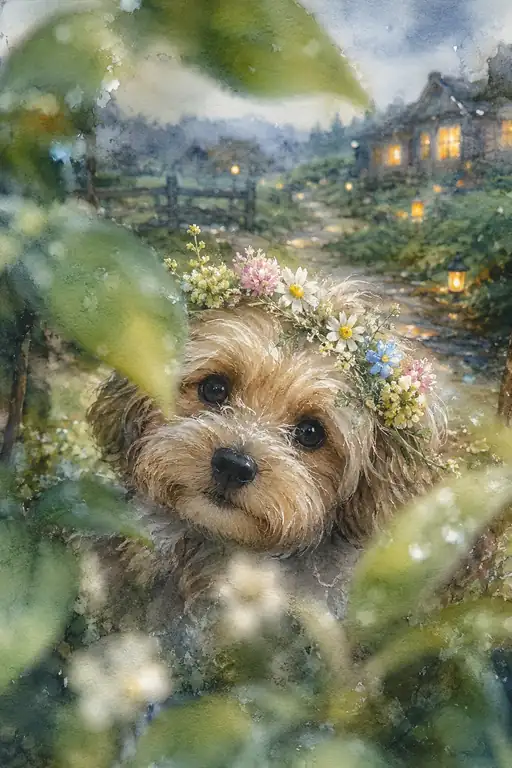 The Flower-Crowned Guardian of the Lantern Path
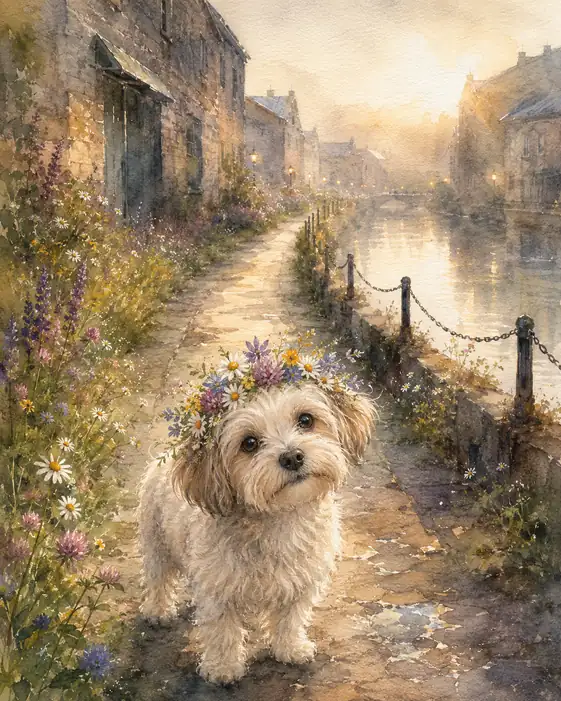 The Little Dog Crowned by Canal Flowers
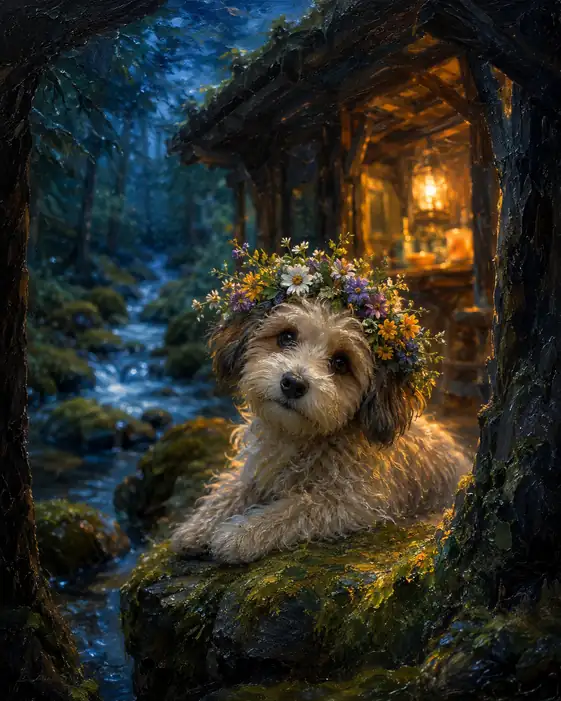 The Flower-Crowned Dog Guards the Forest Hearth
 The Seaside Gave Her a Crown of Daisies
 The Flower-Crowned Dog Greets the Setting Sun
 Her Flower Crown Catches the Morning