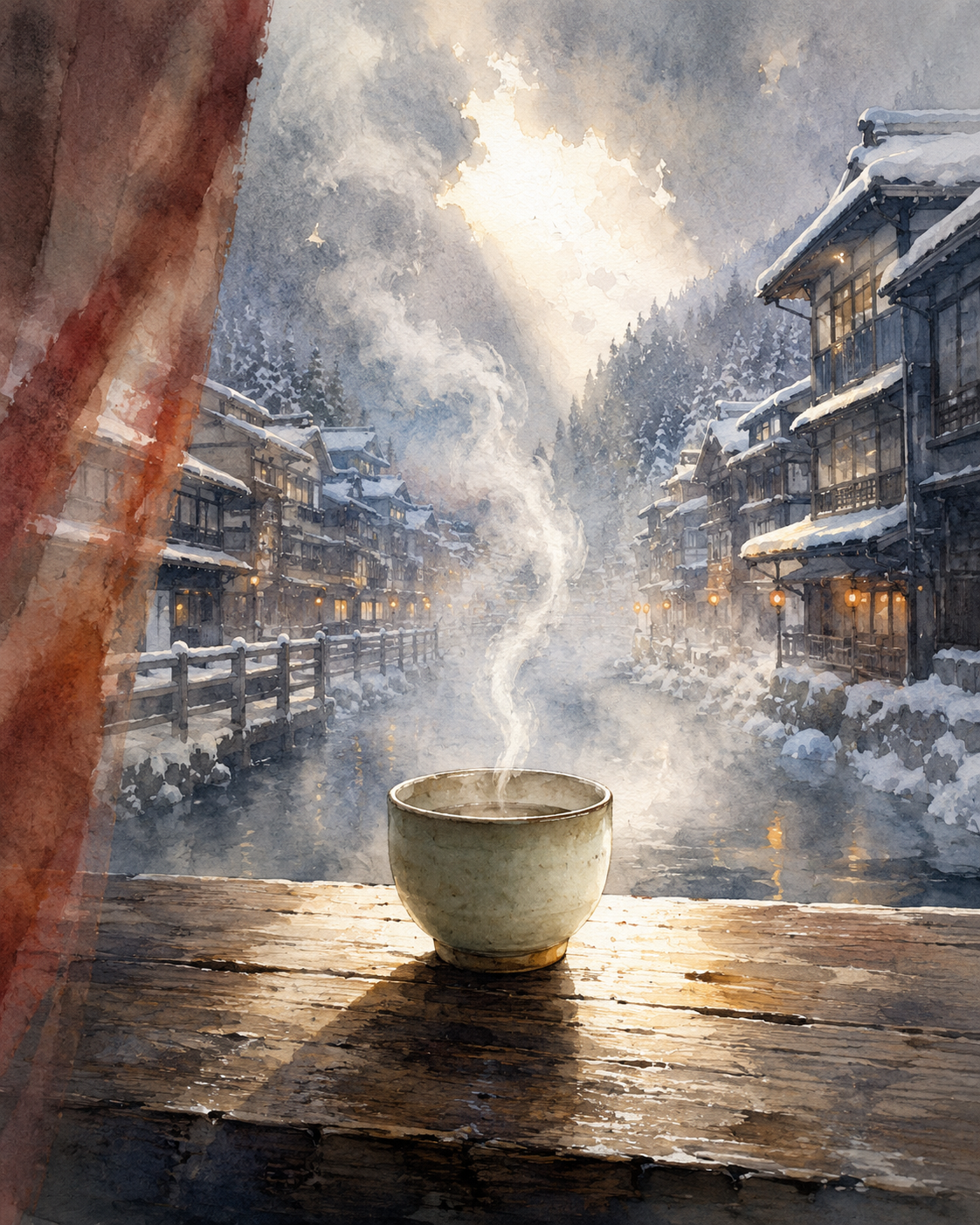
The Village Awakens in a Ribbon of Steam
Critique
Introduction This watercolor depicts a steaming cup before a snow-covered canal town. A red-brown curtain, bright opening, and centered waterway make the still life a prepared moment of observation. Description The cup occupies the lower middle of a wet ledge, its pale greenish glaze warmed along the rim. One sinuous column of steam rises toward luminous clouds. A translucent rust-colored curtain cuts down the left. Beyond it, parallel rows of dark timber houses border a wide channel; fences and orange lamps converge toward a mist-filled center. Snow gathers on roofs and banks, and faint reflections hover in water. Analysis Central symmetry organizes the town, but the curtain's irregular edge prevents rigidity. The cup sits on the canal's axis, and its steam extends upward, linking table, water, and sky. A long shadow gives it weight. Blue and gray washes dominate, while amber lights and reddish fabric form a warm counterpoint. Hard accents on rim, board cracks, and rails soften into vapor. Granulation makes cloud, snow, and forest appear materially related. Interpretation and Evaluation The aligned cup and canal suggest that private attention can bring a landscape into temporary order. Steam echoes fog beyond, yet the curtain retains separation and shelter. Recession is persuasive, the limited palette coherent, and the transition from crisp foreground to atmospheric distance assured. Broad empty water and the frontal arrangement create a solemn mood, giving the composition individual character. Conclusion The first impression is one of comfort before winter scenery; closer viewing reveals a disciplined study of alignment, scale, and permeability. The simple cup becomes a point from which the whole cold landscape can be contemplated.
Same Subcategory
Similar Artworks
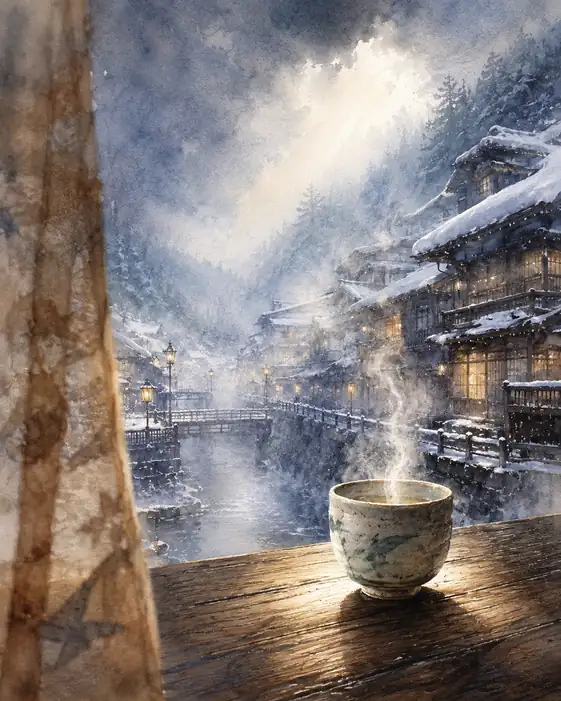 Morning Pours into a Quiet Cup
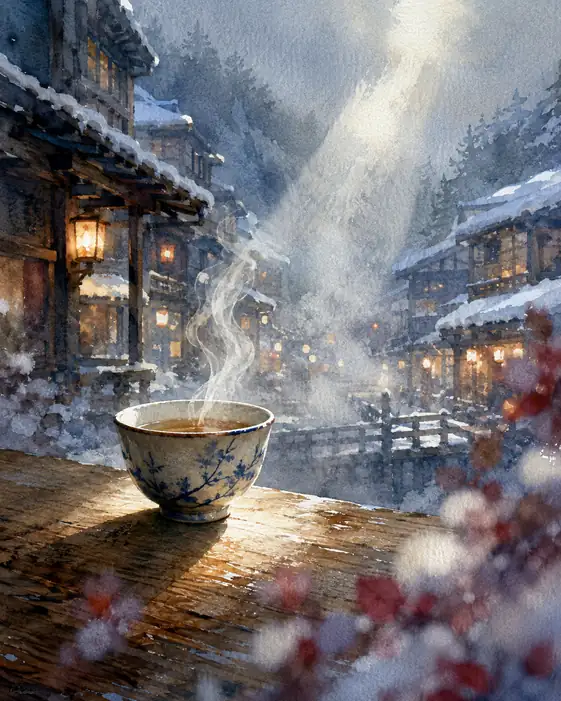 A Cup of Warmth Beneath Heaven's Winter Window
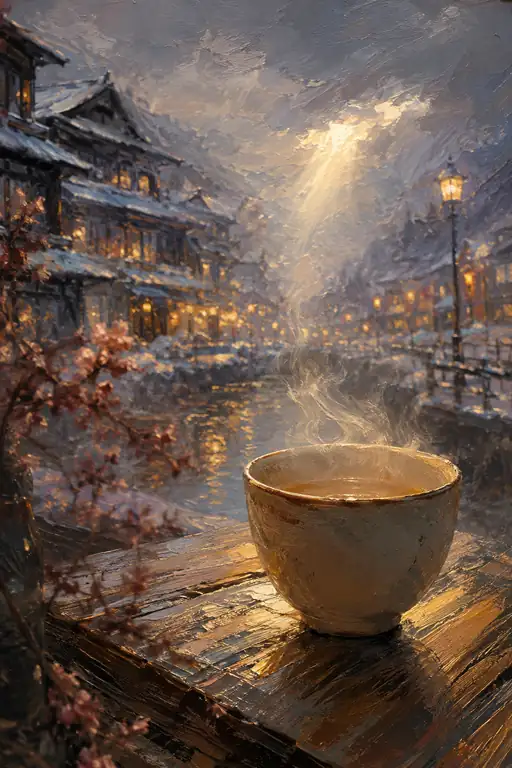 Tea Steams Where the Sun Opens the Snow
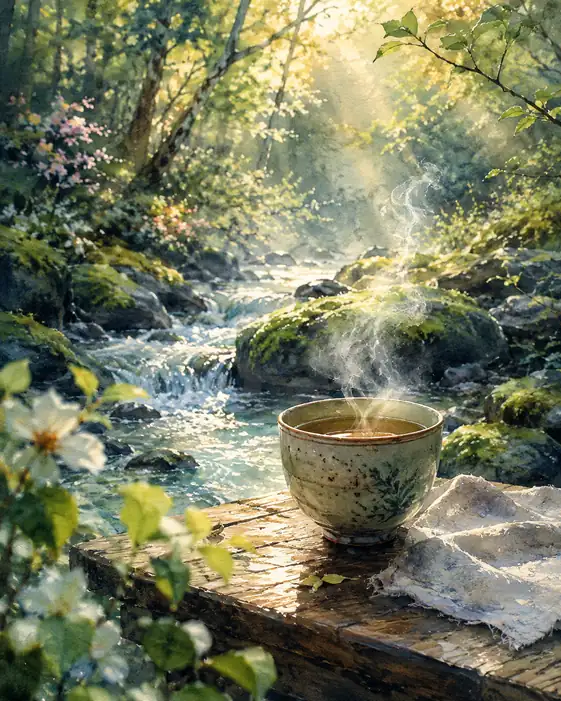 Morning Tea Hears the Stream Laughing
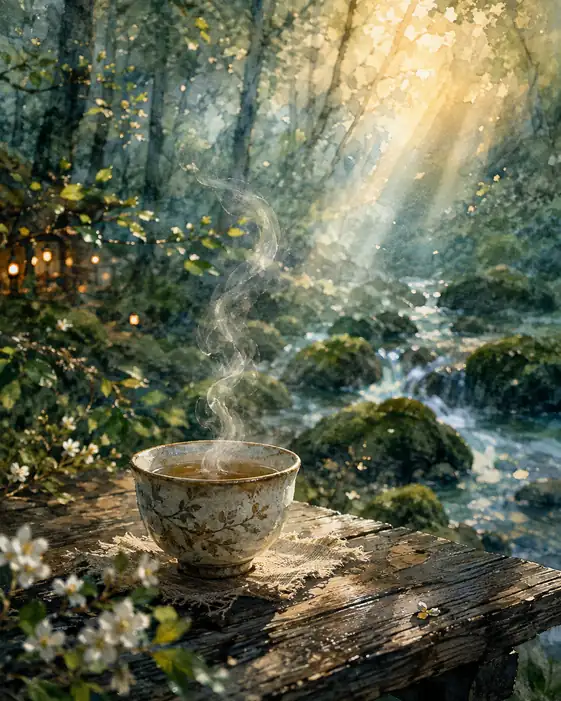 Tea Rises into the Forest's Sunbeams
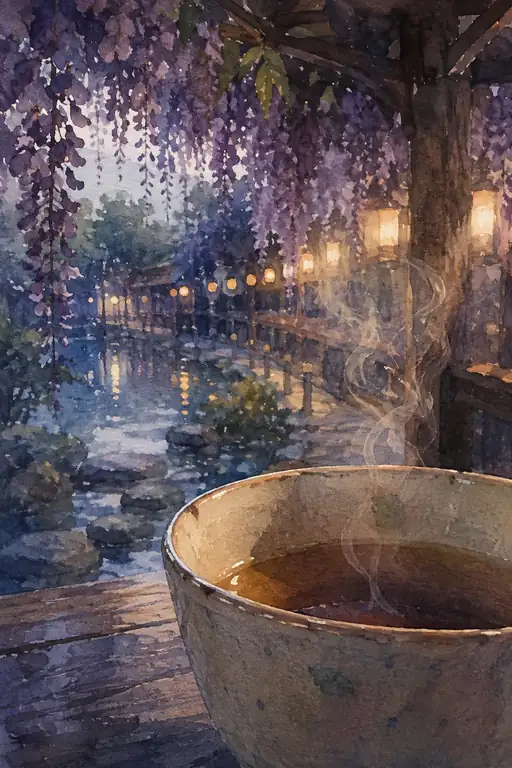 Tea and Lanterns Share the Violet Dusk
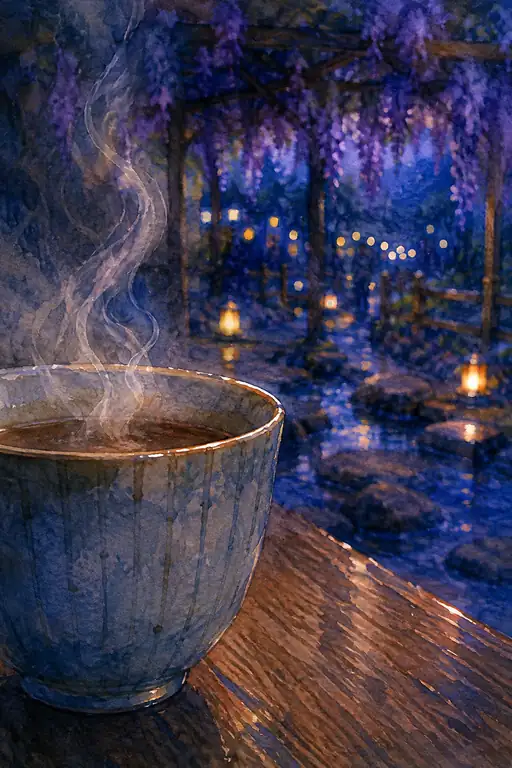 Night Steams Gently Beneath the Violet Canopy
 Tea Sends a Whisper Down the Wisteria Walk
 Tea Watches the Vineyard Lights Come Home
 Tea Steams Where the Greenhouse Lights Wander