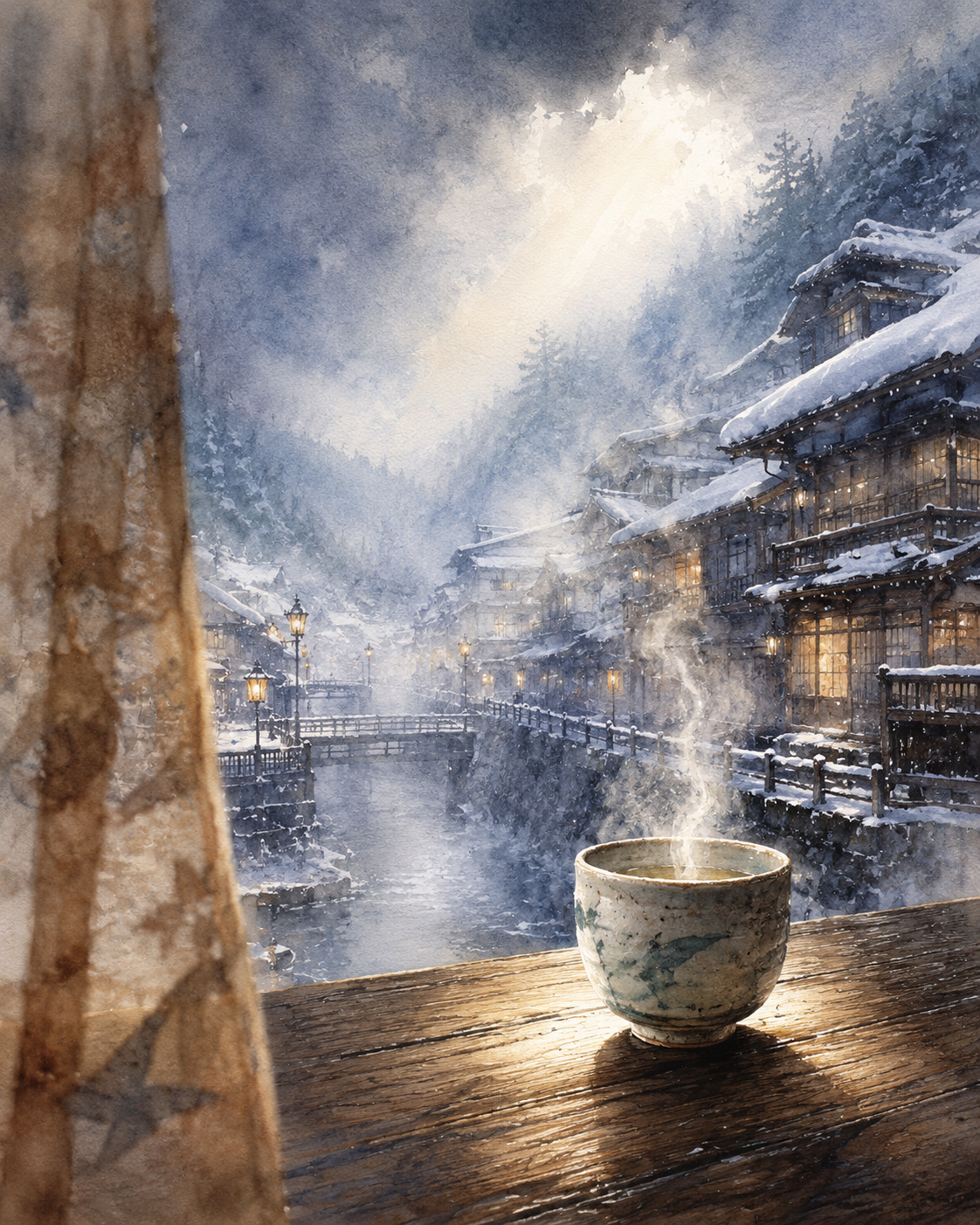
Morning Pours into a Quiet Cup
Critique
Introduction This watercolor places a steaming cup on a sill overlooking a snowbound canal town. A translucent curtain turns the scene into a sheltered view, while descending light gives the morning grandeur. Description The mottled cup sits low and right of center, its pale glaze marked by blue-green strokes. Steam rises in a narrow plume. A brown gauze curtain occupies the left margin, partly obscuring nearby lamps and houses. Beyond the sill, a canal runs toward bridges between snow-laden timber buildings. Fir-covered slopes close the distance, and an opening in the clouds sends angled light across roofs, vapor, and water. Analysis Curtain and sill form an interior frame around the view. The cup's oval and shadow counter the canal's recession, while steam connects foreground with sky. Repeated railings, bridges, and lamps create measured depth. Warm browns and amber windows remain subordinate to blue-gray snow, except where sunlight turns wet wood gold. Controlled marks define ceramic and grain; broad washes and softened edges convey mist and snowfall. Interpretation and Evaluation The work presents contemplation as an interval between enclosure and exposure. The curtain offers protection without sealing off winter, and the cup's vapor joins the haze beyond. The composition is layered, the color harmony restrained, and translucency successful. Cloth, glaze, wood, snow, and water remain distinct. The oblique curtain gives the warm-drink motif a convincing sense of inhabited space. Conclusion At first the cup appears to be the subject, but the painting gradually reveals a broader exchange between private warmth and public landscape. Light, steam, and fabric make that threshold both physically believable and emotionally resonant.
Same Subcategory
Similar Artworks
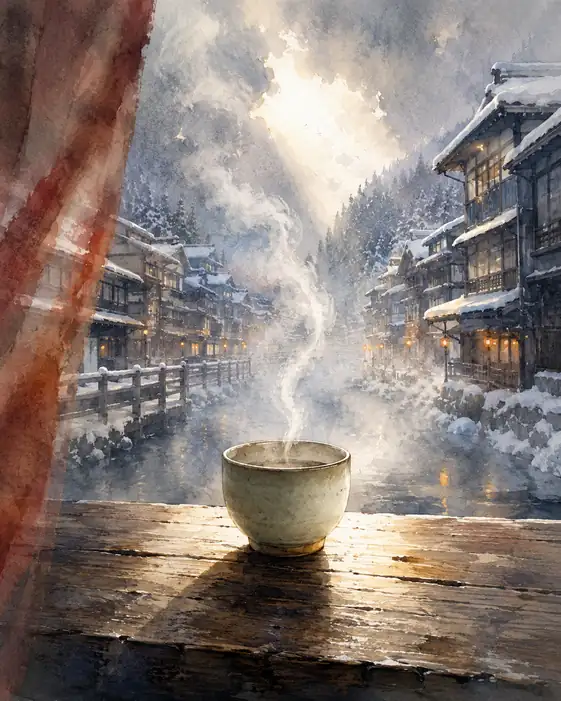 The Village Awakens in a Ribbon of Steam
 A Cup of Warmth Beneath Heaven's Winter Window
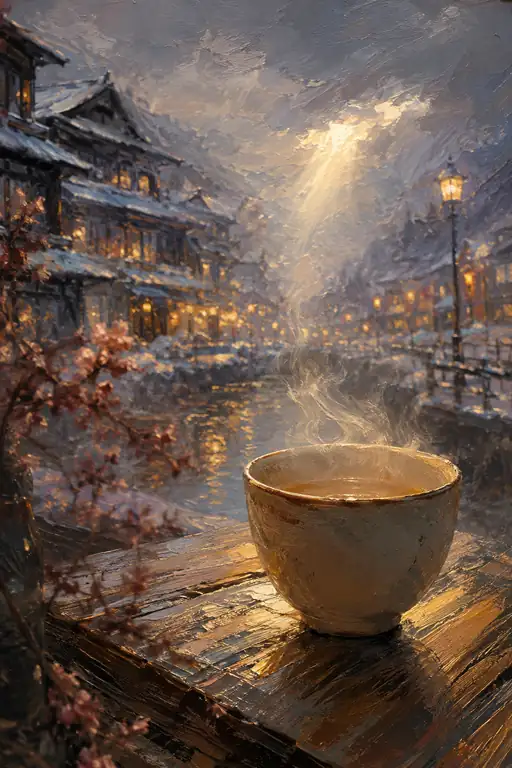 Tea Steams Where the Sun Opens the Snow
 Morning Tea Hears the Stream Laughing
 Tea Rises into the Forest's Sunbeams
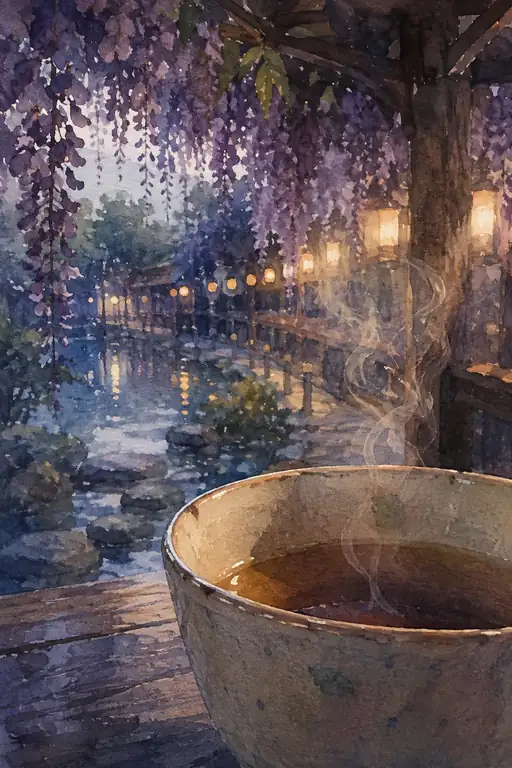 Tea and Lanterns Share the Violet Dusk
 Night Steams Gently Beneath the Violet Canopy
 Tea Sends a Whisper Down the Wisteria Walk
 Tea Watches the Vineyard Lights Come Home
 Tea Steams Where the Greenhouse Lights Wander