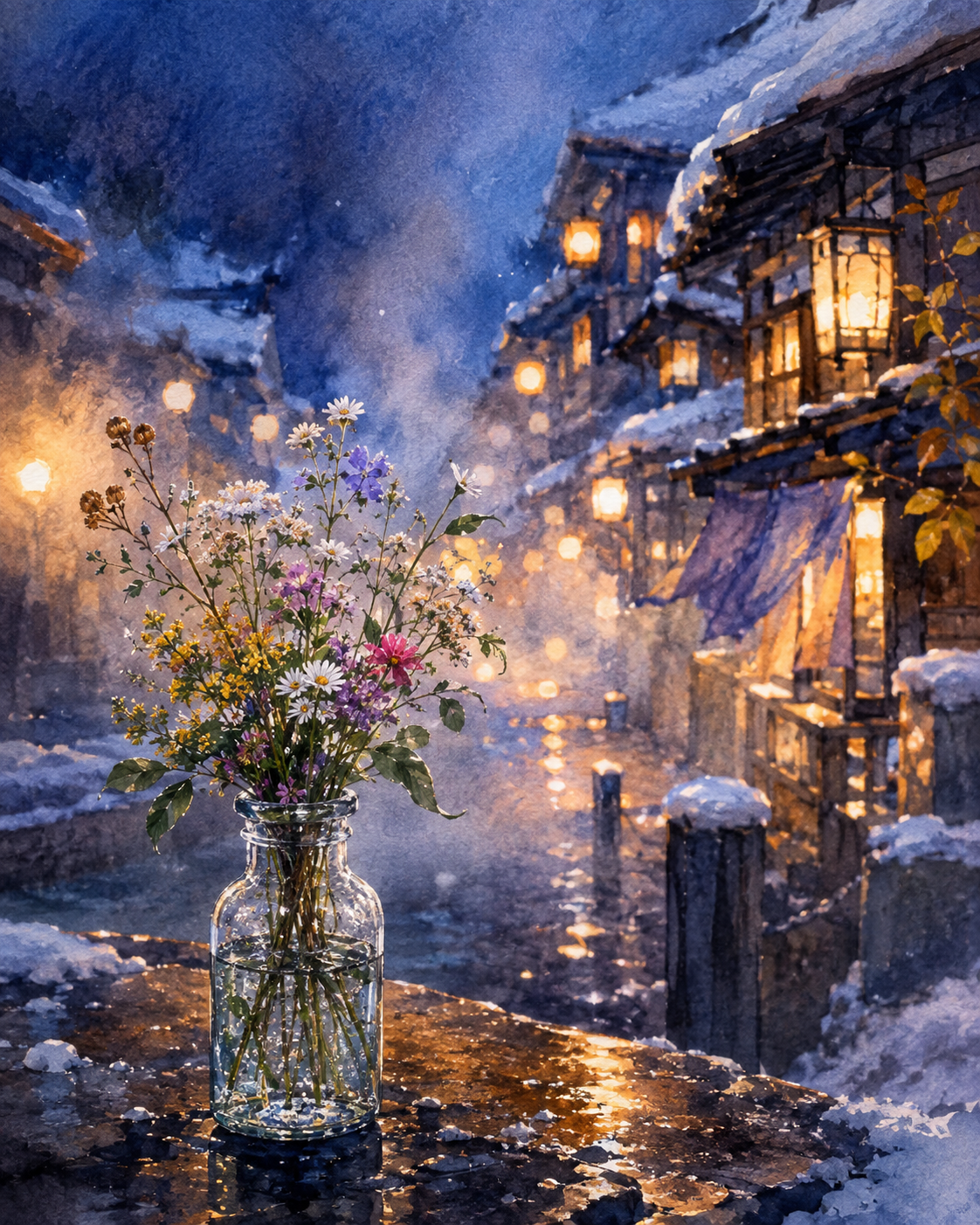
Wildflowers Gather the Lanterns of a Snowy Evening
Critique
Introduction This painting places a glass jar of wildflowers at the threshold of a snow-covered village after dark. The fragile bouquet and deep, inhabited street turn a modest still life into a meditation on shelter. Description The clear, square-shouldered bottle stands left of center on a wet stone ledge. Thin stems, daisies, purple blossoms, yellow sprays, and one small red flower rise in an airy, irregular silhouette. Behind them, a narrow lane descends between timber houses laden with snow. Numerous amber lanterns and windows recede into blue mist, their reflections broken across the damp path. Analysis The bottle anchors the foreground through sharp contours, dark reflected base, and visible stems beneath the waterline. Its vertical form is balanced by the street's diagonal retreat and the asymmetrical spread of flowers. Warm lights repeat the bouquet's yellow centers, linking near and far, while cobalt and violet shadows intensify their glow. Crisp glass highlights give way to granular textures in the distance. Snow and vapor soften architecture without erasing the sequence of roofs, posts, and lights. Interpretation and Evaluation The bouquet appears deliberately placed as a small act of care before an immense winter night. Its mixed, unceremonious flowers suggest persistence rather than luxury, and the transparent jar exposes the ordinary means of their survival. The composition is carefully staged, the color harmony controlled, and glass, wet stone, and snow persuasive. Perspective, decreasing contrast, and the fusion of still life with nocturne supply depth and originality. Conclusion An initial impression of picturesque warmth develops into an understanding of hospitality as something handmade and temporary. The restrained focal structure allows the humble jar to hold its own against the luminous village beyond.
Same Subcategory
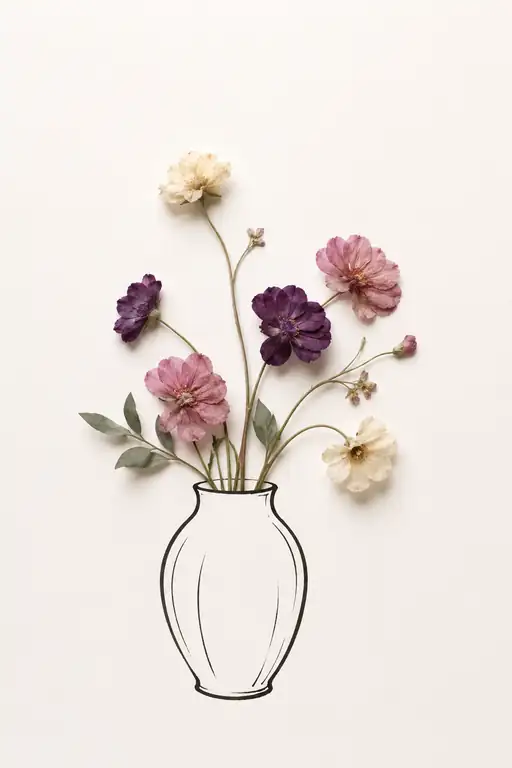 Gentle Blossoms in a Minimal Vase
Similar Artworks
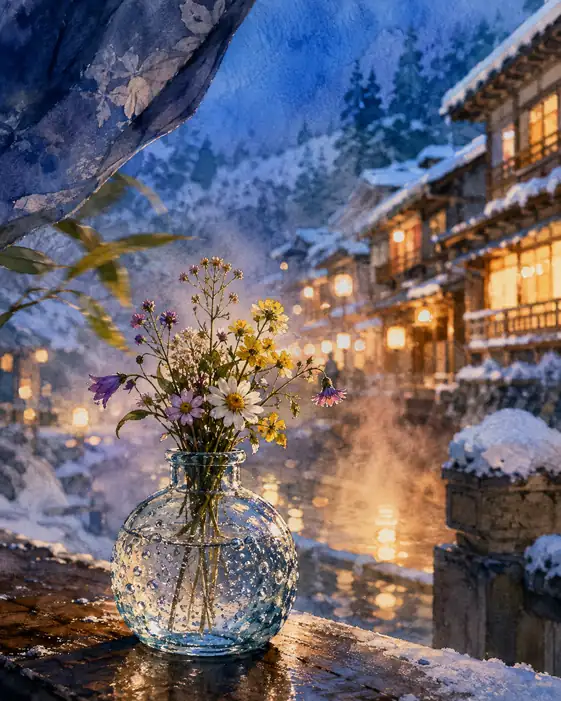 Wildflowers Watch the Hot-Spring Evening Steam
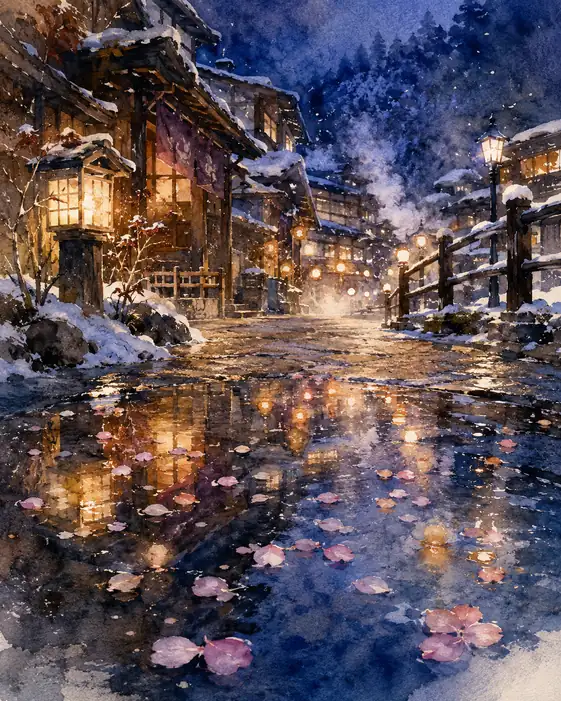 Fallen Petals Borrow the Lanterns' Glow
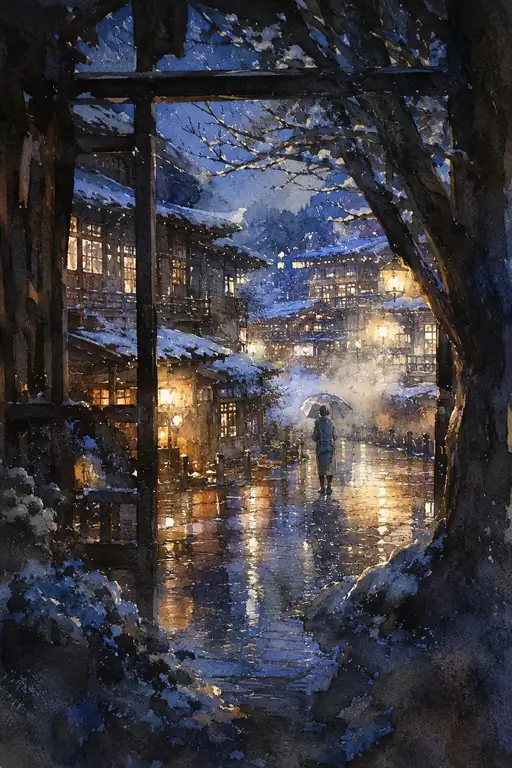 Through the Snowy Gate, She Follows Warmth
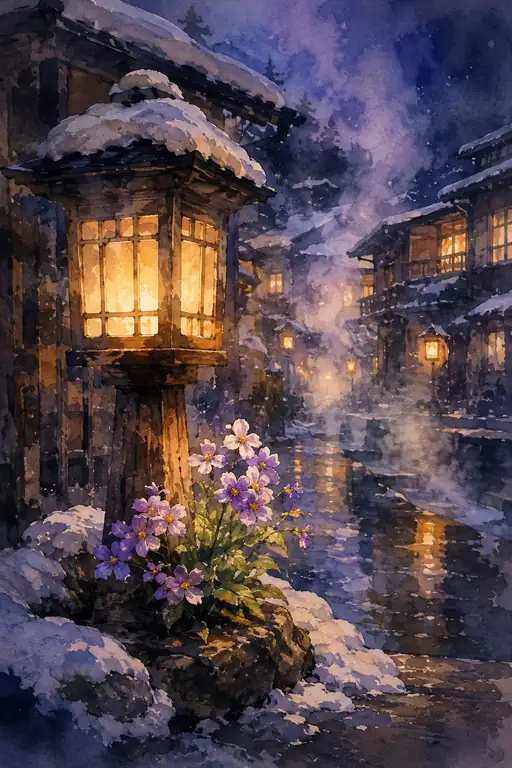 Purple Flowers Beneath the Snow-Crowned Lantern
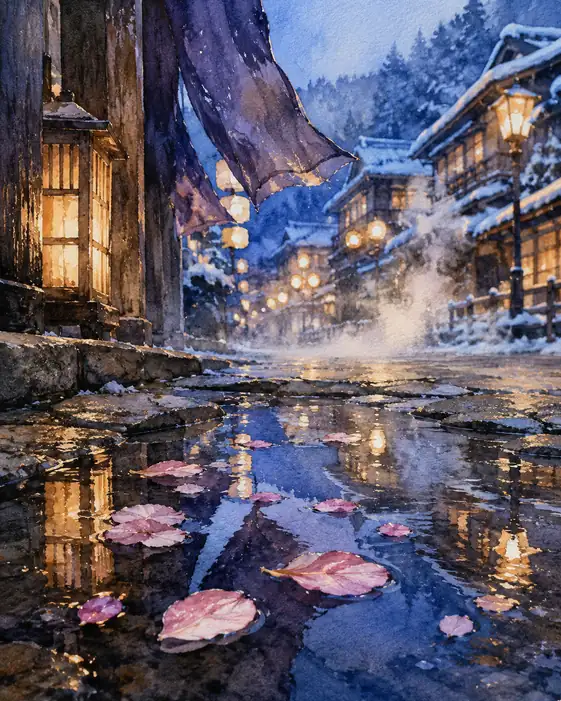 Petals Sail Through the Thawing Lantern Street
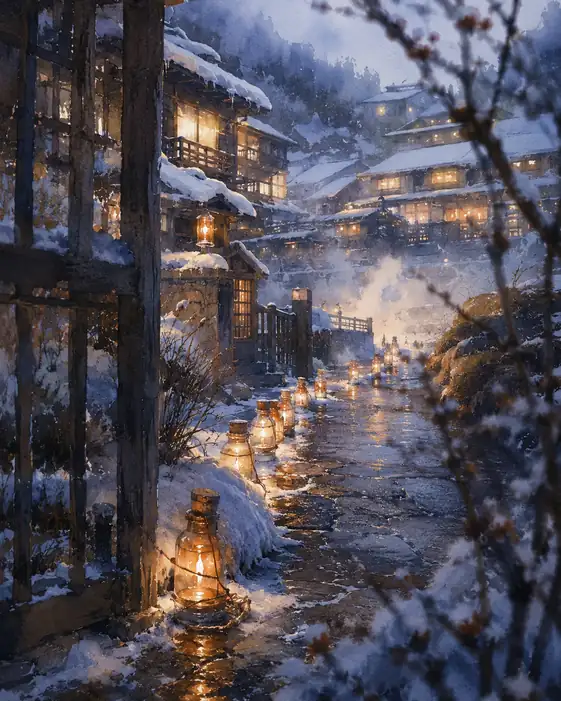 Little Bottles Light the Path to the Springs
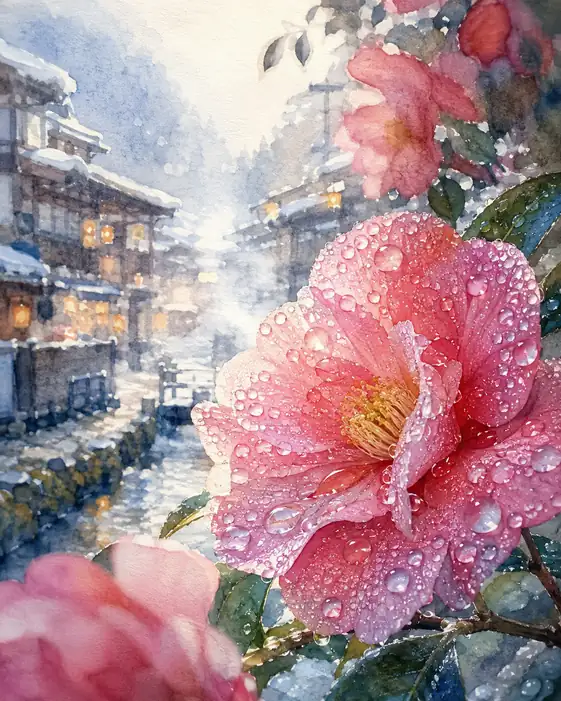 A Camellia Holds the Snow Village in Every Drop
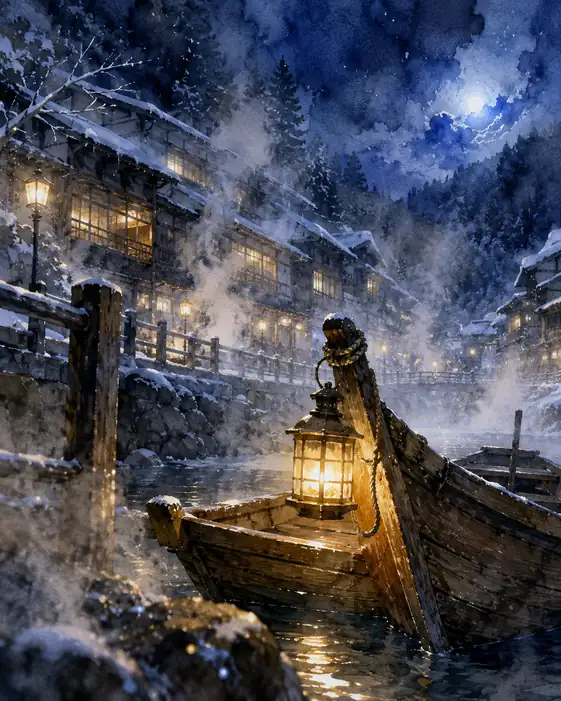 The Lantern Boat Drifts Beneath the Winter Moon
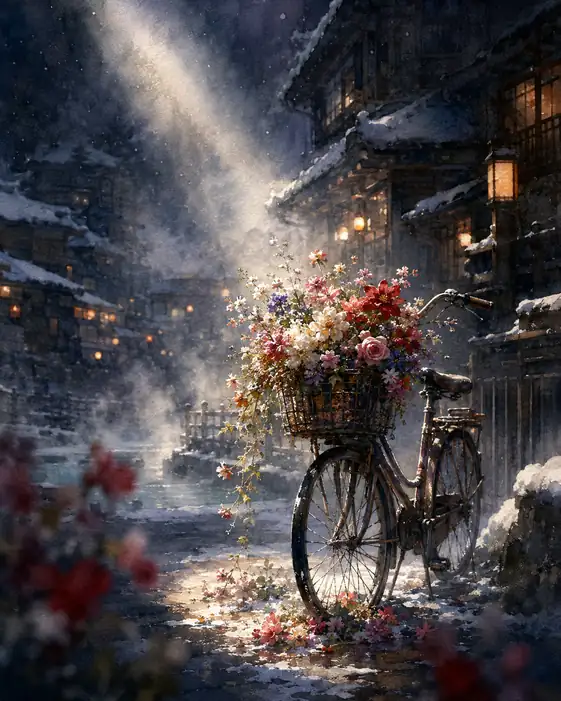 The Bicycle Bloomed Under a Winter Sunbeam
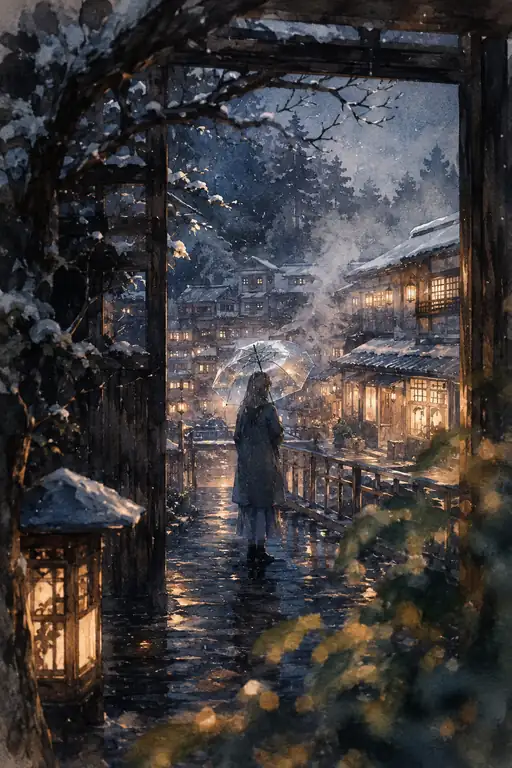 She Pauses Where Snow and Lamplight Meet