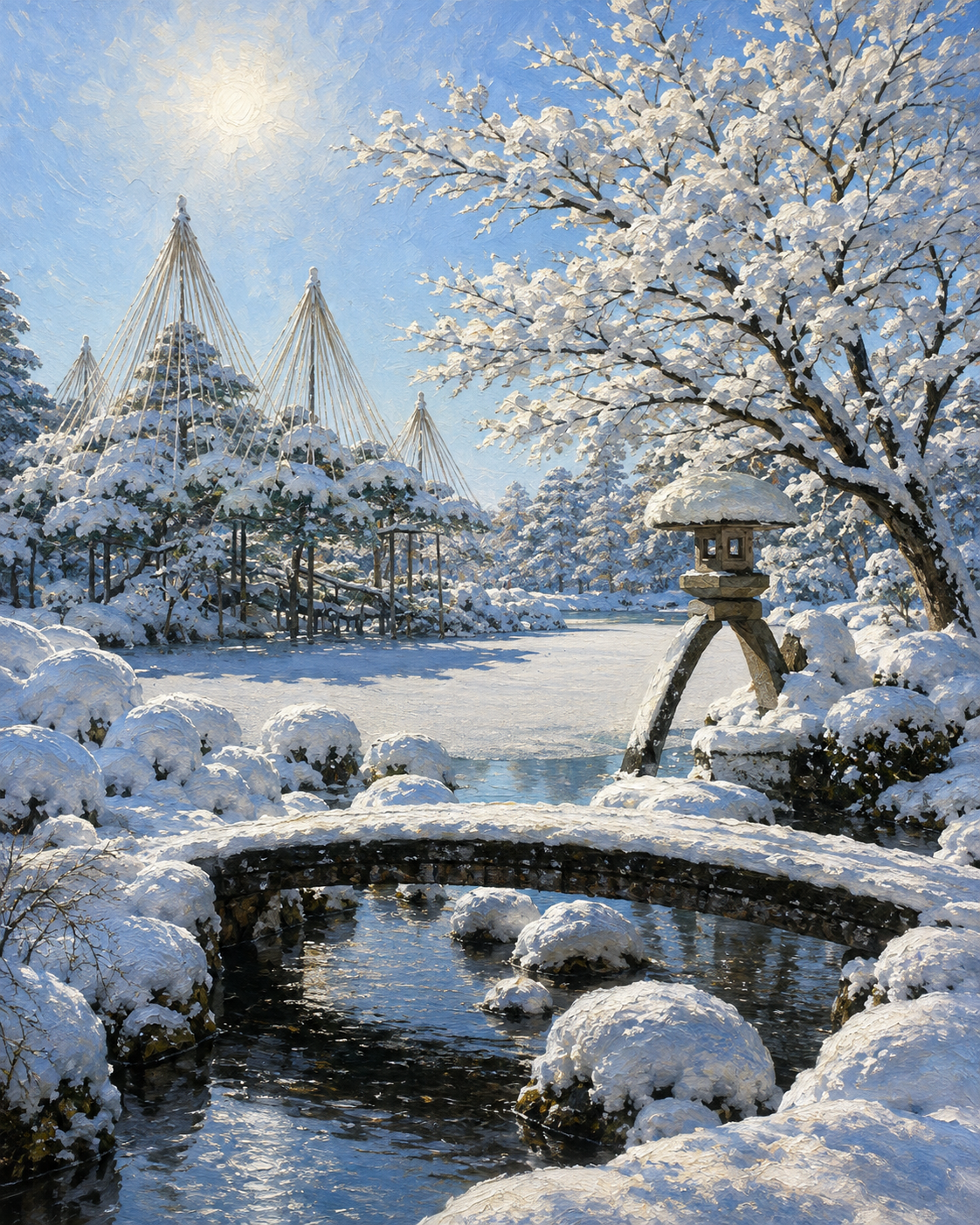
Winter Opens a Mirror Beneath the Bridge
Critique
Introduction This winter garden is organized around a snow-laden tree, rope supports, a stone lantern, and a stream. It presents snow through crisp daylight and an open field of pale blue. The image treats cultivated nature as orderly and resilient. Description An arched stone bridge crosses dark water in the foreground, surrounded by rounded shrubs capped with snow. At middle left, several conifers stand beneath tall conical ropes, their repeated peaks rising toward the sky. A stone lantern occupies the right middle ground, beside a broad deciduous tree whose dark limbs carry thick white clusters. The path and garden recede toward a bright central opening. Analysis The bridge establishes a low curve, countered by the lantern’s angled legs and vertical rope structures. Their geometry is softened by irregular branches, mounded shrubs, and rippling water. White is not uniform: blue shadow, cream sunlight, and gray reflected light model its volume. Short strokes describe packed snow, while dark passages in the stream provide depth and rest. Interpretation and Evaluation The garden suggests care continuing through dormancy. Rope supports make human preparation visible, yet they echo tree forms rather than dominating them. Strong composition directs attention from water to path and sky, and the restrained palette captures winter brightness without losing detail. The technique convincingly distinguishes stone, snow, bark, and water, while the dialogue between practical structures and organic growth gives the familiar subject particular interest. Conclusion At first the scene appears almost uniformly white, but closer attention reveals a carefully graduated network of blue shadows, dark branches, and warm highlights. Its descriptive precision and balanced spatial rhythm turn a quiet garden into an image of protection, adaptation, and ordered seasonal change.
Same Subcategory
 Winter Shore Awakening with Budding Boughs
Similar Artworks
 Sunlight Rests on the Bridge of Snow
 The Pond Keeps Winter's Blue Silence
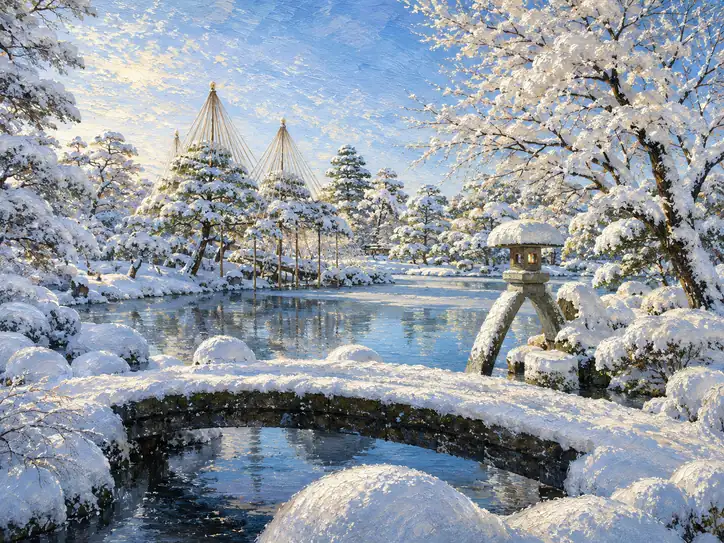 Morning Crosses the Snowbound Garden Bridge
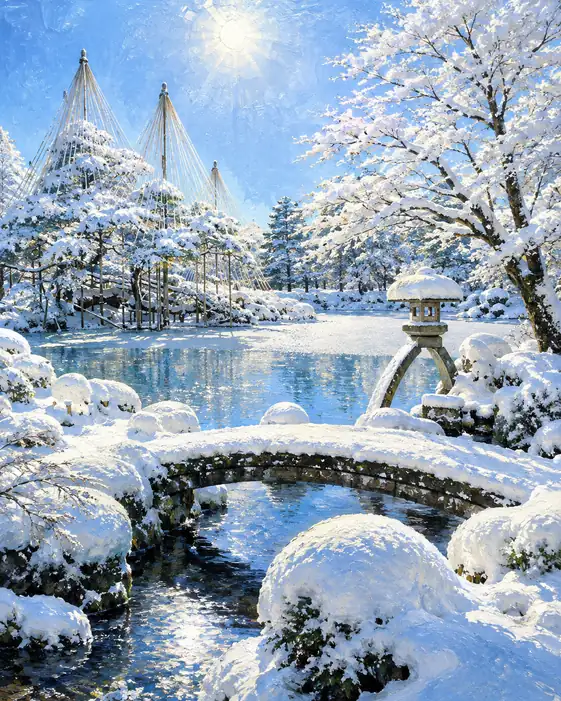 In the Snow’s Radiance, the Lantern Listens to the Koto of Water
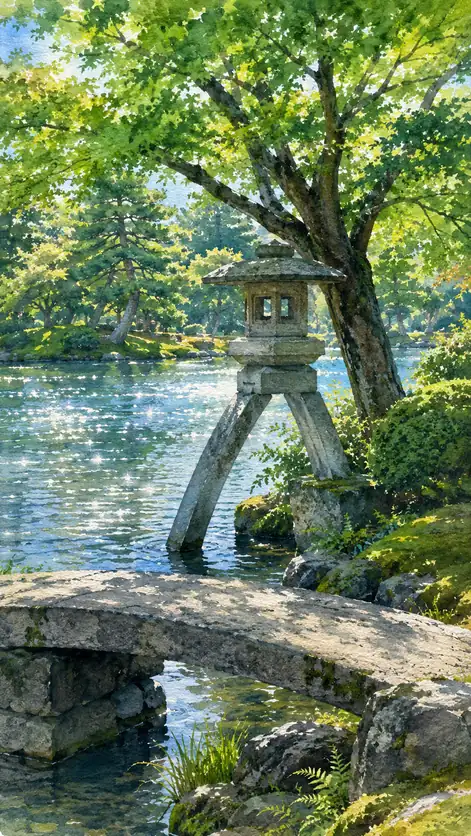 Starlight Born Before Evening
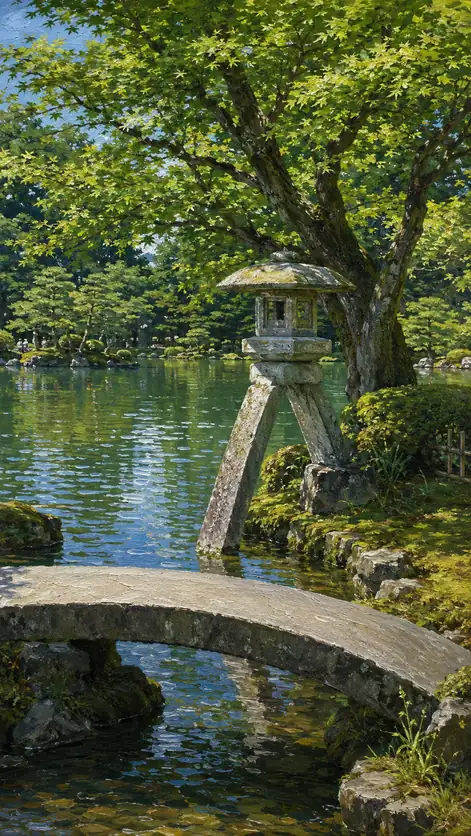 Noon Rings Across the Quiet Pond
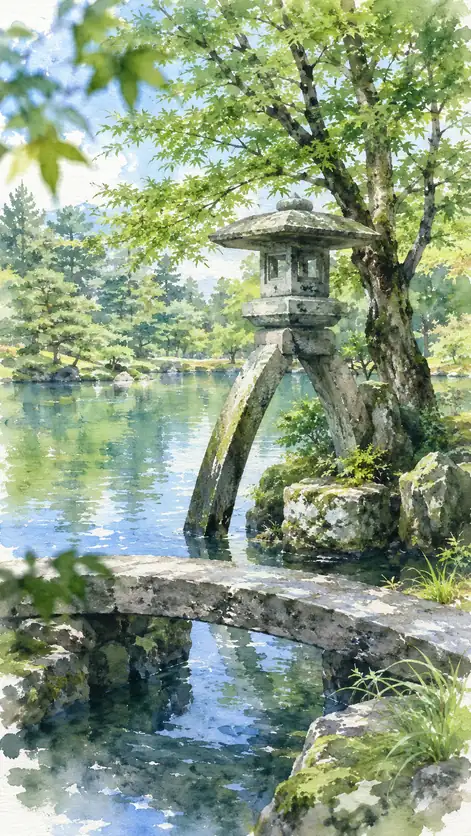 A Summer Whisper Through Three Stones
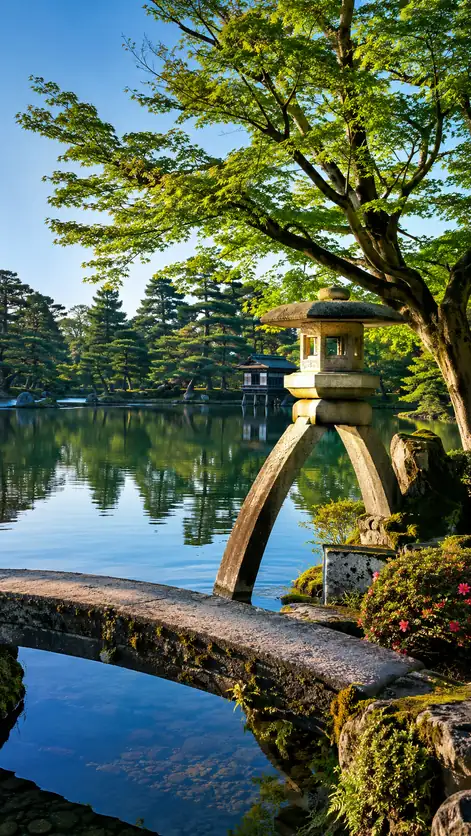 The Garden Keeps a Window of Blue
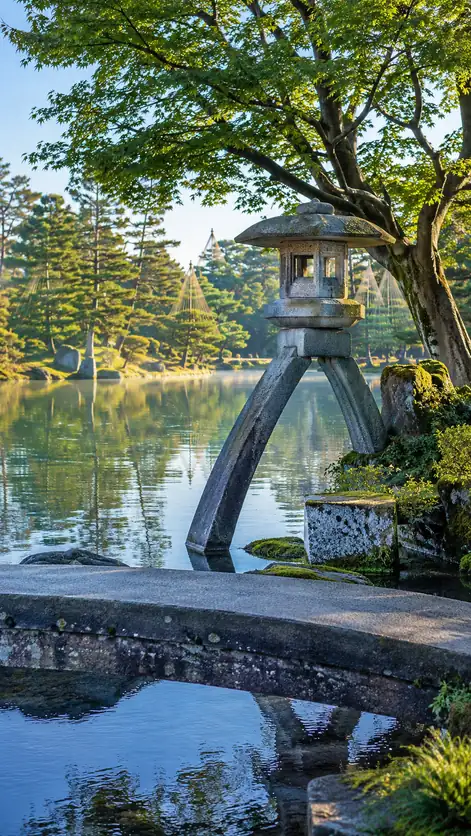 Morning Opens the Stone Lantern
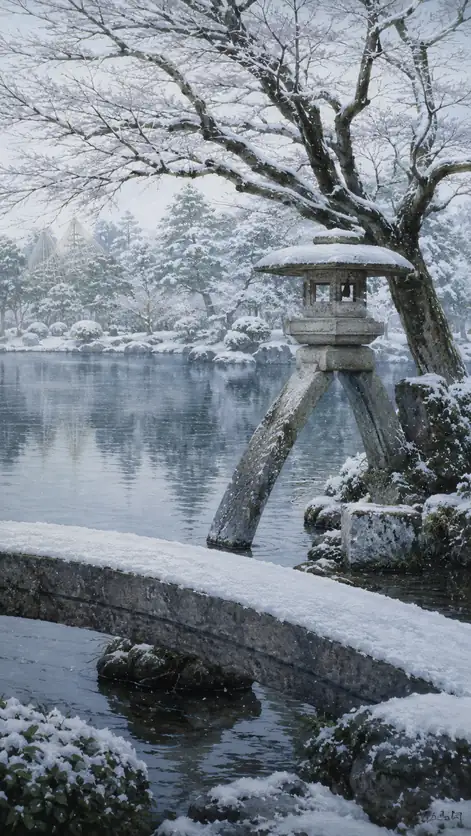 When Snow Learns the Shape of Stillness