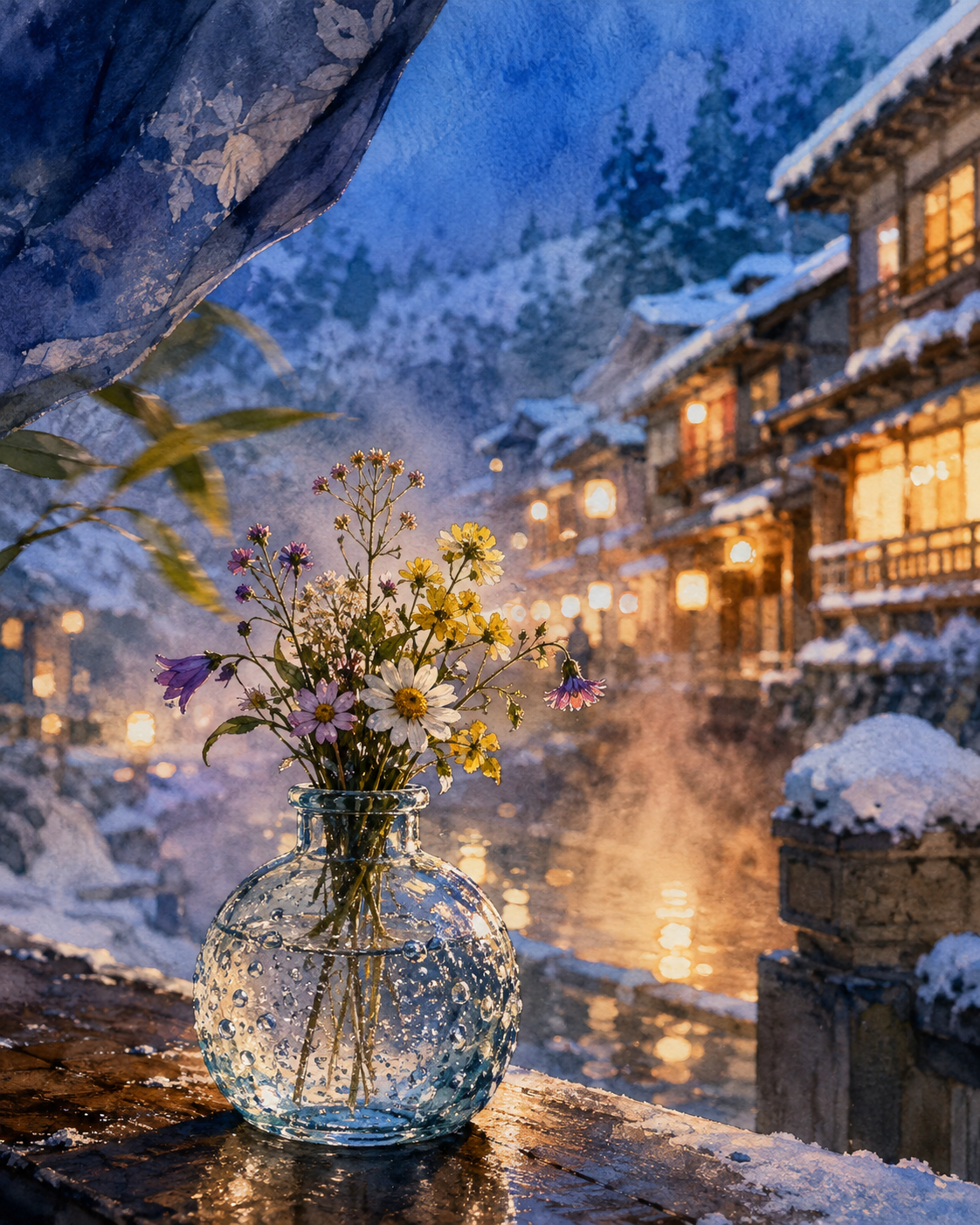
Wildflowers Watch the Hot-Spring Evening Steam
Critique
Introduction This vertical winter scene presents a glass vase of mixed flowers on a wet wooden ledge above a snowbound waterside village. The still life occupies the lower center, while warmly lit buildings recede along the right bank. Its unusual union of fresh blossoms and deep winter establishes the work’s central tension. Description White daisies, yellow flowers, and small purple bells rise on branching stems from a round, transparent vessel. Droplets and bubbles articulate the glass, and the submerged stems remain clearly visible. Behind them, steam drifts over a narrow waterway; snow-covered roofs and amber windows soften into the blue distance, while a dark patterned overhang closes the upper left corner. Analysis The vase forms the sharpest and most tactile passage, set against a progressively blurred settlement. Curving stems and scattered petals interrupt the architecture’s descending diagonals. Cool ultramarine snow surrounds concentrated notes of gold, and reflections connect the flowers to the lamps. Backlighting catches moisture on the glass and edges of petals, giving fragile materials convincing weight and luminosity. Interpretation and Evaluation The improbable flowers do not simply decorate the view; they introduce persistence and tenderness into a season of suspension. The composition is carefully staged, yet the wet ledge, irregular bouquet, and drifting vapor prevent rigidity. Strong descriptive skill appears in the contrasting surfaces of glass, timber, snow, and water, while the warm-cool color design gives the familiar village motif a distinctive emotional clarity. Conclusion At first the image reads as a picturesque winter retreat, but sustained looking shifts attention toward the small, vulnerable still life. By balancing intimate detail with atmospheric depth, the work turns a bouquet into a measured statement about warmth carried through cold surroundings.
Same Subcategory
Similar Artworks
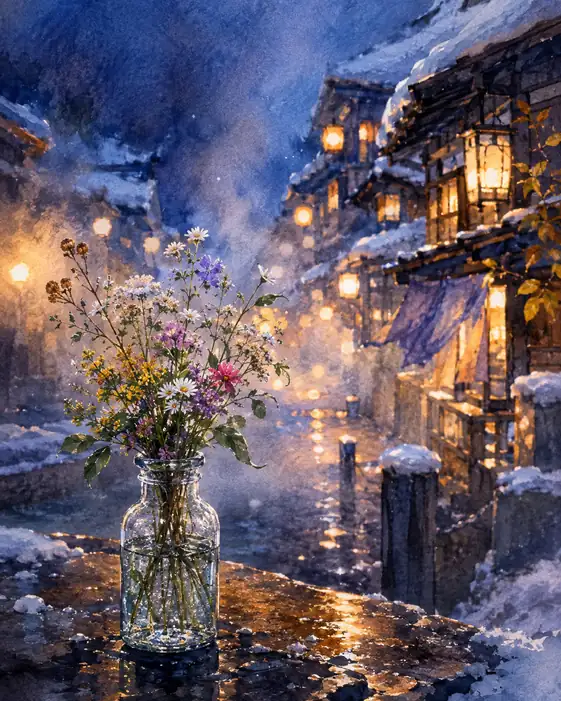 Wildflowers Gather the Lanterns of a Snowy Evening
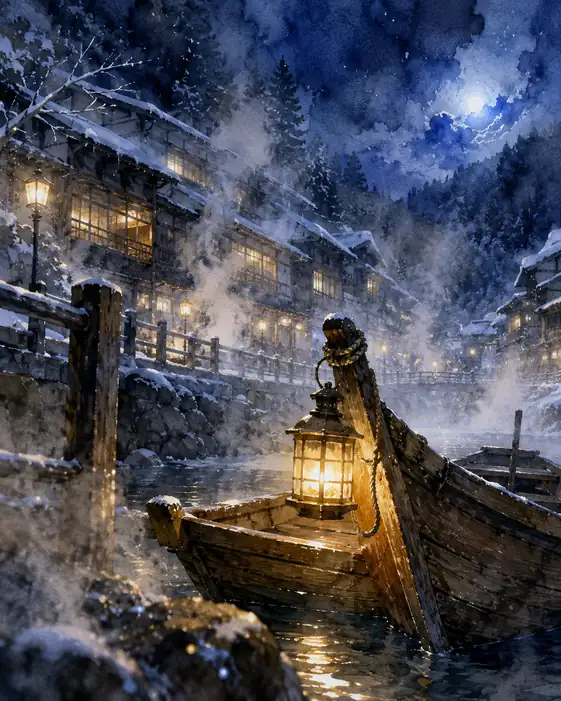 The Lantern Boat Drifts Beneath the Winter Moon
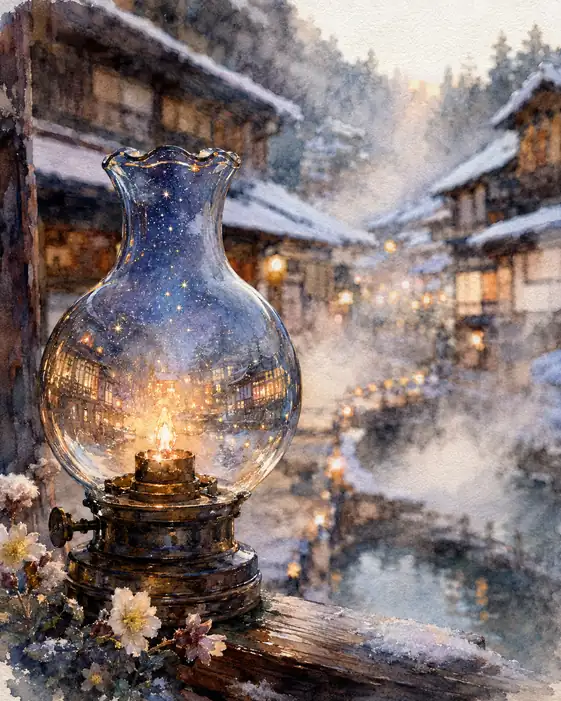 The Lamp Keeps a Snowy Village in Its Glass
 The White Cat Watches Snowfall Fill the Village
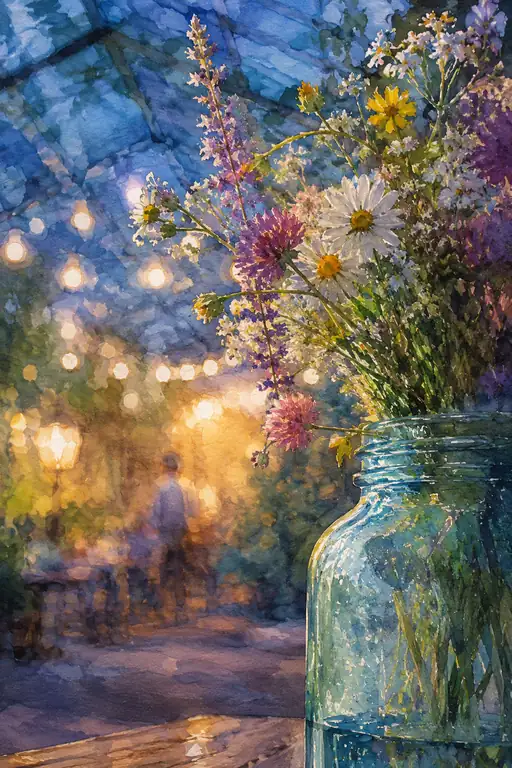 Evening Waits Beyond the Wildflower Jar
 The Snow Gave Her a Crown of Wildflowers
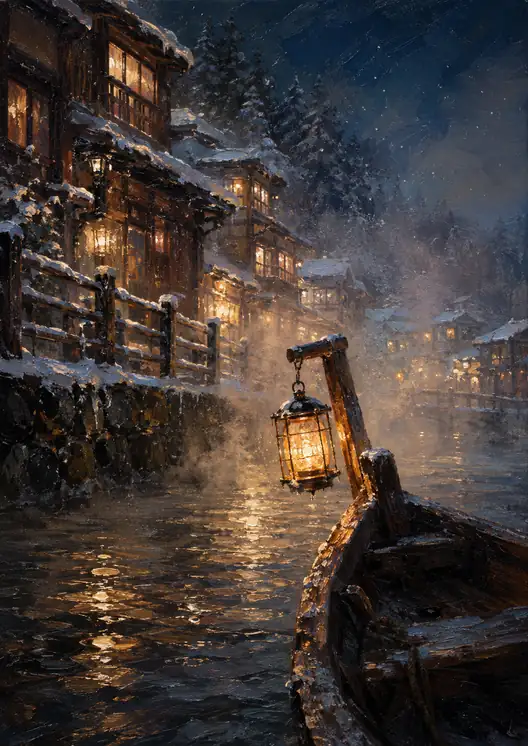 The River Carries One Lantern Home
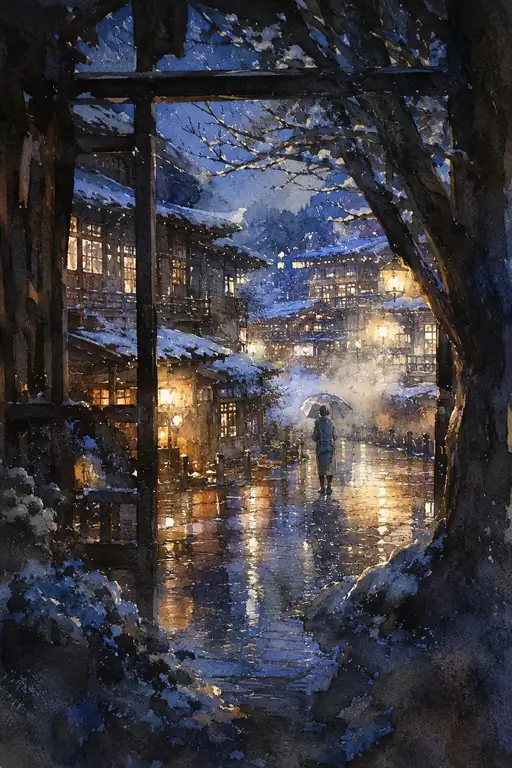 Through the Snowy Gate, She Follows Warmth
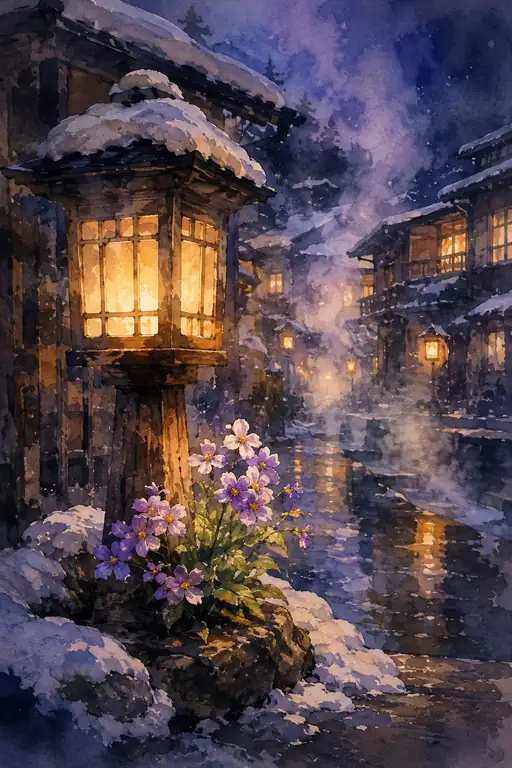 Purple Flowers Beneath the Snow-Crowned Lantern
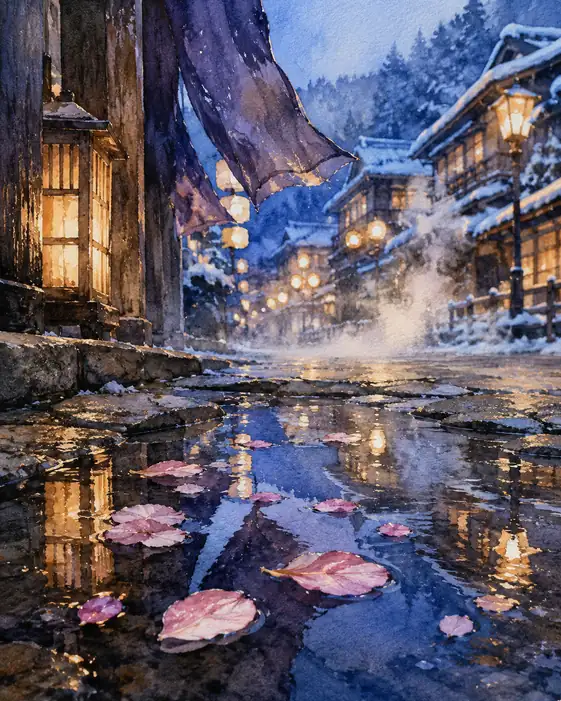 Petals Sail Through the Thawing Lantern Street