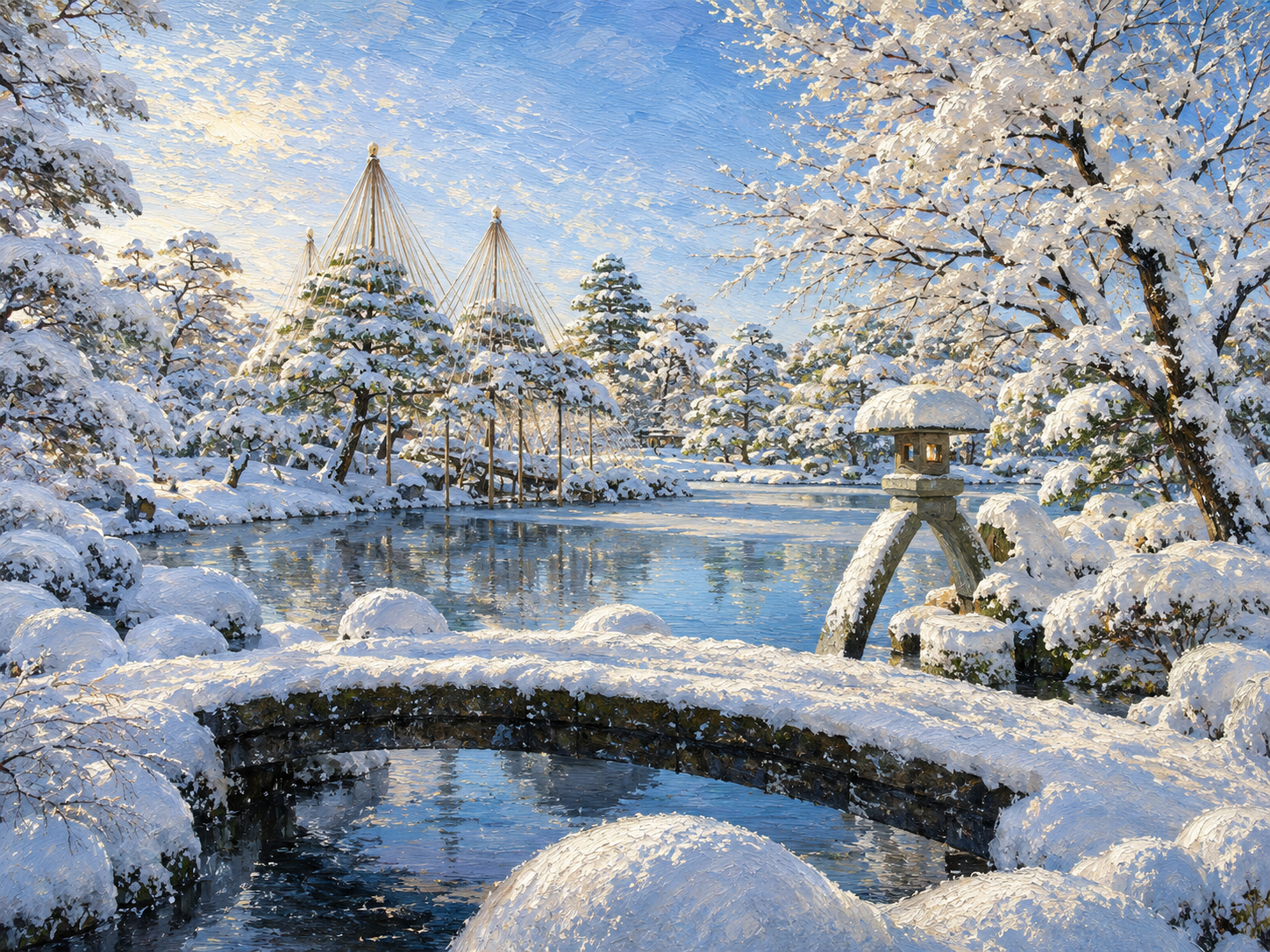
Morning Crosses the Snowbound Garden Bridge
Critique
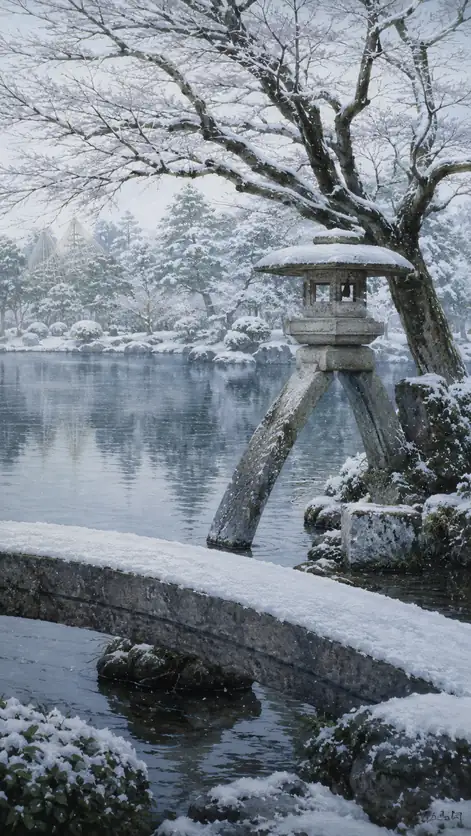
Introduction This winter garden is a radiant study of cultivation under snow. Its daylight, pond, and supported pines suggest renewal rather than dormancy. Snow becomes a material that reveals the garden’s structure through weight, contour, and reflected color. Description A low stone bridge crosses dark water in the foreground. Beyond it lies a wide pond bordered by rounded shrubs and snow-laden trees. Three prominent pines carry conical yukitsuri ropes, while a three-legged stone lantern stands at right. A large deciduous tree arches inward from the upper corner, and pale sunlight spreads through a clear blue sky. Analysis The bridge supplies a horizontal threshold, answered by the pond and lantern’s vertical accent. Repeated white mounds create a slow visual pulse, while dark water opens breathing space amid their density. Yukitsuri lines introduce fine geometric tension above the organic masses. Warm cream highlights prevent the blue-and-white palette from becoming sterile, and broken, directional strokes make snow appear granular and weighty. Interpretation and Evaluation Protection is the image’s quiet theme. The ropes are practical supports, yet their tent-like silhouettes also suggest care made visible. The lantern, capped with snow but still structurally legible, joins crafted culture to seasonal change. The bridge invites imaginative crossing, although no people appear; consequently, human presence survives through maintenance rather than figures. The work is especially convincing in its varied whites, which distinguish fresh light, compressed banks, and reflected sky. Conclusion This is a lucid and generous winter landscape whose order never feels rigid. Geometry, vegetation, stone, and water cooperate to express endurance as active stewardship. By keeping the pond open and reflective, the composition allows motion and time to continue beneath the garden’s apparent stillness.
Same Subcategory
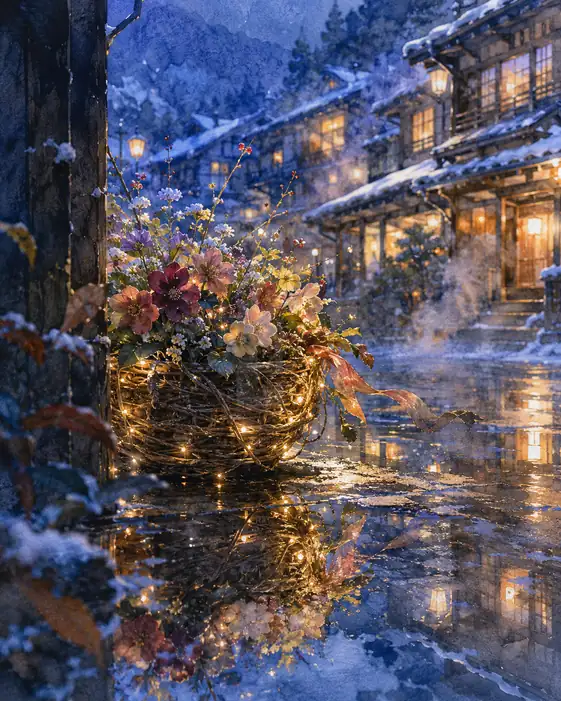 A Basket of Light Blooms in the Snow
Similar Artworks
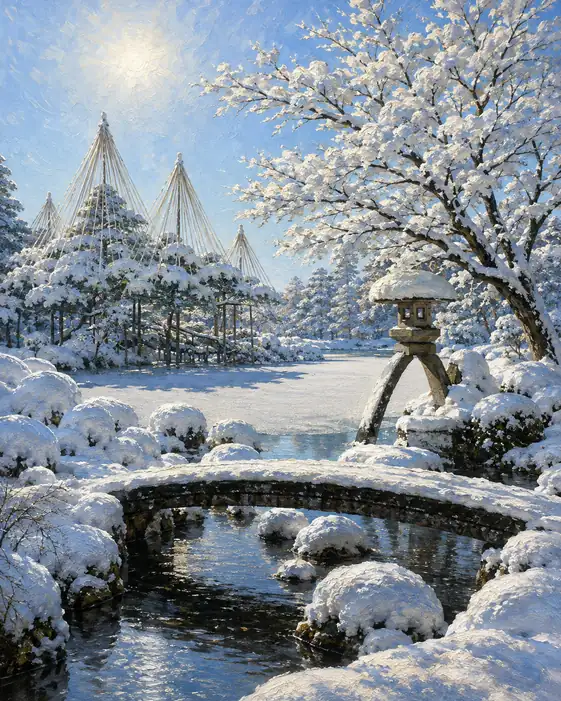 Winter Opens a Mirror Beneath the Bridge
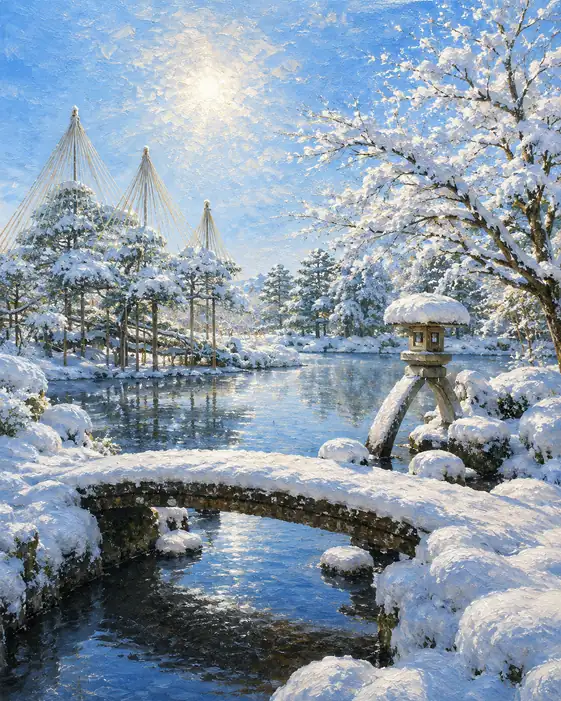 Sunlight Rests on the Bridge of Snow
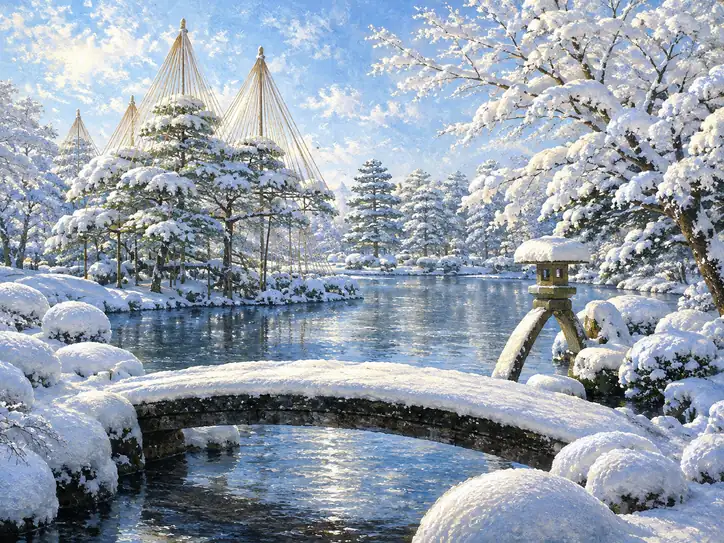 The Pond Keeps Winter's Blue Silence
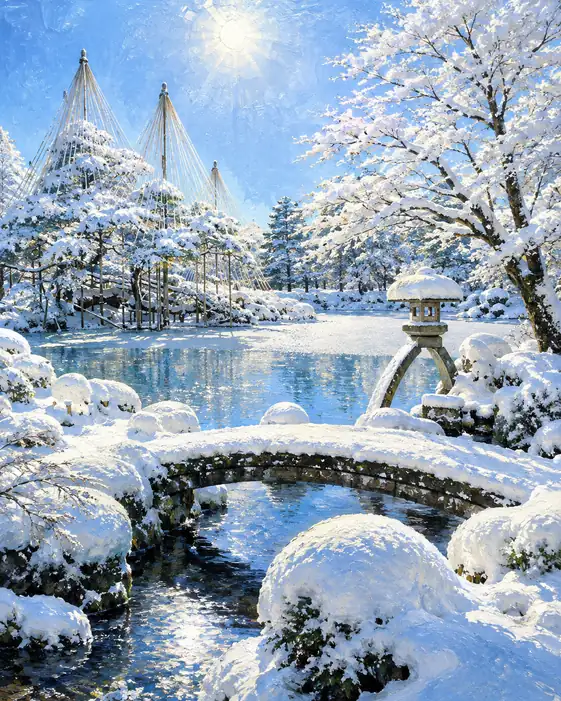 In the Snow’s Radiance, the Lantern Listens to the Koto of Water
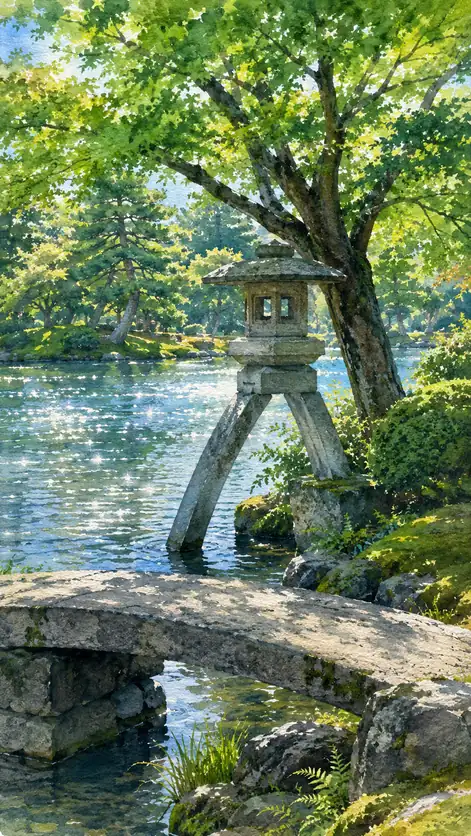 Starlight Born Before Evening
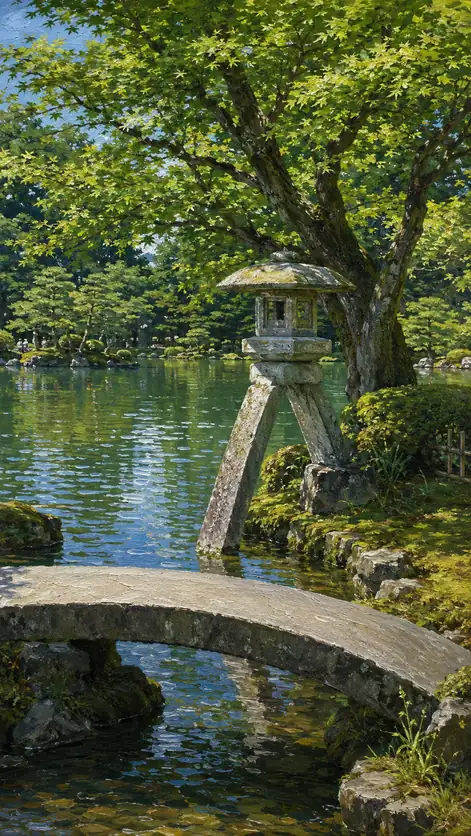 Noon Rings Across the Quiet Pond
 A Summer Whisper Through Three Stones
 The Garden Keeps a Window of Blue
 Morning Opens the Stone Lantern
 When Snow Learns the Shape of Stillness