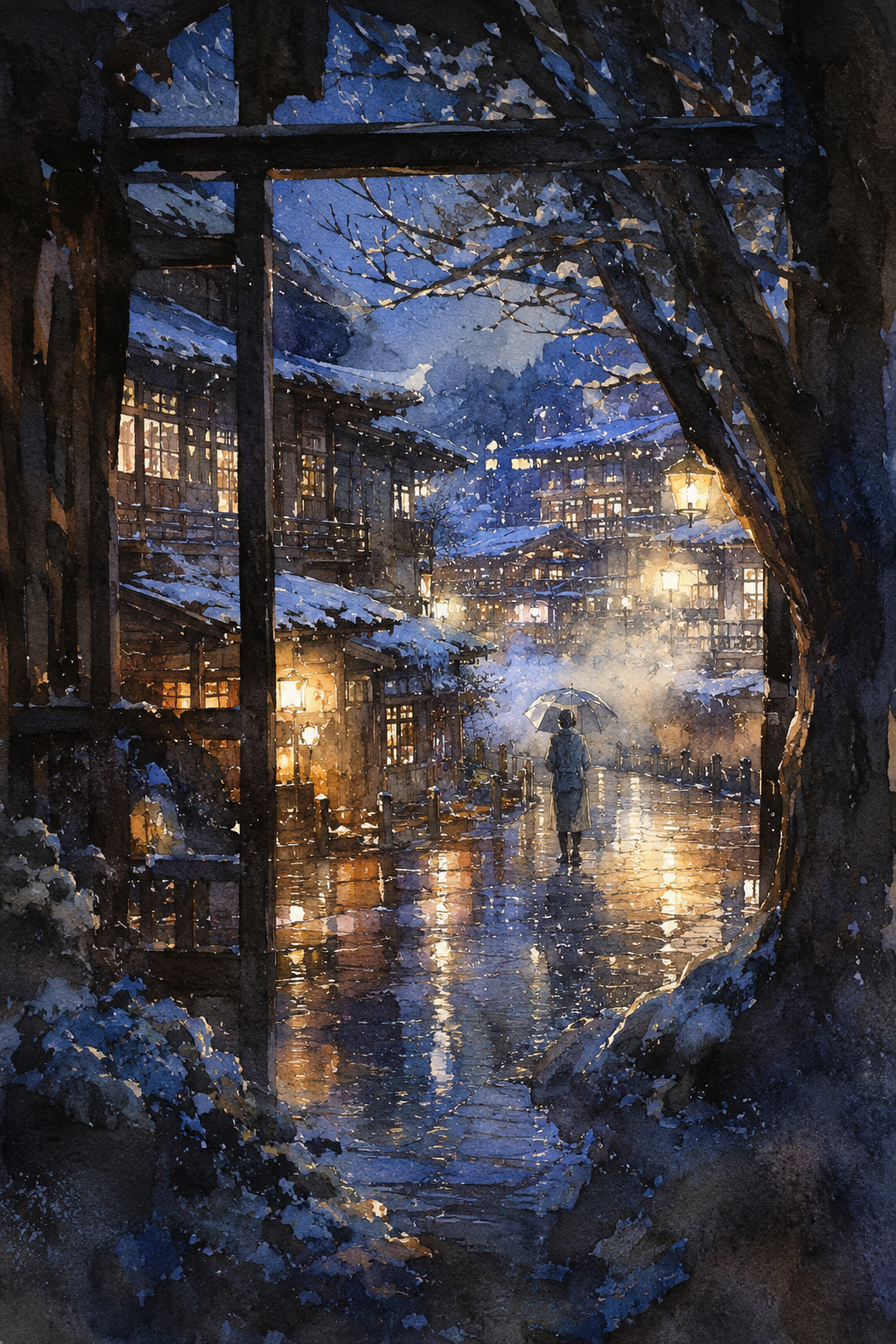
Through the Snowy Gate, She Follows Warmth
Critique
Introduction This nocturnal winter scene presents a lone umbrella-bearing figure entering a luminous mountain settlement. Watercolor-like granulation turns a familiar hot-spring street into an image of passage, shelter, and anticipation. Its emotional force comes from balancing deep enclosure with a beckoning glow. Description Dark trunks and timber posts form a massive frame around the view. Beyond them, snow-covered wooden inns climb the slope, their windows and lanterns glowing amber against blue roofs and mist. A solitary person walks away along wet paving beneath a transparent umbrella. Reflections stretch toward the foreground while steam and falling snow soften the middle distance. Analysis The composition works as a sequence of nested thresholds. The near-black frame compresses the opening, the curving road releases it, and stacked buildings lift the eye toward the center. Blue-black washes establish depth, while small warm rectangles create rhythm and habitation. Vertical trunks counter the road’s recession; scattered highlights on water translate architecture into flickering, mobile color. Interpretation and Evaluation The figure’s small scale makes arrival feel chosen rather than guaranteed. Seen from behind, the traveler becomes an open surrogate for the viewer, suspended between wooded darkness and communal warmth. Steam functions both materially and symbolically: it records heat meeting winter air while veiling the destination enough to preserve mystery. Particularly effective is the refusal to make brightness uniform; every lamp appears local, tended, and therefore credible. Conclusion The painting succeeds through disciplined contrasts of cold and warmth, solidity and vapor, solitude and welcome. Its richly framed viewpoint gives the scene theatrical intensity without sacrificing intimacy. Most importantly, reflected light makes the road itself hospitable, converting a difficult winter approach into a patient invitation to continue.
Same Subcategory
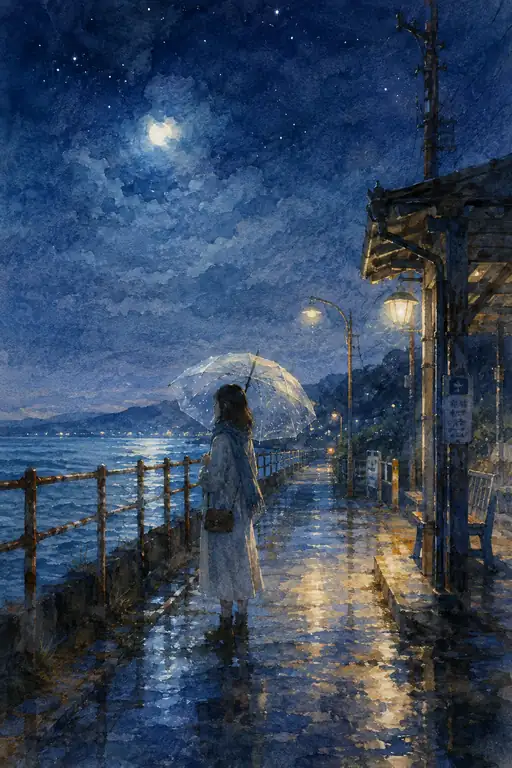 She Waits Where Moonlight Meets the Tide
Similar Artworks
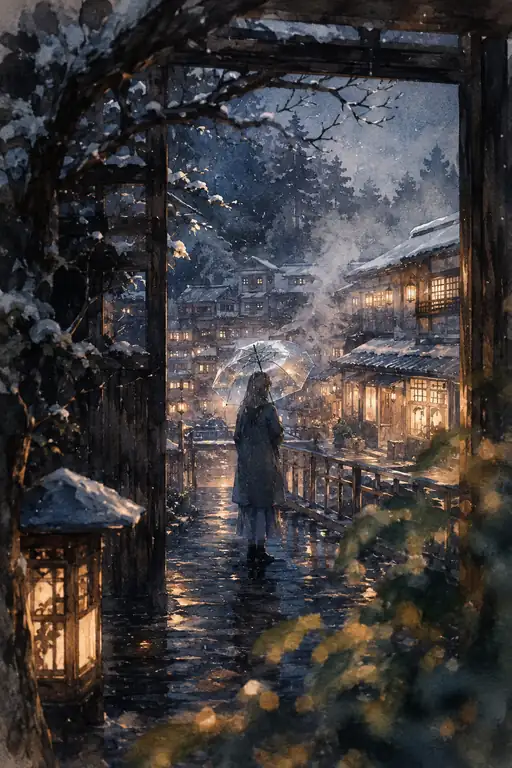 She Pauses Where Snow and Lamplight Meet
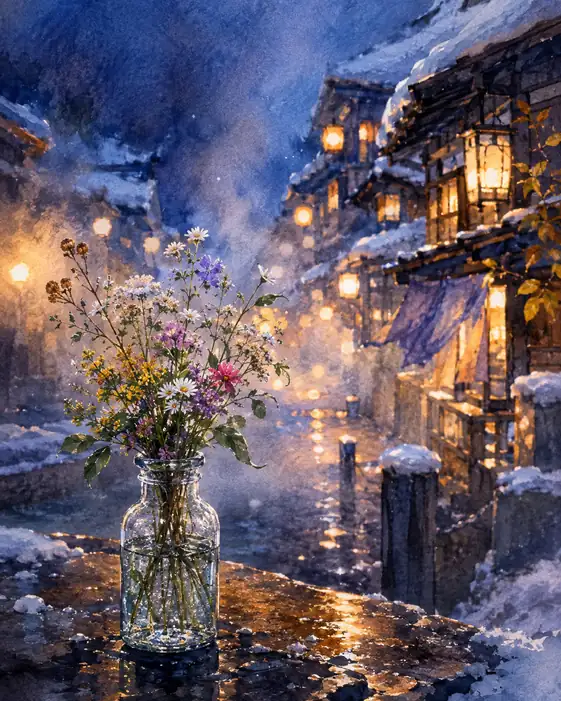 Wildflowers Gather the Lanterns of a Snowy Evening
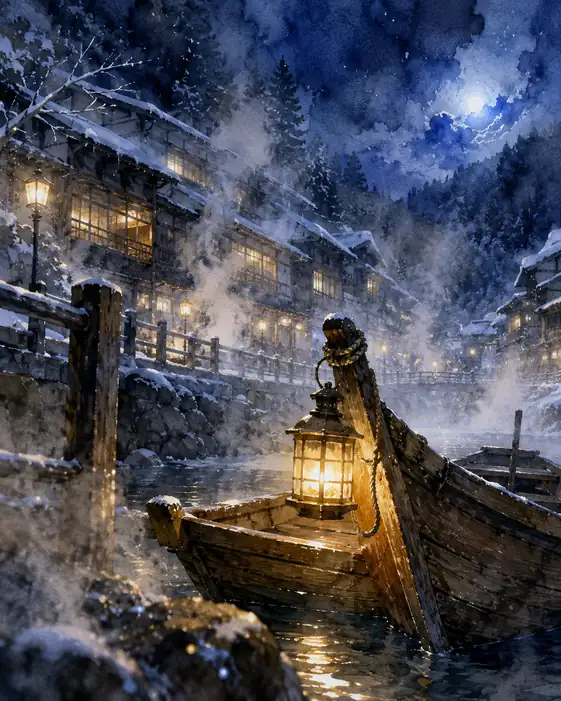 The Lantern Boat Drifts Beneath the Winter Moon
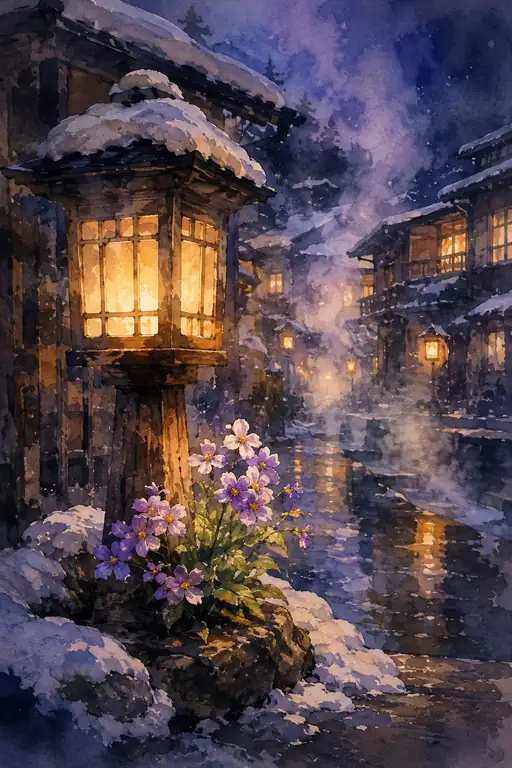 Purple Flowers Beneath the Snow-Crowned Lantern
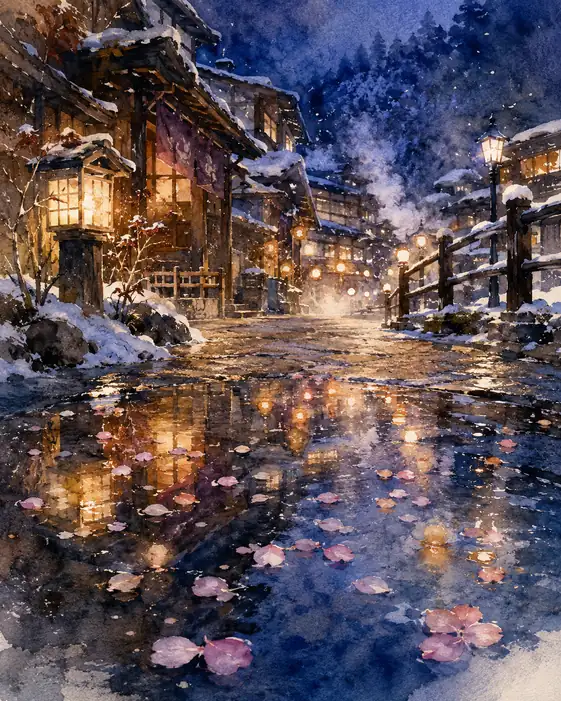 Fallen Petals Borrow the Lanterns' Glow
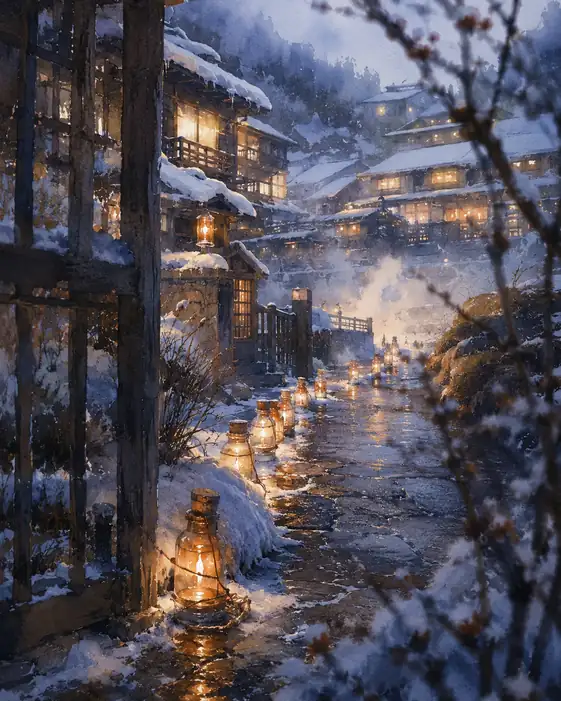 Little Bottles Light the Path to the Springs
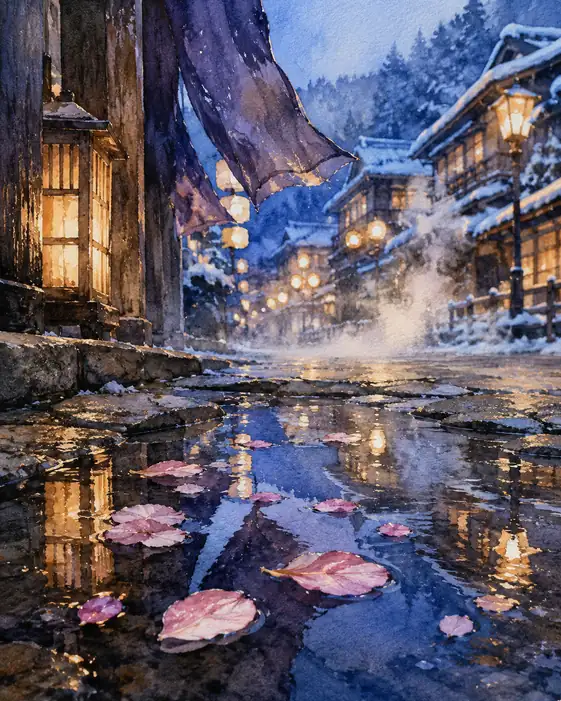 Petals Sail Through the Thawing Lantern Street
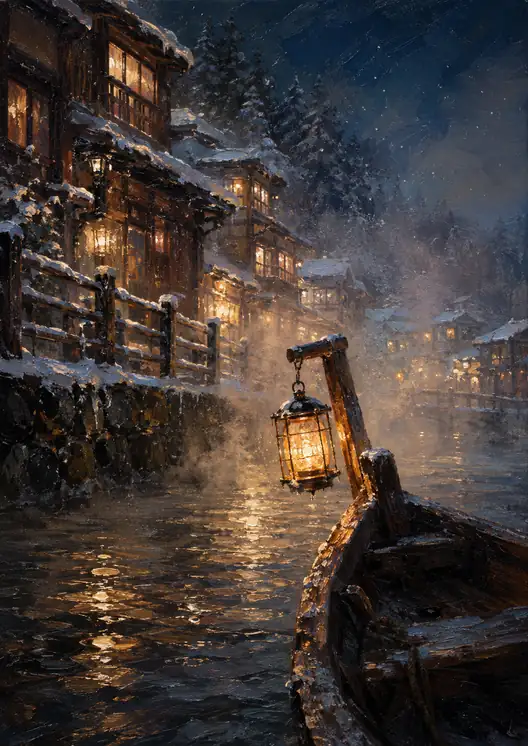 The River Carries One Lantern Home
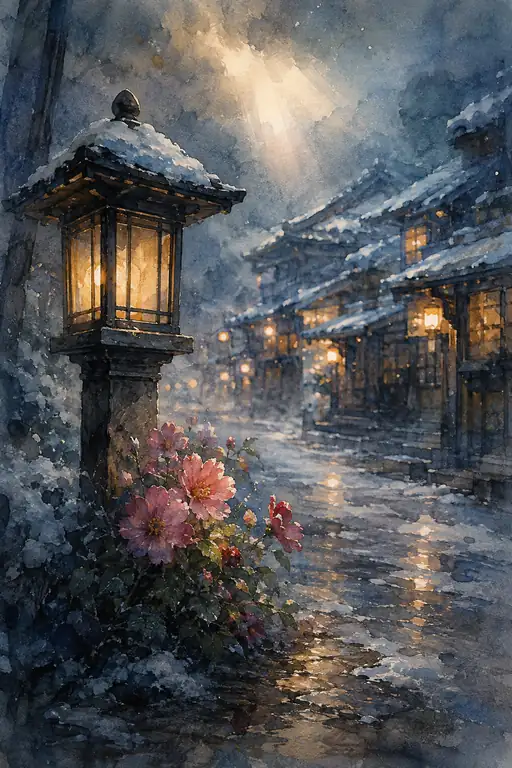 A Sunbeam Finds the Winter Lantern
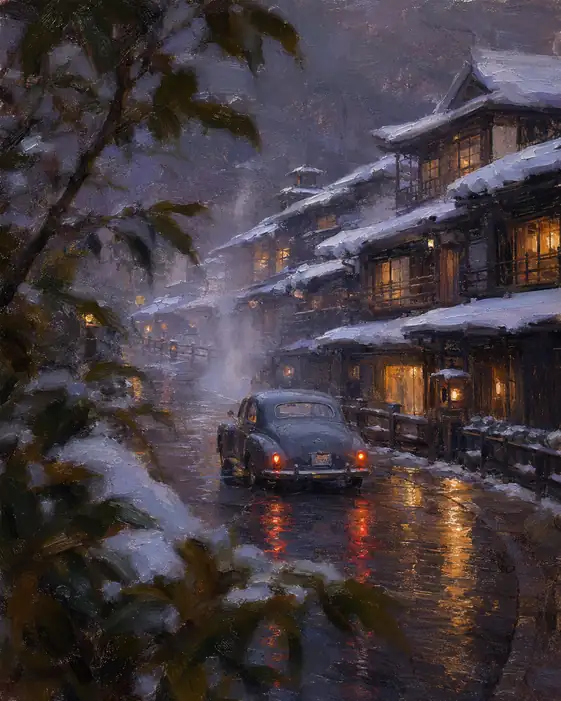 The Last Car Leaves a Trail of Emberlight