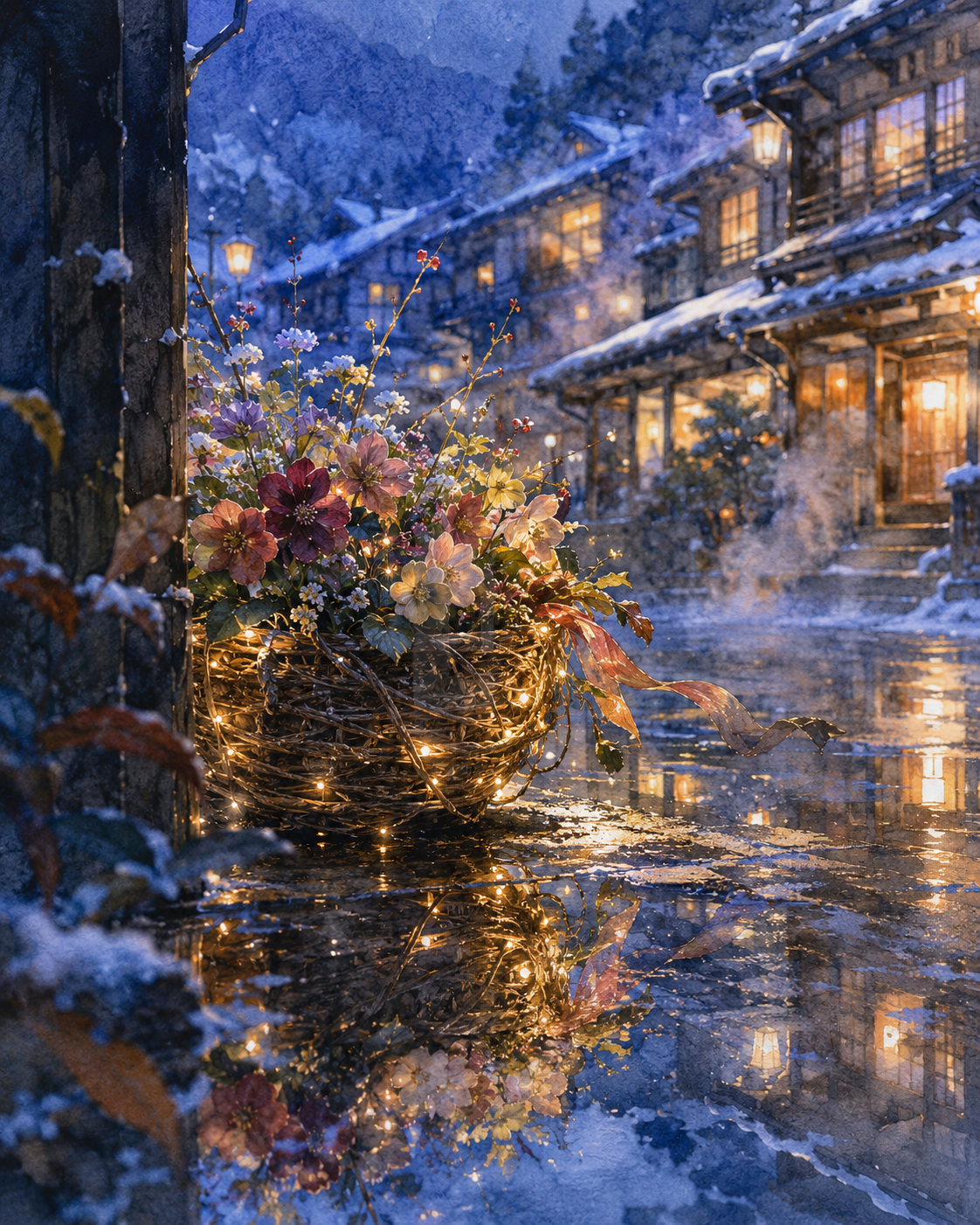
A Basket of Light Blooms in the Snow
Critique
Introduction This blue-hour village scene places a glowing, flower-filled woven basket beside a snow-lined wet street. The arrangement joins gift, winter journey, and inhabited architecture through repeated warm light. Description A large twig basket rests at the left foreground against a dark wooden post. Pink, burgundy, cream, lavender, and yellow flowers rise from it, surrounded by many tiny warm bulbs. A long translucent rust-colored ribbon trails toward the right. Snow borders the road, whose puddles reflect the basket, windows, and lanterns. Traditional timber houses climb the blue hillside, their interiors glowing through snow and steam. Analysis The basket’s rounded mass anchors the road’s diagonal recession. Its woven lines and branching stems contrast with the houses’ rectangular frames. Warm bulbs, windows, and streetlamps form a continuous rhythm through depth. Deep cobalt and slate dominate, while flower colors mediate between gold and snow. The broad reflection doubles the gift and extends its light downward. The ribbon supplies a lateral movement into the open street. Interpretation and Evaluation The basket appears prepared for delivery or reception, occupying the threshold between a private doorway and communal route. Flowers offer seasonal contradiction without denying the cold, while electric bulbs prolong their visual life after dusk. The trailing ribbon suggests recent human handling. Reflected architecture places the gift within the village rather than isolating it as decoration. Absence of a carrier preserves anticipation. Conclusion The painting makes welcome portable and spatial. Woven fiber, petals, snow, and wet stone register different vulnerabilities, held together by repeated light. The basket seems ready to move from one warm interior to another.
Same Subcategory
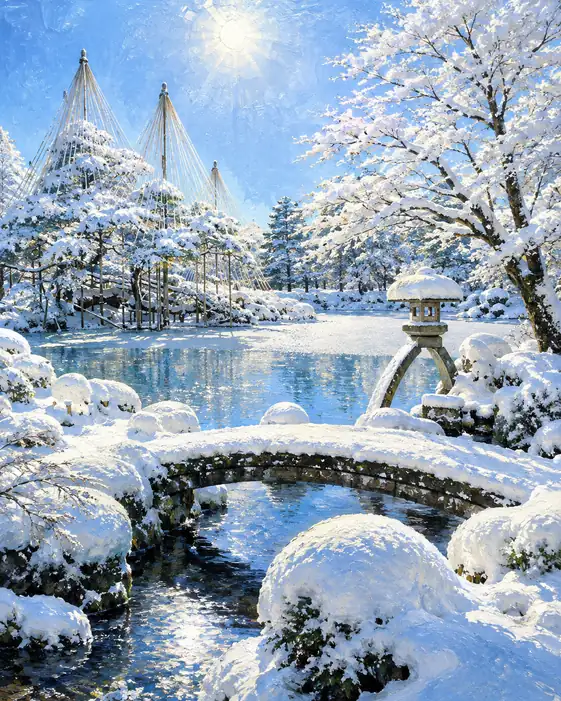 In the Snow’s Radiance, the Lantern Listens to the Koto of Water
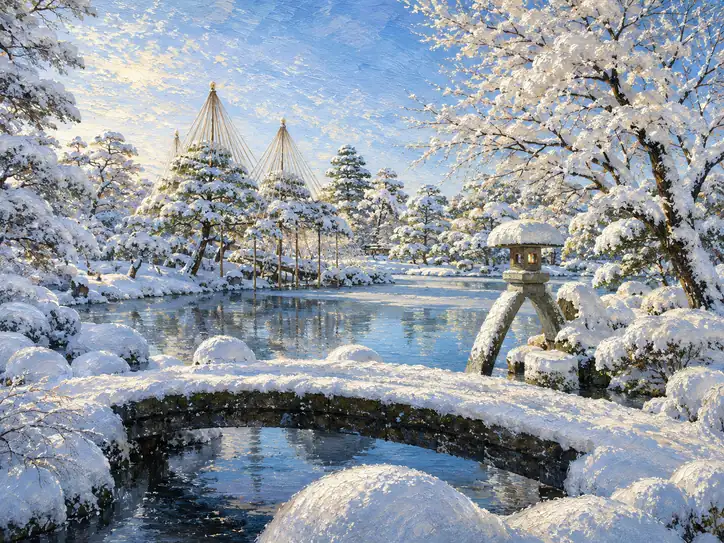 Morning Crosses the Snowbound Garden Bridge
Similar Artworks
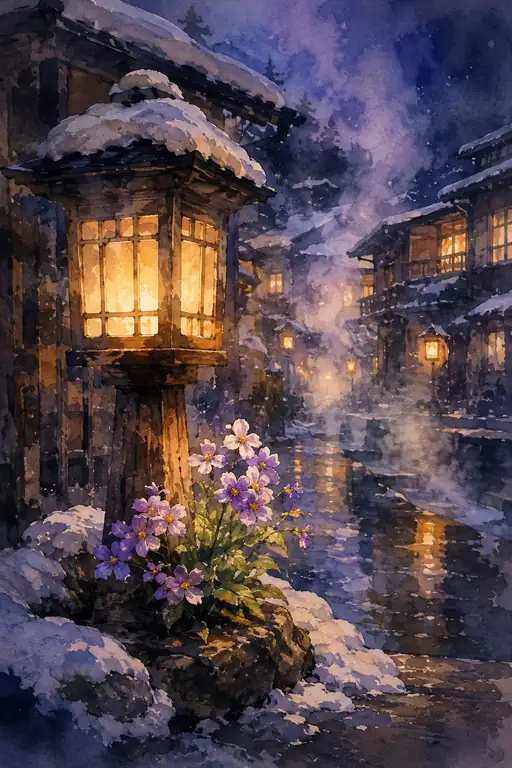 Purple Flowers Beneath the Snow-Crowned Lantern
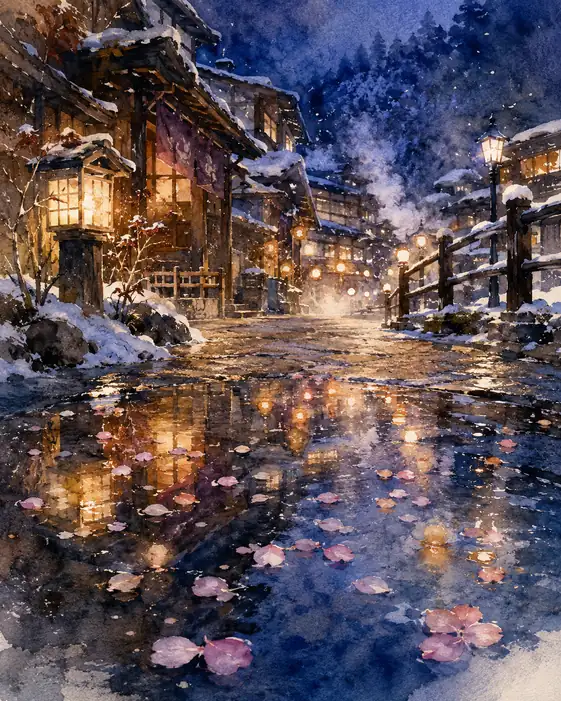 Fallen Petals Borrow the Lanterns' Glow
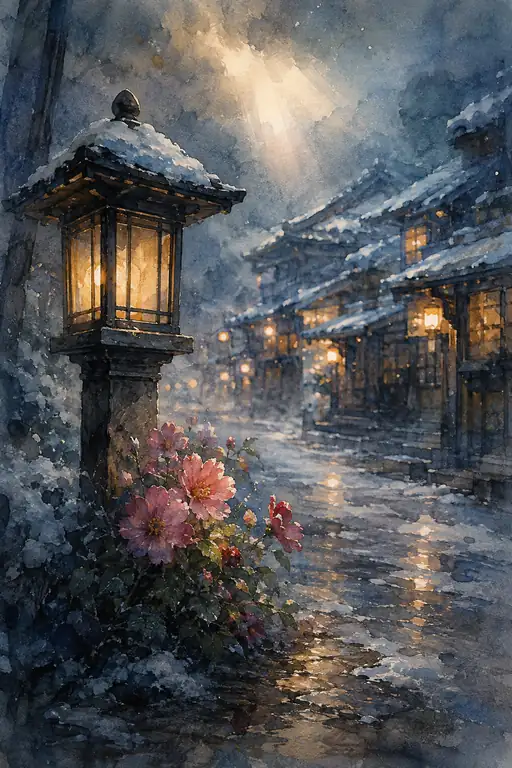 A Sunbeam Finds the Winter Lantern
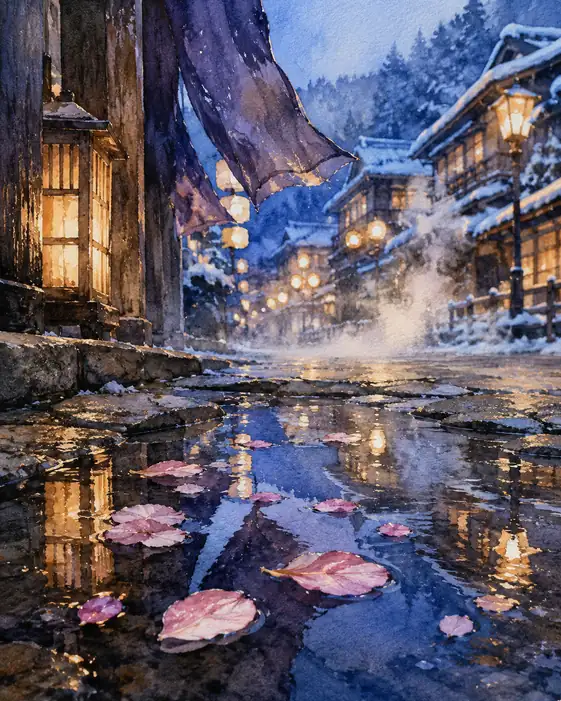 Petals Sail Through the Thawing Lantern Street
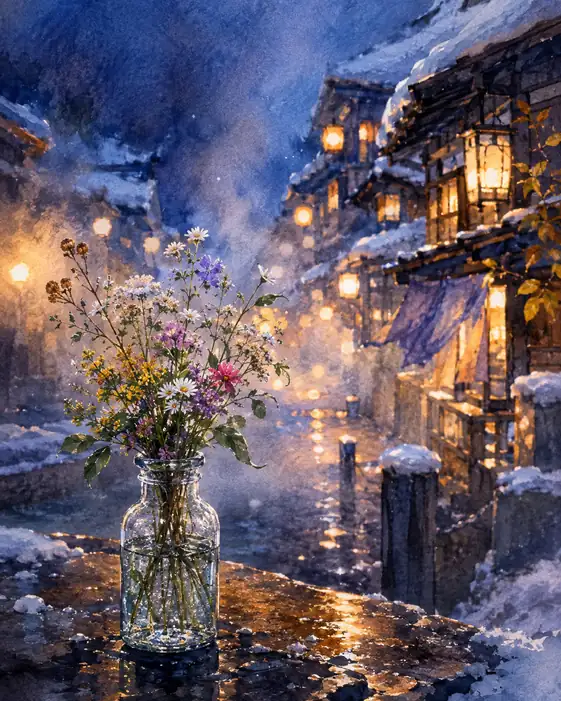 Wildflowers Gather the Lanterns of a Snowy Evening
 Pressed Flowers Remember a Warmer Season
 Little Bottles Light the Path to the Springs
 The Bicycle Bloomed Under a Winter Sunbeam
 The Lantern Boat Drifts Beneath the Winter Moon
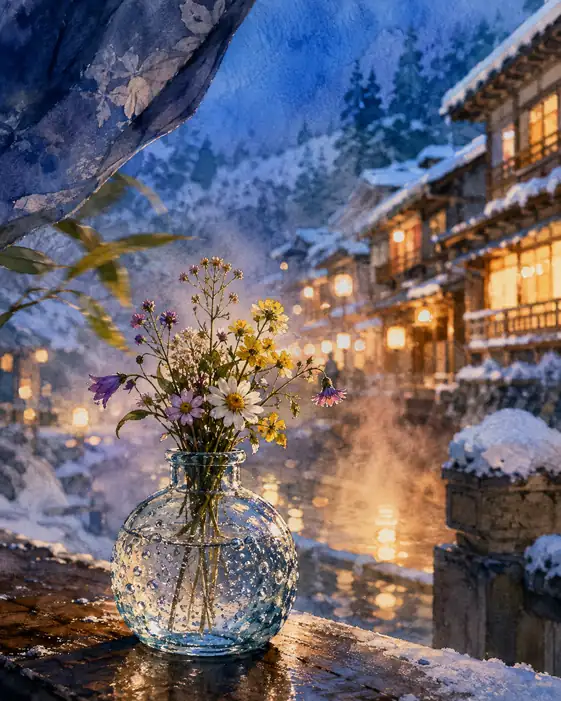 Wildflowers Watch the Hot-Spring Evening Steam