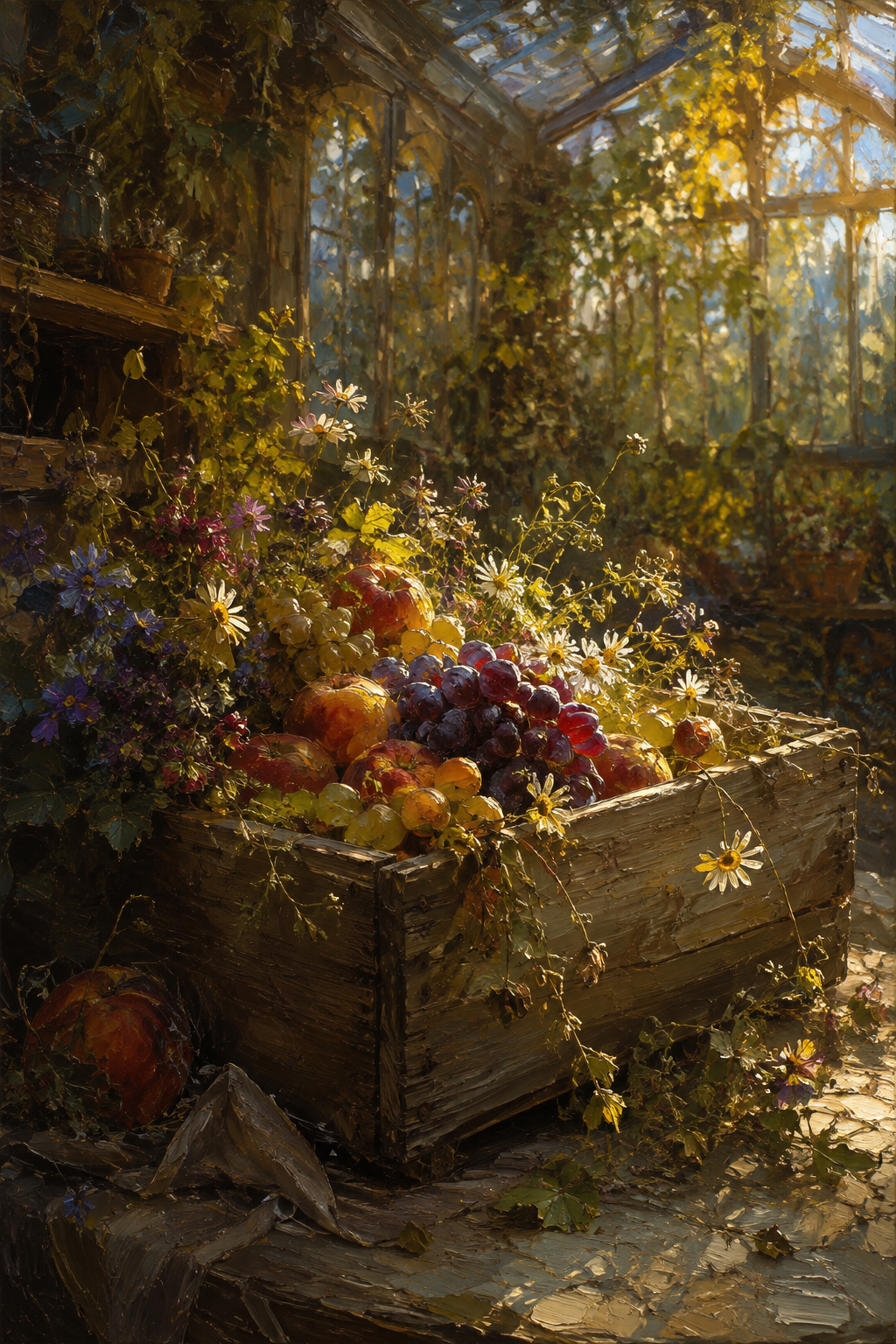
Autumn Overflows the Forgotten Crate
Critique
Introduction This greenhouse harvest scene sets a heavy wooden crate of fruit among wildflowers and aging work surfaces. Warm sidelight gives abundance weight, while surrounding growth keeps it connected to the place that produced it. Description A deep rectangular box occupies the lower center, filled with red apples, pale pears or citrus, green and purple grapes, and abundant daisies and violet flowers. Stems trail over its front edge to the floor. Another large fruit rests beside a crumpled sack at lower left. Behind, shelves, pots, arched windows, vines, and a blue glass roof recede through golden haze. Analysis The crate’s dark geometry anchors a profusion of circles and branching lines. Light enters from the upper right, catching grape skins, daisy petals, and the worn plank edge. Deep brown and green form the base; red, yellow, purple, and white create concentrated accents. Thick strokes emphasize material density. Trailing stems breach the rectangle and lead into surrounding plants, while window arcs and roof diagonals establish depth. Interpretation and Evaluation The harvest remains visibly entangled with uncultivated flowers, resisting a purely economic reading. Fruit and blossom represent different forms of seasonal value gathered together. The dropped fruit and crumpled cloth introduce labor, excess, and possible waste, complicating celebration. Yet warm light and the open setting imply imminent use rather than abandonment. The crate is a practical mediator between growing and sharing. Conclusion The painting makes abundance tangible, imperfect, and situated. Wood contains the harvest but cannot fully separate it from vines and flowers. This permeability turns storage into a generous threshold between greenhouse labor and communal use.
Same Subcategory
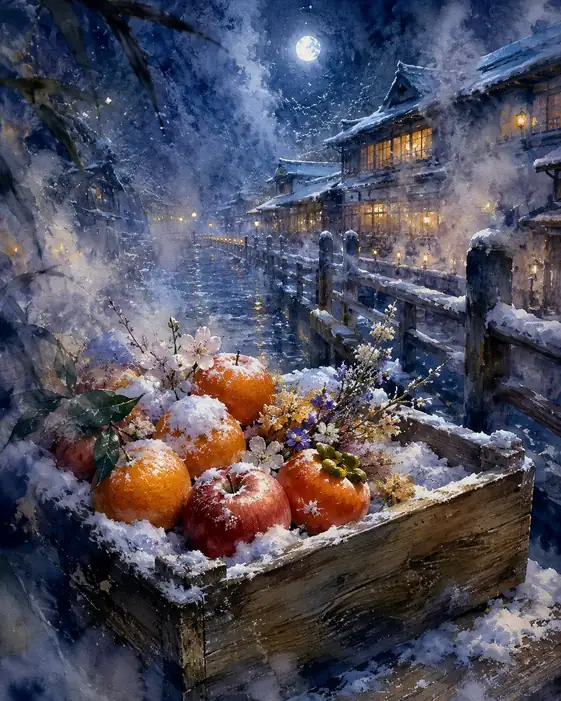 Moonlit Fruit Waits beside the Hot-Spring River
Similar Artworks
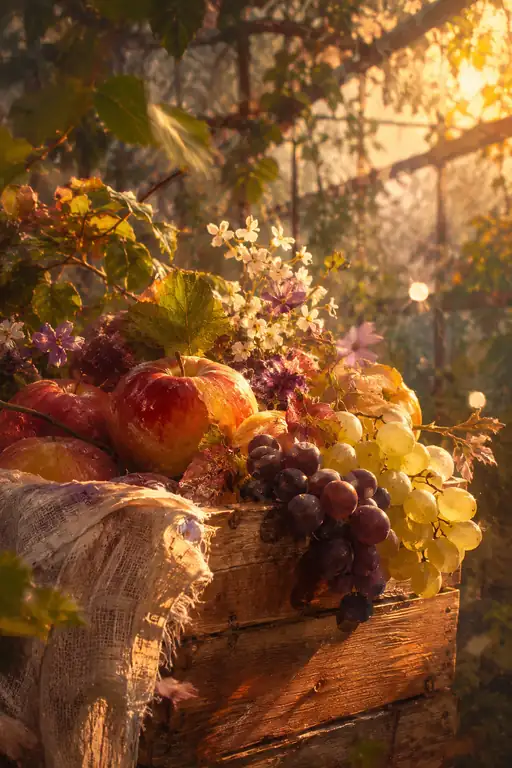 The Harvest Blushes in Greenhouse Gold
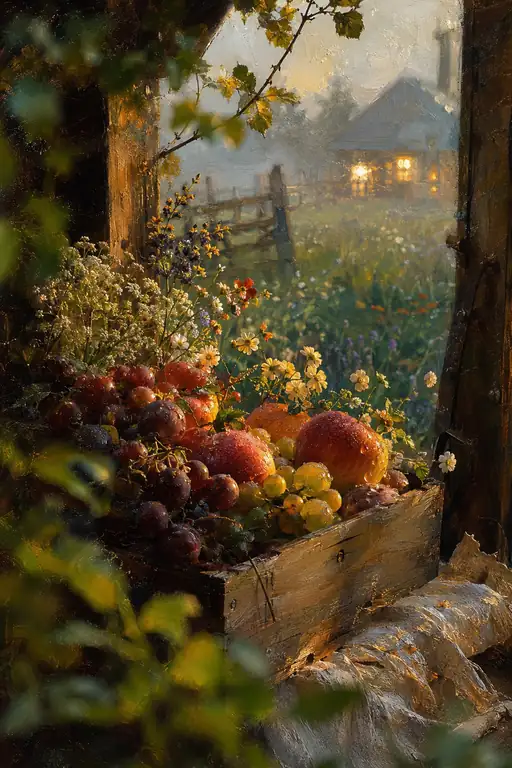 Autumn's Sweetness at the Lighted Door
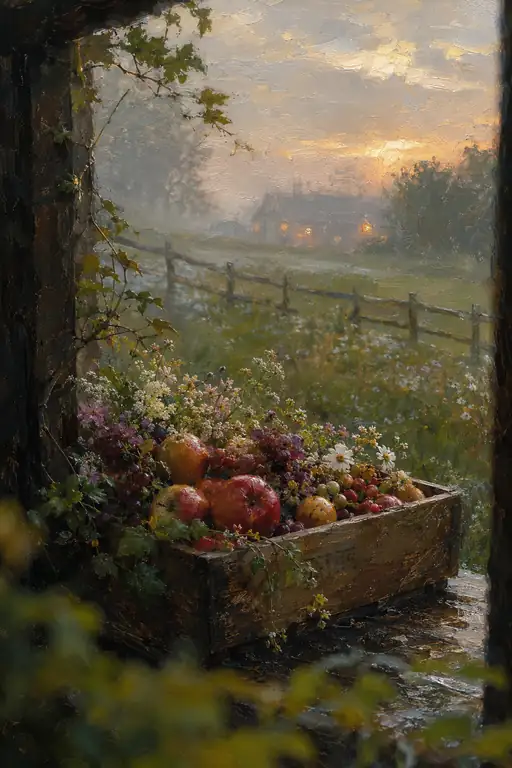 The Harvest Waits at the Threshold of Evening
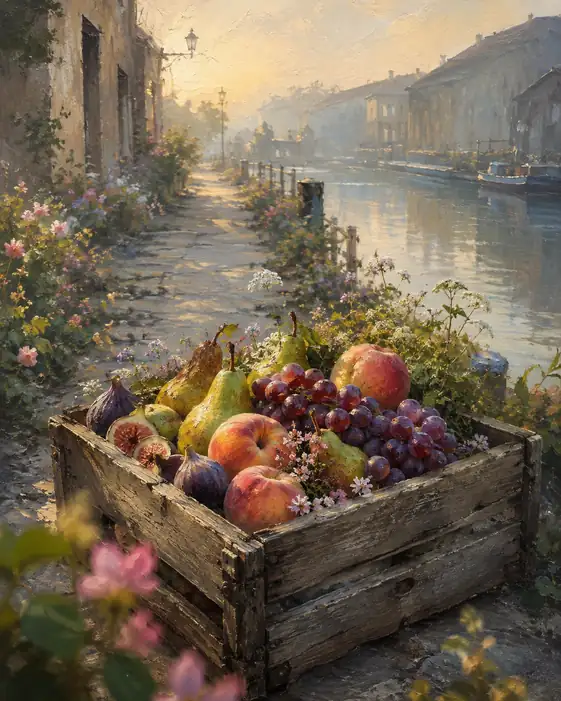 Morning Ripens in a Crate by the Canal
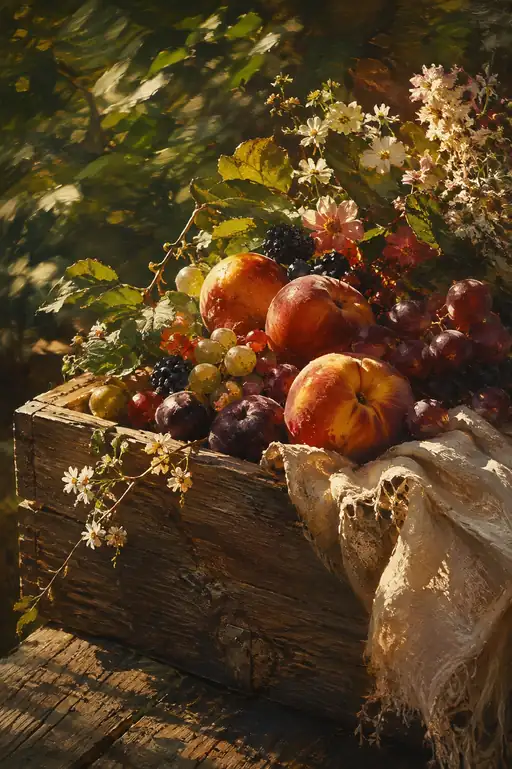 Rustic Wooden Box of Autumn Blessings
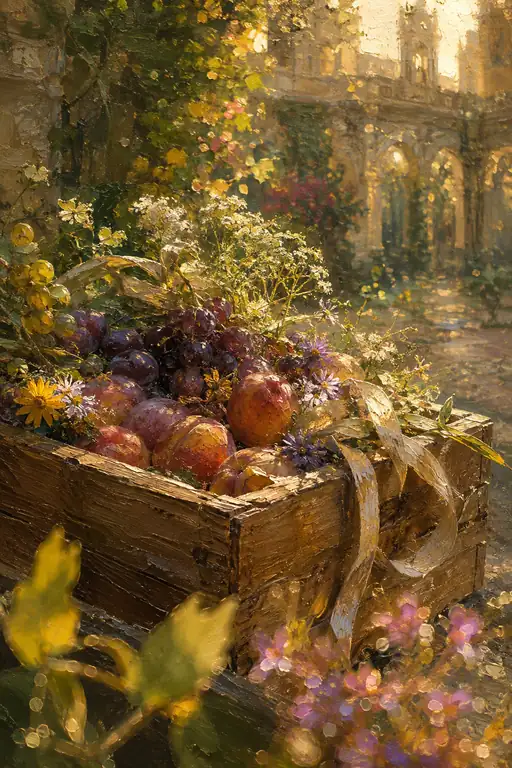 Sun-Drenched Harvest of the Abbey Garden
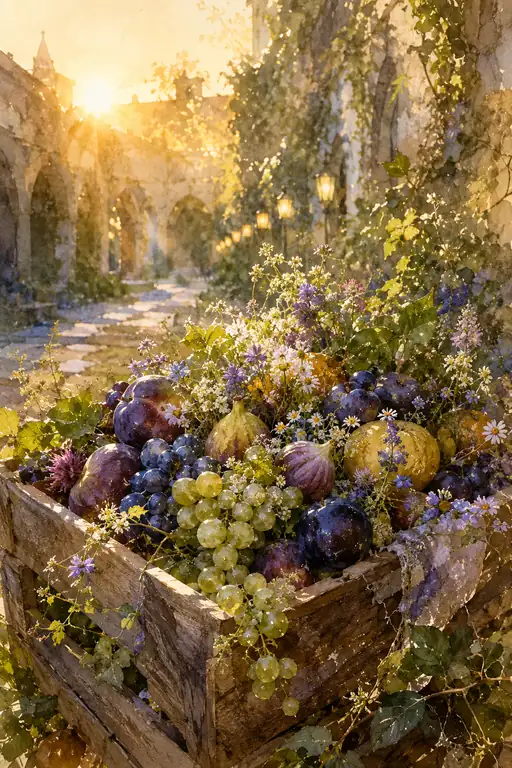 Golden Harvest in the Cloistered Sun
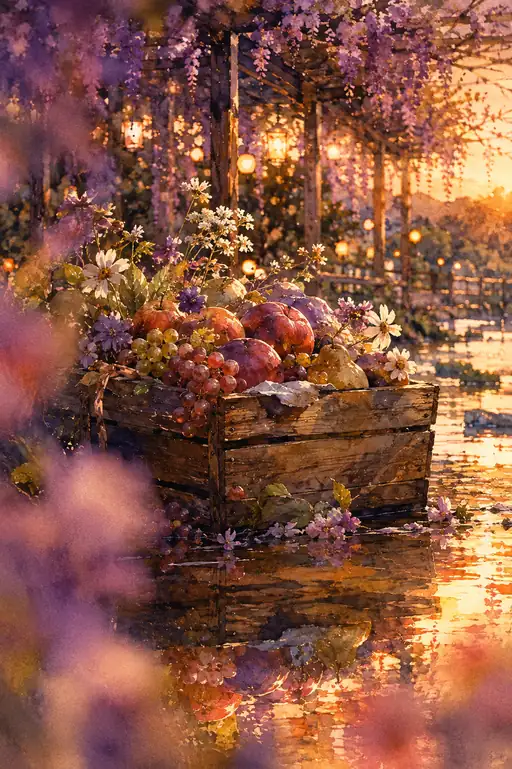 A Crate of Fruit Receives the Wisteria Sunset
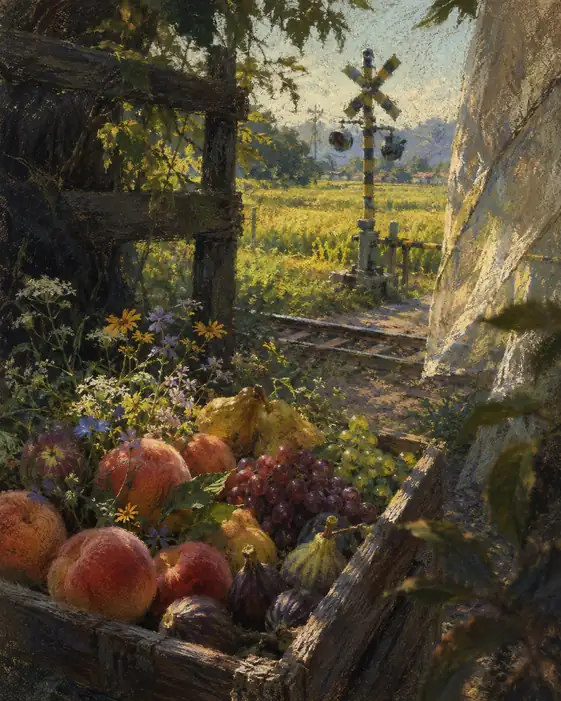 Autumn Harvest Beside the Rural Crossing
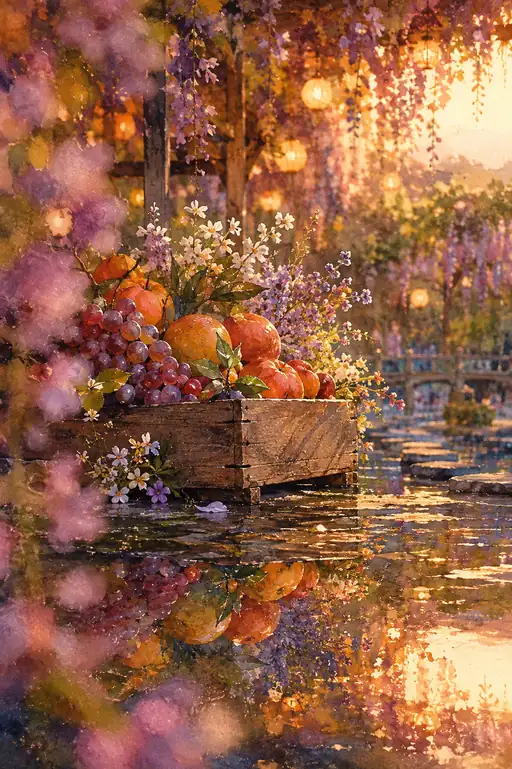 Summer's Harvest Glows beneath Autumn-Colored Wisteria