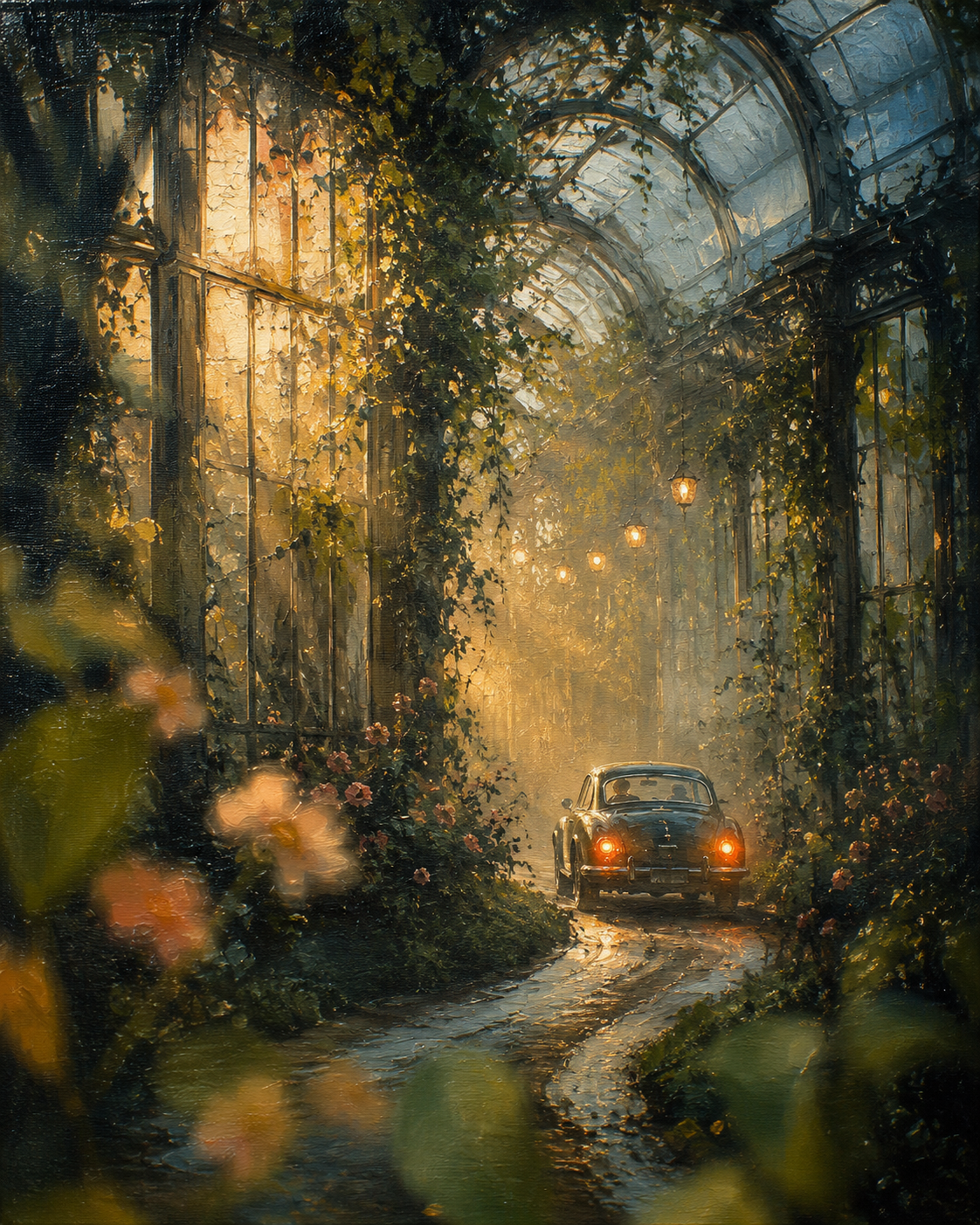
The Car Follows Sunset Through the Garden of Glass
Critique
Introduction This oil-like scene places a vintage car on a narrow wet road inside an immense overgrown conservatory. Mechanical travel, cultivated growth, and golden evening light combine into an unlikely but persuasive image of passage. Description A dark rounded sedan drives away near the lower right center, its twin red tail lamps bright. The lane curves through dense flowers and vines beneath towering arched glass roofs and iron ribs. Hanging lamps recede into warm mist. Large blurred leaves and blossoms frame the foreground. Sunlight enters through tall panes at the left and from a glowing upper window, catching puddles and the vehicle’s roof. Analysis The car’s compact horizontal mass interrupts a field dominated by vertical windows and repeated arches. Road curvature and shrinking lamps produce depth, while foliage obscures a clear vanishing point. Deep green and blue-black surround concentrated amber, with red lights as urgent accents. Thick strokes give metal, glass, leaves, and wet ground tactile weight. Foreground blur makes the viewer an observer within the plants rather than outside the structure. Interpretation and Evaluation The car introduces mobility into a building associated with contained growth. It may be entering, leaving, or adapting an old route to a new use. Tail lamps address anyone behind, making departure a relational act rather than solitary escape. The enormous greenhouse makes the vehicle appear vulnerable, while maintained lamps ensure the path remains inhabited. Nature and machine coexist without either being idealized. Conclusion The painting turns an impossible setting into a coherent threshold. Light and road give direction, but arch, vine, and rain preserve uncertainty. The vehicle embodies measured continuation through a living architecture.
Same Subcategory
Similar Artworks
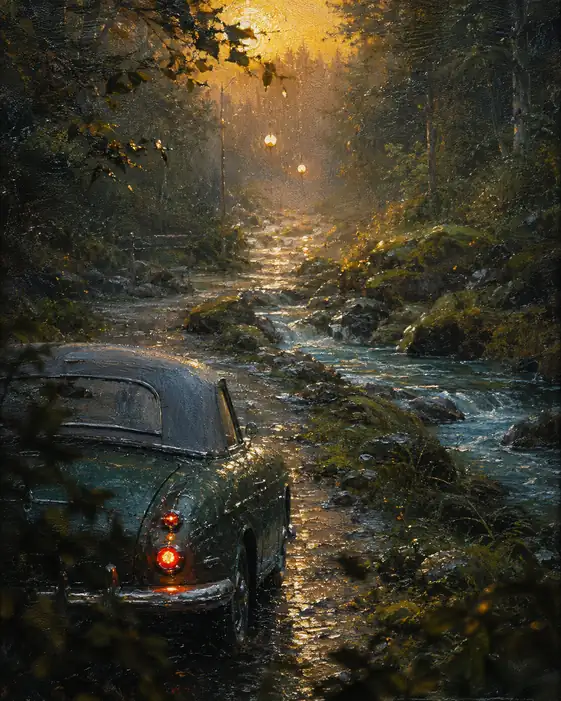 The Old Car Follows Lanterns into the Forest
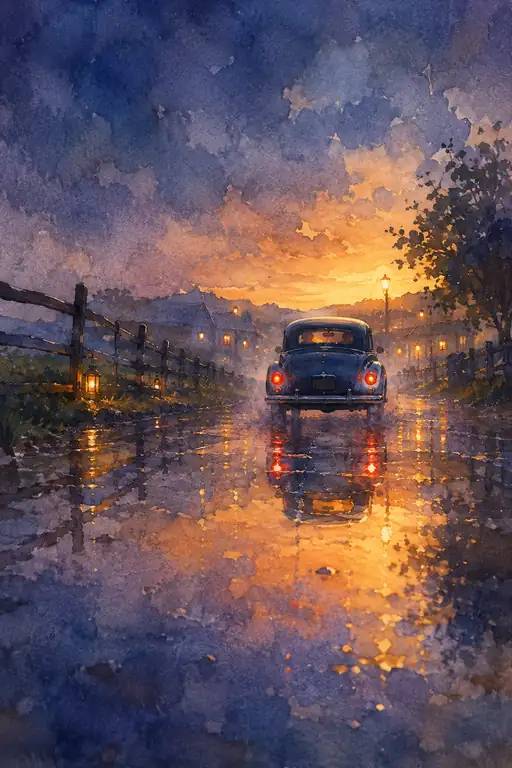 The Blue Car Drives into a Burning Sky
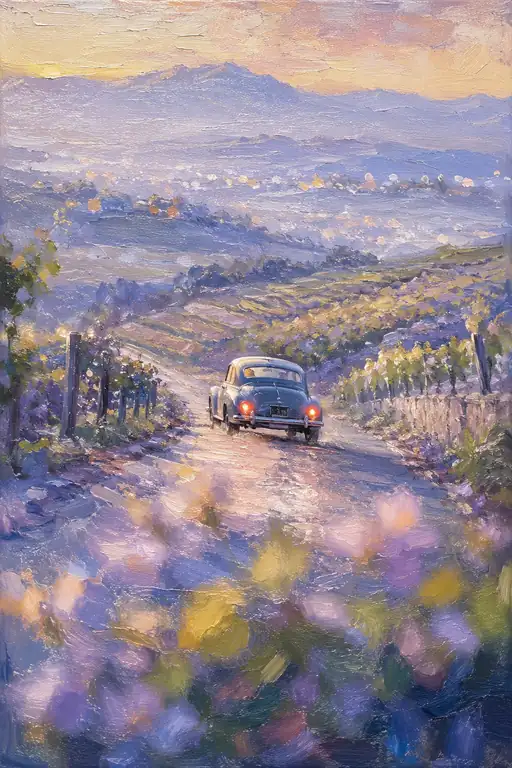 The Old Car Drives into a Lavender Dawn
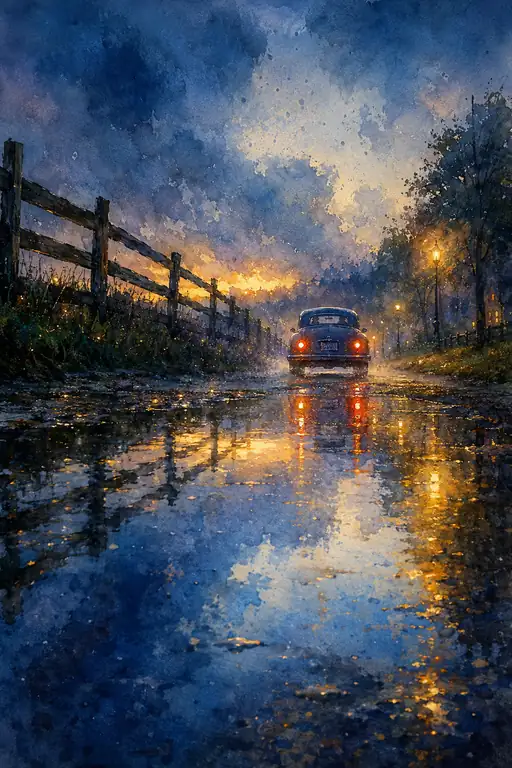 Rain Carries the Last Car Toward Sunset
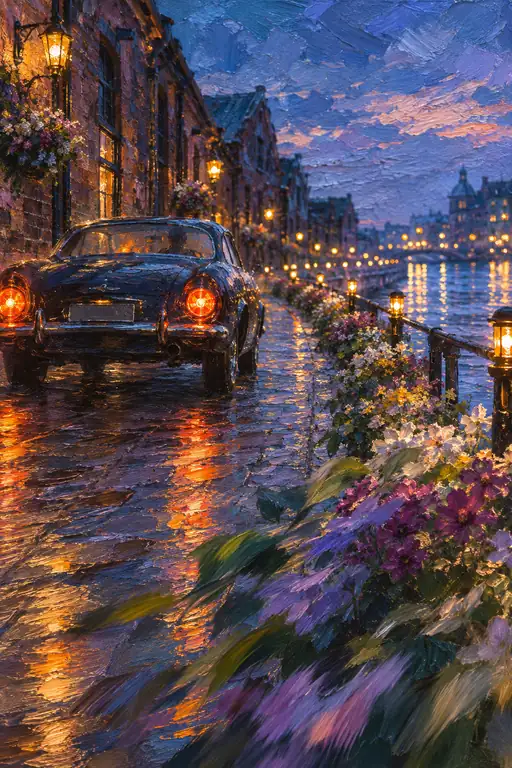 The Road Shines Before the Midnight Drive
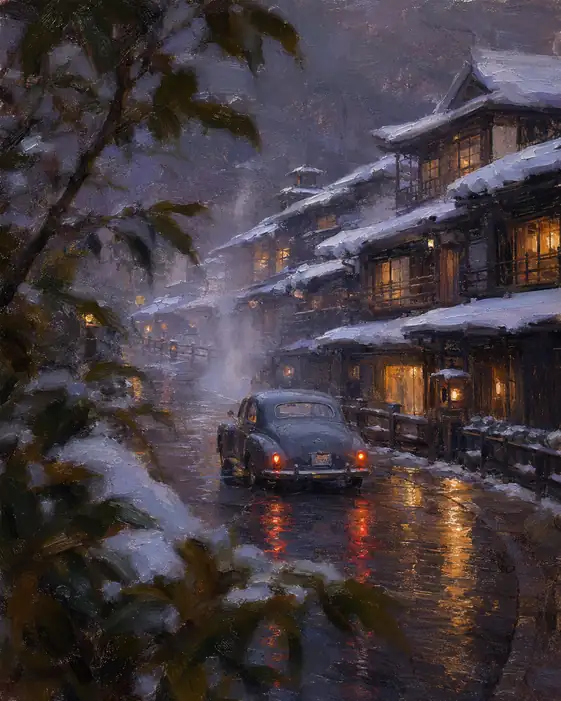 The Last Car Leaves a Trail of Emberlight
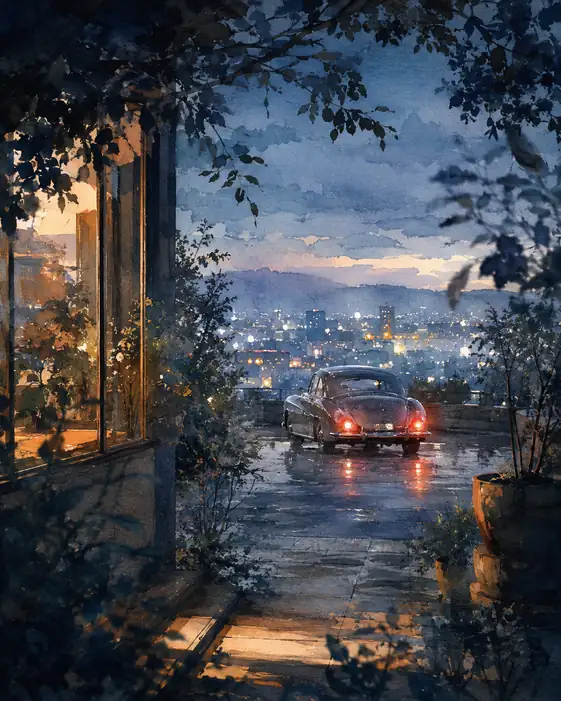 The Old Car Pauses between Home and the City Stars
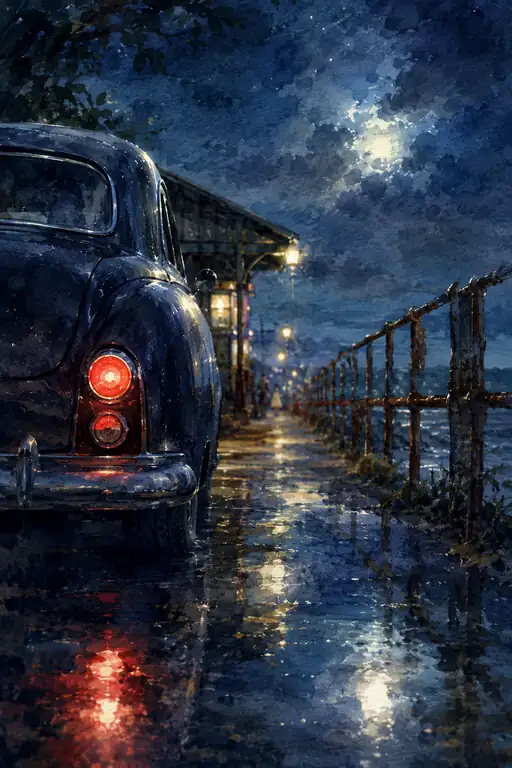 The Last Train Waits beneath a Rain-Washed Moon
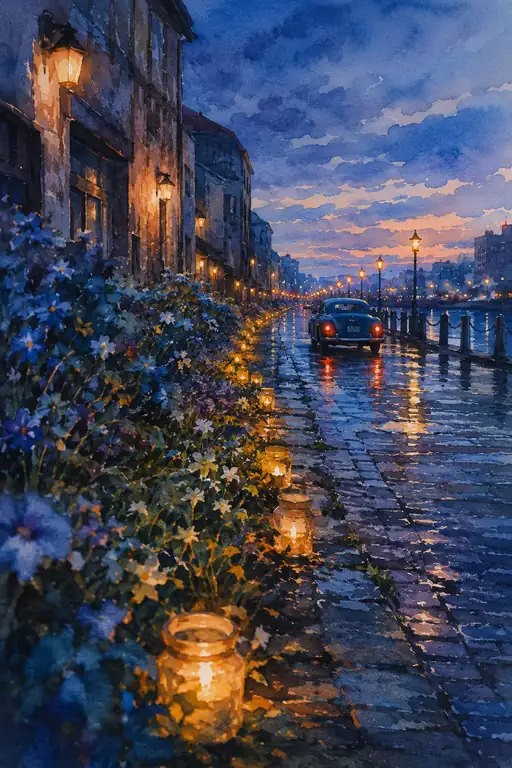 Little Lanterns Guide the Blue Car Home
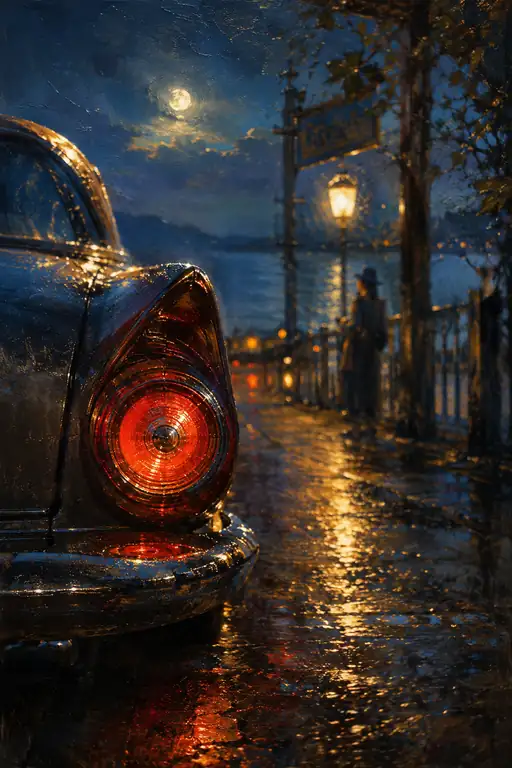 One Red Lamp Remembers the Moonlit Farewell