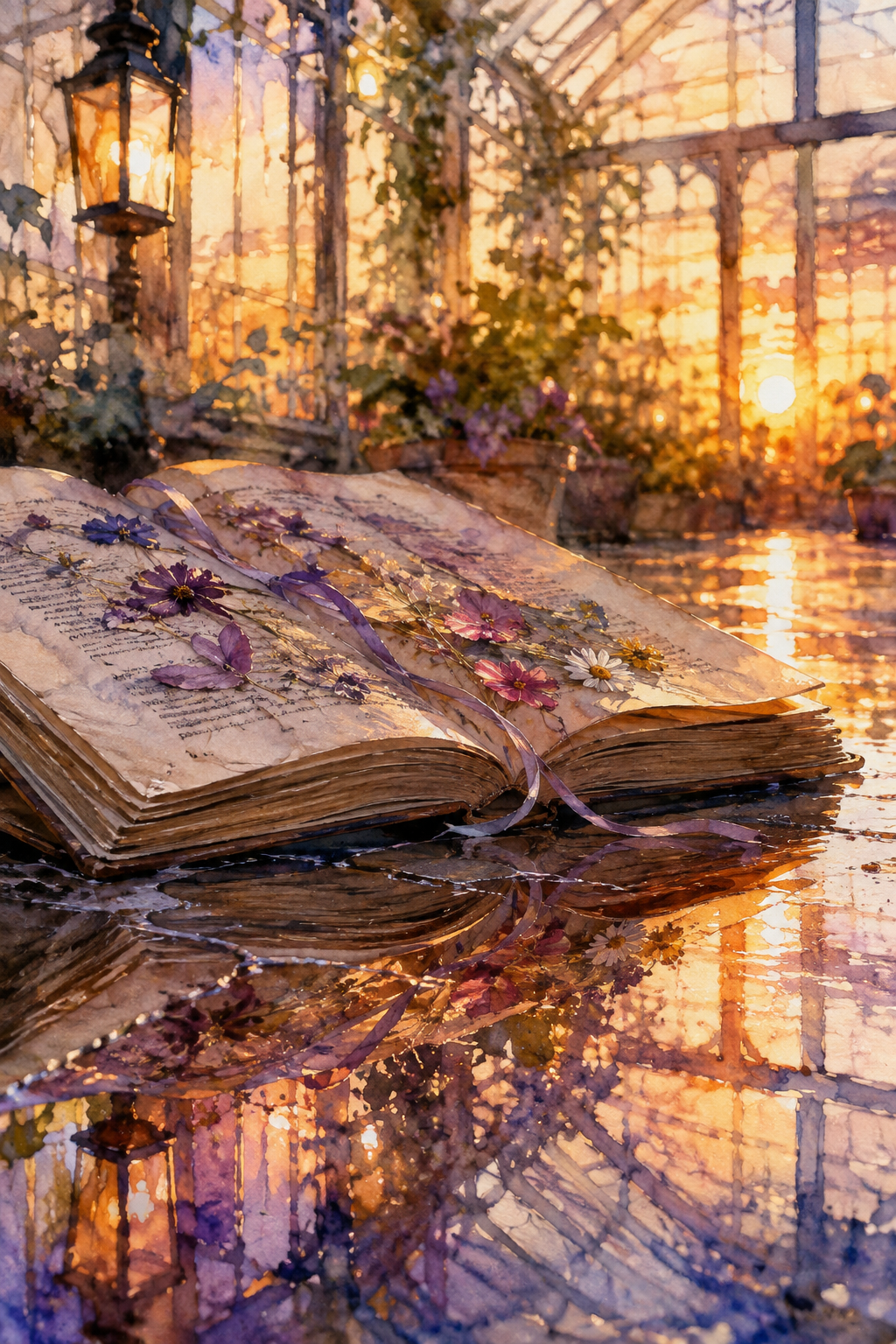
Sunset Reads the Greenhouse Book of Flowers
Critique
Introduction This sunset greenhouse still life places an open, flower-strewn book on a flooded table or floor. Written memory, pressed blossoms, ribbon, and radiant architecture overlap in a lavish meditation on preservation and change. Description A large worn volume lies open across the foreground, its yellowed pages covered with printed or handwritten lines. Purple, pink, white, and yellow flowers rest on the paper beneath loose violet ribbons. Thick page edges curl and darken with age. Water surrounding the book mirrors it, the roof grid, lanterns, plants, and brilliant orange sun. Potted flowers and iron frames recede into the glowing conservatory. Analysis The book forms a broad diagonal platform against the vertical and arched greenhouse structure. Its pale pages create a major light mass, echoed and distorted below. Violet ribbon threads through warm orange and brown, providing cool chromatic continuity with the shadows. Fine text and stems contrast with thick reflective strokes. The gutter points toward the sunset, linking reading to distance. Reflections double the composition but water’s irregularity prevents exact symmetry. Interpretation and Evaluation Writing preserves language, flowers preserve an encounter, and ribbon temporarily gathers both. Yet wet surroundings, curled pages, and fading petals make preservation visibly imperfect. The book remains open, refusing final closure. Sunset light turns the archive into a present event, while the reflection suggests memory as transformation rather than copy. Its romantic symbols remain credible because material wear is fully acknowledged. Conclusion The work joins record and impermanence with exceptional sensory richness. Page, petal, water, and glass each retain traces differently. Memory appears not as a sealed past, but as something reopened and altered by current light.
Same Subcategory
 Pressed Flowers Remember a Warmer Season
Similar Artworks
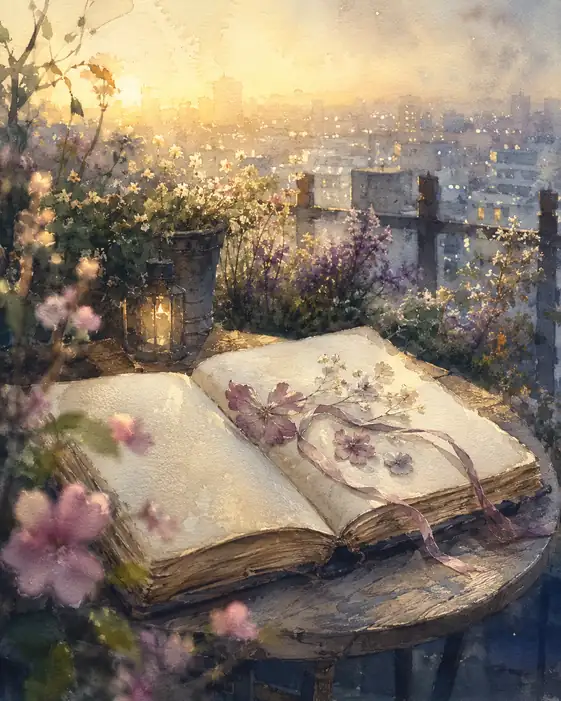 The Blank Page Waits for the City's Morning
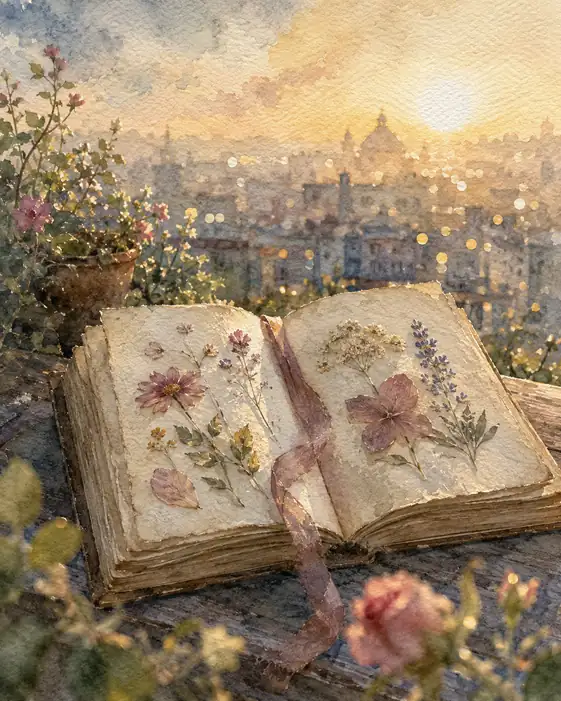 Pressed Flowers Dream beneath the Golden Dome
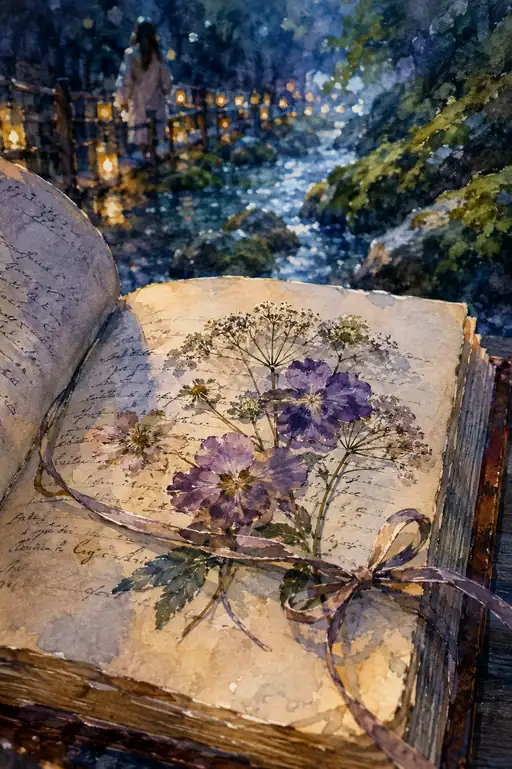 Pressed Flowers Keep the Night Walker's Story
 Reflections of a Forgotten Tale
 The Moon Reads the Flowers Between the Lines
 Flowers Remember What the Letter Said
 Pressed Blossoms Preserve the Valley's Afterglow
 Pressed Blossoms Dream beside the Lantern Stream
 Winter Reads the Flowers' Secret Diary
 Pressed Flowers Dream Beyond the Moonlit Page