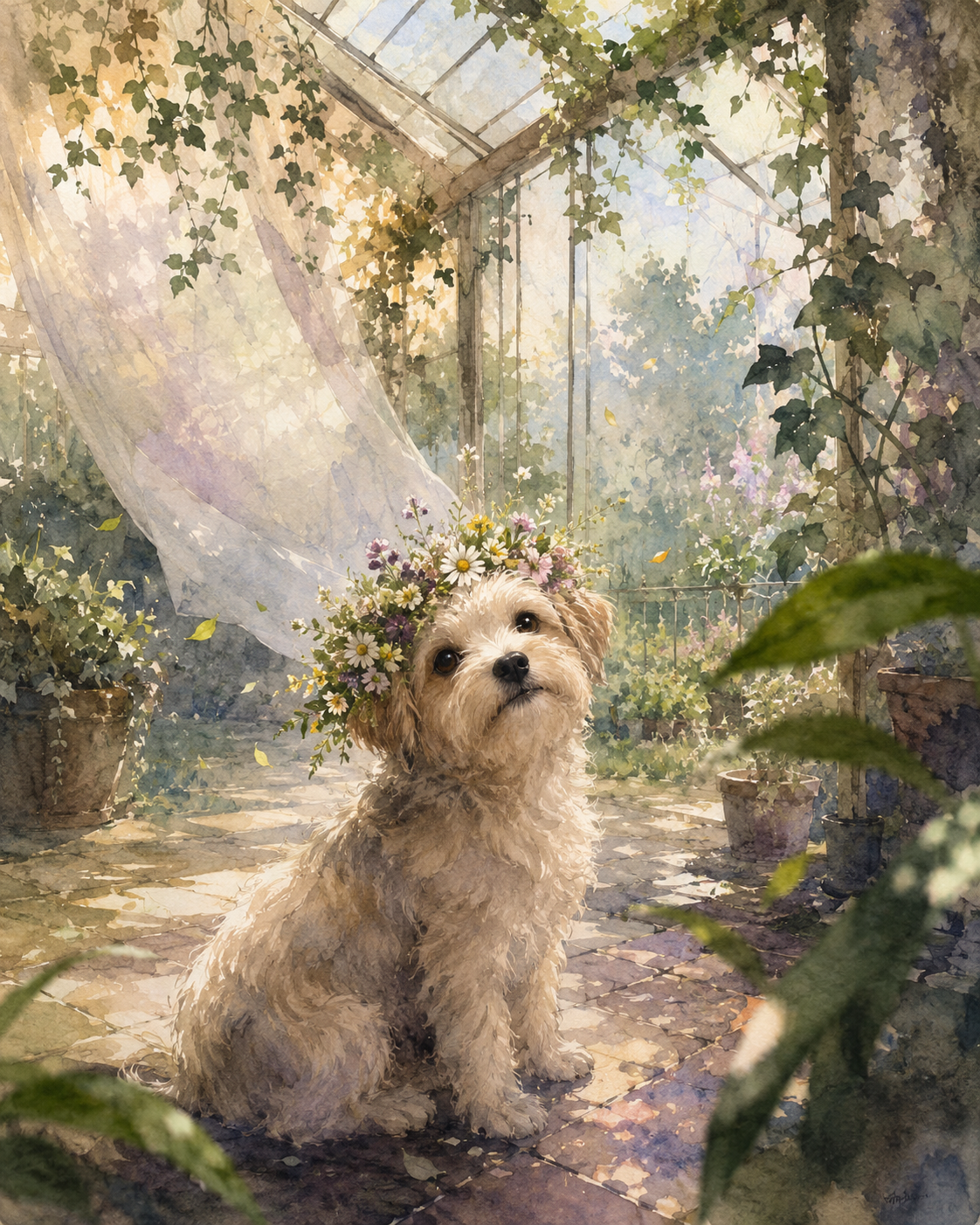
The Little Dog Who Became the Greenhouse Spring
Critique
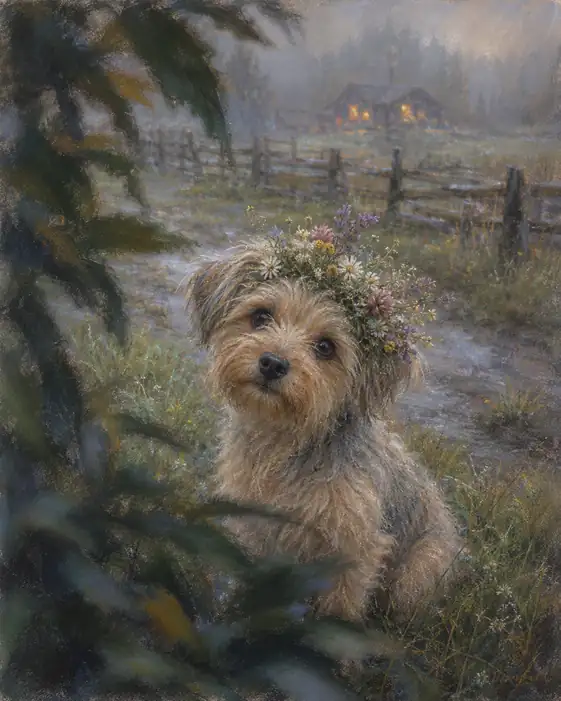
Introduction This gentle watercolor portrays a small cream-colored dog wearing a crown of meadow flowers inside a sunlit greenhouse. Its inquisitive gaze and surrounding movement balance tenderness with a clear sense of animal presence. Description The shaggy dog sits near the center on pale, irregular paving, tilting its head upward toward the viewer. Daisies, tiny yellow and purple blossoms, and green sprigs form an abundant wreath over both ears. A translucent curtain billows across the left background. Ivy climbs glass walls and roof beams, potted plants sit along the edges, and broad foreground leaves frame the lower corners. Analysis The dog’s upright body forms a stable triangular mass amid drifting fabric and branching vines. Dark eyes and nose create concentrated accents in otherwise pale fur. Cream, sage, lavender, and soft gold establish a restrained palette. The flower crown repeats surrounding growth at a smaller, organized scale. Backlight defines individual hairs, while watercolor blooms soften the paving and distant plants. Foreground leaves create a protected, discovered viewpoint. Interpretation and Evaluation The crown may imply human affection, but its meadow flowers keep the dog connected to the garden rather than turning it into a formal ornament. The tilted head conveys attention without exaggerated anthropomorphism. Moving curtain and scattered leaves suggest air circulating around the seated animal, so stillness remains receptive. Human care is inferred through architecture and adornment, while the dog retains its own direct agency through its gaze. Conclusion The painting succeeds by disciplining charm with spatial and material sensitivity. Fur, flower, glass, cloth, and light remain distinct yet cooperative. The dog becomes a warm participant in the greenhouse, not merely its decoration.
Same Subcategory
Similar Artworks
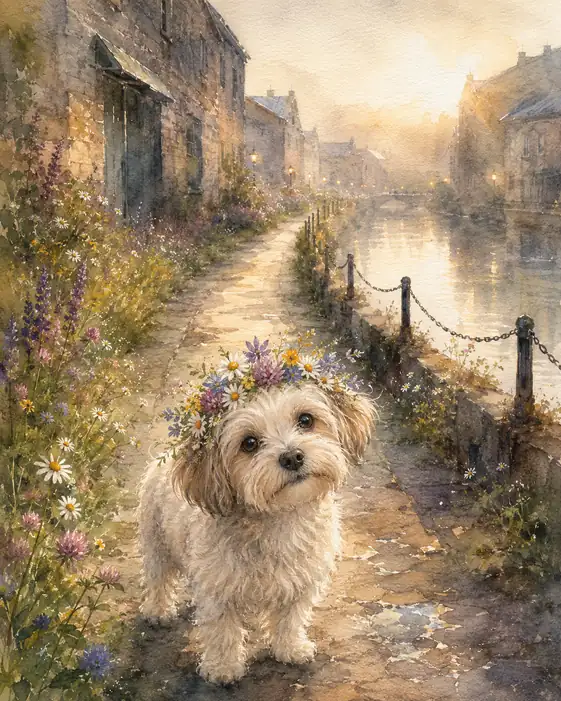 The Little Dog Crowned by Canal Flowers
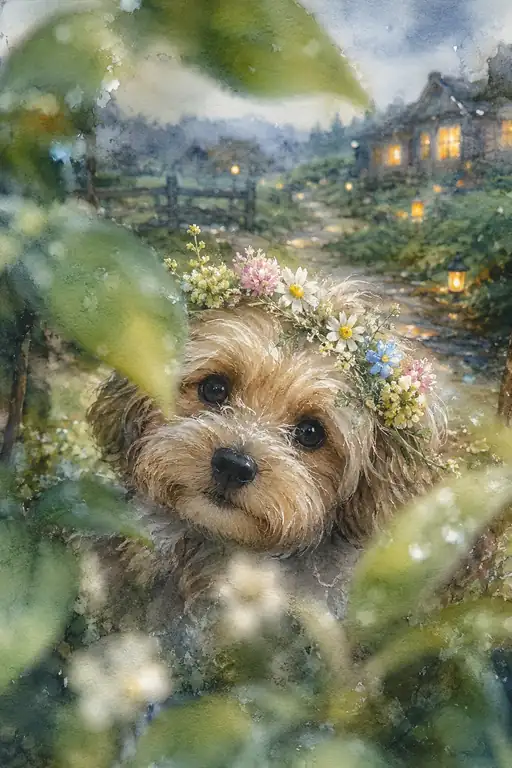 The Flower-Crowned Guardian of the Lantern Path
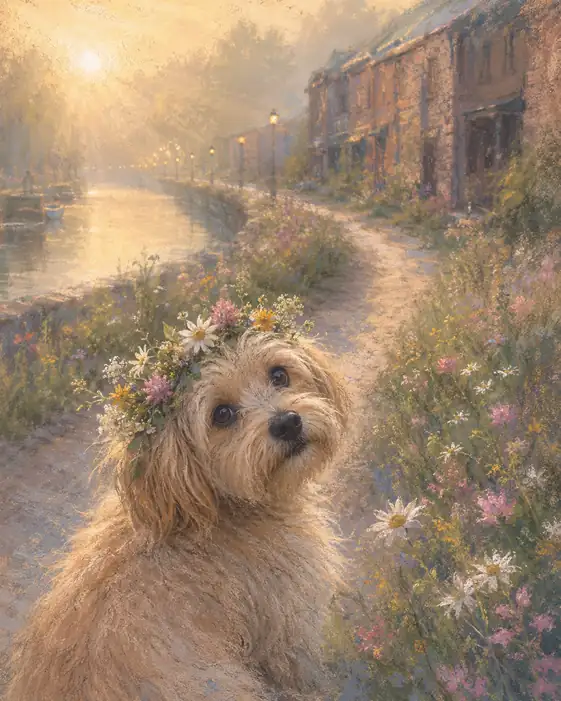 Her Flower Crown Catches the Morning
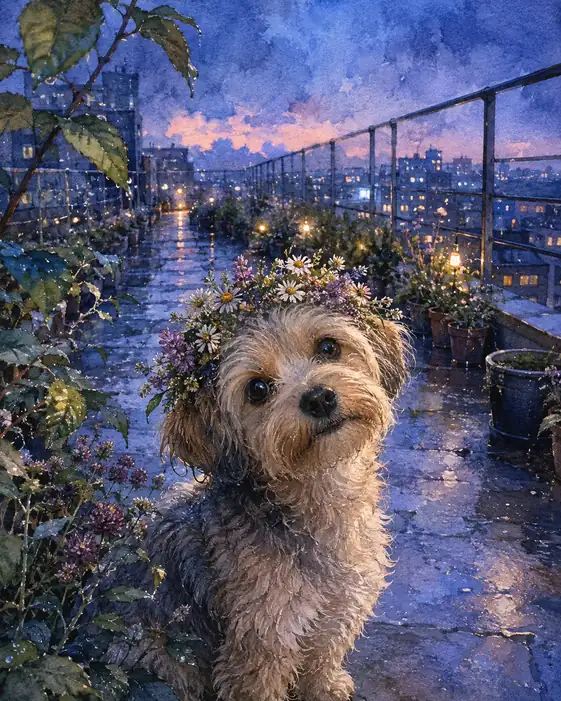 The Flower-Crowned Dog Finds the Rain's Last Star
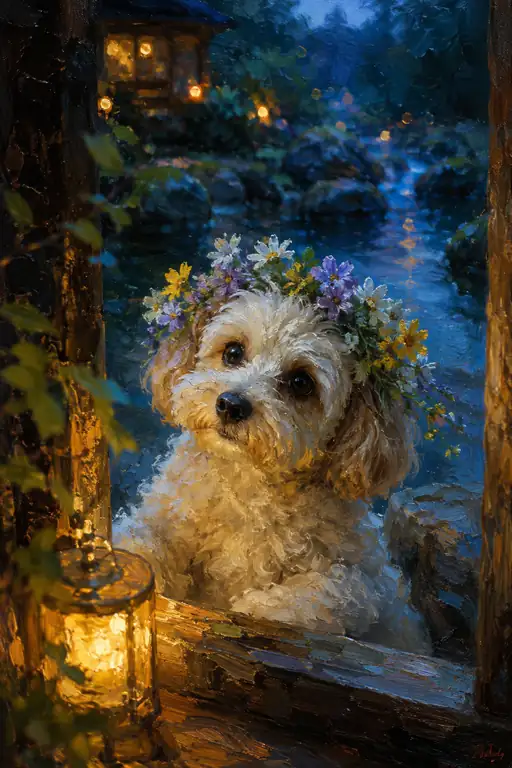 The Flower-Crowned Dog Returns with the Blue Evening
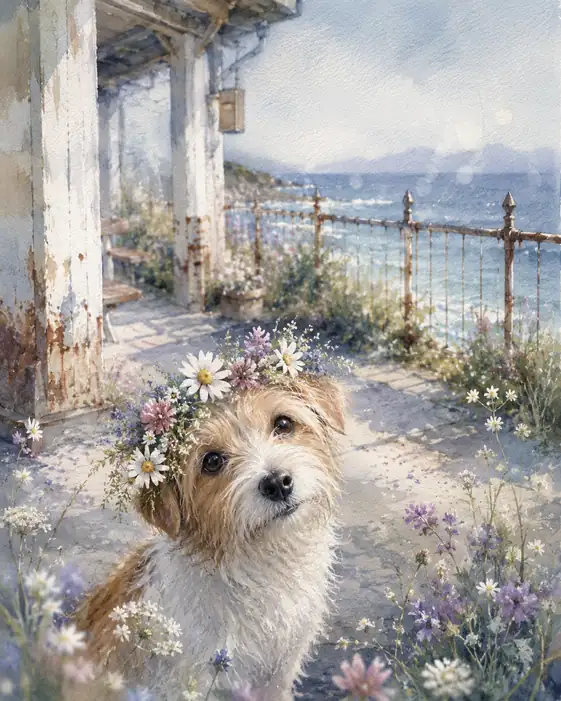 The Seaside Gave Her a Crown of Daisies
 The Flower-Crowned Dog Greets the Setting Sun
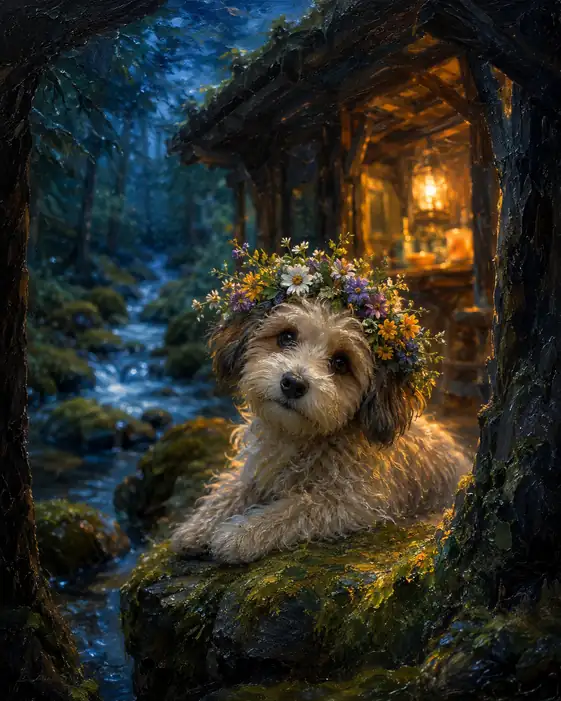 The Flower-Crowned Dog Guards the Forest Hearth
 The Snow Gave Her a Crown of Wildflowers
 She Wore the Meadow Home at Dusk