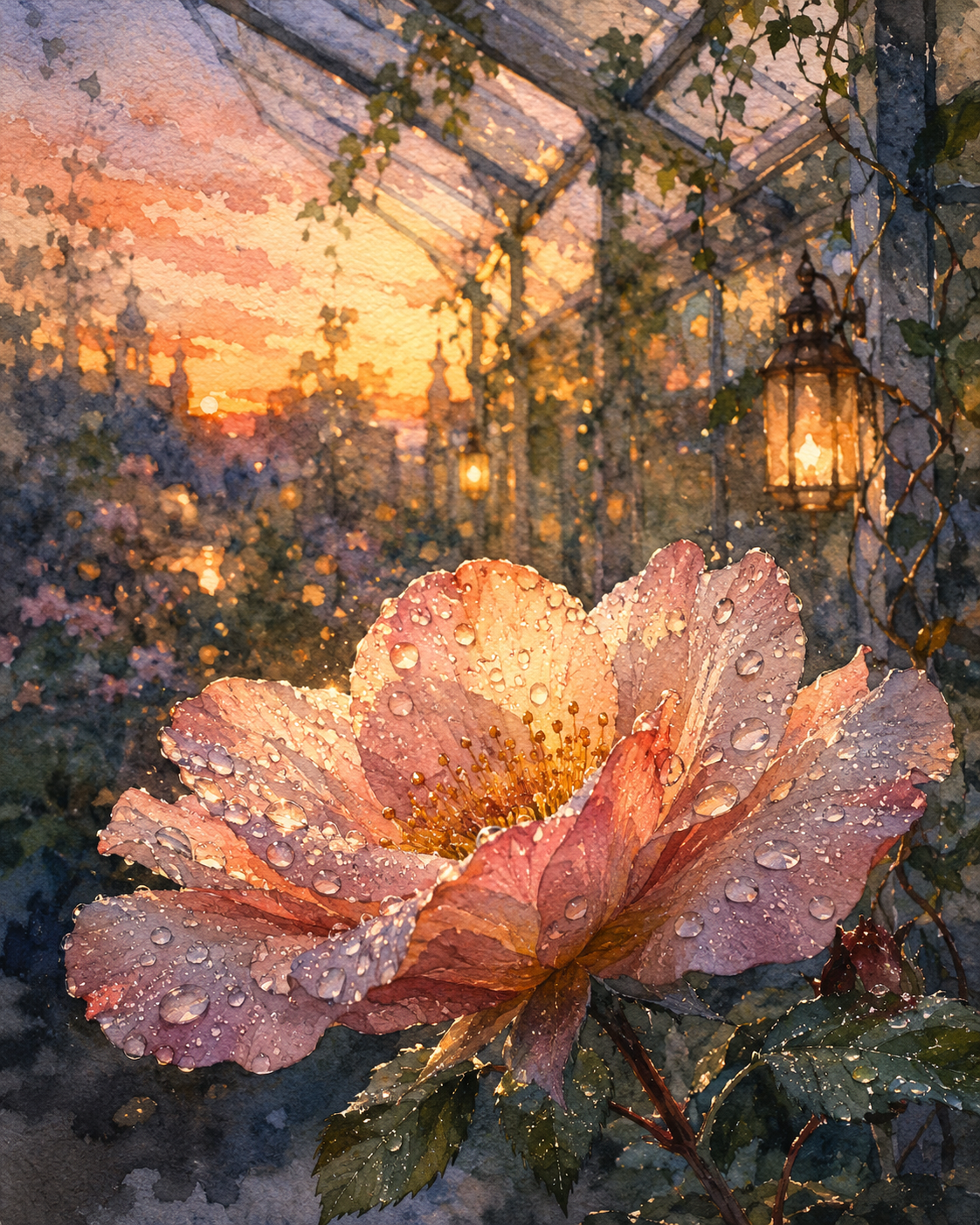
The Rose Drinks the Last Light of Rain
Critique
Introduction This close watercolor portrait of a rain-covered rose places botanical intimacy against a glowing greenhouse sunset. Magnified petals and droplets make a single bloom capable of holding the larger atmosphere around it. Description A broad pink-peach flower fills most of the lower and central frame. Its irregular layered petals open around a dense gold center and carry dozens of clear droplets of varied sizes. Dark serrated leaves and reddish stems support it. Behind, glass roof beams, hanging vines, distant flowers, and several amber lanterns dissolve into blue-gray and orange haze beneath a brilliant setting sun. Analysis Extreme scale makes the bloom a landscape of folds, edges, and reflective spheres. Warm backlight travels through thin petals, shifting them from coral to lavender. Droplets sharpen the foreground through highlights and miniature refractions, while the conservatory remains broadly washed. The flower’s radial structure counters roof diagonals and vertical posts. A lantern at upper right balances the heavy bloom and echoes its gold stamens. Interpretation and Evaluation The painting treats attention as enlargement. Rain does not merely decorate the rose; droplets reveal curvature, texture, and gravity, recording the recent weather on a fragile surface. The sunset and lamps are distributed across the water beads, allowing the flower to receive the architecture’s entire light. Its slightly bruised, uneven petals prevent perfection from becoming sterile. Conclusion The work convincingly joins the minute and the expansive. Petal, water, sun, and lantern share one luminous system. By looking closely at a temporary bloom, the painting makes the whole greenhouse newly perceptible.
Same Subcategory
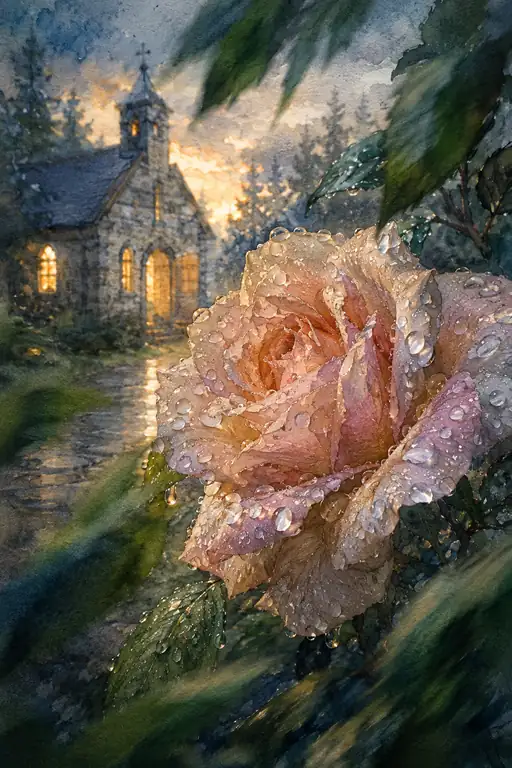 Resilience in Pink Dew
Similar Artworks
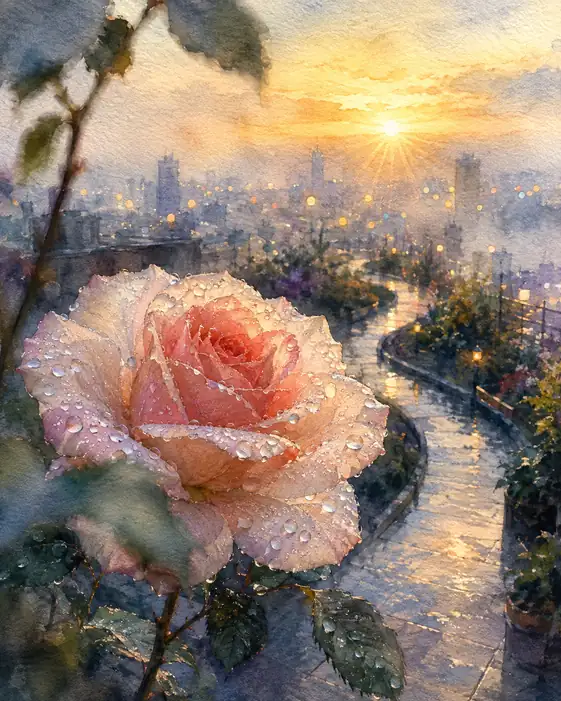 A Rose Drinks the Dawn from Every Raindrop
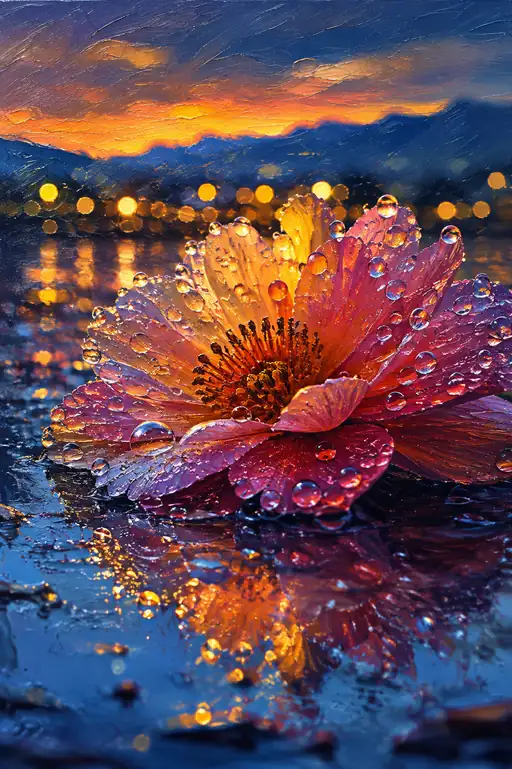 A Rain-Jewelled Blossom Mirrors the Burning Sky
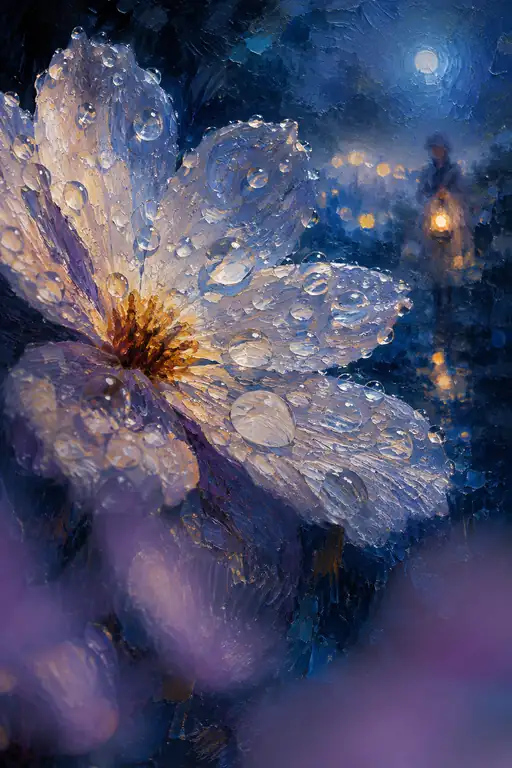 Moonlit Dew Crowns the Midnight Flower
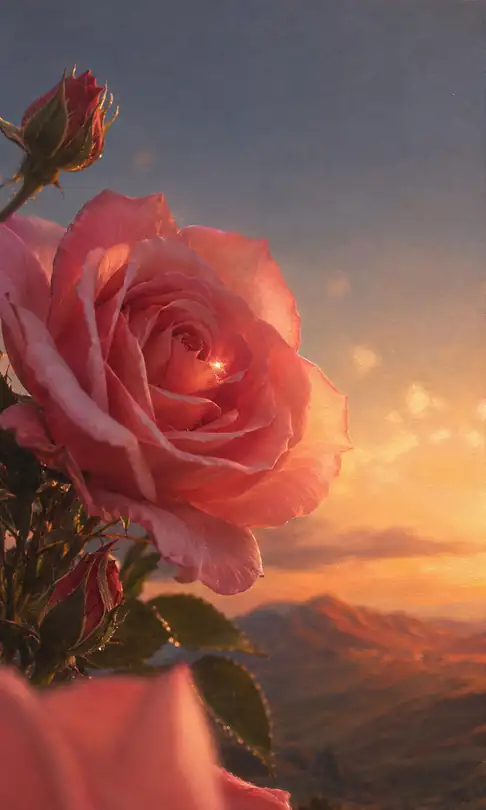 Rose Petals in the Golden Horizon
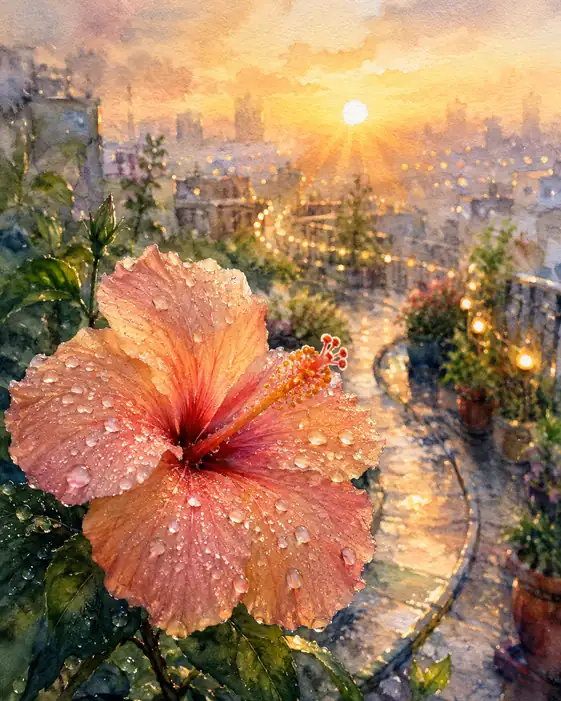 The Hibiscus Wears the City's Golden Rain
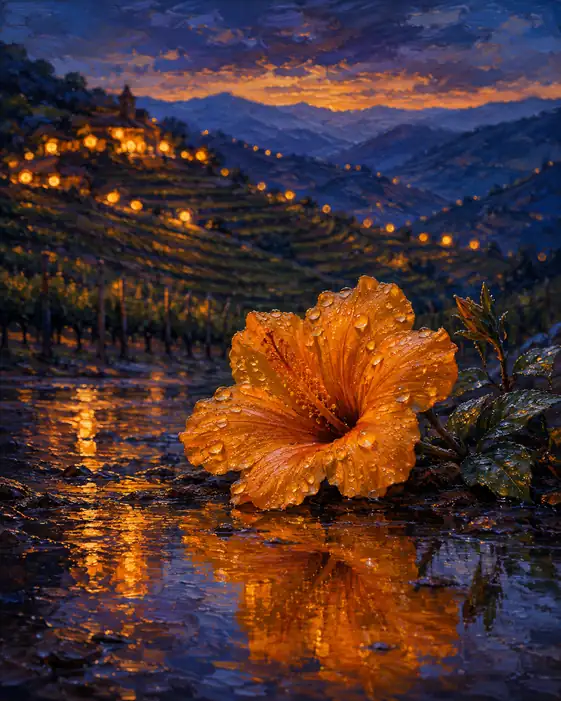 A Rain-Kissed Hibiscus Holds the Vineyard Sunset
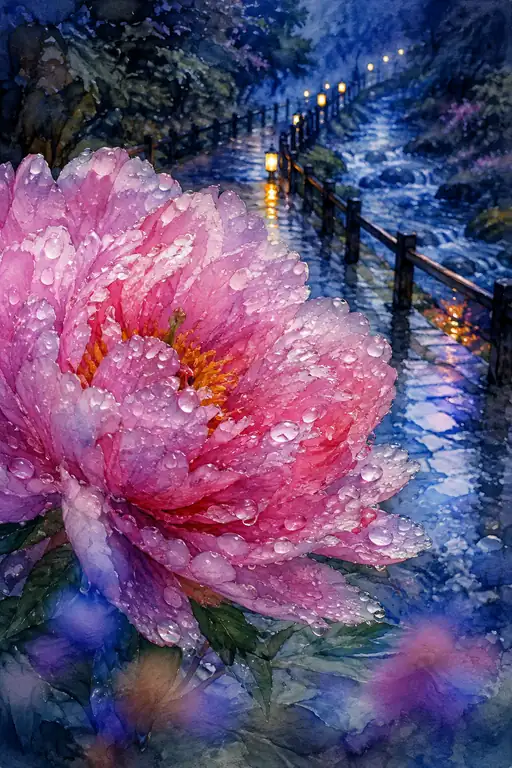 The Peony Wears a Necklace of River Rain
 Lantern Glow by the Country Station
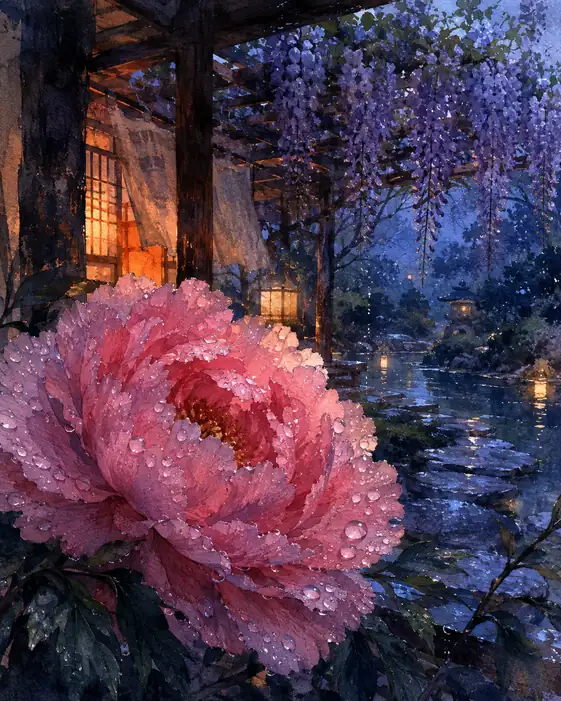 A Peony Gathers the Blue Garden's Rain
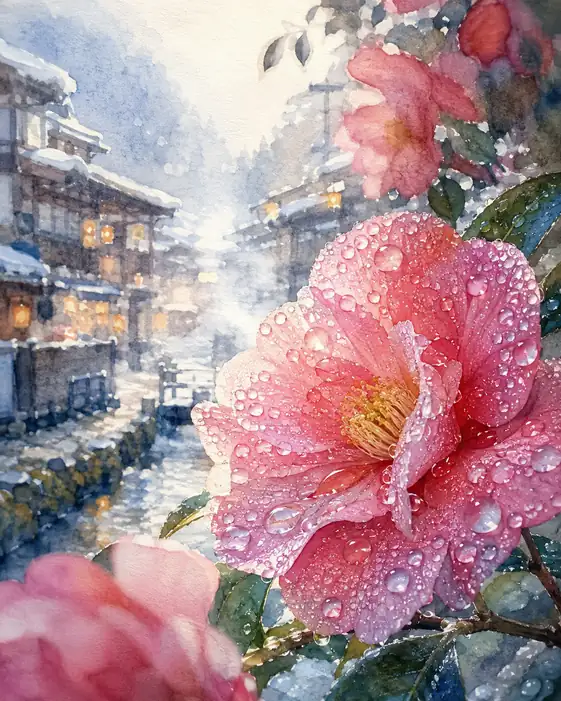 A Camellia Holds the Snow Village in Every Drop