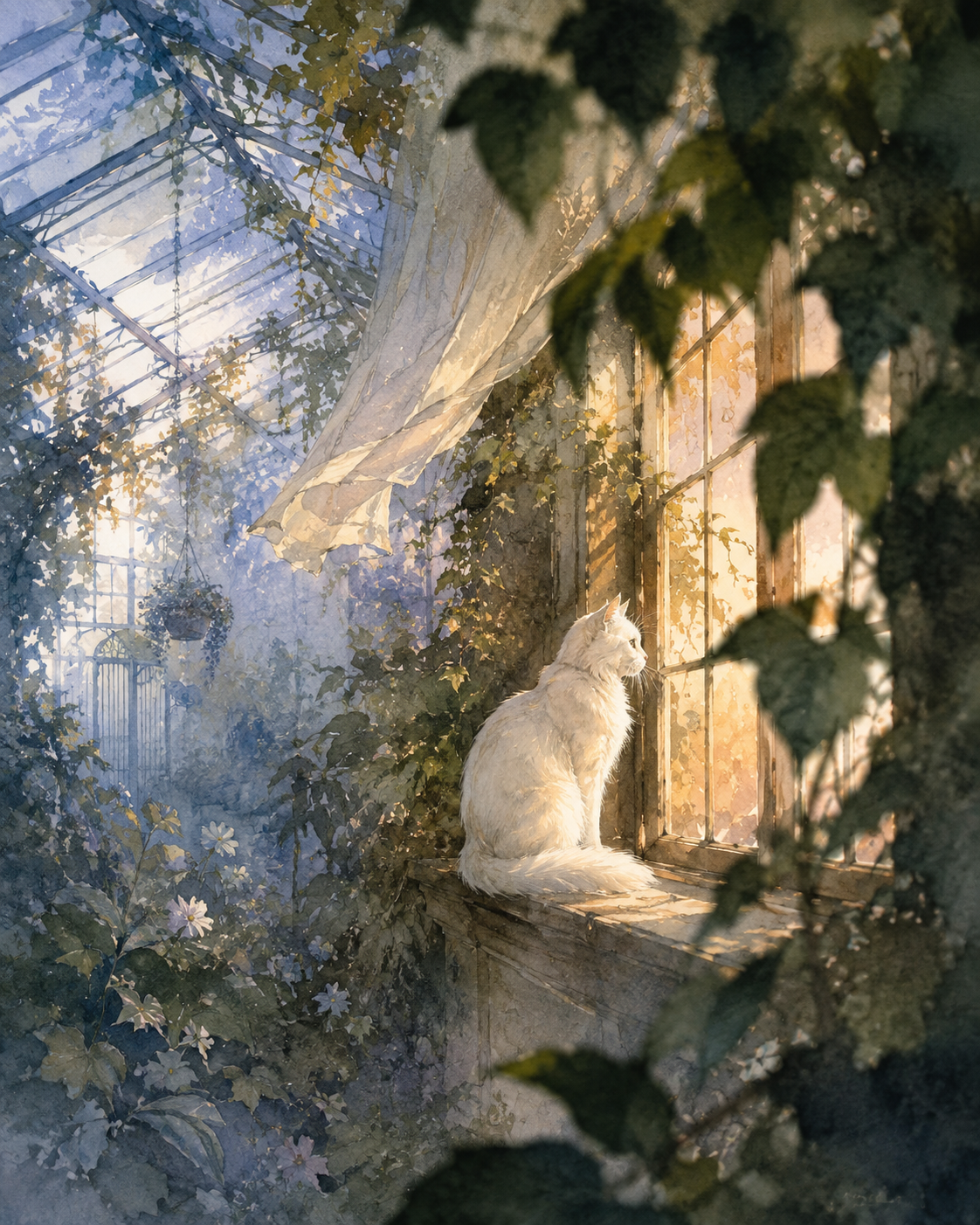
The White Cat Watches Morning Enter the Glasshouse
Critique
Introduction A white cat sits on a greenhouse ledge before a radiant window. Its attention centers the overgrown architecture between cool foliage and warm light. Description The cat sits in profile near the center-right, facing glowing panes. Its tail rests along the broad, worn sill, and cream light outlines its ears, whiskers, chest, and back. A translucent curtain lifts from the roof and drifts toward the window. Vines, hanging baskets, and pale flowers fill the blue-gray conservatory. Large dark leaves blur across the right foreground and partially conceal the view. Analysis The cat’s compact triangular silhouette stabilizes the complex lattice of roof ribs, mullions, vines, and cloth folds. Warm gold concentrates around the window and fur, opposed by cool blue-green shade. Backlighting dissolves some of the animal’s white coat into the exterior glow, yet darker facial accents preserve its profile. The curtain creates a broad diagonal sweep, while the sill supplies a firm horizontal. Layered foliage constructs depth and a sense of quiet observation. Interpretation and Evaluation The cat acts as a witness rather than a decorative pet. Its alert ears and forward gaze make looking itself the subject. Greenhouse, window, and curtain form successive thresholds, while the animal occupies their meeting point. The lifted cloth records air moving through cultivated shelter, suggesting that enclosure remains alive only through exchange. Human care is present indirectly in architecture and fabric, but the cat claims the space on its own terms. Conclusion The painting balances intimacy with environmental breadth. Light transforms white fur into a receptive surface, while stillness clarifies the movement of leaves and curtain around it. The cat becomes a patient measure of the greenhouse’s changing air and light.
Same Subcategory
Similar Artworks
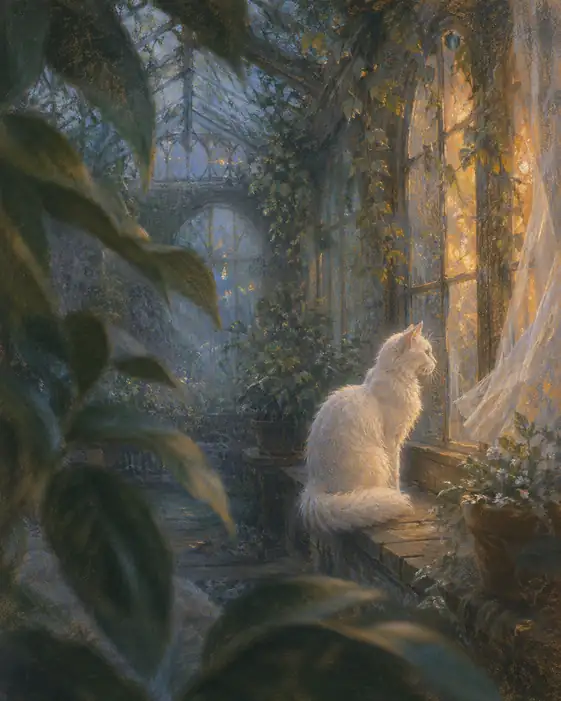 The Greenhouse Cat Waits for the Curtain of Light
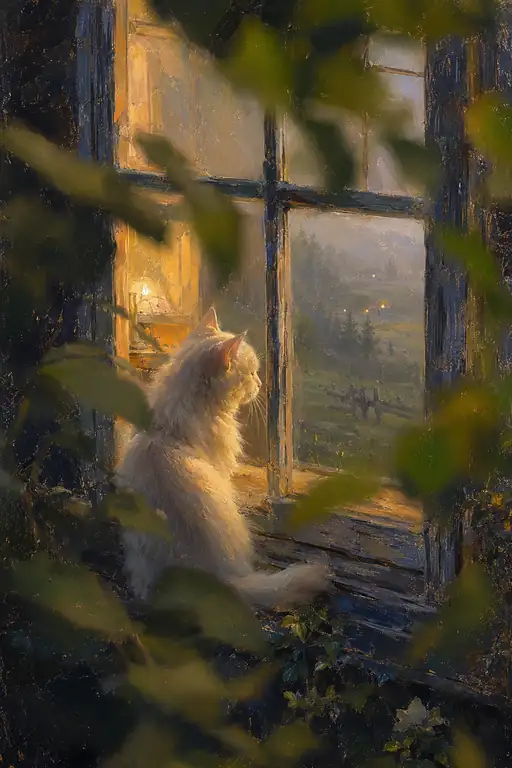 The Cat Who Watched Evening Cross the Fields
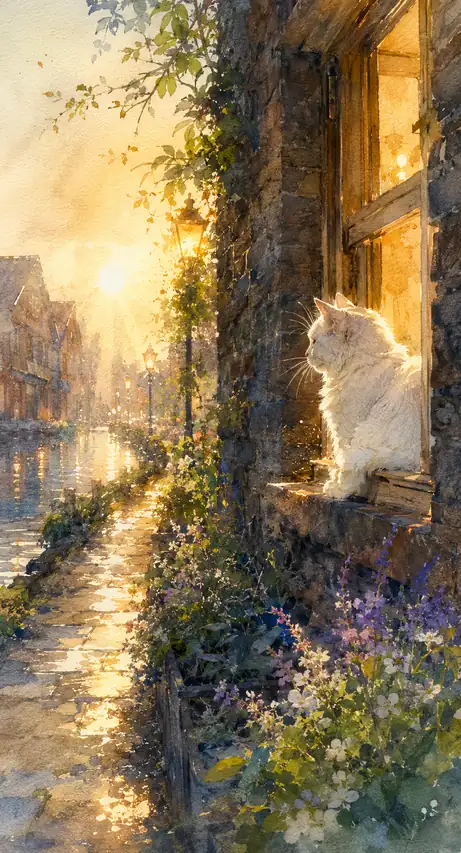 Sunset Finds the Cat at the Canal Window
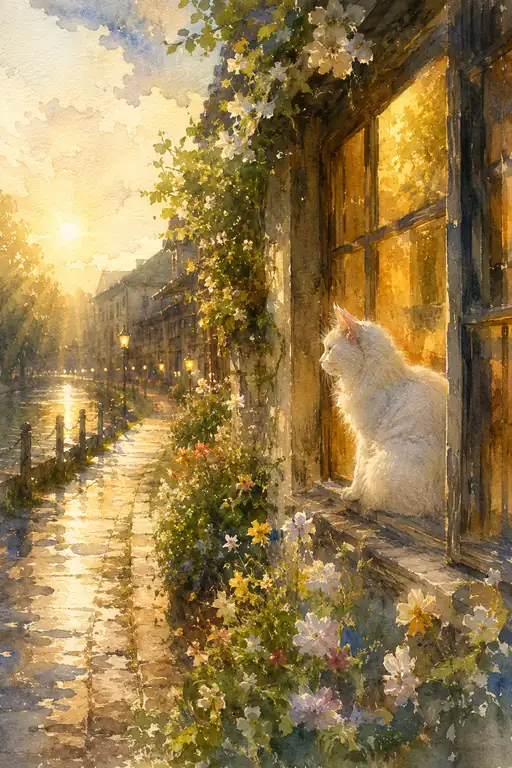 The White Cat Who Watches Morning Arrive
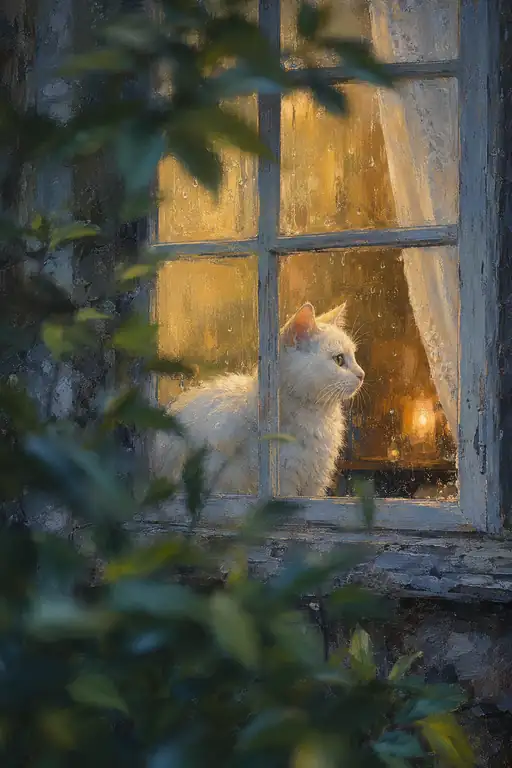 The White Cat Listening to the Rainlit Window
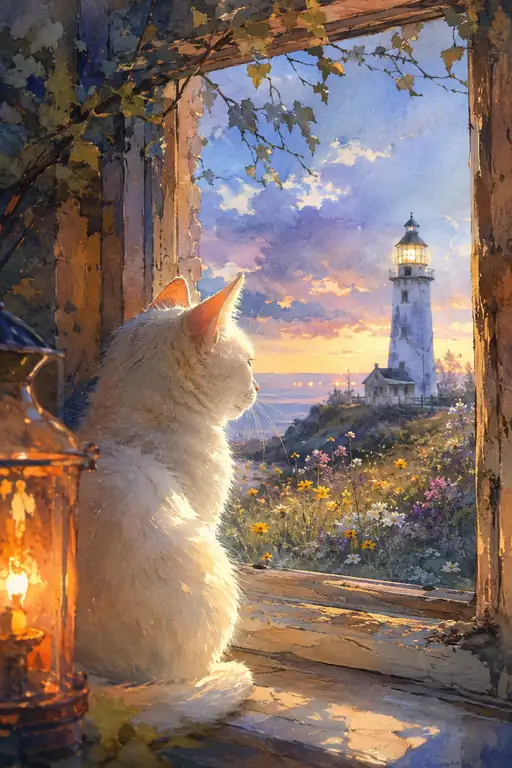 The White Cat and the Distant Lighthouse
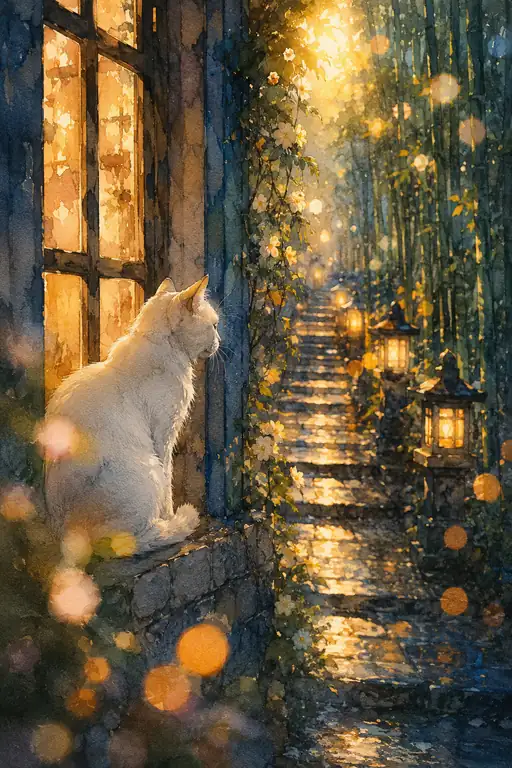 Silent Gaze Beyond the Bamboo Lanterns
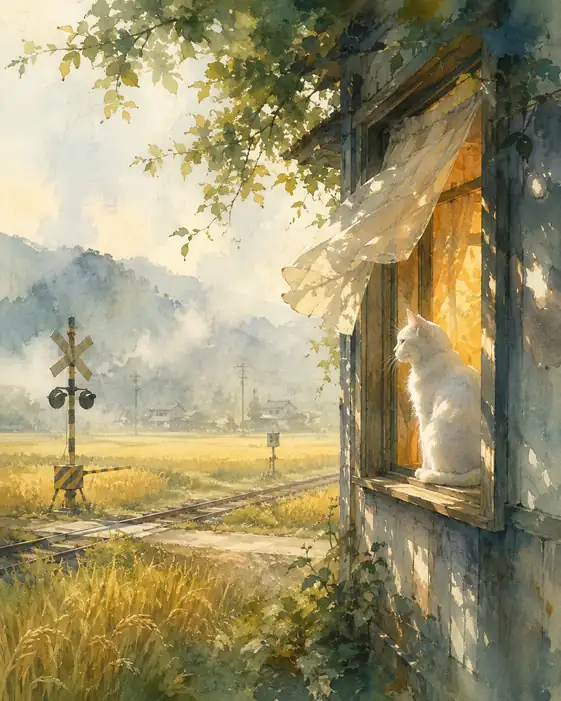 White Cat Watching the Morning Train Pass
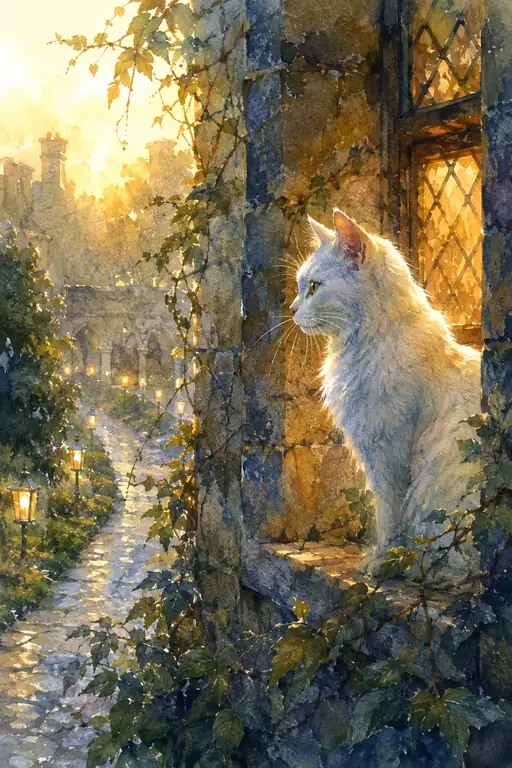 Morning Sunlight on the Castle Ledge
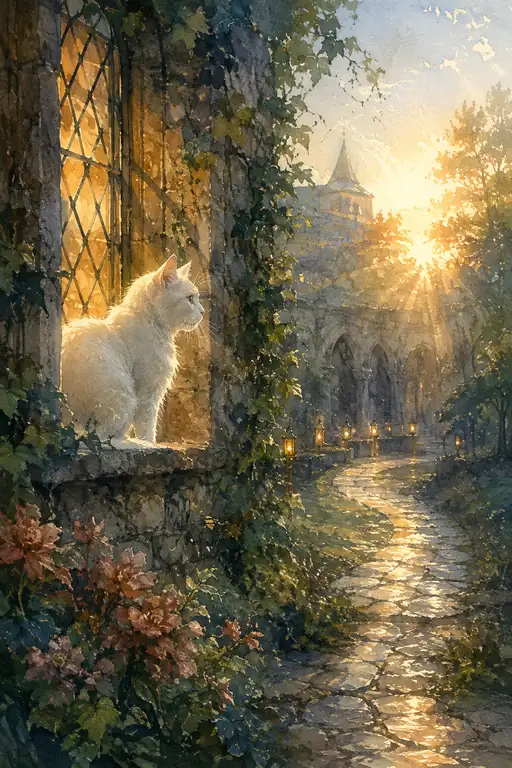 Morning Solitude on an Ancient Window