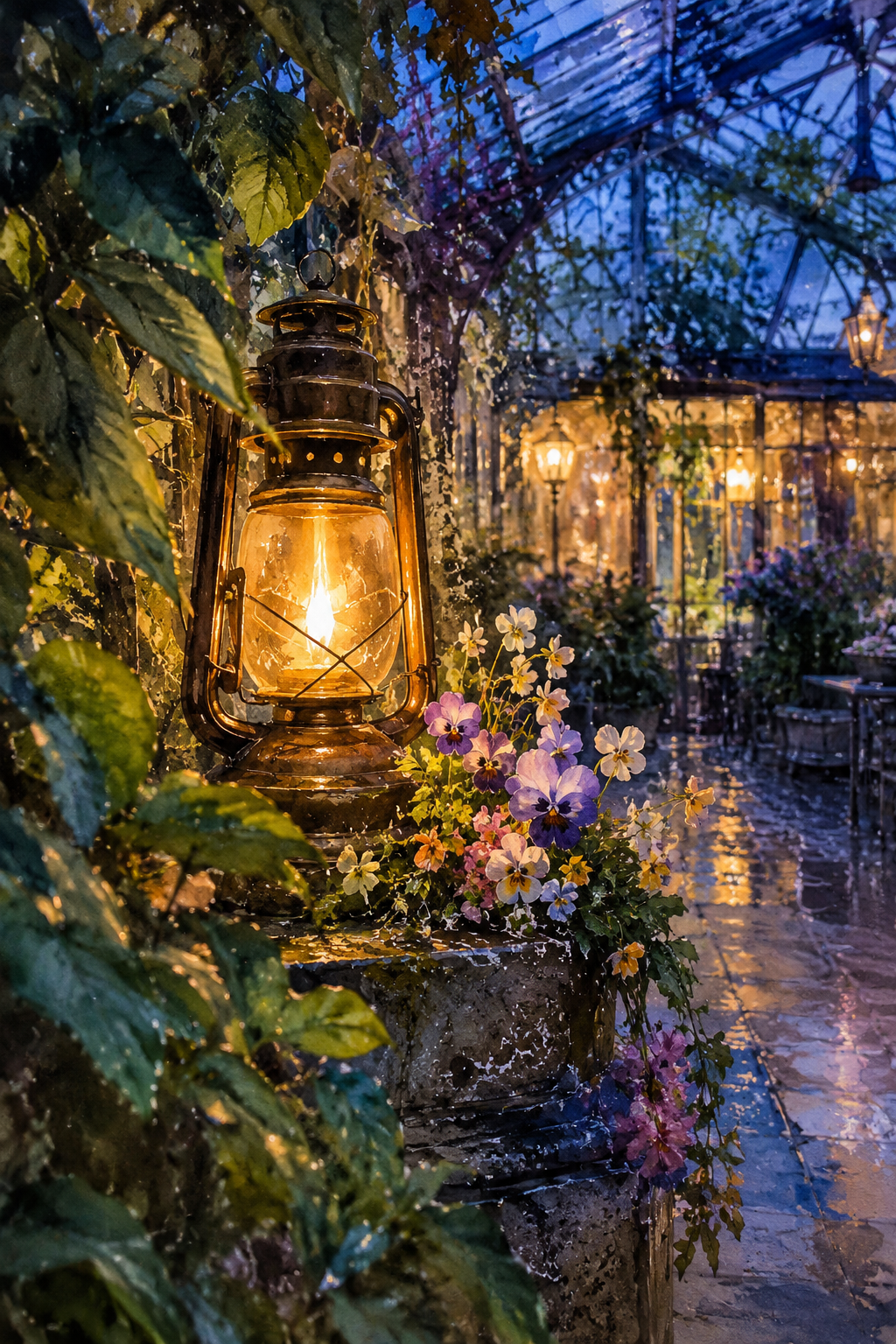
Rain Makes a Garden of Every Lantern
Critique
Introduction This rain-darkened greenhouse scene places a bright oil lantern beside a spill of pansies. Its contrast of practical flame, wet foliage, and repeating glass architecture turns maintenance into an atmosphere of intimate welcome. Description A large black lantern stands on a worn stone pedestal at the left center, its glass chamber glowing gold. White, lavender, purple, and yellow flowers cluster around its base and trail downward. Broad wet leaves crowd the foreground. Behind them, a narrow reflective aisle passes tables and plants beneath an iron-and-glass roof, where several hanging and standing lamps repeat into blue dusk. Analysis The lantern’s strong vertical anchors a corridor organized by receding roof ribs and paving lines. Warm lamps shrink in sequence, extending depth. Gold reflections run along wet stone against dominant cobalt, violet, and green. Crisp metal, droplets, and near petals contrast with softened distant fixtures. Leaves partially mask the lantern, preventing it from becoming an isolated emblem and establishing the viewer as someone approaching through growth. Interpretation and Evaluation The image makes care legible through infrastructure. A lamp protects work after daylight, while the greenhouse moderates weather for plants; both remain marked by rain and age. Flowers gather around the heavy metal object without appearing subordinated to it. The repeated lights imply that tending is distributed along the whole passage rather than concentrated in one decorative display. Human absence lets maintenance itself become the evidence of presence. Conclusion The painting combines tactile richness with lucid spatial direction. Its brightest flame is local, yet reflections and repeated lamps carry its warmth through the building. Shelter emerges as a continuing practice of lighting, growing, and keeping a path open.
Same Subcategory
Similar Artworks
 The Greenhouse Lantern Wakes the Violets
 One Lantern Keeps the Greenhouse Dusk
 The Moonbow Greenhouse at Midnight
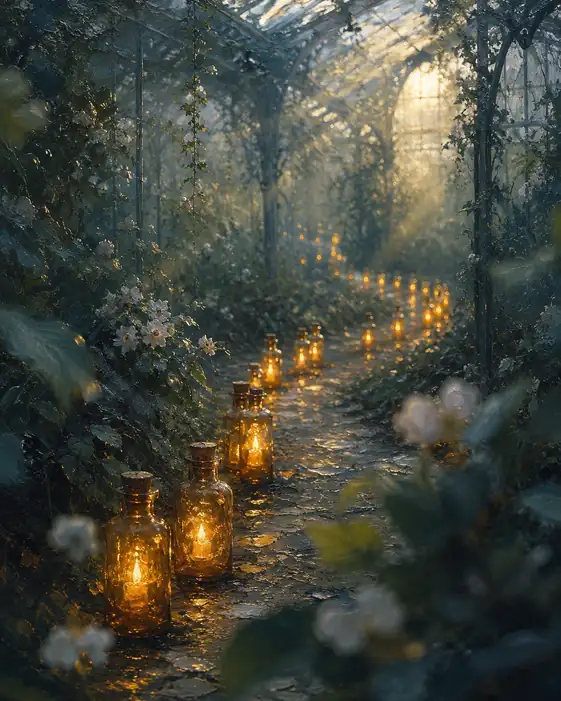 A Constellation of Bottled Flames Through the Leaves
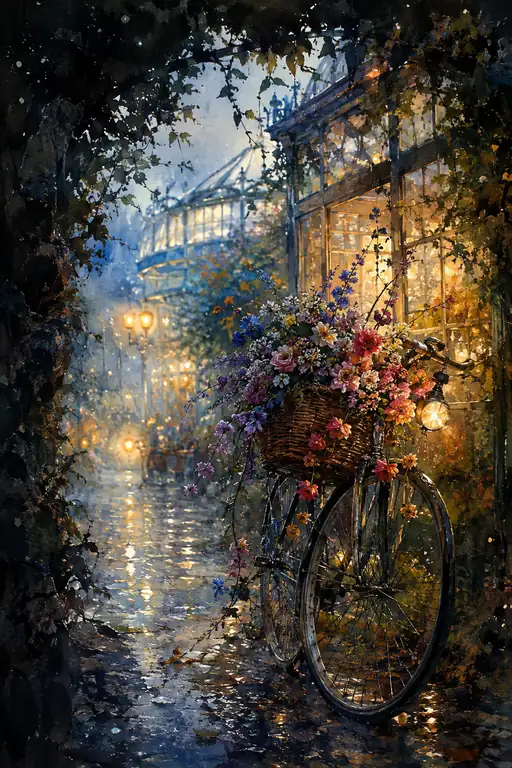 A Bicycle Overflows with the Greenhouse Evening
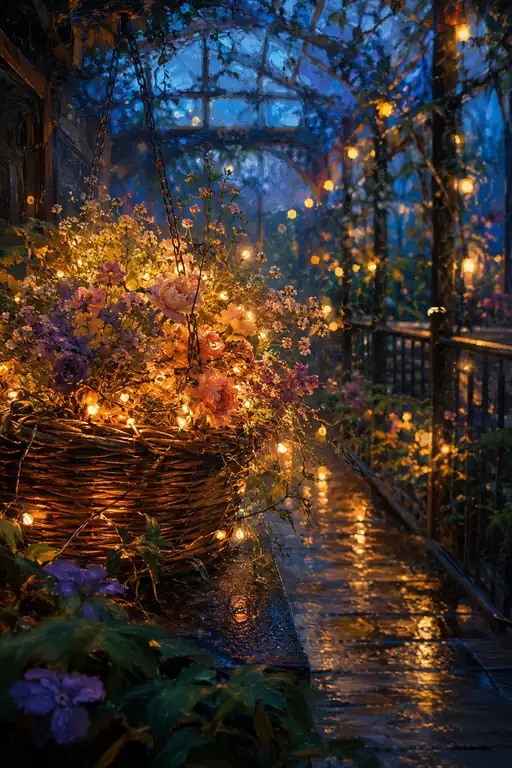 The Hanging Garden Learned to Glow at Night
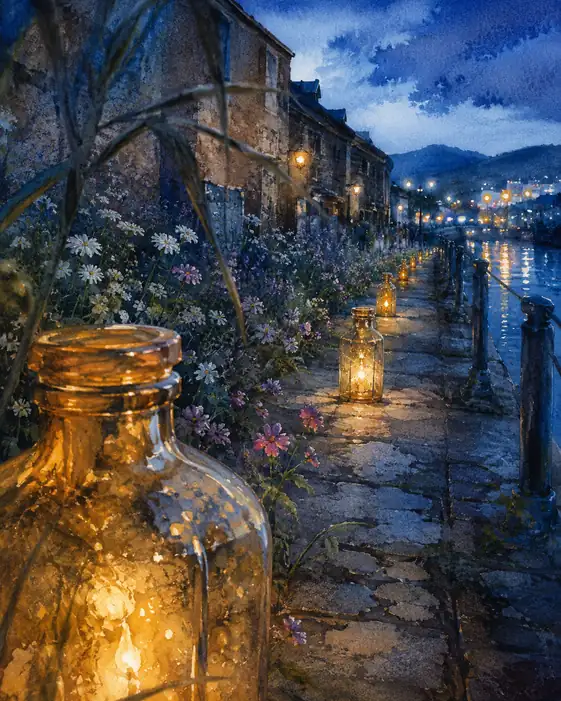 A Path Lit by Bottled Stars
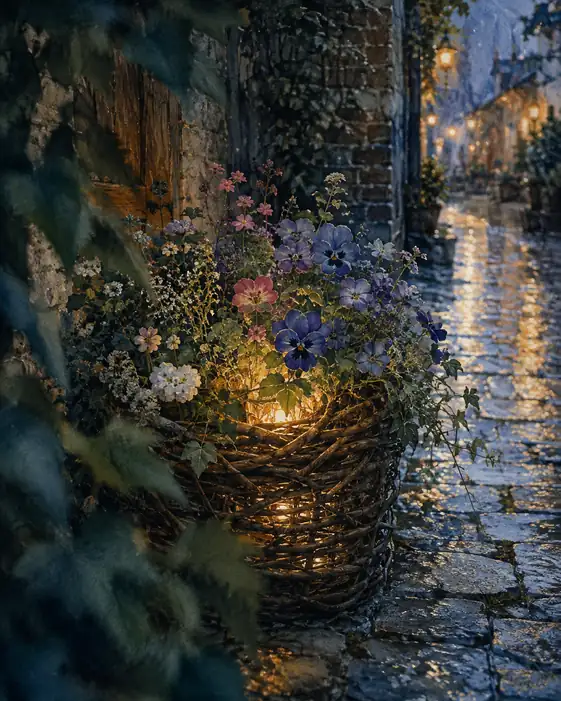 The Night Lamp Blooming in a Wicker Nest
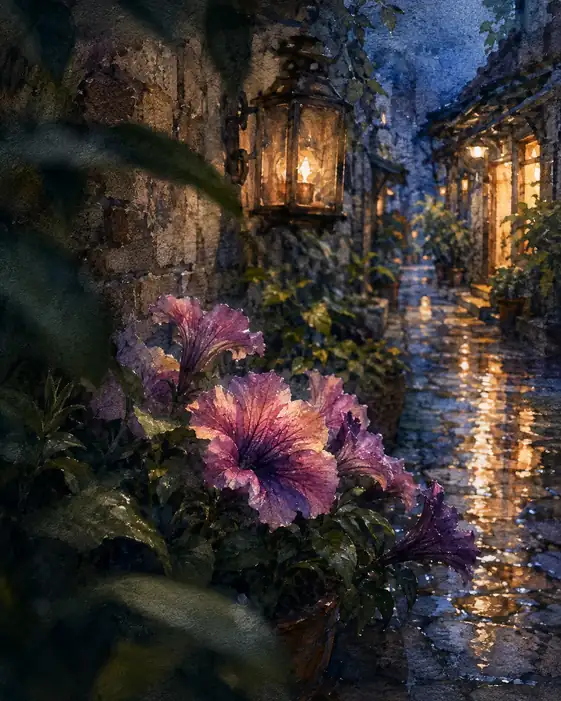 Petunias Listening to the Rainlit Lane
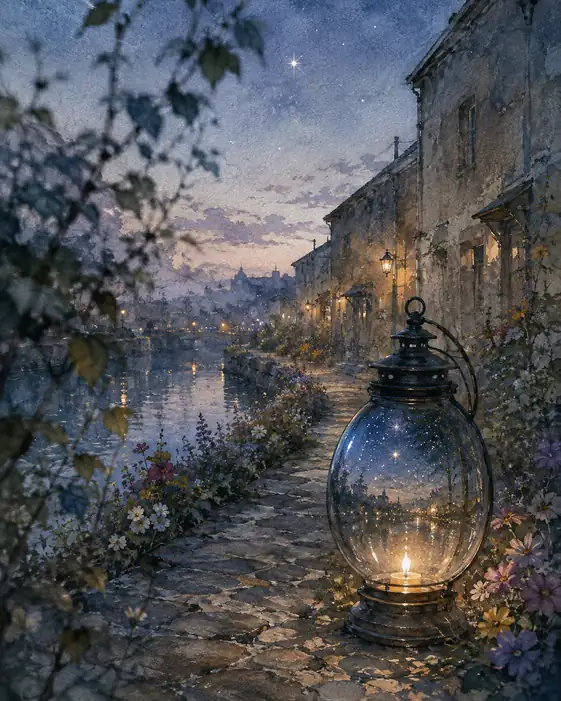 The Lantern That Gathered a Fallen Star