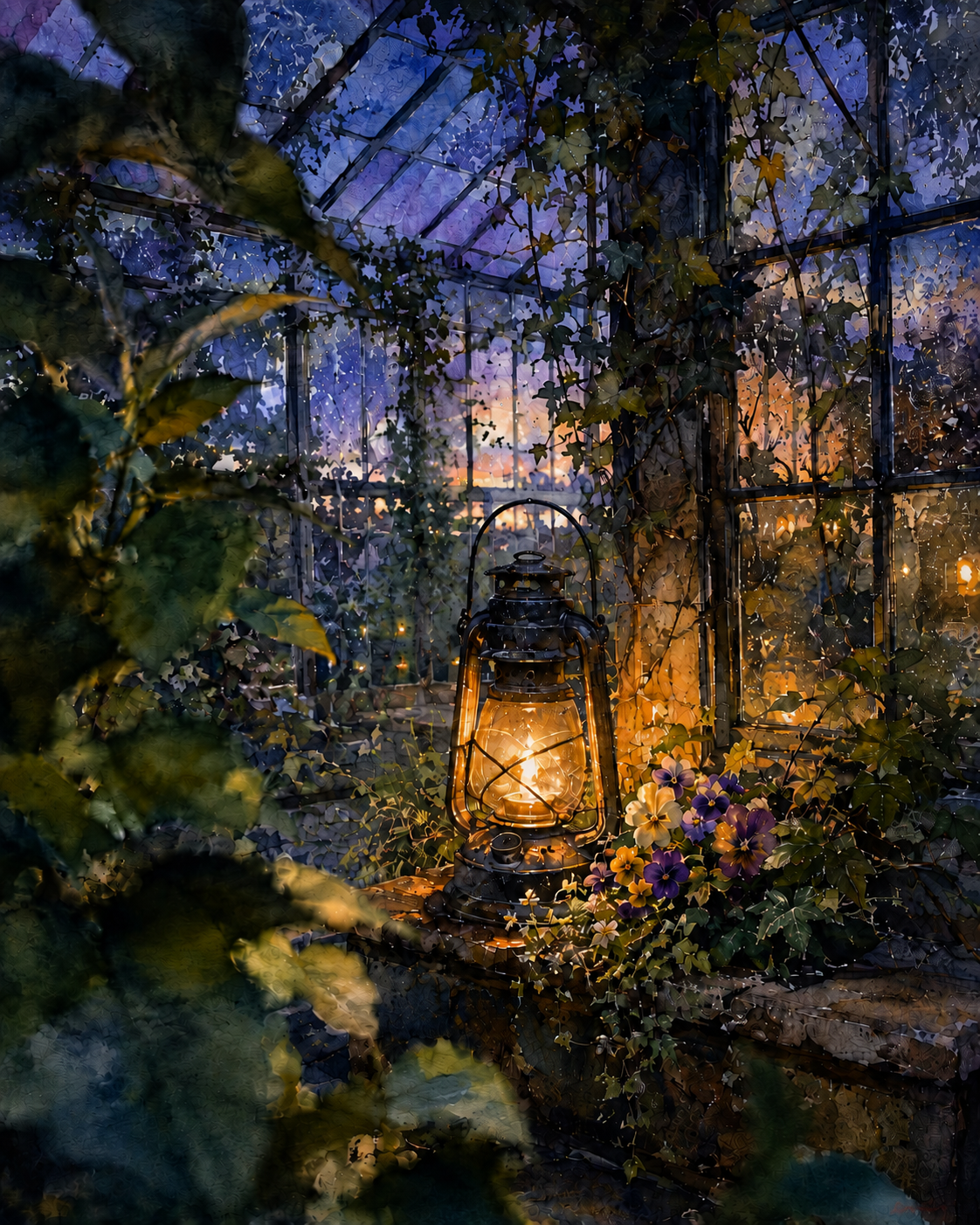
One Lantern Keeps the Greenhouse Dusk
Critique
Introduction This twilight greenhouse scene centers a working oil lantern beside a bed of flowers. Dense vines, wet glass, and an orange horizon make cultivated shelter feel porous to weather and the advancing night. Description A black metal lantern glows on a raised wooden or stone bed near the lower center. White, yellow, and purple pansies crowd its right side. Large leaves blur across the left foreground, while ivy climbs iron mullions and roof ribs throughout the glasshouse. Droplets and irregular reflections cover the panes. Outside, a violet-blue sky opens to a narrow peach sunset and scattered distant lights. Analysis The lantern’s vertical body anchors a composition otherwise filled with branching diagonals. Roof ribs establish depth, and vines repeatedly interrupt their geometry. Amber light expands across nearby foliage and a central masonry pier, contrasting with the cool blue-violet enclosure. The strongest detail lies around flame and flowers; edges soften toward foreground leaves and exterior distance. Numerous small highlights turn condensation into a visual rhythm that links lantern, windows, and remote lights. Interpretation and Evaluation The scene presents cultivation as negotiation rather than separation from nature. Glass moderates weather but admits its traces, while vines claim the very structure meant to contain them. The lantern extends working time into dusk, suggesting care performed when growth is no longer clearly visible. Flowers remain modest and close to the ground, preventing the strong central glow from becoming theatrical. Human presence is inferred through maintenance, not depicted. Conclusion The painting balances enclosure and openness with unusual richness. Its lantern gives warmth a practical center, while wet glass distributes that warmth throughout the architecture. Shelter appears alive because it remains exposed to change.
Same Subcategory
Similar Artworks
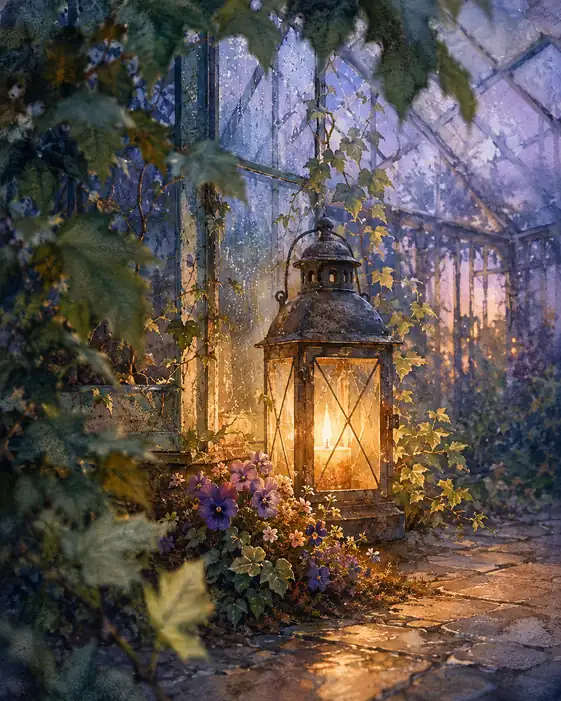 The Greenhouse Lantern Wakes the Violets
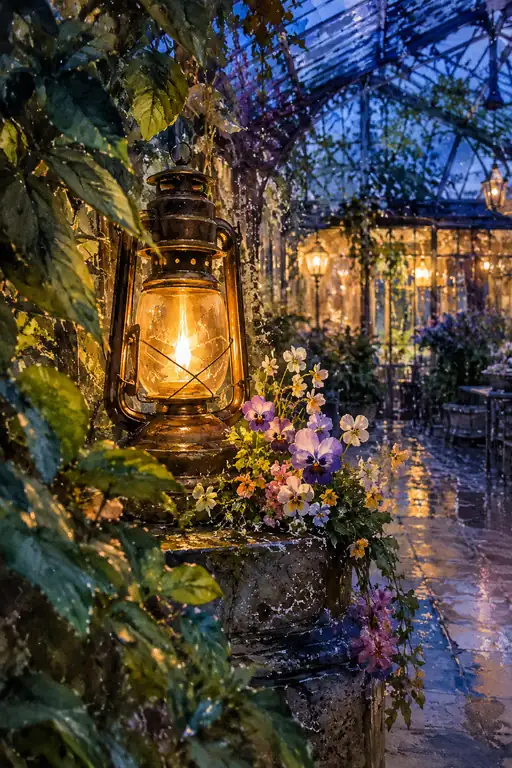 Rain Makes a Garden of Every Lantern
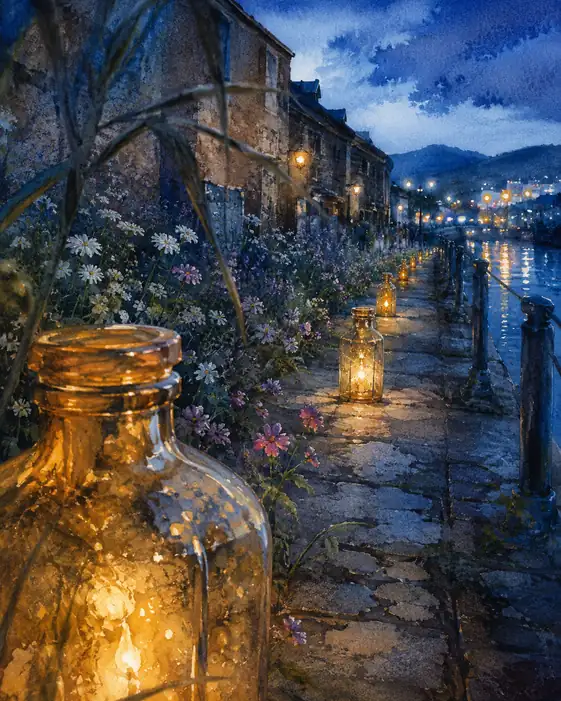 A Path Lit by Bottled Stars
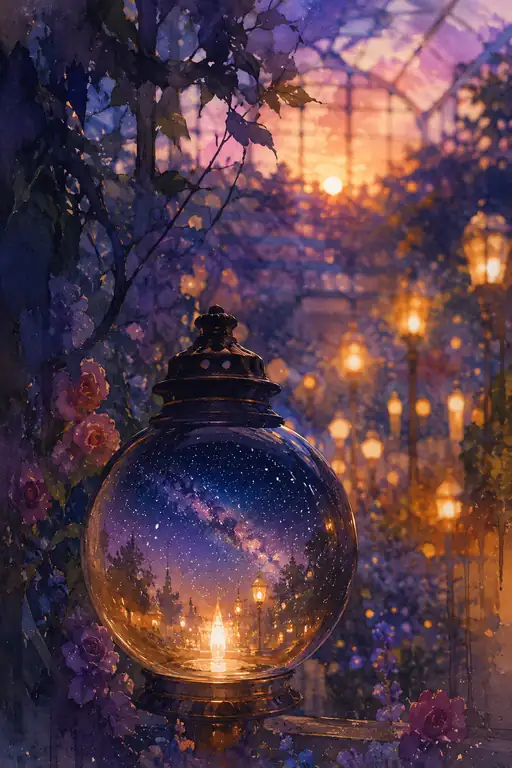 A Starlit Town Dreaming Inside the Garden Lamp
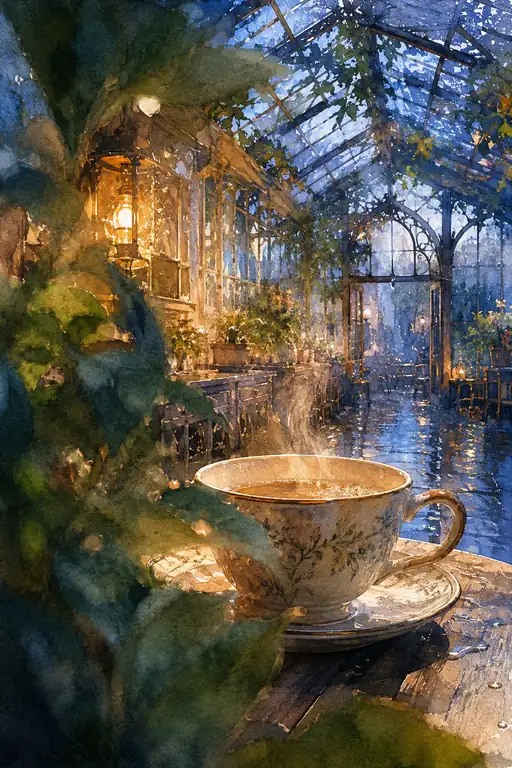 A Cup of Warmth Beside the Rainy Glasshouse
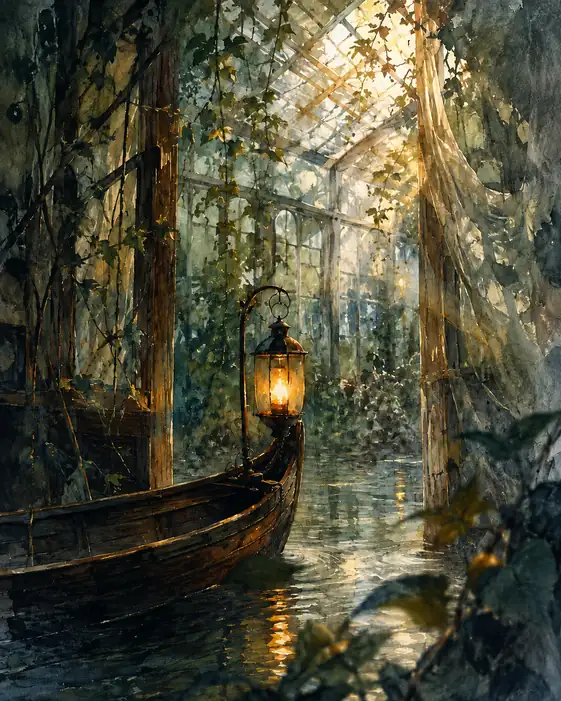 A Lantern Boat Drifts Through the Forgotten Glasshouse
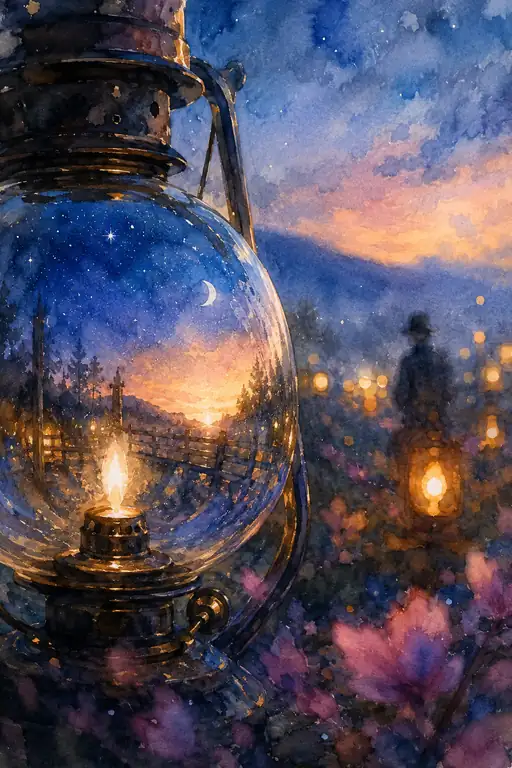 The Lantern Holds Both Crescent and Sunset
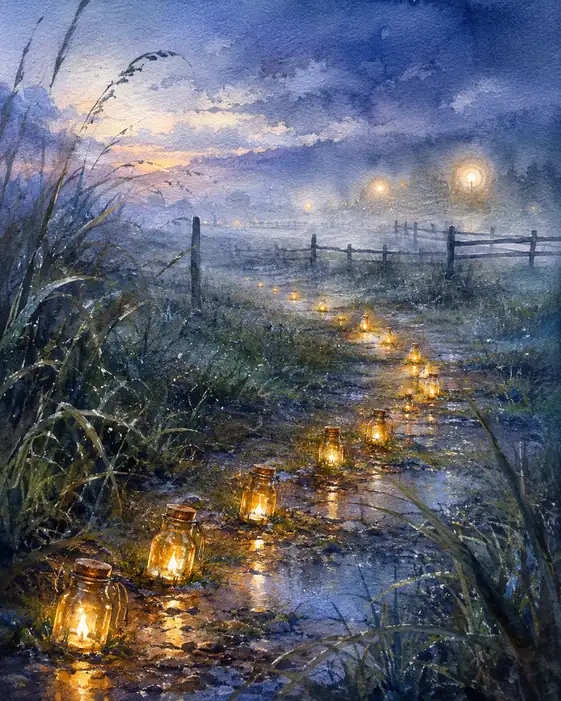 A River of Little Flames Crosses the Wet Meadow
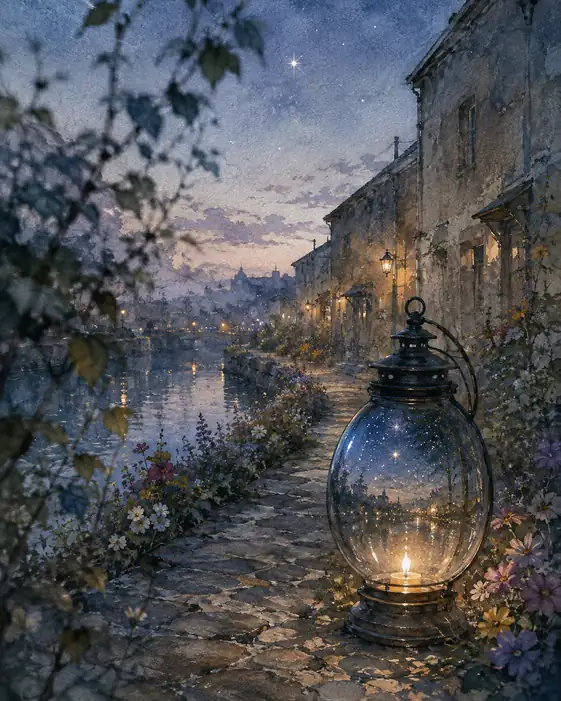 The Lantern That Gathered a Fallen Star
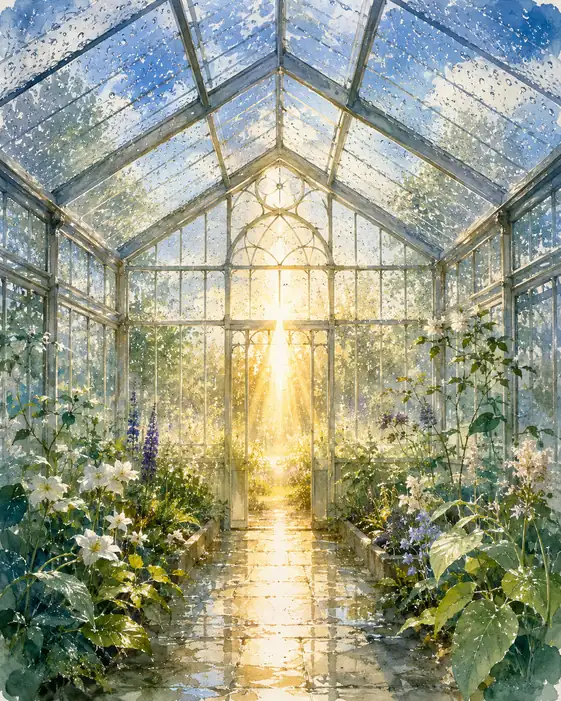 After the Rain, the Greenhouse Opens to Gold