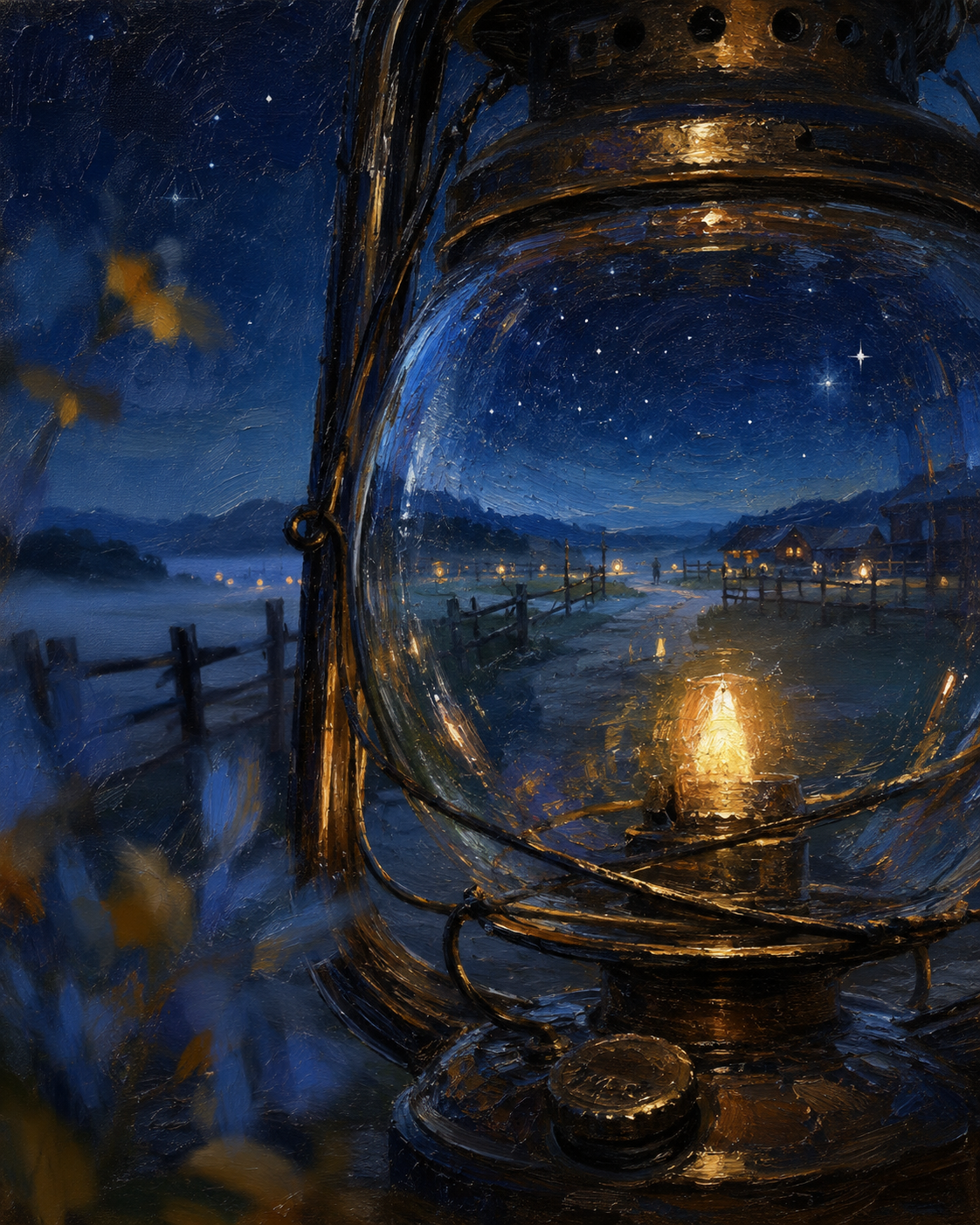
A Village of Stars Inside the Lantern Glass
Critique
Introduction This nocturnal painting enlarges an oil lantern whose glass contains an entire rural night. The familiar tool becomes both illumination and lens, gathering stars, road, traveler, and home into one curved field. Description The lantern occupies the right and lower foreground, its dark bronze frame cropped closely. Within the bulging globe, a flame burns near the bottom and reflects across wet glass. A fenced lane extends toward warmly lit cottages beneath a densely starred blue sky; a small solitary figure appears on the road. Outside the globe, misty fields, fence posts, and a few blurred leaves continue the same landscape. Analysis The glass circle organizes the composition and bends linear perspective around its edge. Deep ultramarine dominates, while concentrated gold traces metal, flame, lamps, windows, and wet road. Thick, energetic strokes give the lantern tactile weight, contrasted with finer stars. The internal route points from flame toward the figure and houses, creating a vertical narrative ascent. Overlap between reflected and external fences makes the boundary of the globe deliberately uncertain. Interpretation and Evaluation The lamp does not merely reveal a road; it appears to remember one. Its enclosed landscape may be reflection, magnification, or imaginative accumulation. The traveler’s tiny silhouette measures human vulnerability while giving the light a recipient. Stars offer remote orientation and cottages promise local shelter, with the portable flame mediating between them. Wear on the metal keeps the metaphysical conceit grounded in repeated use. Conclusion The painting persuasively turns an everyday instrument into an archive of journeys. Curved glass holds destination and distance without sealing them away. A modest flame becomes the meeting point of celestial guidance, human care, and the next step home.
Same Subcategory
Similar Artworks
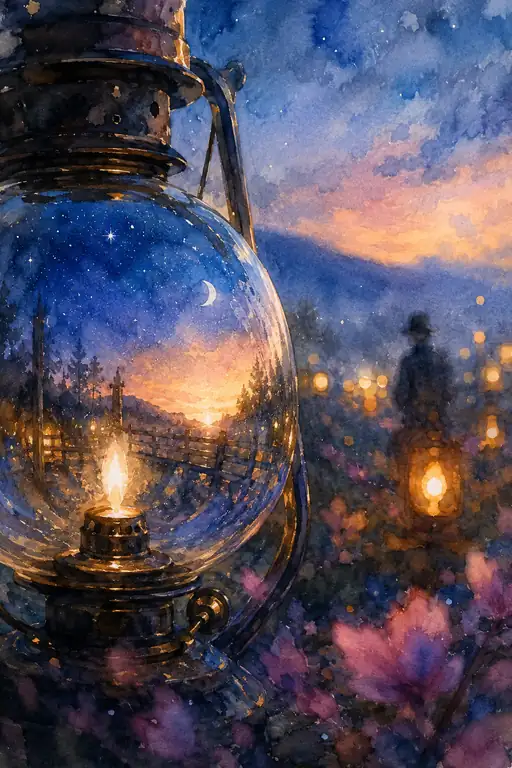 The Lantern Holds Both Crescent and Sunset
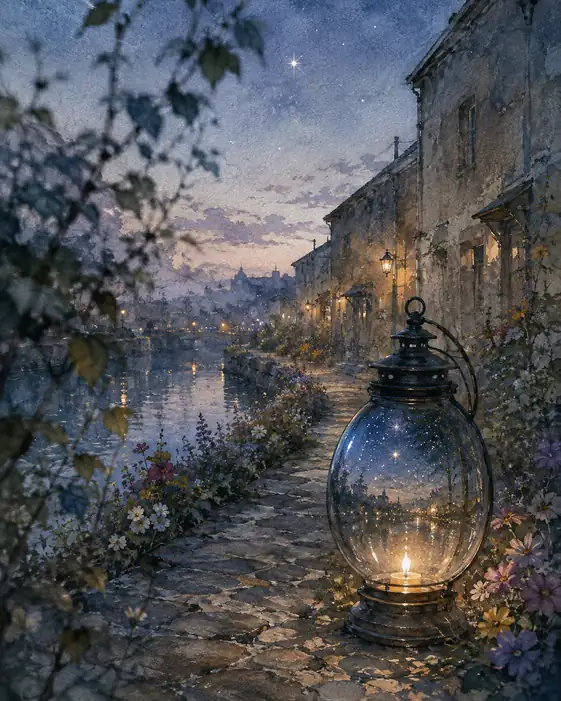 The Lantern That Gathered a Fallen Star
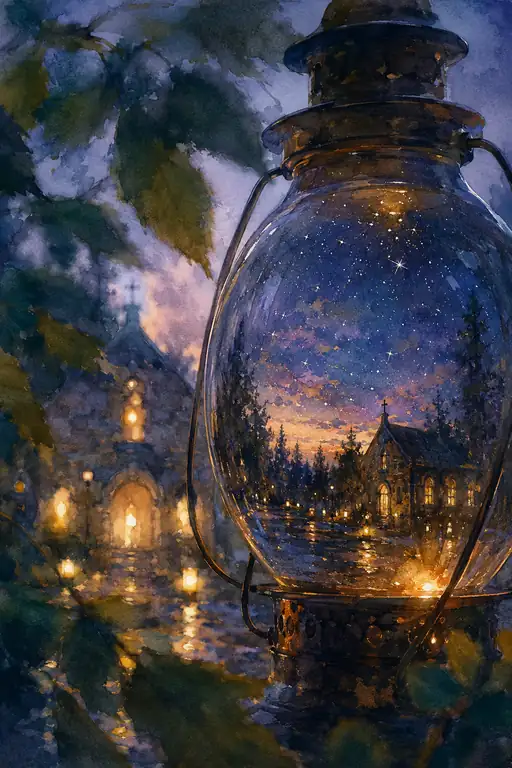 A Village Sky Kept Under Glass
 The Chapel Sleeping Inside the Lantern
 A Lantern Holds the Village's Starry Dusk
 A Starlit Town Dreaming Inside the Garden Lamp
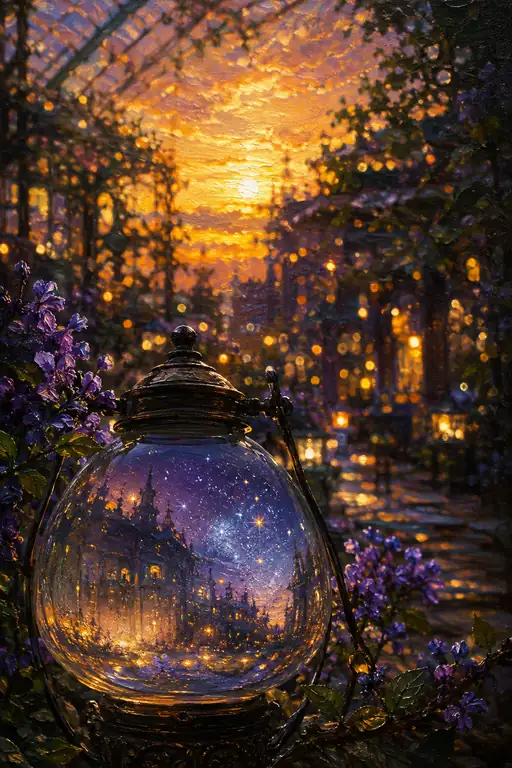 The Lantern Shelters a City Beneath the Milky Way
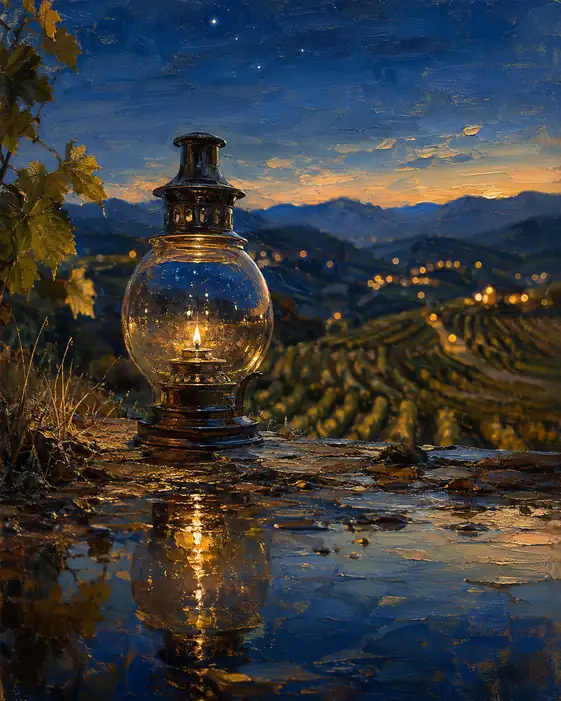 One Lamp Keeps Vigil over the Sleeping Vineyard
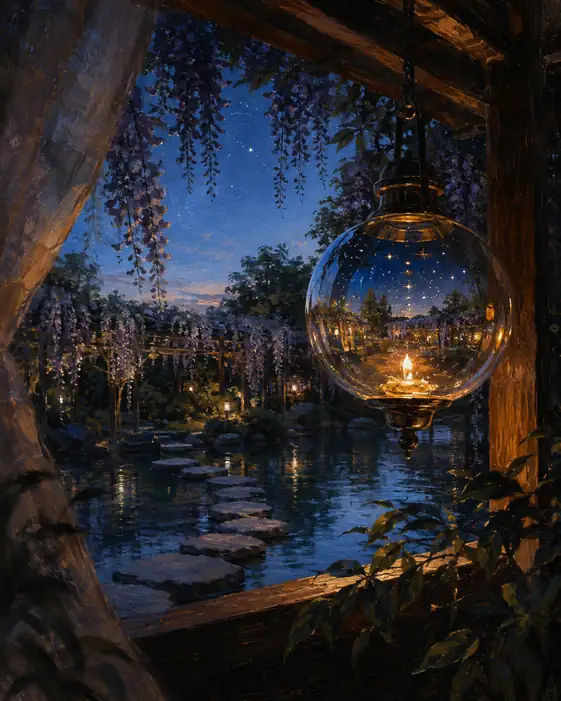 The Garden's Stars Gather inside One Lamp
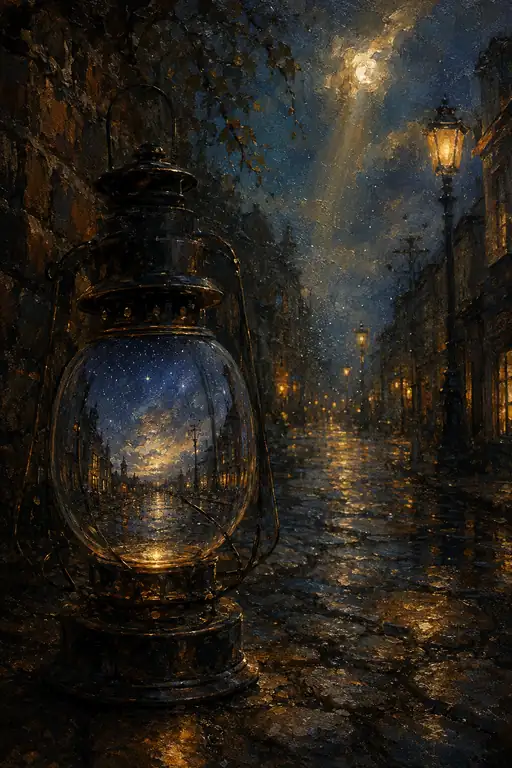 A Miniature Universe in My Lantern