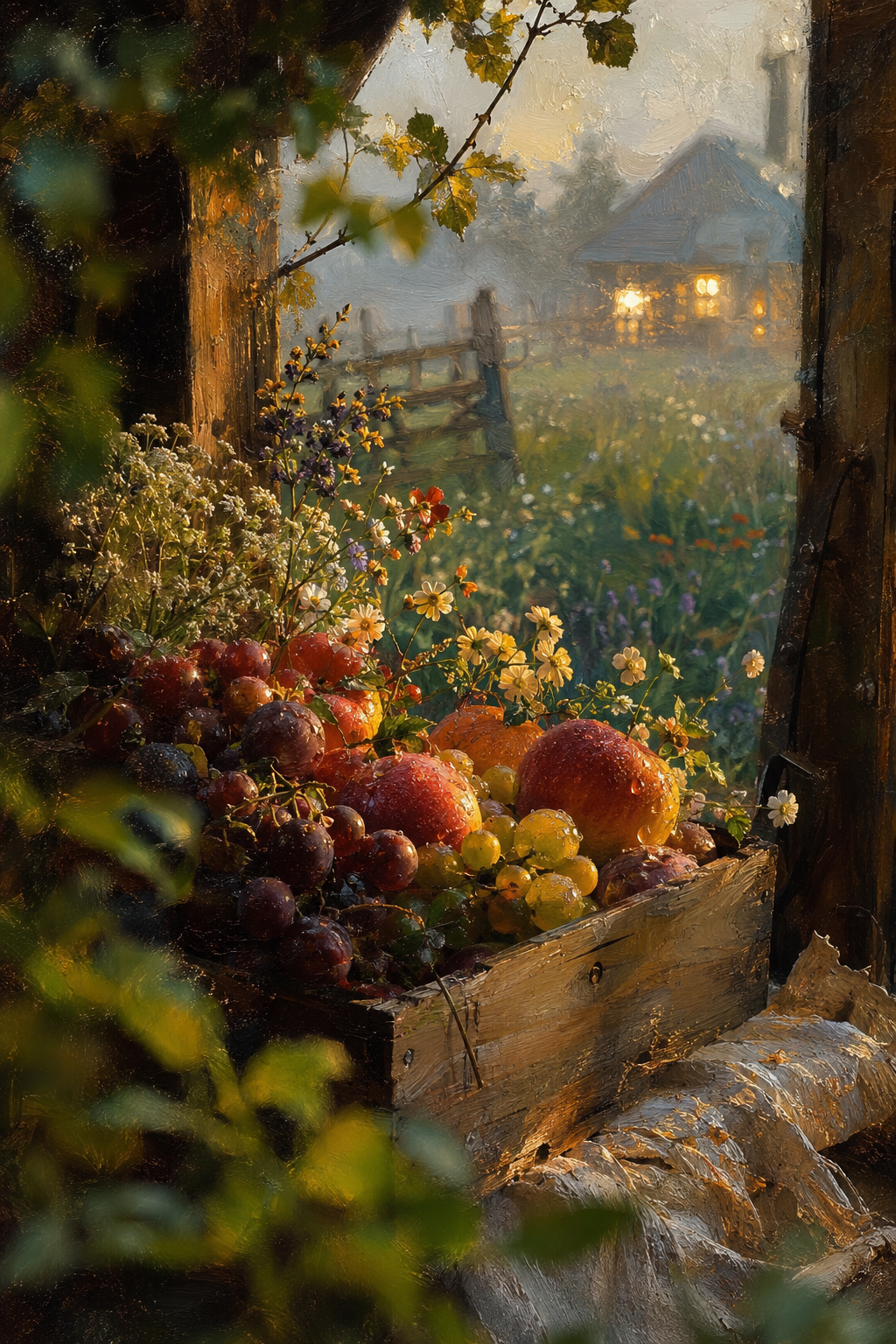
Autumn's Sweetness at the Lighted Door
Critique
Introduction This pastoral still life sets a fruit-filled wooden crate in a shadowed opening facing a glowing cottage. Harvest, rain, and evening light meet at a threshold, turning abundance into anticipated sharing. Description Red apples, dark and pale grapes, plums, berries, and small golden fruit overflow a rough rectangular box. Daisies and branching white, purple, and orange flowers rise among them, all jeweled with moisture. Dark foliage blurs across the left and lower edges. Beyond a fence and flowered meadow, a steep-roofed cottage shines through mist; a tall chimney or tower fades into the pale sky. Analysis The crate’s hard rectangle stabilizes a profusion of spheres, stems, and petals. Strong chiaroscuro isolates the foreground against the misty field, while warm rim light models fruit and wet wood. Reds and golds concentrate below and recur in distant windows. The fence forms a diagonal relay from offering to house. Thick directional strokes give fruit skins, plank grain, leaves, and dew distinct tactile identities, and the dark doorway creates a natural frame. Interpretation and Evaluation The harvest occupies an intermediate place: gathered from the land but not yet carried indoors. Its mixture of food and unmarketable wildflowers resists reading the box as inventory alone. The illuminated house implies recipients without showing ownership, so abundance remains an open gesture. Moisture and bruised surfaces acknowledge perishability; generosity matters because ripe things cannot wait indefinitely. The reaching ivy further preserves continuity with the field. Conclusion The painting unites still life and landscape with persuasive material richness. Its light does more than beautify plenty; it establishes a route from cultivation to shelter. At the doorway, temporary gifts become a promise of shared warmth.
Same Subcategory
Similar Artworks
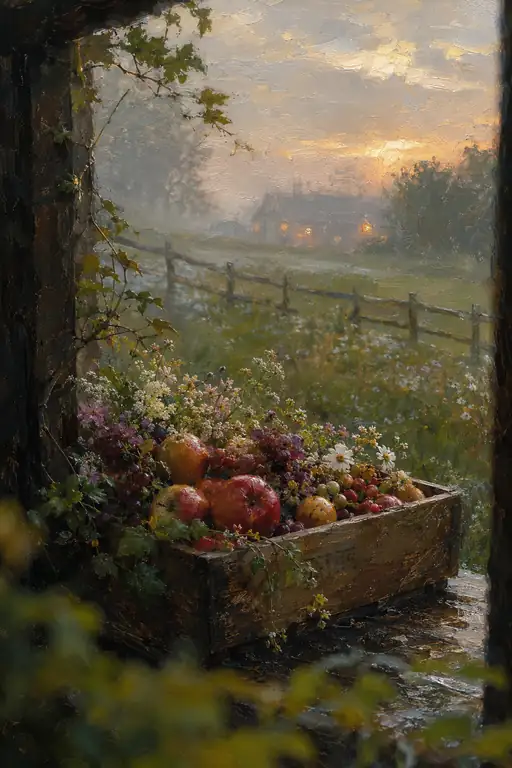 The Harvest Waits at the Threshold of Evening
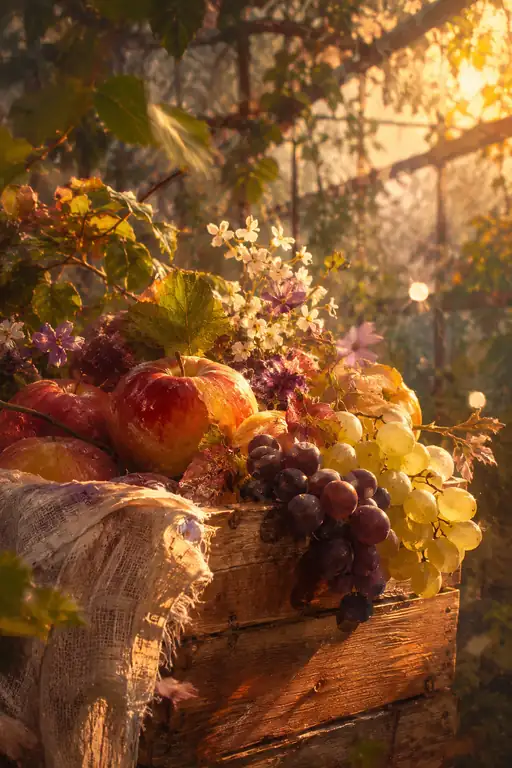 The Harvest Blushes in Greenhouse Gold
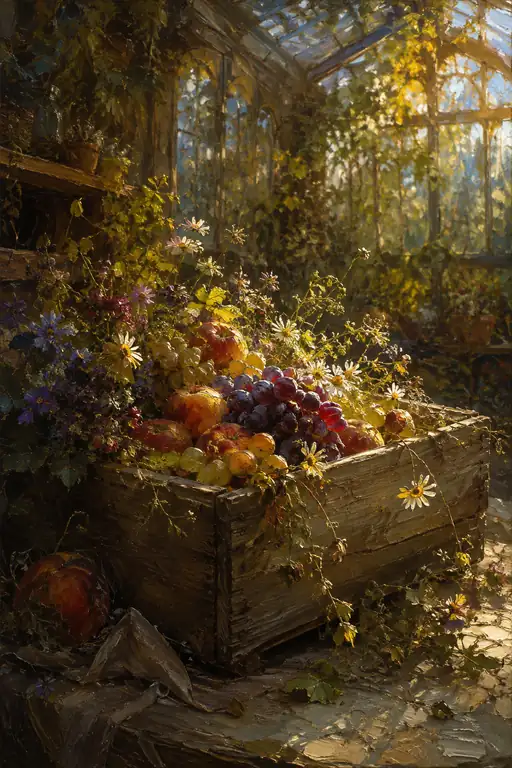 Autumn Overflows the Forgotten Crate
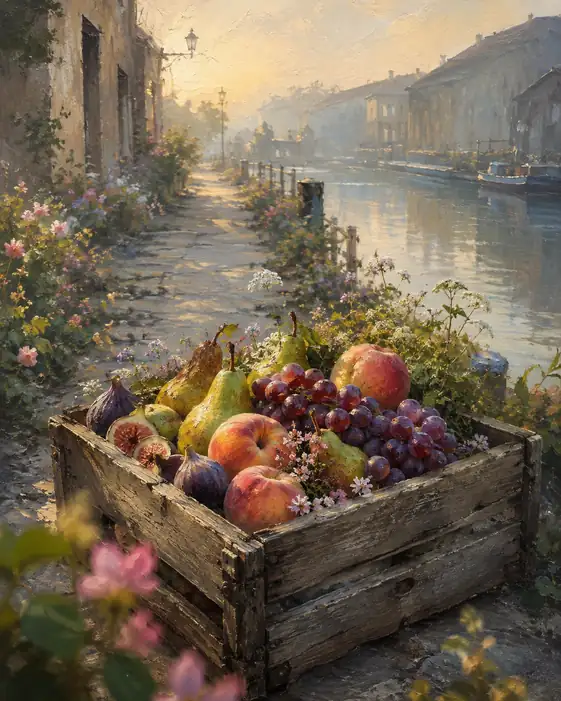 Morning Ripens in a Crate by the Canal
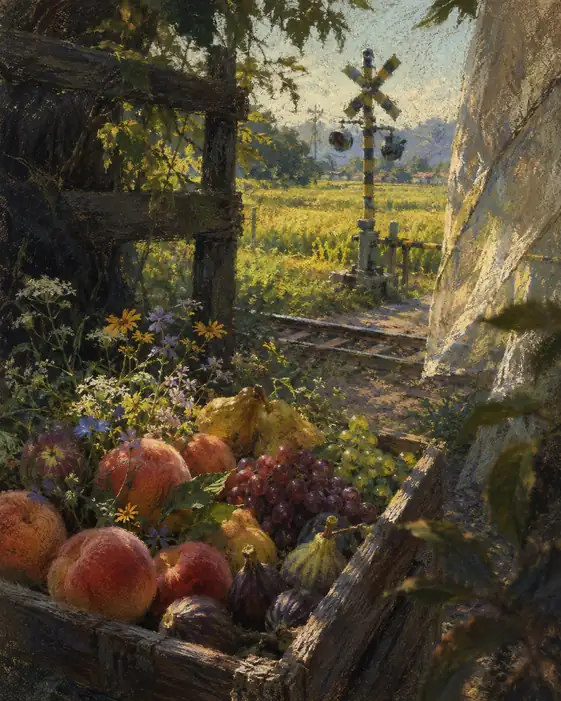 Autumn Harvest Beside the Rural Crossing
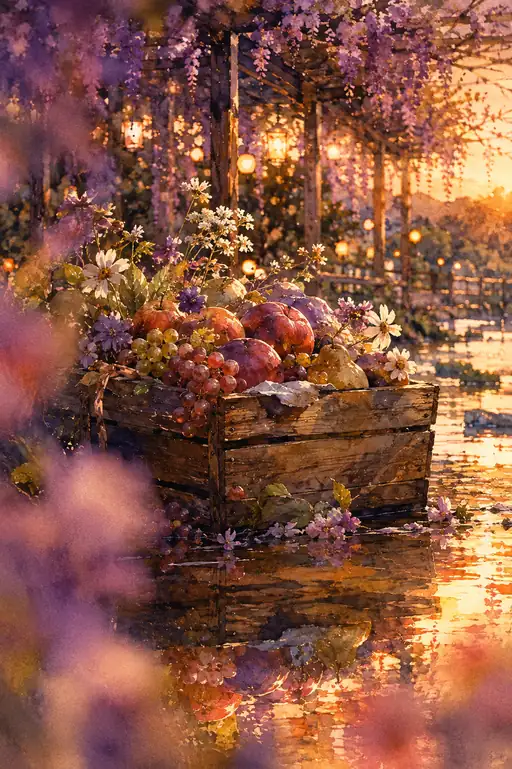 A Crate of Fruit Receives the Wisteria Sunset
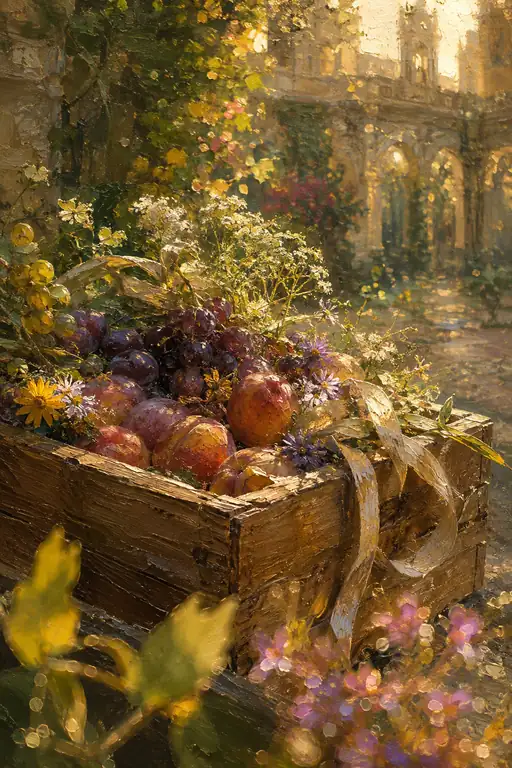 Sun-Drenched Harvest of the Abbey Garden
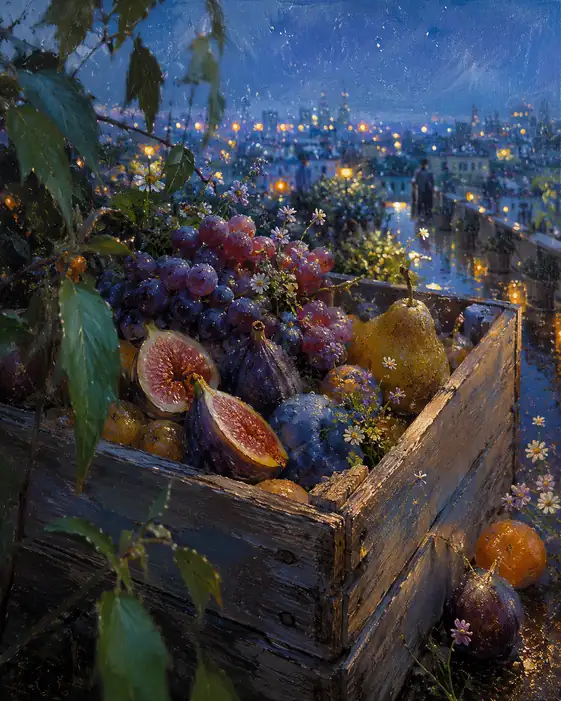 The Rain Harvests Figs beneath the City Lights
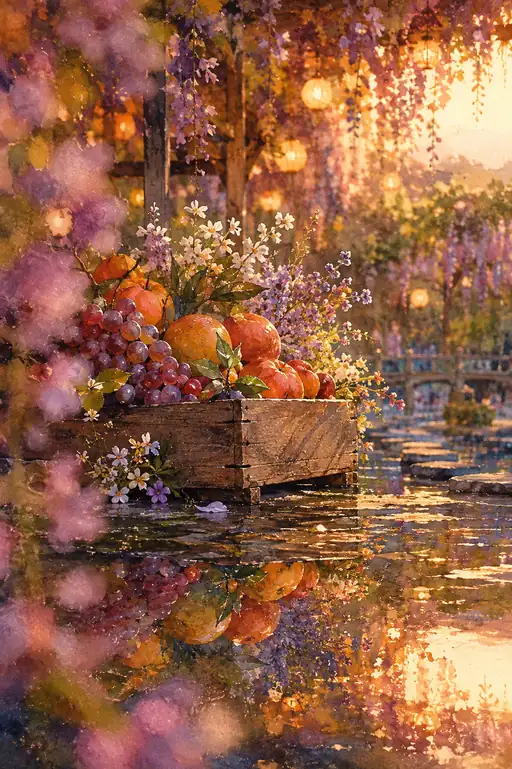 Summer's Harvest Glows beneath Autumn-Colored Wisteria
 Emerald Cluster in the Terrace Light