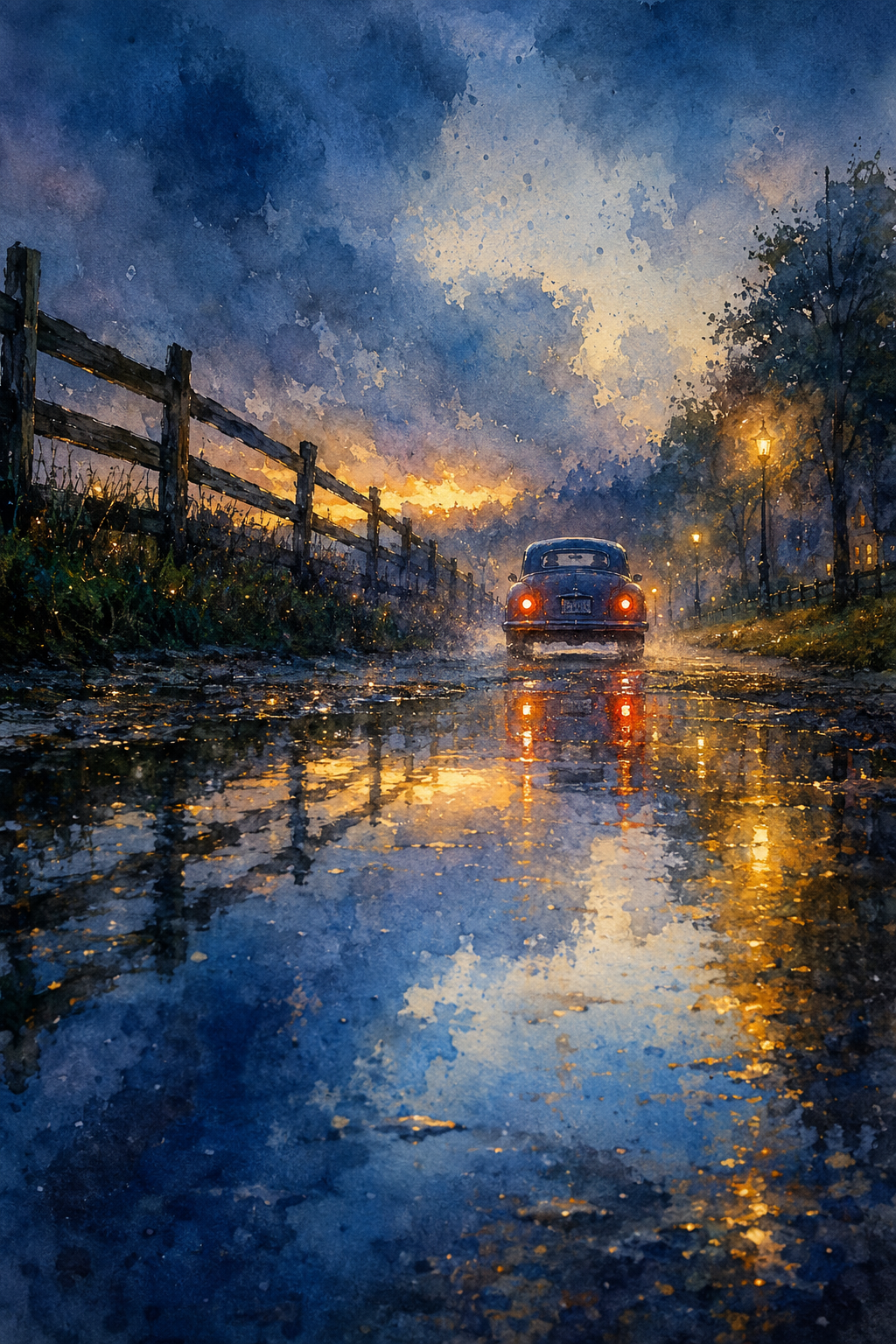
Rain Carries the Last Car Toward Sunset
Critique
Introduction This dramatic watercolor centers a vintage car on a flooded rural lane beneath a clearing storm. Expansive reflections make the road a second sky, turning forward motion into an encounter with weather, light, and uncertainty. Description A dark blue sedan recedes at center, its round red tail lamps burning through spray. A wooden fence rises along the left; trees, lamps, and a few lit windows line the right. The wet road occupies most of the image, reflecting orange streetlights, the car, and a pale opening in blue-black clouds. Water splashes outward behind the tires. Analysis The extremely low viewpoint makes reflection equal to physical landscape. Fence rails and road edges converge sharply on the car, while a vertical band of pale blue and gold extends toward the viewer. Dense ultramarine frames concentrated amber marks; red tail lights add a third, urgent temperature. Splattered pigment and broken highlights describe rainfall and disturbed water. The car remains symmetrical, but irregular puddles and vegetation prevent rigidity. Its small scale beneath the sky increases vulnerability. Interpretation and Evaluation The vehicle embodies persistence rather than speed. It advances through a world that cannot be fully read, yet roadside lamps provide intermittent orientation. Reflections multiply those guides while also distorting them, making hope useful but not simple. The storm’s opening lies above and before the car, though darkness remains on every side. The anonymous driver allows the scene to hold many possible departures and returns. Conclusion The work combines cinematic drama with convincing watercolor instability. Light, spray, and mirrored cloud make travel inseparable from changing conditions. Its emotional force comes from measured resolve: the road is difficult, but enough of it is illuminated to continue.
Same Subcategory
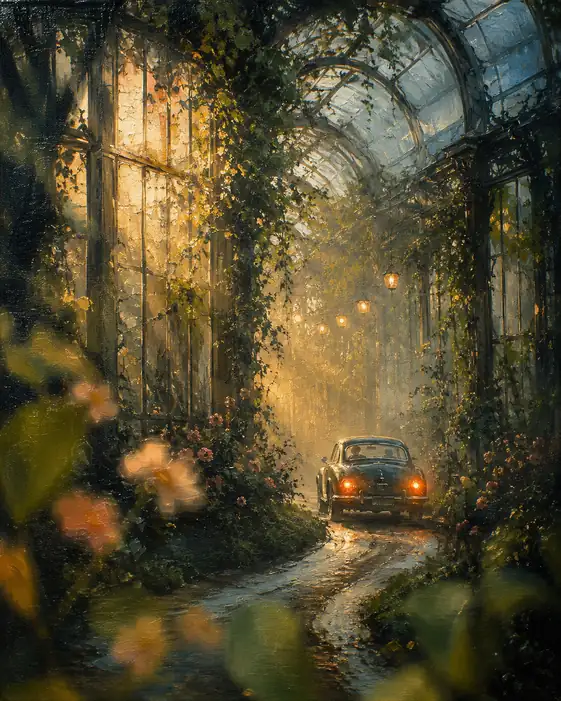 The Car Follows Sunset Through the Garden of Glass
Similar Artworks
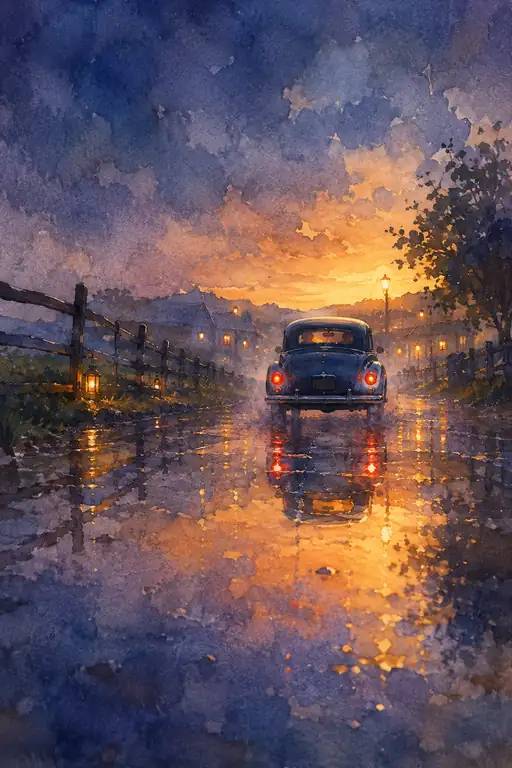 The Blue Car Drives into a Burning Sky
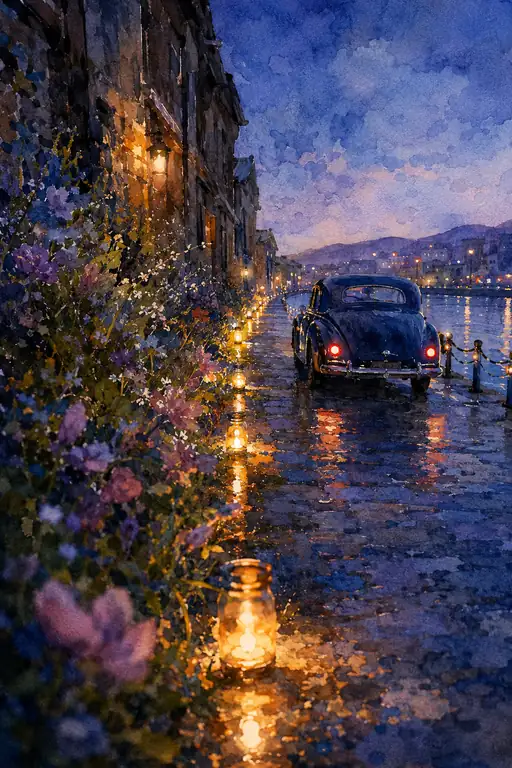 The Last Car Along the River of Lanterns
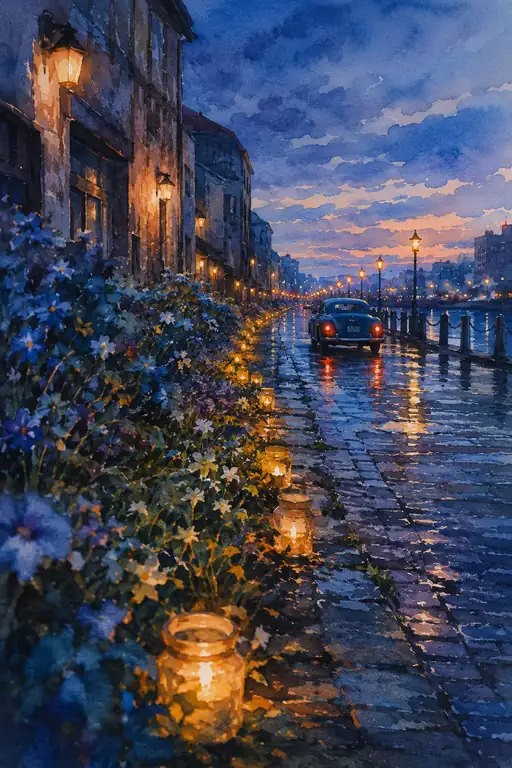 Little Lanterns Guide the Blue Car Home
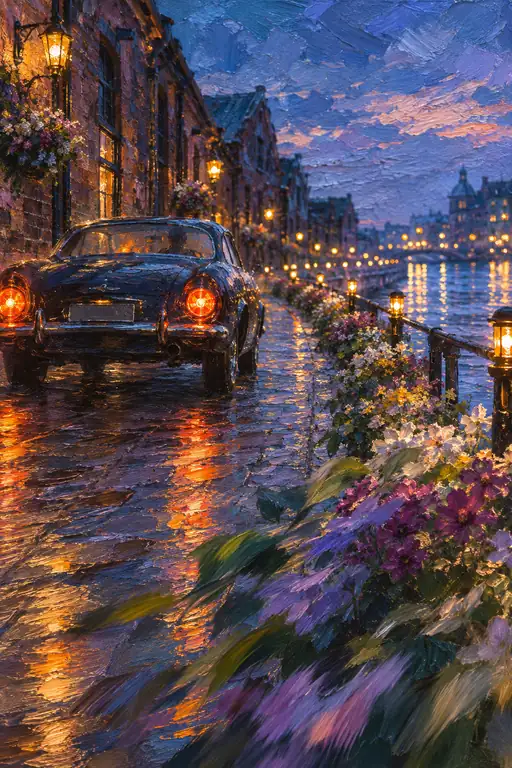 The Road Shines Before the Midnight Drive
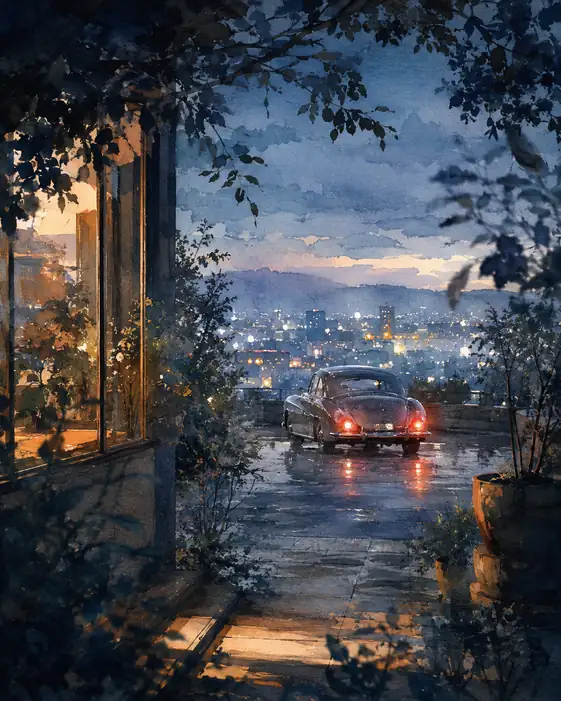 The Old Car Pauses between Home and the City Stars
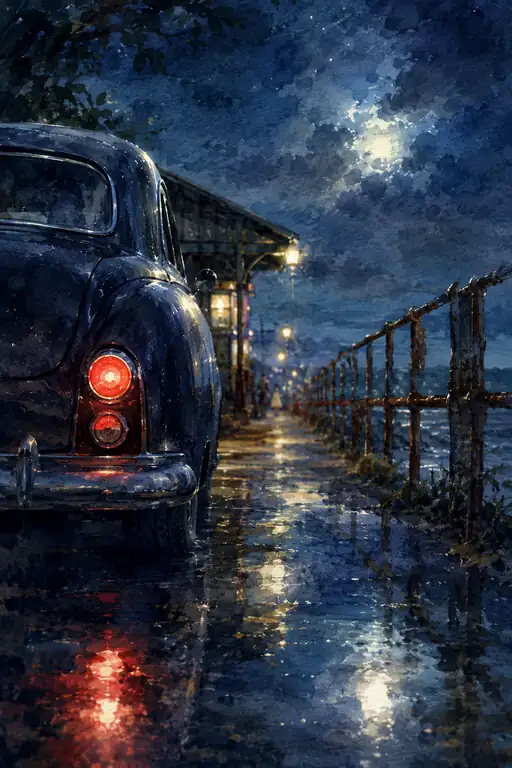 The Last Train Waits beneath a Rain-Washed Moon
 A River of Little Flames Crosses the Wet Meadow
 Twilight Traveler Resting by the Dunes
 The Old Car Drives into a Lavender Dawn
 Taillights, Flowers of Dusk