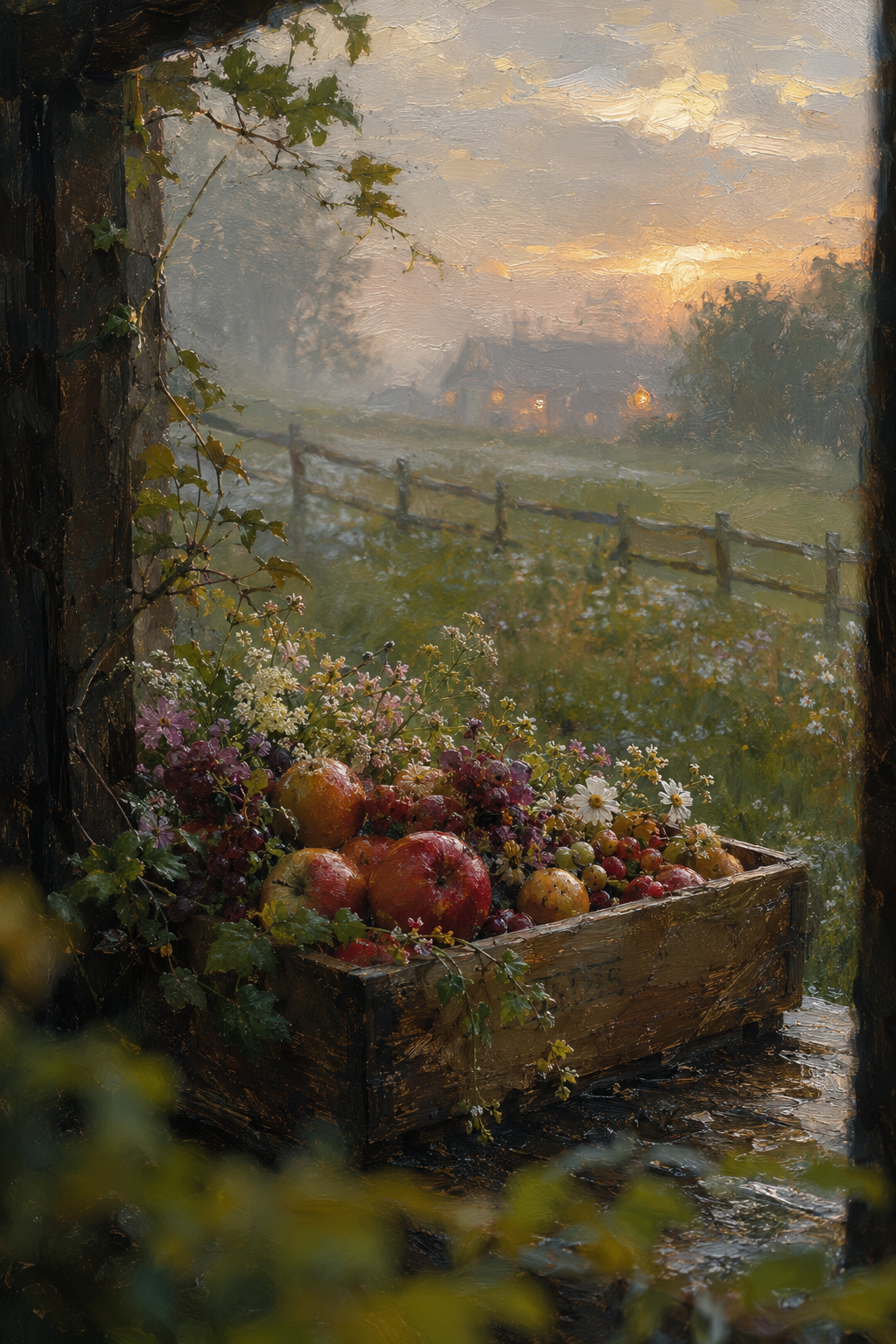
The Harvest Waits at the Threshold of Evening
Critique
Introduction This pastoral places a crate of fruit and wildflowers in a dark doorway overlooking a misty cottage. Harvest abundance becomes a threshold between shelter, open field, and fading daylight. Description A rough wooden box fills the lower foreground with red apples, pale pears, grapes, berries, ivy, daisies, and clustered pink-white flowers. Wet boards reflect small highlights beneath it. Dark vertical jambs frame a meadow crossed by a split-rail fence. In the middle distance, a low cottage glows from several windows beneath trees, haze, and a peach-gray sunset sky. Analysis The doorway creates a deep tonal frame around the luminous field, while the box forms a second rectangular architecture inside it. Rounded fruit and branching stems resist that geometry. Thick directional strokes describe skins, wood grain, leaves, and cloud, giving the scene tactile density. Reds and golds concentrate below and echo in the cottage windows; cool gray-green mist carries the eye between them. The fence provides a diagonal bridge from still life to habitation. Interpretation and Evaluation The crate suggests harvest brought to a point of exchange, neither fully indoors nor left in the field. Fruit records labor and season, while freely mixed flowers prevent abundance from becoming inventory alone. The glowing cottage implies recipients, yet no figure claims the offering. This absence turns plenty into an open gesture of hospitality. Damp wood and bruised surfaces add mortality, making ripeness precious because it cannot remain. Conclusion The painting convincingly unites still life and landscape through framing, repeated warmth, and material texture. Its abundance feels earned rather than ornamental. At the threshold, gathered food becomes a promise that the land’s temporary gifts can be carried into shared shelter.
Same Subcategory
Similar Artworks
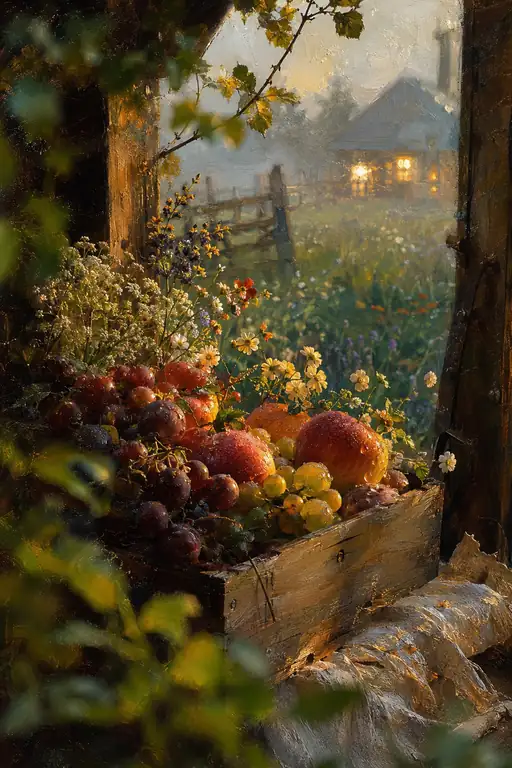 Autumn's Sweetness at the Lighted Door
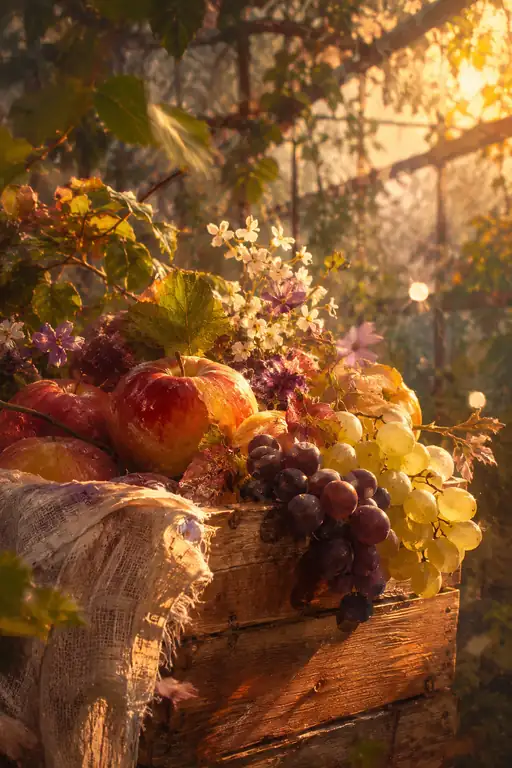 The Harvest Blushes in Greenhouse Gold
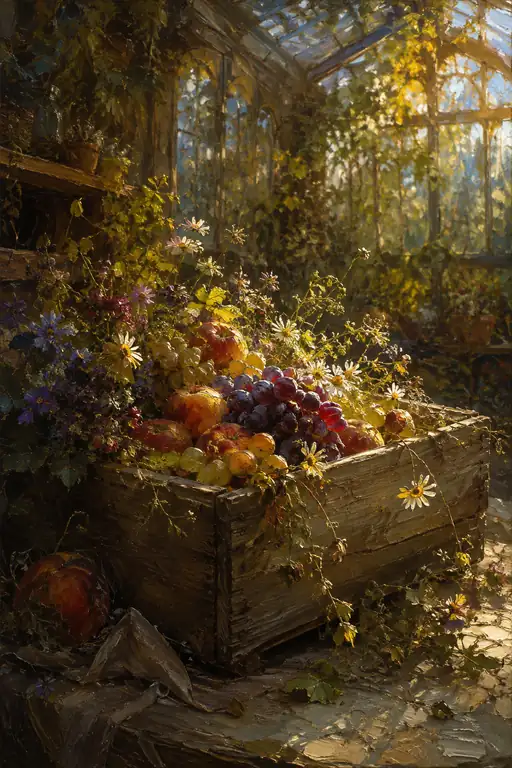 Autumn Overflows the Forgotten Crate
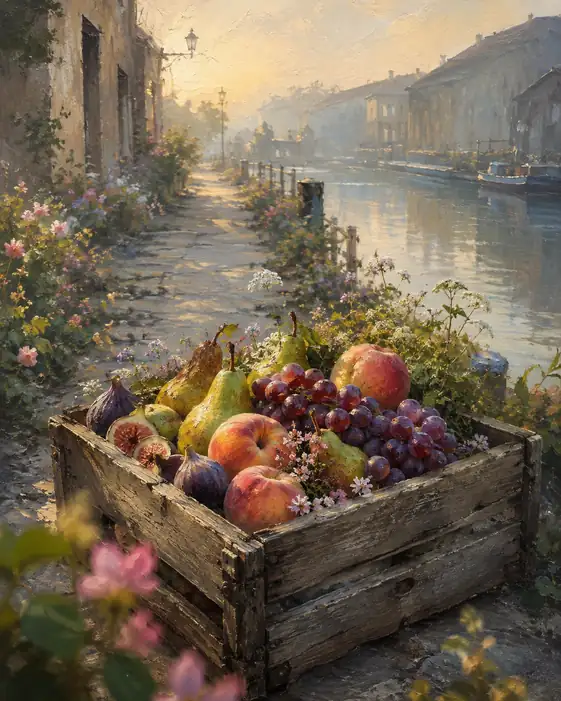 Morning Ripens in a Crate by the Canal
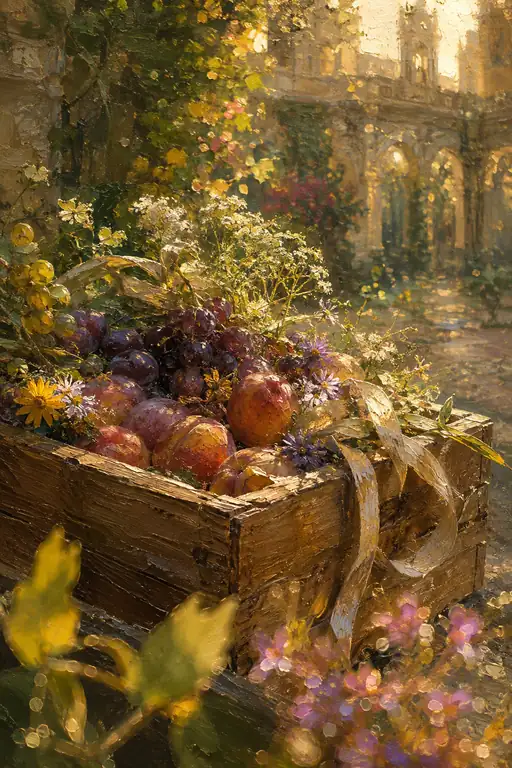 Sun-Drenched Harvest of the Abbey Garden
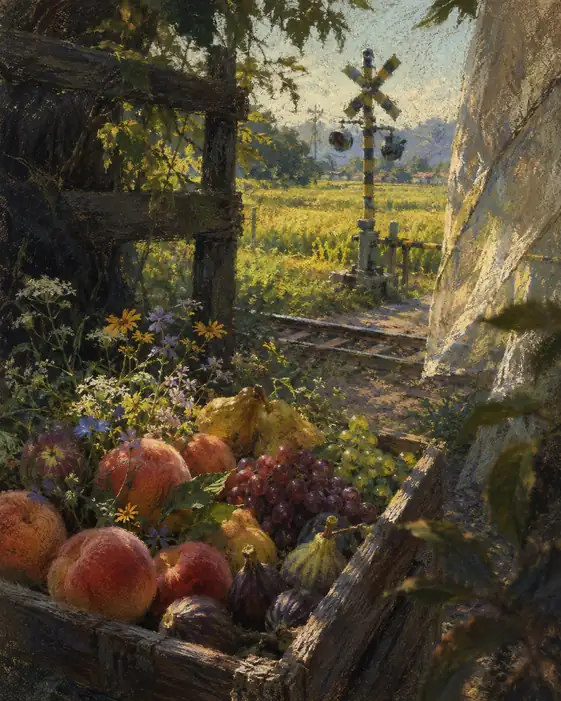 Autumn Harvest Beside the Rural Crossing
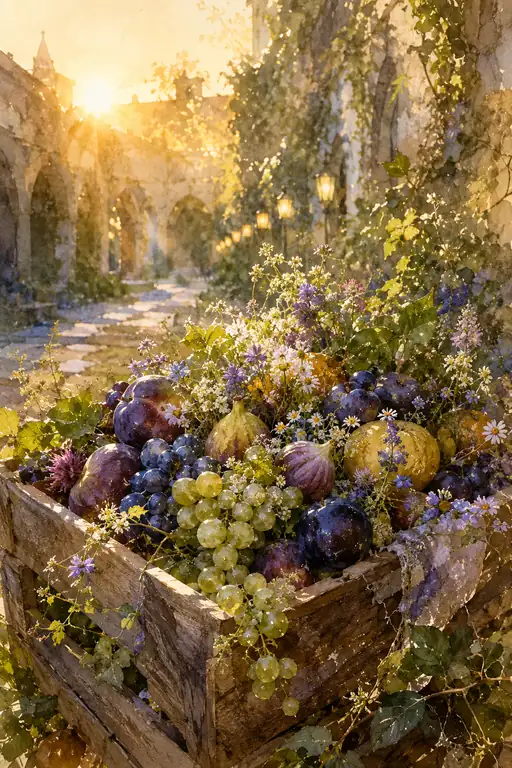 Golden Harvest in the Cloistered Sun
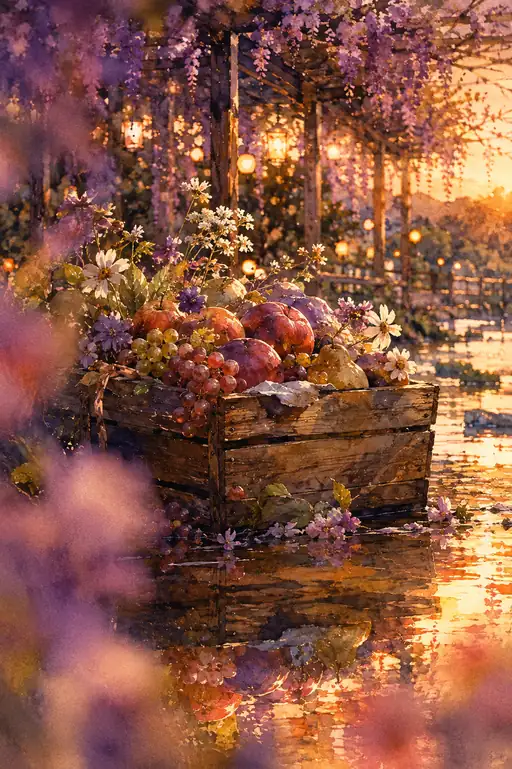 A Crate of Fruit Receives the Wisteria Sunset
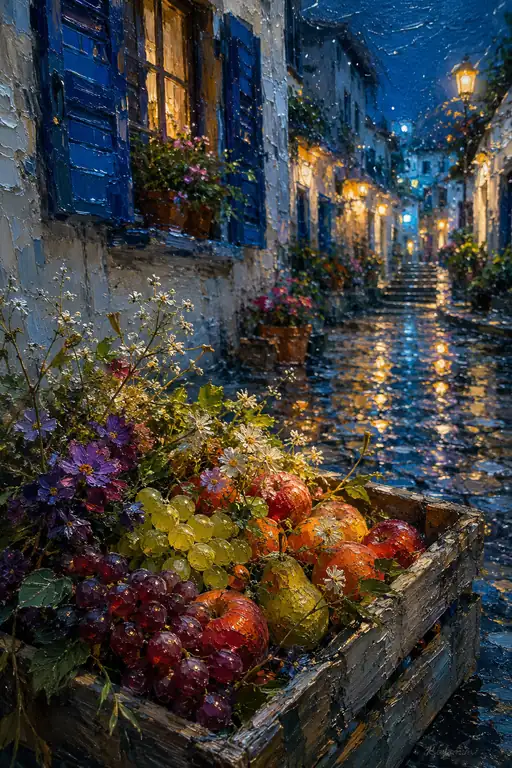 Crates of Abundance at the Lane's Foot
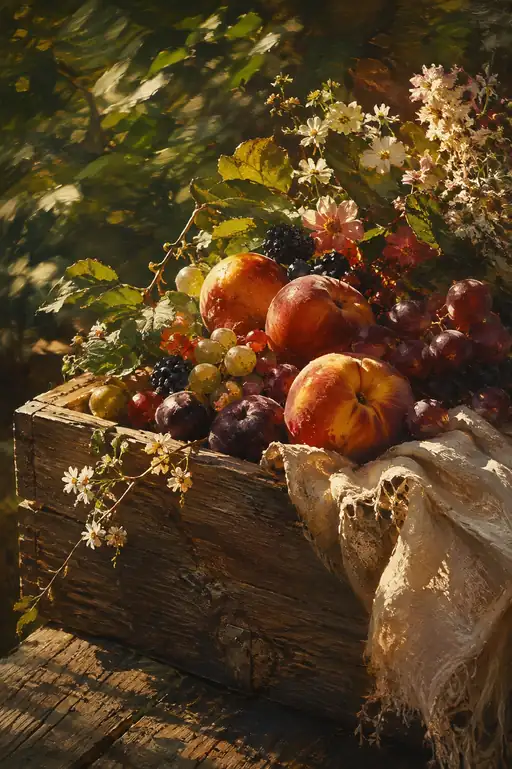 Rustic Wooden Box of Autumn Blessings