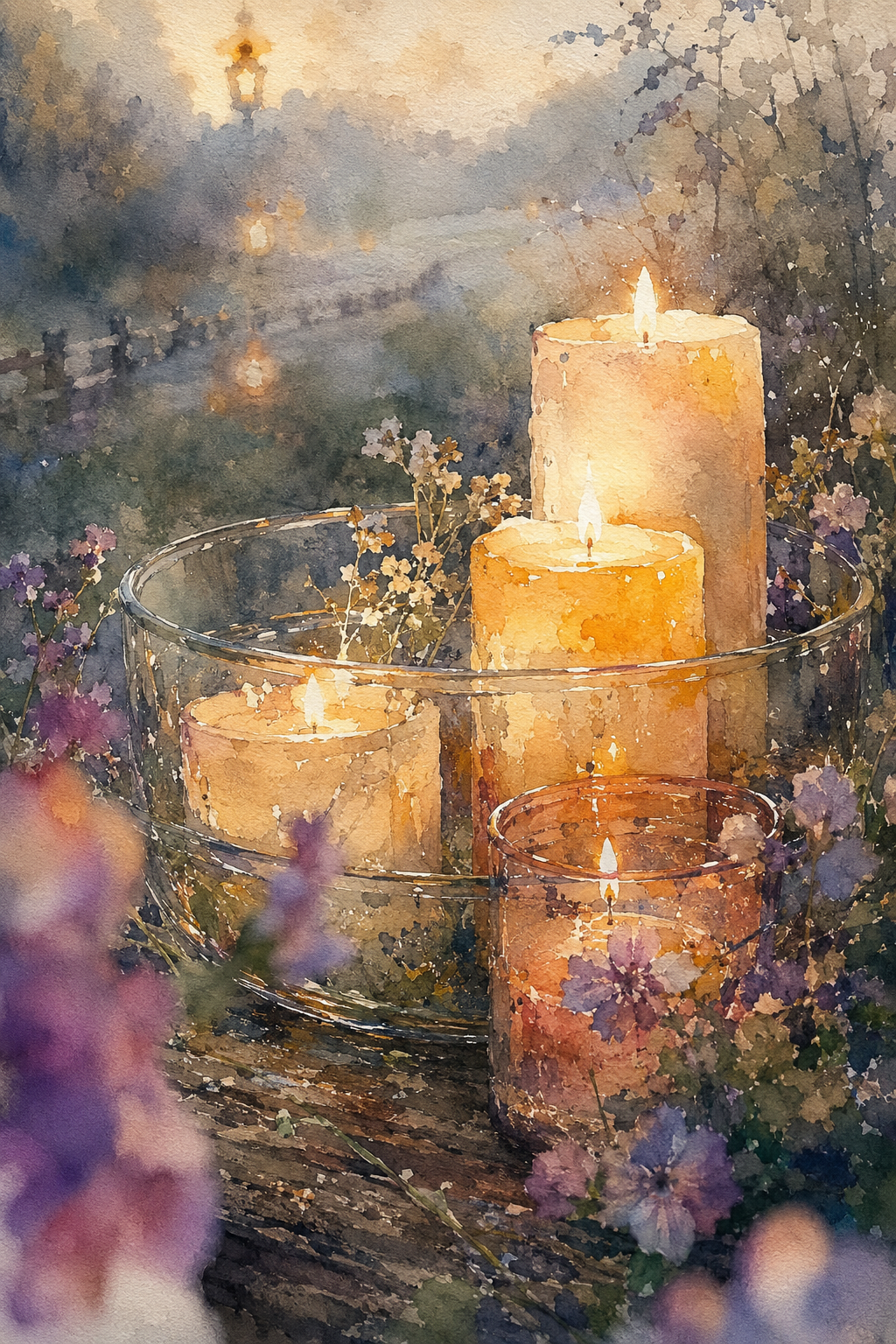
Four Flames Bloom Beside the Evening Path
Critique
Introduction This watercolor gathers candles and small flowers at the edge of a misty path. Its modest scale and softened distance create an atmosphere of vigil, where warmth is sustained through ordinary vessels rather than grand illumination. Description Three cream pillar candles stand within a broad clear glass bowl, while a fourth flame burns in an amber tumbler at the lower right. Tiny white, violet, and pink flowers weave between the containers and spill across a rough wooden surface. In the blurred background, a fenced path recedes past several lamps into gray-green trees beneath a pale, glowing sky. Analysis Nested circles—the bowl rim, candle tops, and amber glass—stabilize the close foreground. Vertical flames answer the distant lamp posts, linking radically different scales. Warm ochre washes concentrate around wax and glass, surrounded by muted blue, olive, and mauve. Transparent overlaps are rendered through reserved highlights and layered color, while soft foreground blossoms partially veil the base. The tallest candle establishes hierarchy without overpowering the ensemble. Interpretation and Evaluation The arrangement suggests a vigil prepared beside a route. Glass both protects and reveals, making care visible as a practical structure. Wildflowers soften the geometry and imply that the gathering belongs to its setting rather than being imported decoration. Distant lamps extend the candles’ function toward unknown travelers. Because the path remains empty, the image emphasizes readiness and waiting over arrival. Conclusion The painting makes tenderness spatial: it begins among hand-sized objects and continues into landscape. Its controlled blur, warm reflections, and humble materials sustain a quiet emotional charge. Each flame seems temporary, but their visual kinship with the road’s lamps gives that temporary care continuity.
Same Subcategory
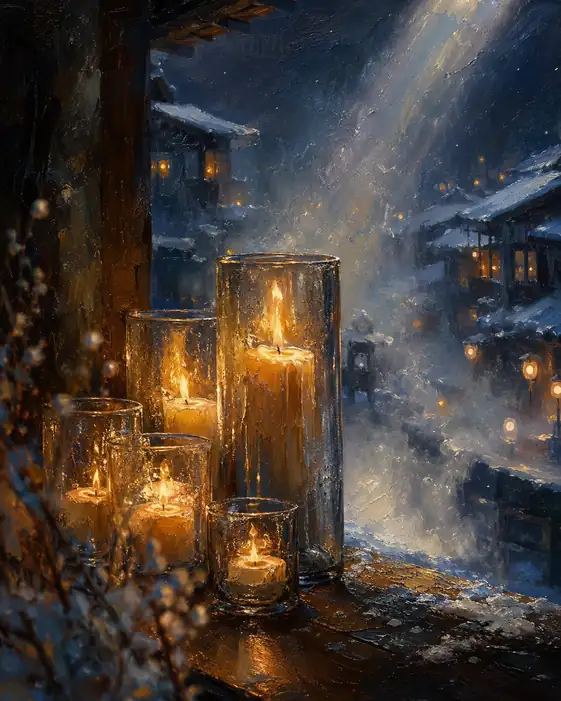 Five Flames Keep Winter from the Window
Similar Artworks
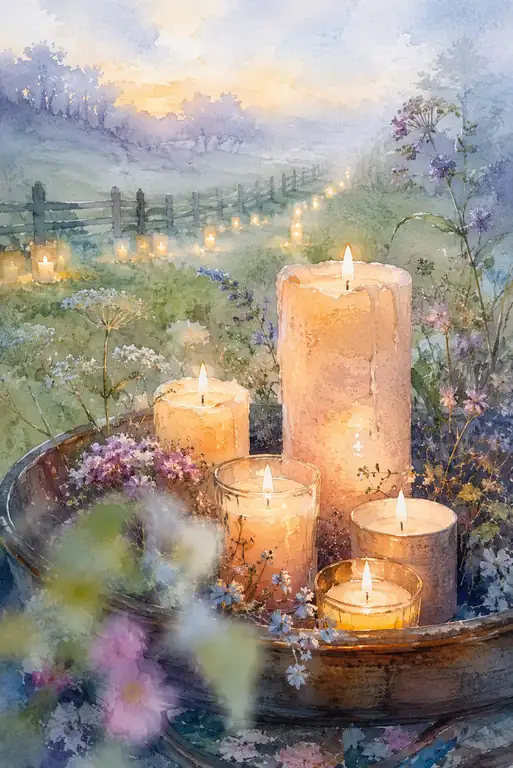 Five Candles Welcome the Meadow Morning
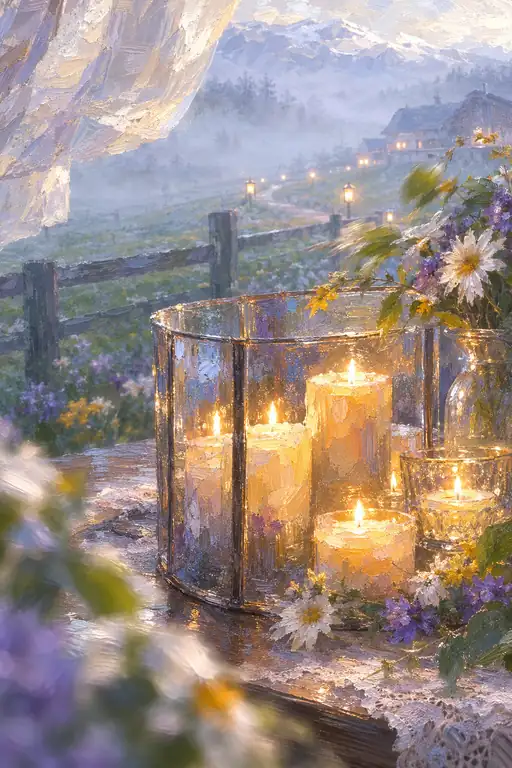 Candles Welcome the Mist Home to the Mountains
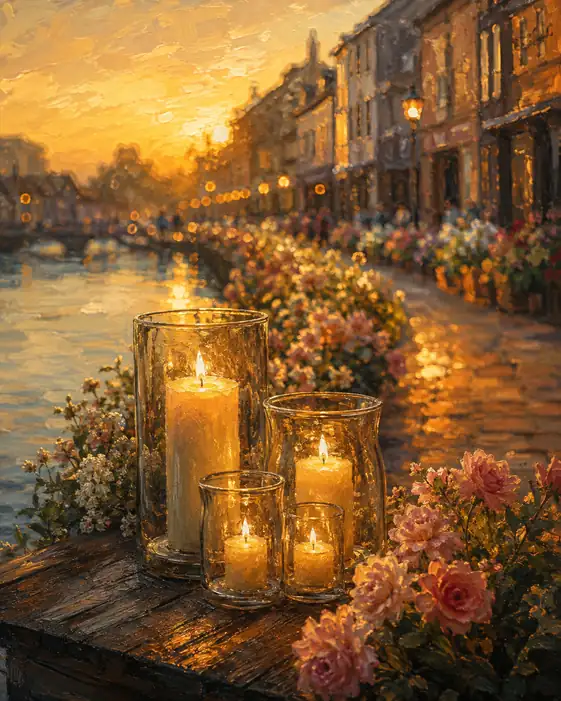 Four Flames Keeping the Golden Canal
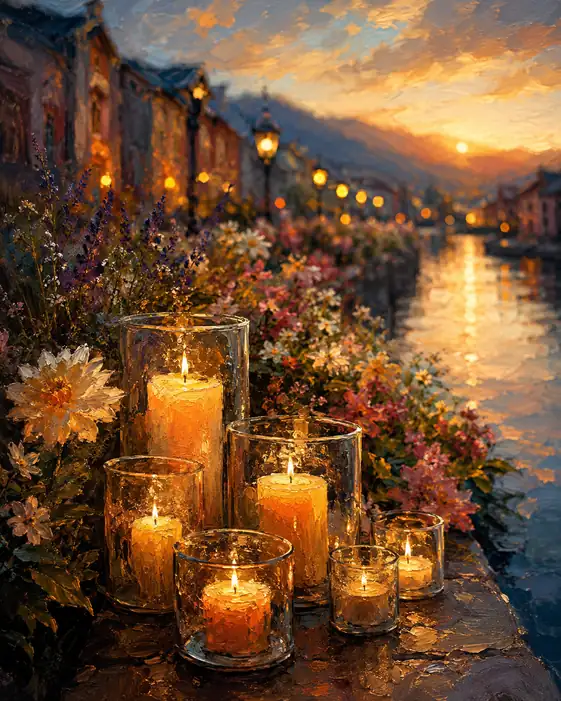 Candles Bloom Where the Sun Says Farewell
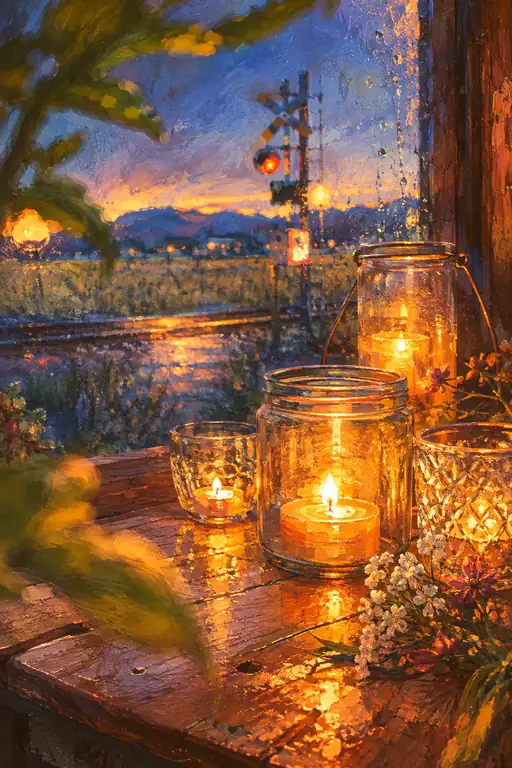 Twilight Candles on the Country Station Sill
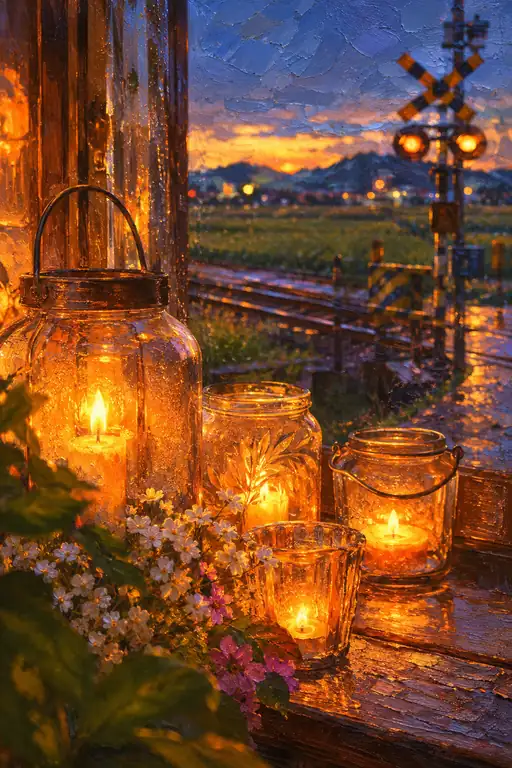 Warm Glow by the Rain-Drenched Crossing
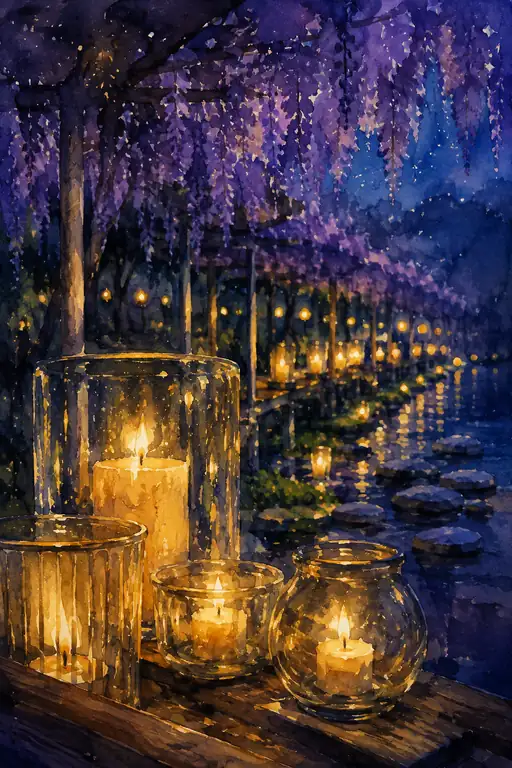 Four Candles Begin the Wisteria Night
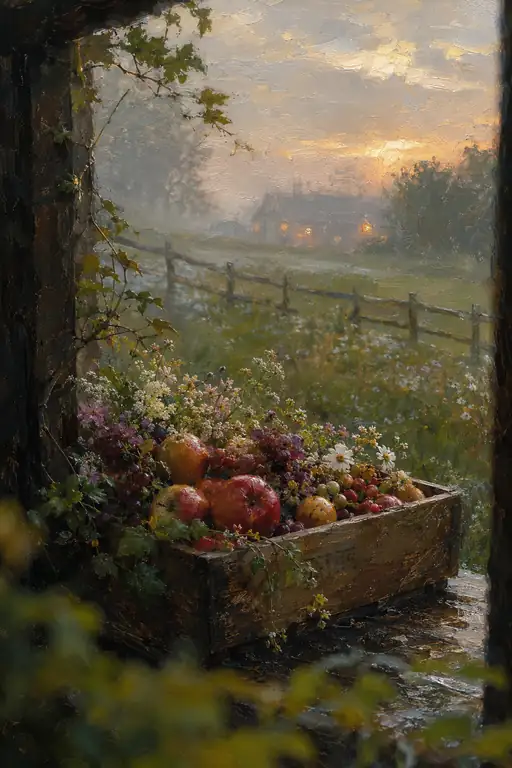 The Harvest Waits at the Threshold of Evening
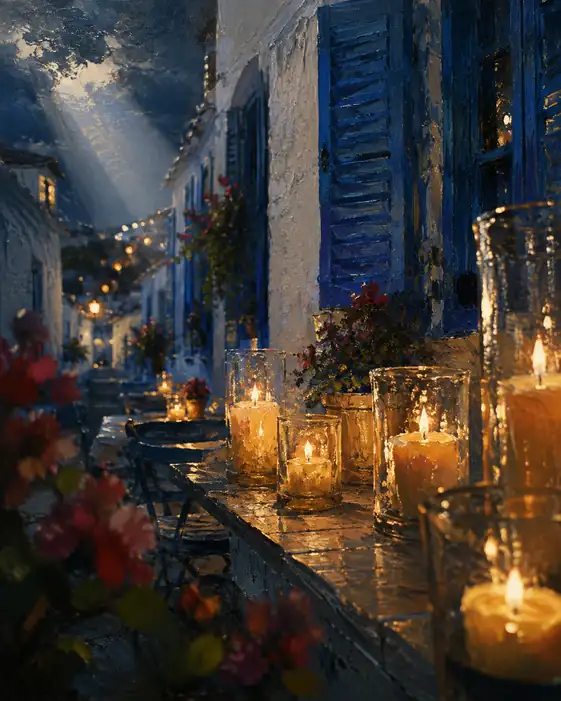 Tender Flame Kept from the Storm
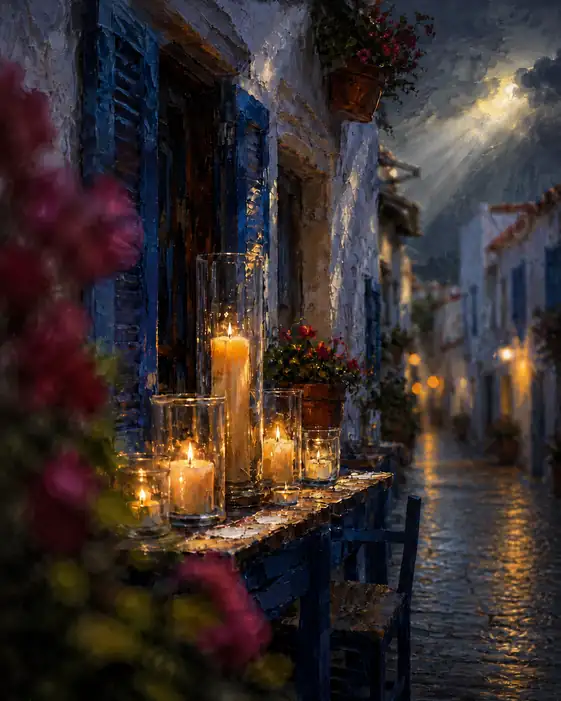 A Quiet Vigil Beneath the Storm