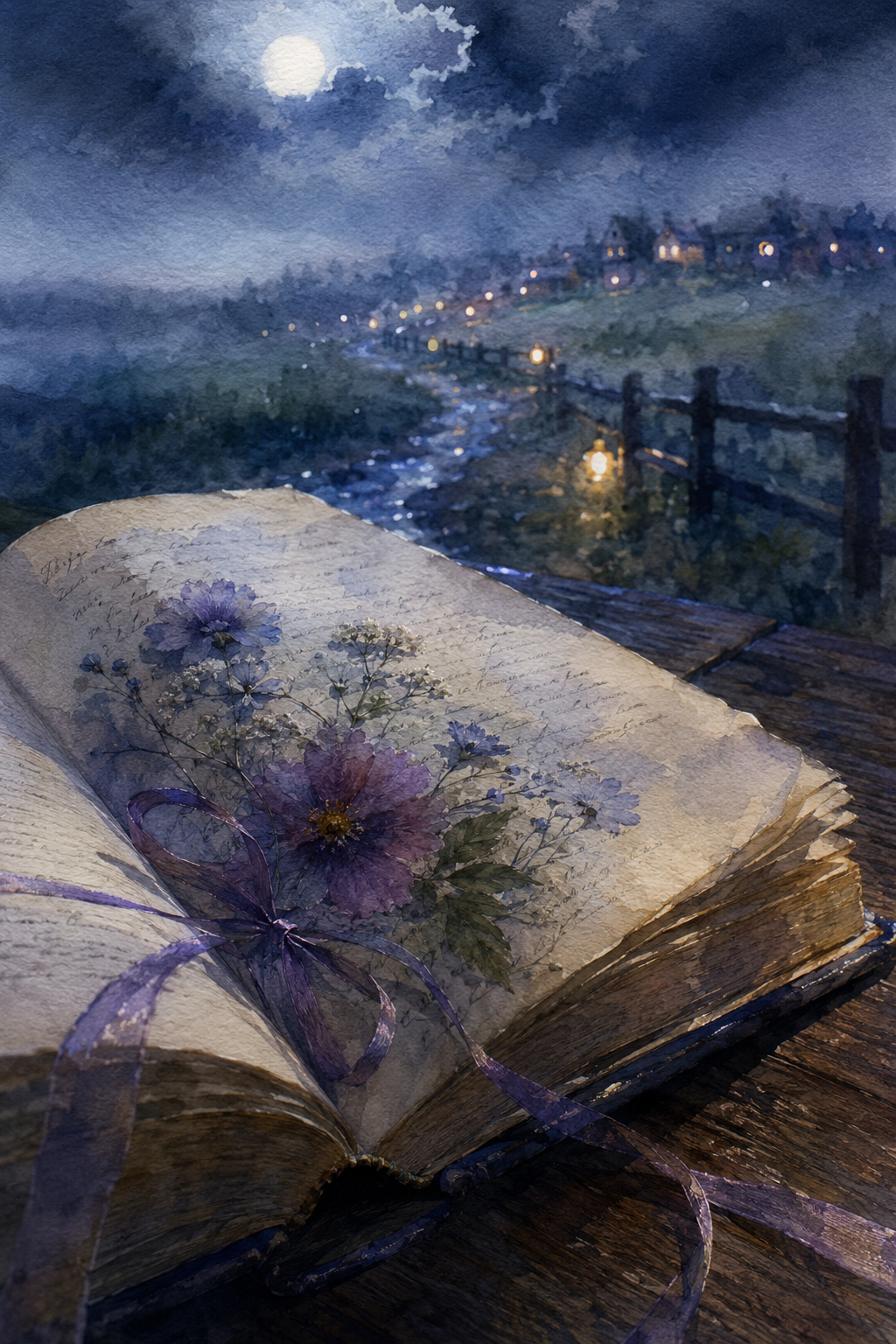
The Moon Reads the Flowers Between the Lines
Critique
Introduction This moonlit still life places an open, timeworn book against a distant village road. Pressed-looking flowers and a violet ribbon turn reading, memory, and travel into interwoven forms of preservation. Description The heavy book rests on a rough wooden ledge across the foreground. Faded handwriting covers its cream pages, where purple, blue, and white flowers lie beneath a loose ribbon bow. Beyond it, a wet lane curves between fences toward glowing hillside houses. A full moon appears through broken navy clouds, illuminating mist and scattered lamps. Analysis The book’s broad diagonal establishes tactile proximity, while the road repeats its direction into depth. Crisp page edges and ribbon highlights contrast with the dissolved village. Purple links blossoms, ribbon, sky, and reflected night. Warm lamps punctuate the cool field, but the luminous paper remains the largest light mass. Layered page corners measure accumulated time, and cursive marks supply a fine rhythm that answers the distant chain of lights. Interpretation and Evaluation The image proposes memory as something both recorded and gathered. Writing preserves language; flowers preserve an encounter; ribbon briefly holds them together. Yet the open book and untied ends resist final closure. The road beyond implies that recollection accompanies movement rather than replacing it. Although its symbols are romantic, material wear—creased paper, frayed binding, damp timber—keeps the scene emotionally credible. Conclusion The painting elegantly joins intimate evidence to expansive night. Its strongest achievement is the visual continuity between marks on a page and lights across a landscape. Past experience becomes neither sealed archive nor pure nostalgia, but a companion laid open beside the next road.
Same Subcategory
Similar Artworks
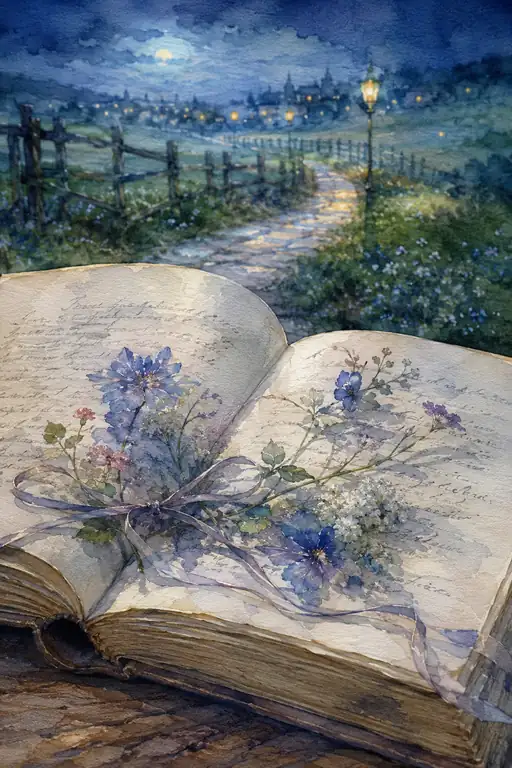 Pressed Flowers Dream Beyond the Moonlit Page
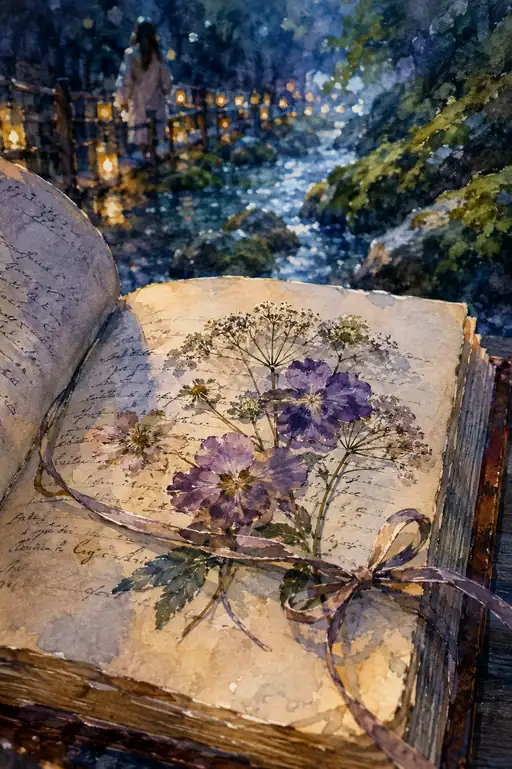 Pressed Flowers Keep the Night Walker's Story
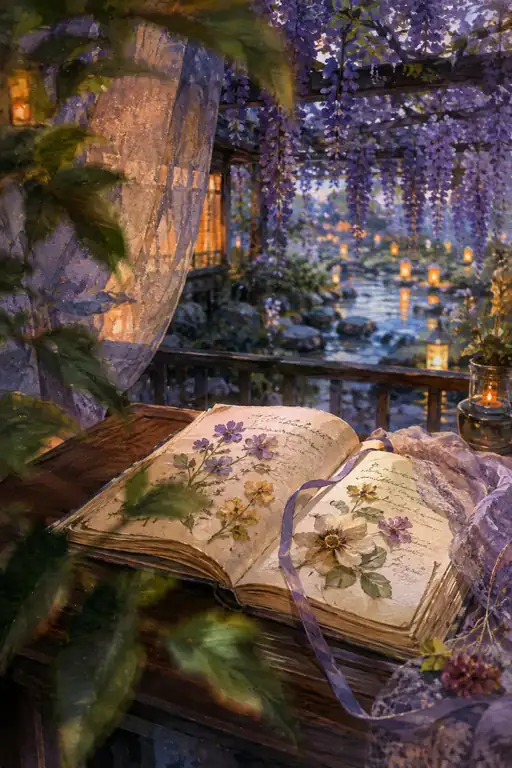 Pressed Blossoms Dream beside the Lantern Stream
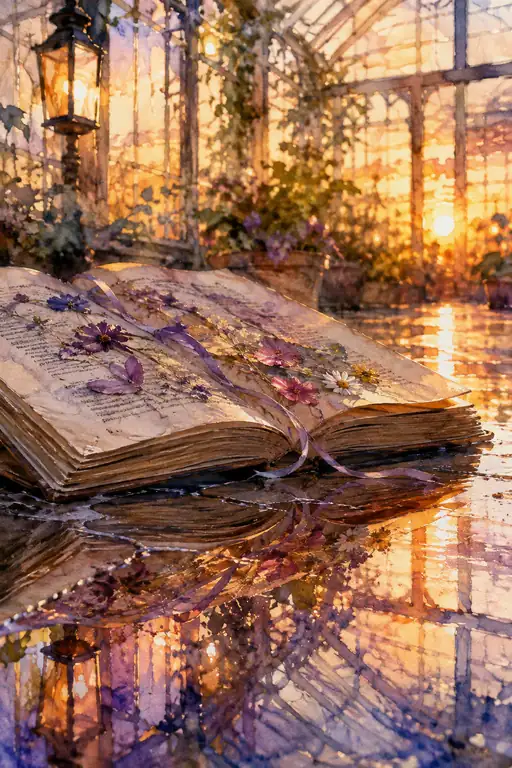 Sunset Reads the Greenhouse Book of Flowers
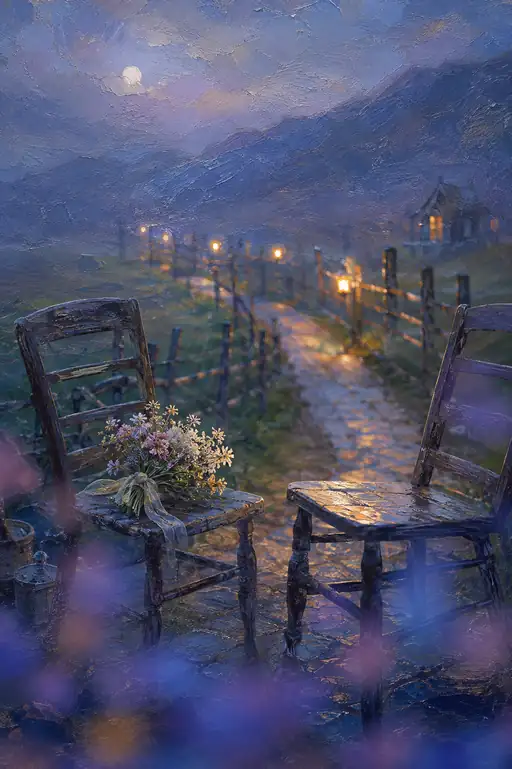 Two Chairs Waiting at the Moonlit Turning
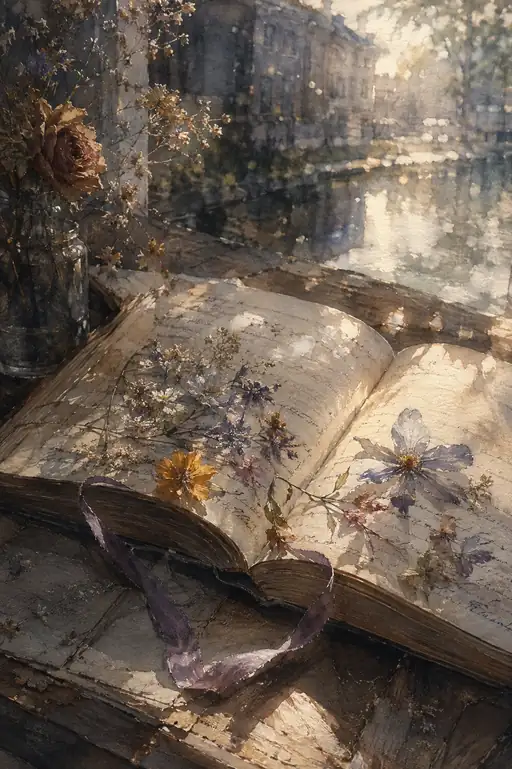 Flowers Remember What the Letter Said
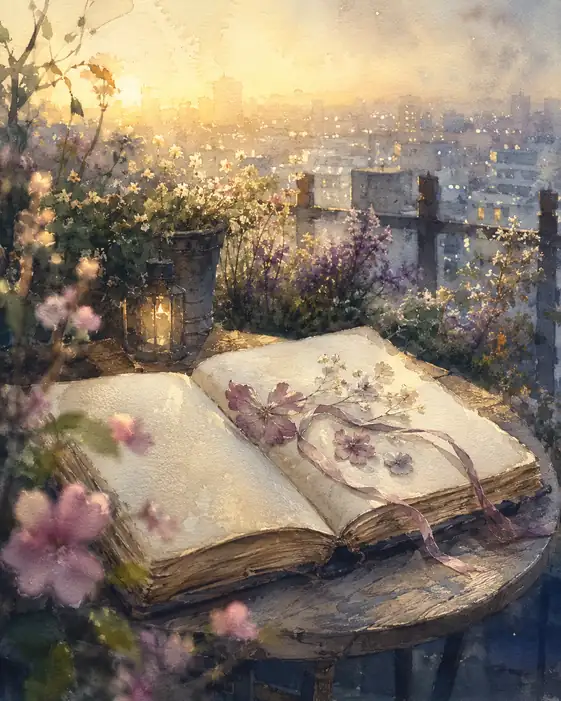 The Blank Page Waits for the City's Morning
 Pressed Flowers Dream beneath the Golden Dome
 Pressed Blossoms Preserve the Valley's Afterglow
 The Empty Chairs Remember a Moonlit Promise