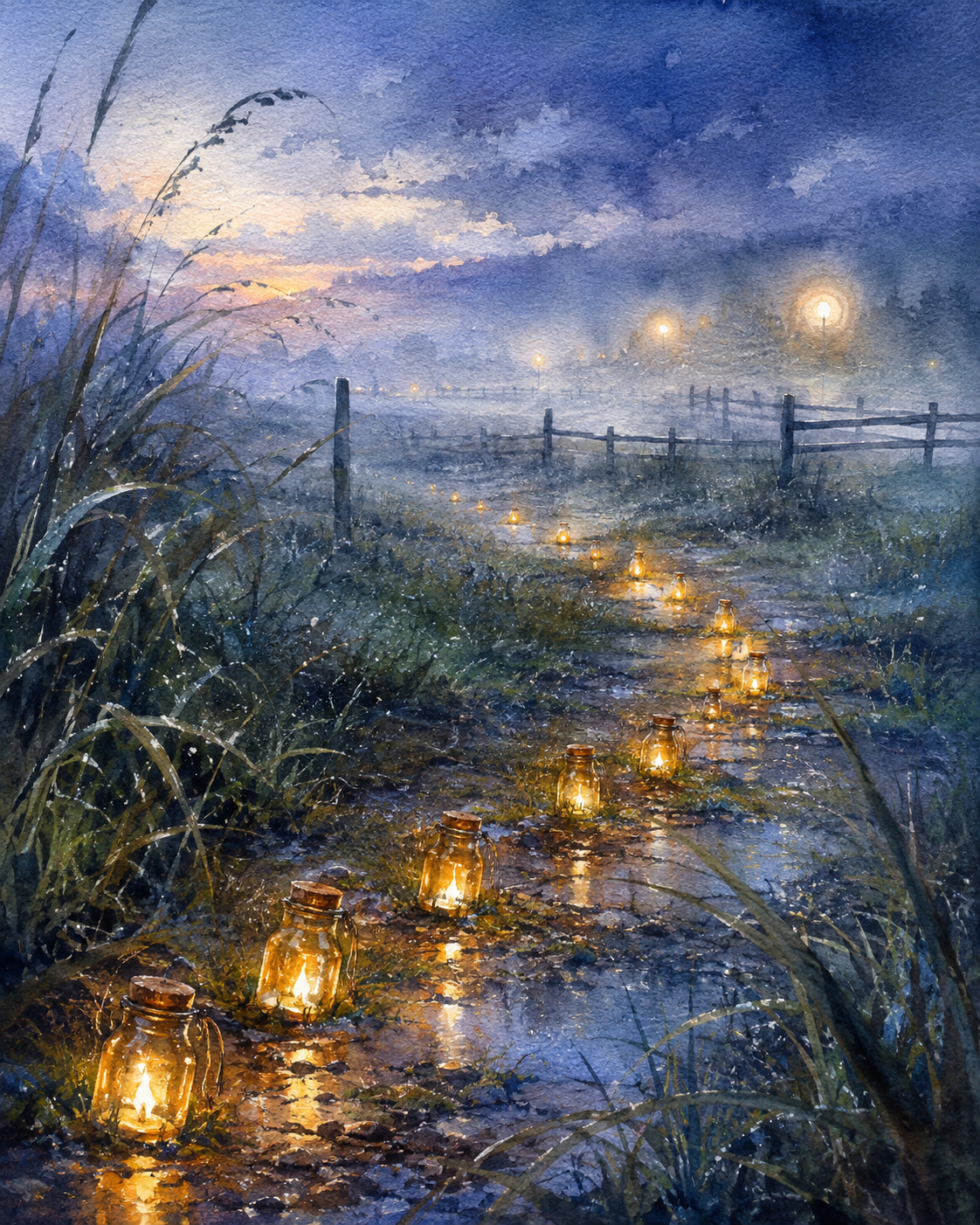
A River of Little Flames Crosses the Wet Meadow
Critique
Introduction This nocturnal landscape transforms a rain-soaked country path into a ceremonial passage. A procession of jar lanterns carries warmth through blue mist, giving humble illumination unusual emotional and spatial power. Description Glass jars containing small flames begin large at the lower left and recede in a winding line toward the center. Wet stones mirror their gold light. Tall grasses crowd both sides, dark fences cross the middle distance, and higher electric lamps continue the route through fog. A pale peach opening near the left horizon survives beneath heavy indigo clouds. Analysis Strong recession is created by diminishing jars, repeated highlights, and the path’s serpentine diagonal. Warm orange occupies little area yet commands attention against expansive cobalt and slate washes. Reflections double each flame and break into angular strokes across uneven ground. Dense grass on the left provides weight, while open mist on the right releases the composition. The distant lamps shift scale and technology without interrupting the rhythm. Interpretation and Evaluation The jars suggest guidance assembled through many modest acts. No single flame conquers the weather, but together they establish direction and reassurance. Rain intensifies rather than extinguishes their presence by multiplying light on the path. The empty route leaves the traveler implicit, allowing viewers to inhabit the journey themselves. Particularly effective is the transition from handmade vessels to public lamps, which broadens private care into communal infrastructure. Conclusion Through disciplined color contrast and rhythmic perspective, the painting makes passage feel protected without denying darkness. Its lights do not erase uncertainty; they render it traversable. The result is a lyrical image of collective welcome, poised between the last glow of evening and the deepening night.
Same Subcategory
Similar Artworks
 Bottled Flames Climb Toward the Distant House
 Little Bottles Light the Path to the Springs
 The Canal Follows a Trail of Little Suns
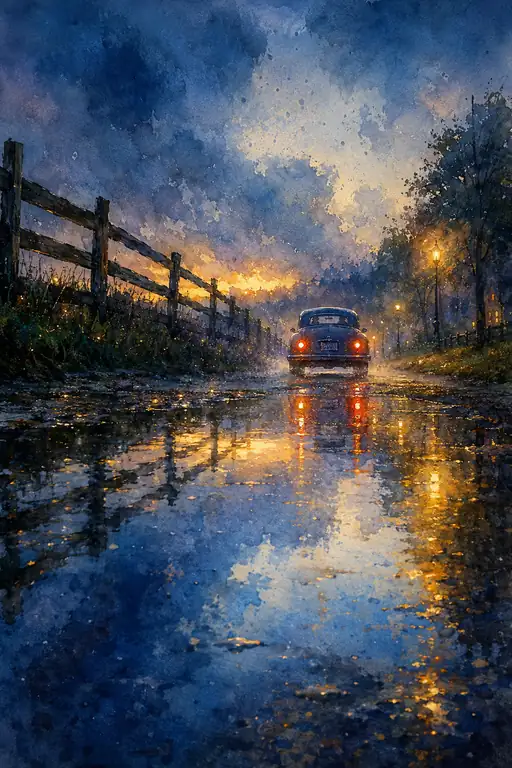 Rain Carries the Last Car Toward Sunset
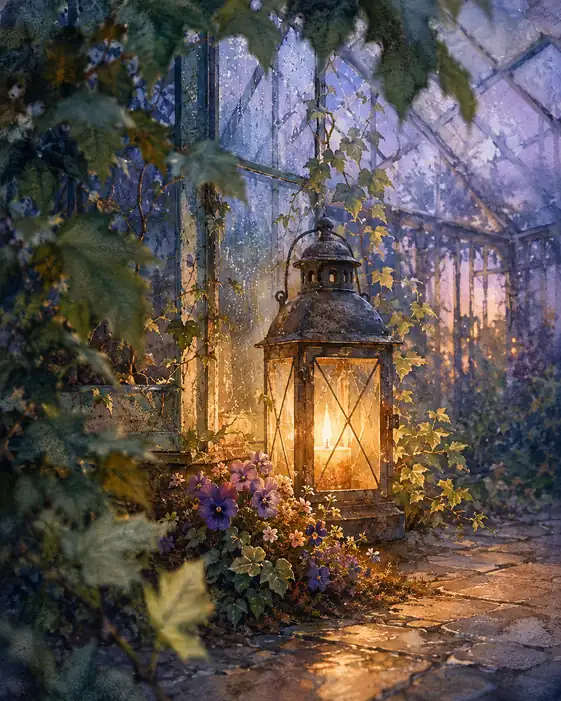 The Greenhouse Lantern Wakes the Violets
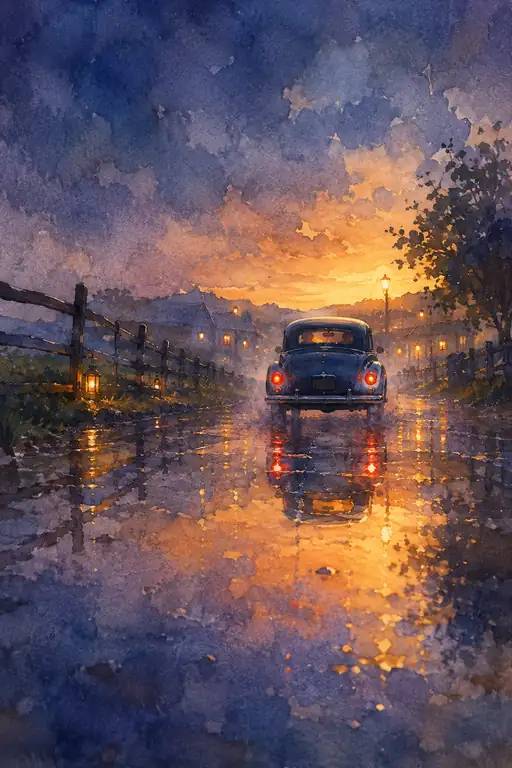 The Blue Car Drives into a Burning Sky
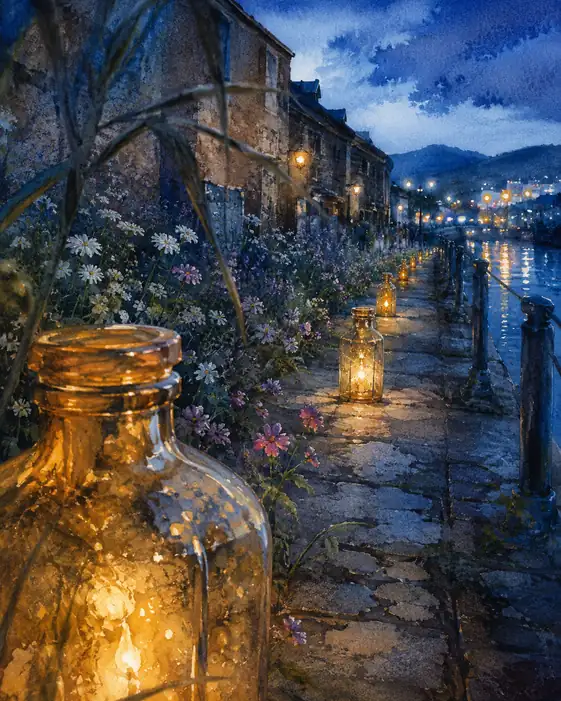 A Path Lit by Bottled Stars
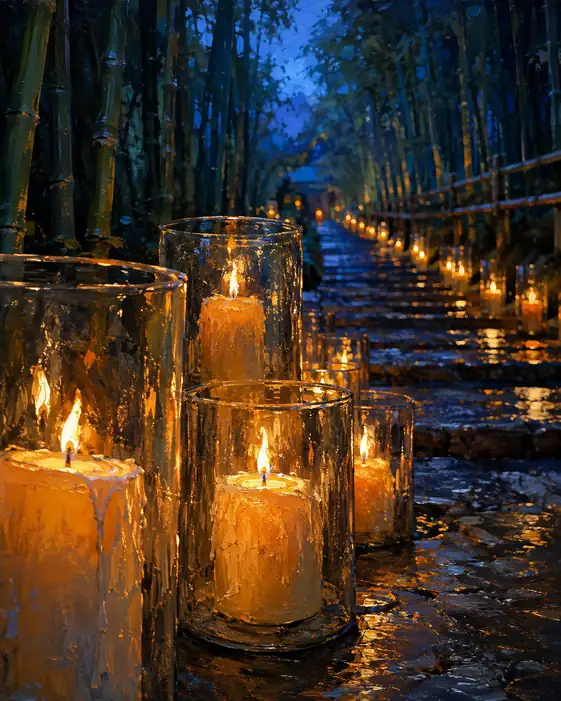 A Constellation of Candles on Forest Steps
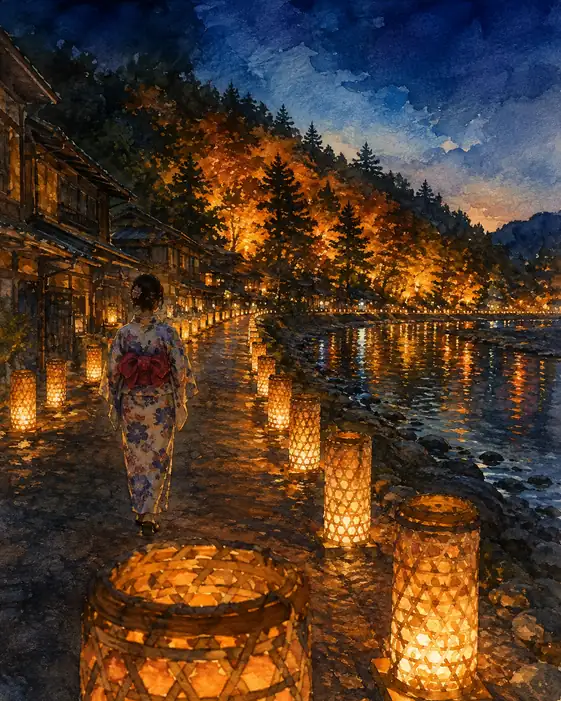 Warm Luminescence Rising in Darkness (No. 51)
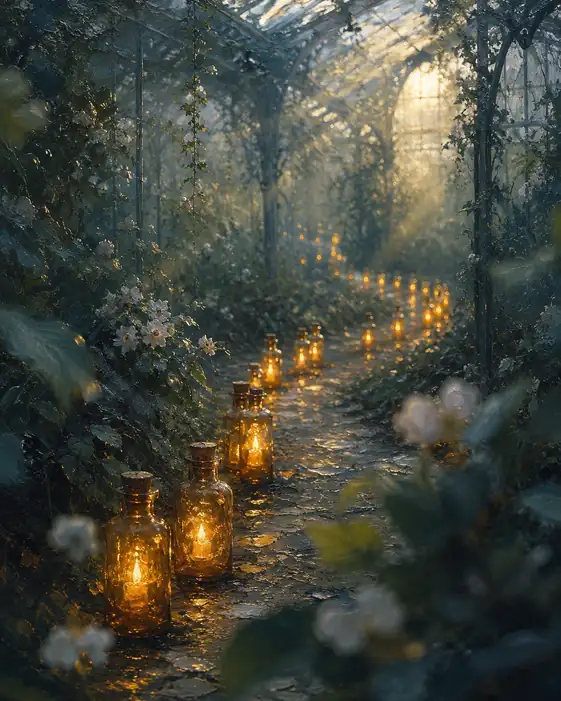 A Constellation of Bottled Flames Through the Leaves