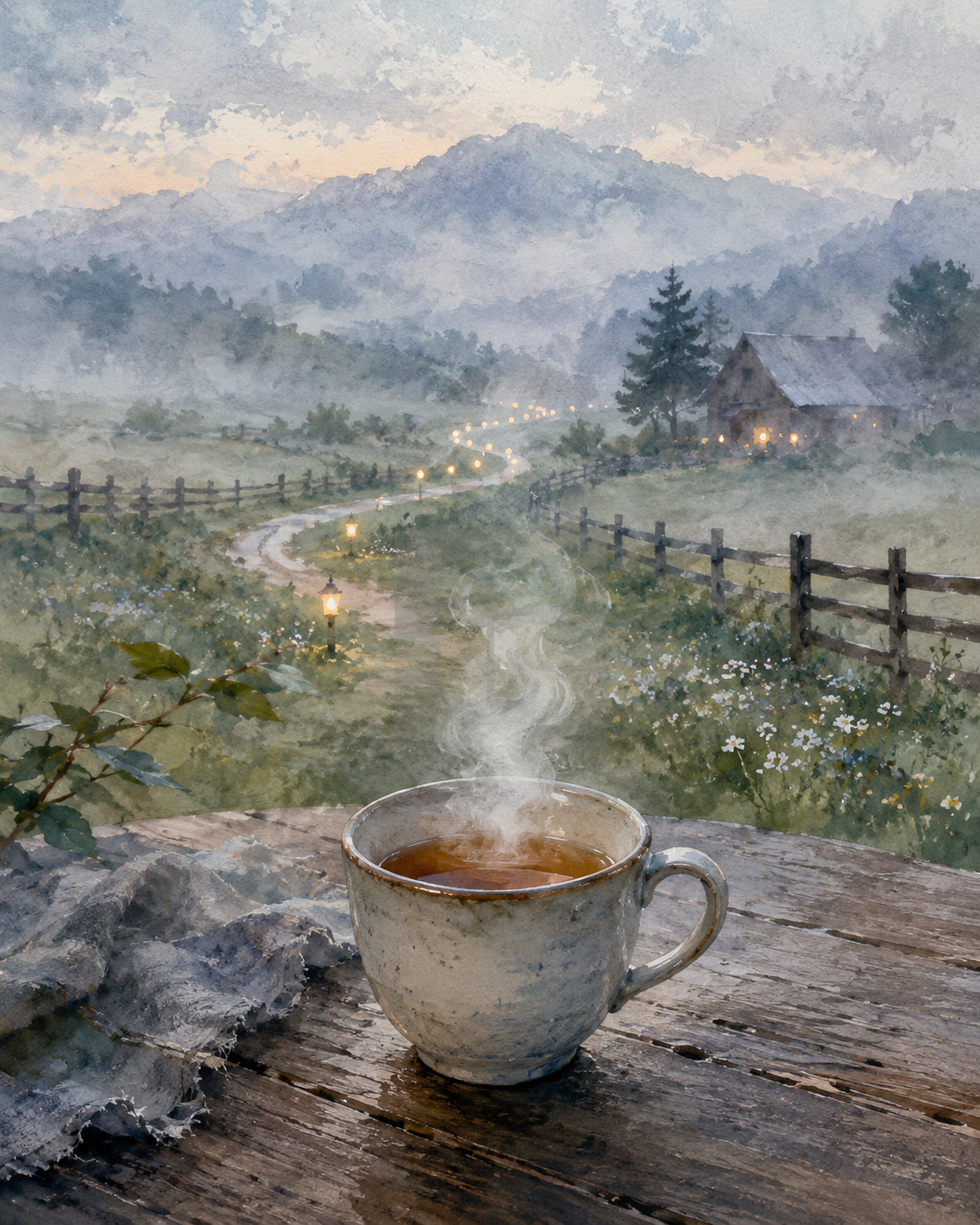
Tea at the Beginning of the Lantern Road
Critique
Introduction This mountain still life places a steaming cup above a lamp-lined valley road. Immediate warmth and distant travel coexist, turning a drink into a pause for contemplating landscape and journey. Description A large gray-beige ceramic cup occupies the lower center, its handle facing right and amber tea visible inside. White steam rises in loose translucent coils. A crumpled blue-gray cloth lies at left on rough damp boards, with a leafy twig entering from the side. Beyond the table, a pale road curves through fenced meadows toward a rustic house and receding mountain range. Small golden lamps follow the path deep into pearl-gray mist beneath layered cloud. Analysis The cup forms a solid rounded anchor against the road's narrow serpentine recession. Its circular rim and handle counter the table's strong horizontals and fence diagonals. Steam creates the only upward flowing movement and visually joins beverage to cloud and fog. Muted gray, green, and blue dominate, while tea and lamps repeat warm amber at near and distant scales. Atmospheric perspective steadily reduces contrast toward the mountains. Interpretation and Evaluation The unattended cup implies a person just outside the frame and a temporary halt within travel. Heat is immediate but finite, while the road extends beyond visibility; this difference in duration makes rest feel necessary rather than indulgent. Steam and mist connect body-scale comfort to regional weather. The lamps suggest that the journey remains available when the drink is finished. Conclusion The painting gives pause directional meaning. Cup, steam, cloth, road, lights, house, and mountains create a continuum from touch to distance. Its restraint makes hospitality feel embedded in the landscape rather than staged apart from it.
Same Subcategory
 The Cup That Kept the Last Golden Hour
Similar Artworks
 Morning Tea Before the Meadow Wakes
 Breath of a Rain-Soaked Evening
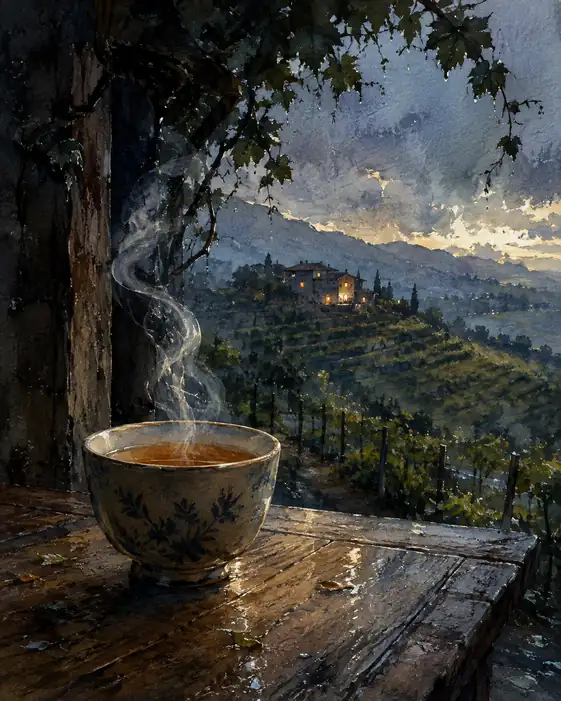 Tea Watches the Vineyard Lights Come Home
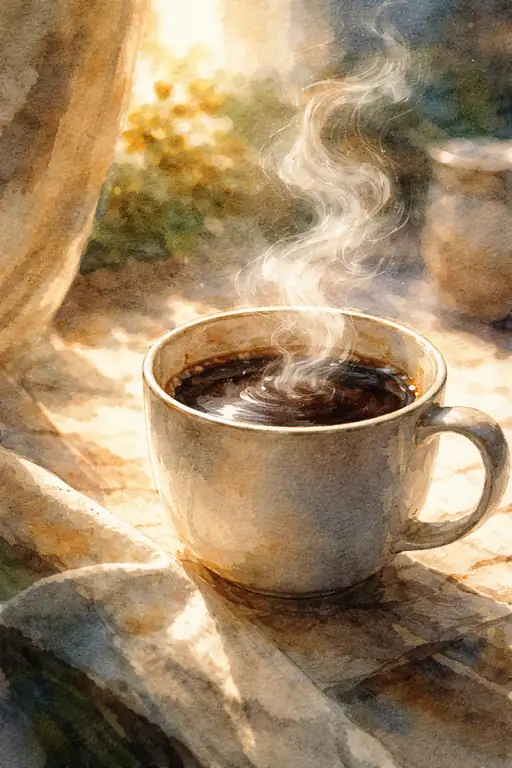 A Quiet Morning Reflection in Coffee
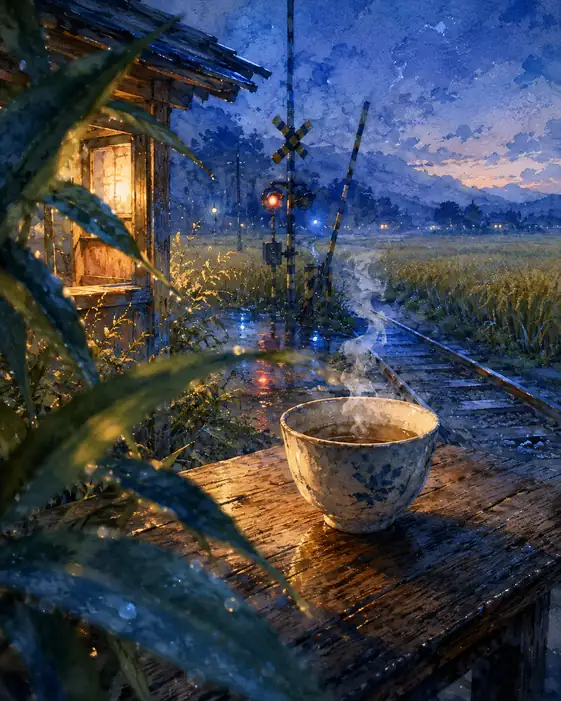 Steam Rising by the Quiet Country Station
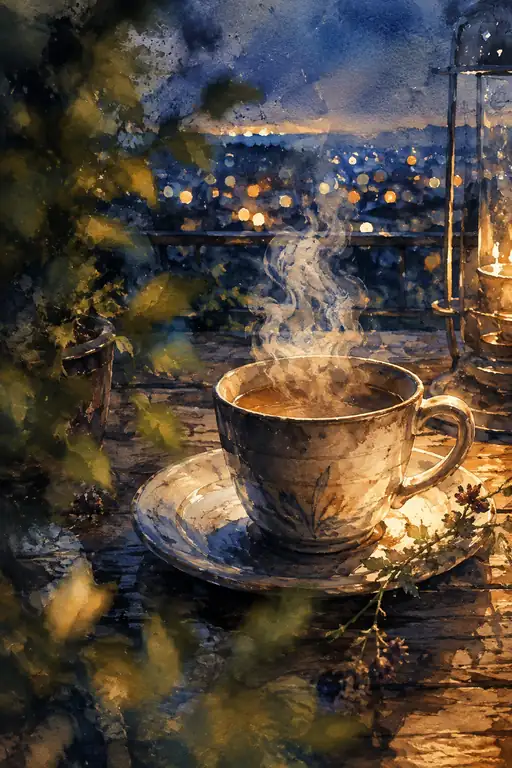 Evening Tea Listens to the Faraway Lights
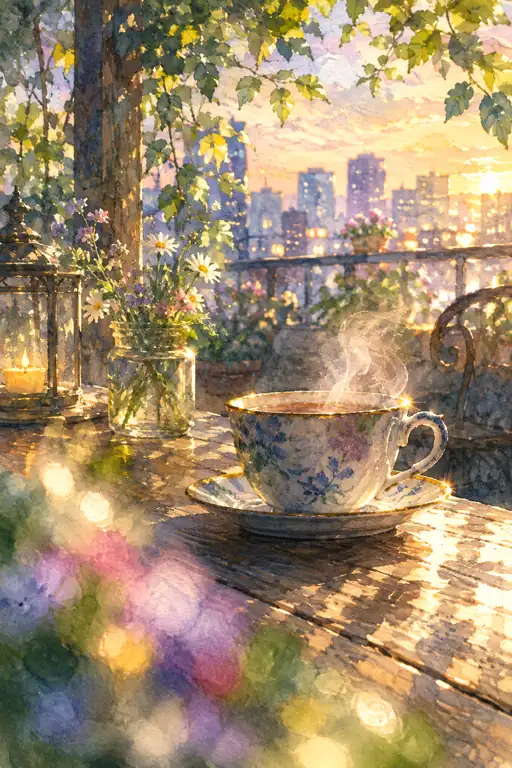 Morning Tea Steams beside the Waking City
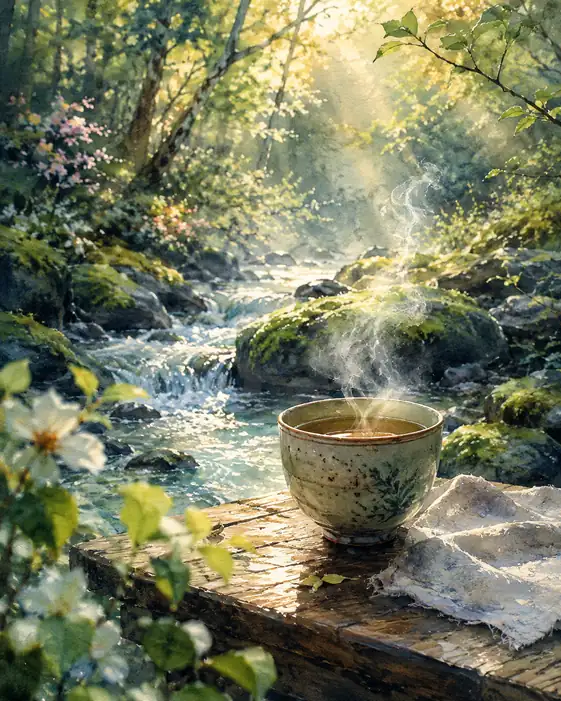 Morning Tea Hears the Stream Laughing
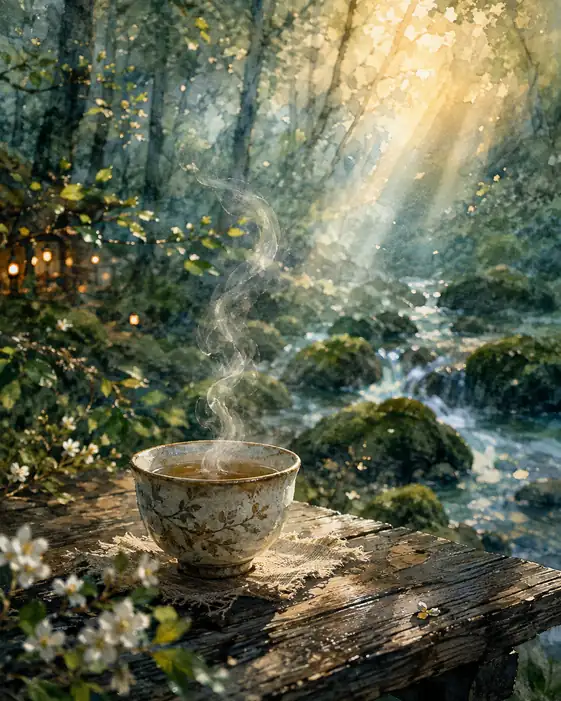 Tea Rises into the Forest's Sunbeams
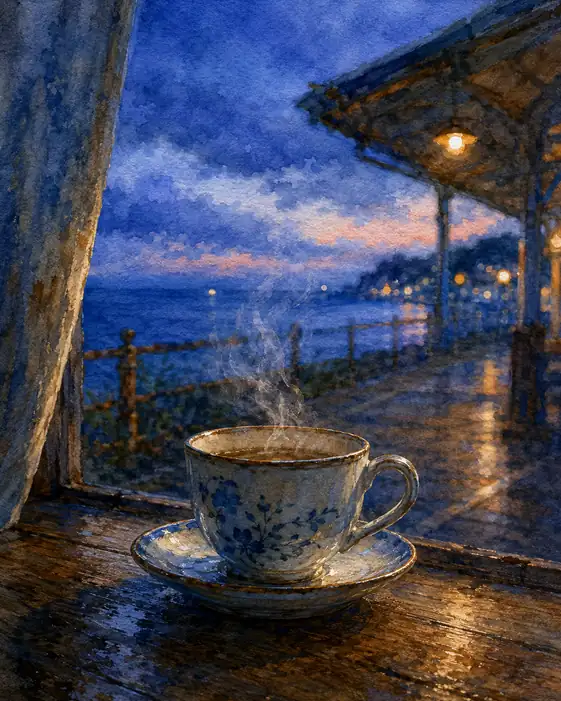 A Cup Keeps the Last Blue of Evening Warm