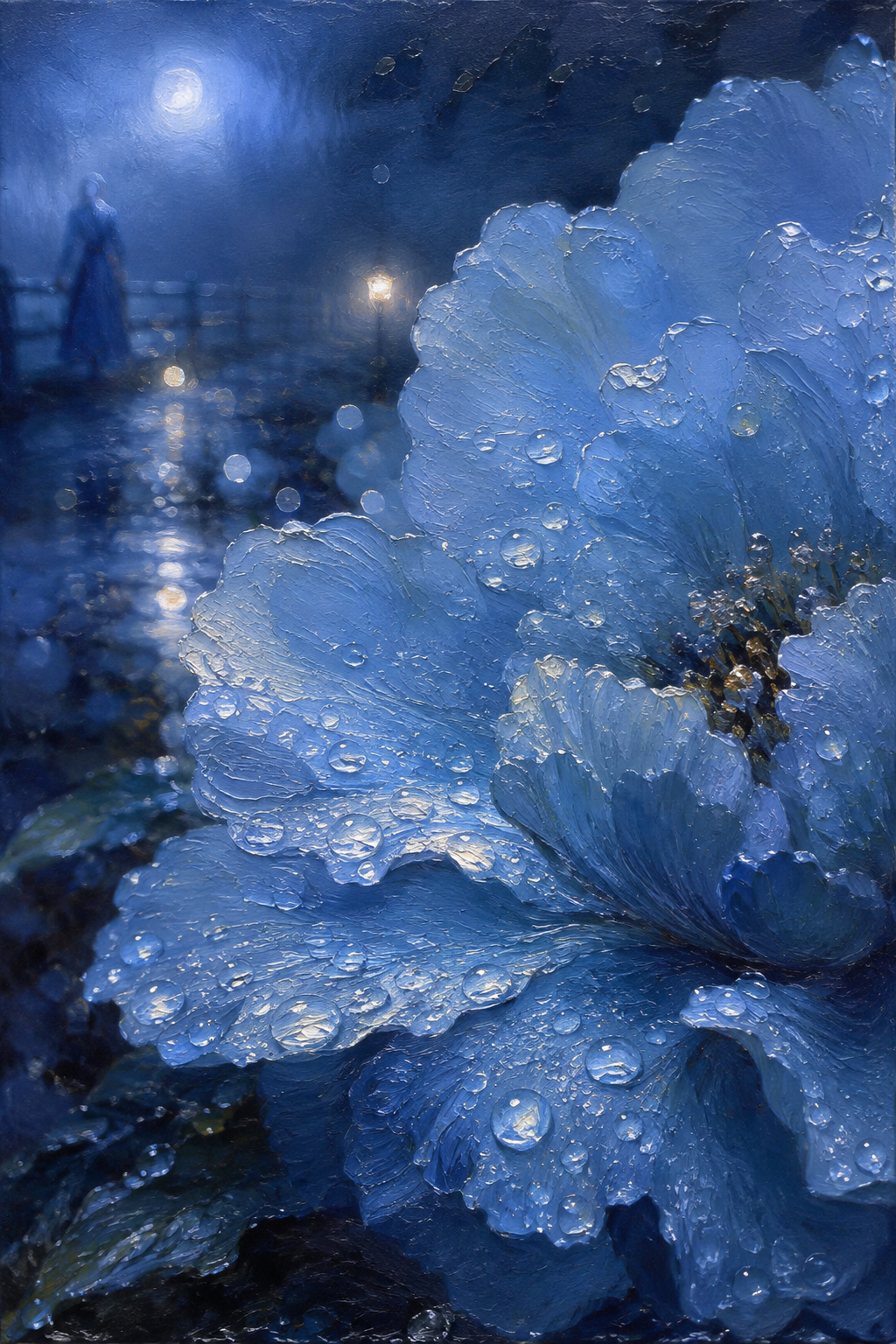
Blue Petals Gather the Moon's Tears
Critique
Introduction This moonlit close-up enlarges a rain-covered flower while a solitary figure stands far beyond. Reversed scale uses botanical intimacy to deepen awareness of weather, distance, and human solitude. Description The flower fills the right and lower portions, its broad layered petals opening around a dark cluster of stamens. Cool blue shadows model each folded surface. Numerous droplets cling to ridges and margins, ranging from tiny beads to rounded lenses. At upper left, a pale moon shines through deep navy sky. A blurred figure in a long coat stands near a fence in the left distance. A single amber lamp and its wet reflection occupy the middle ground, while further droplets or bokeh circles scatter across the road. Analysis The flower's enormous mass counterbalances the small upright figure and moon. Droplet circles repeat the lamp, moon, and blurred highlights, connecting separate depths through shape. Their clear rims and internal refractions provide sharp detail against atmospheric background softness. Nearly monochrome ultramarine unifies petals, sky, and pavement; restrained amber marks the human route. Petal folds radiate from the center and guide attention outward toward the distant scene. Interpretation and Evaluation Rain increases the flower's weight but also its capacity to receive and redistribute light. Each droplet becomes a miniature optical world, making vulnerability productive rather than passive. The solitary figure shares the weather but remains distant, suggesting that nonhuman and human endurance occur simultaneously without requiring one to symbolize the other. The flower's scale demands ethical attention to what is normally overlooked. Conclusion Close looking becomes expansive. Petal, water, moon, lamp, road, and figure join through blue and gold. Attention to a fragile surface provides richer understanding of the wider night.
Same Subcategory
Similar Artworks
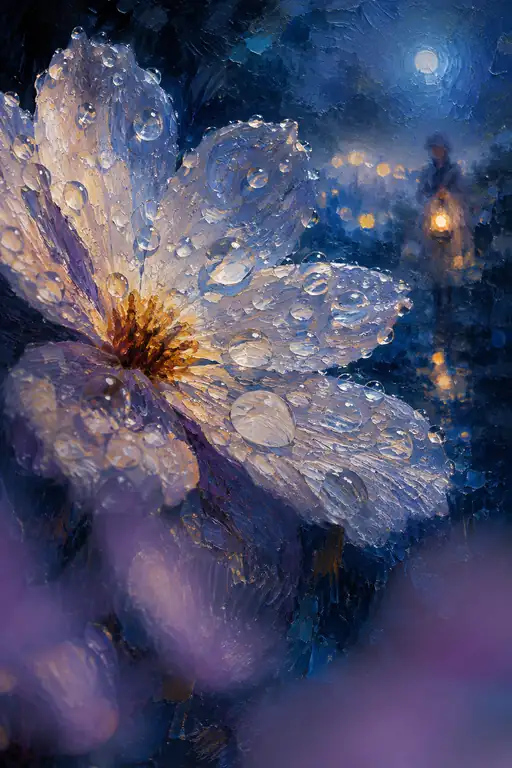 Moonlit Dew Crowns the Midnight Flower
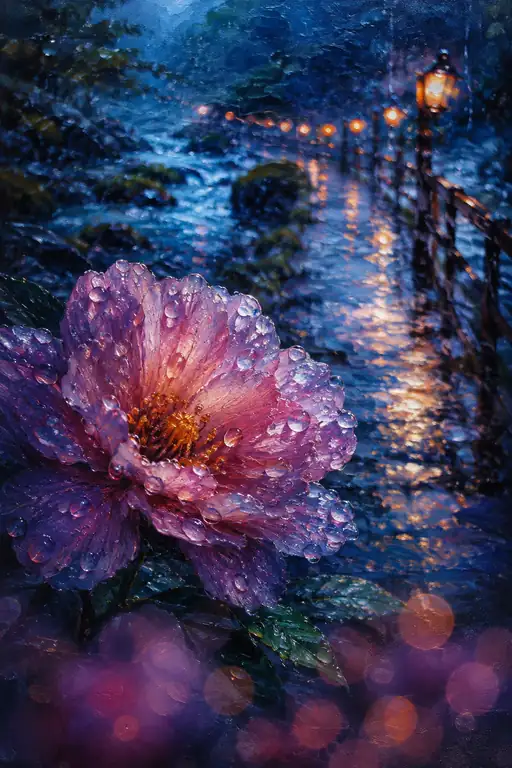 A Rain-Crowned Camellia Watches the Lantern Path
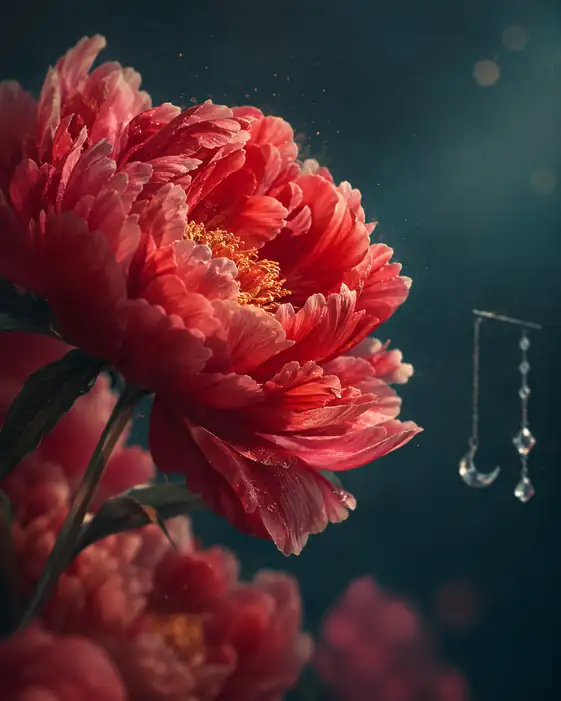 Peony and Crescent Moon Pendant
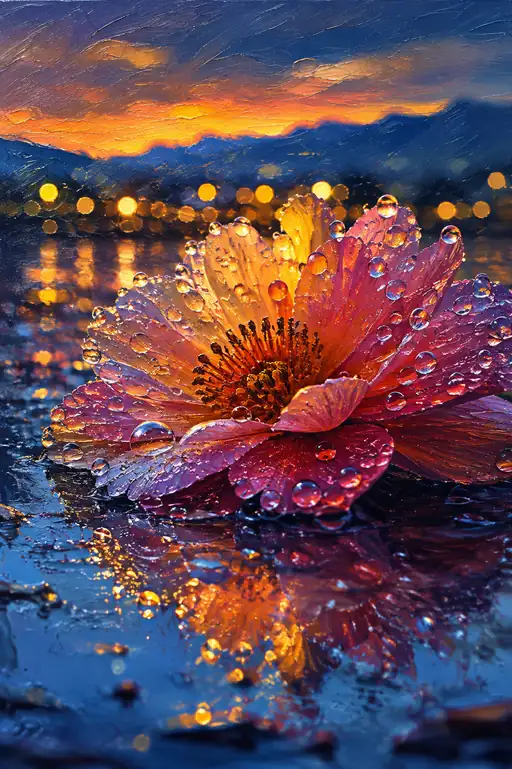 A Rain-Jewelled Blossom Mirrors the Burning Sky
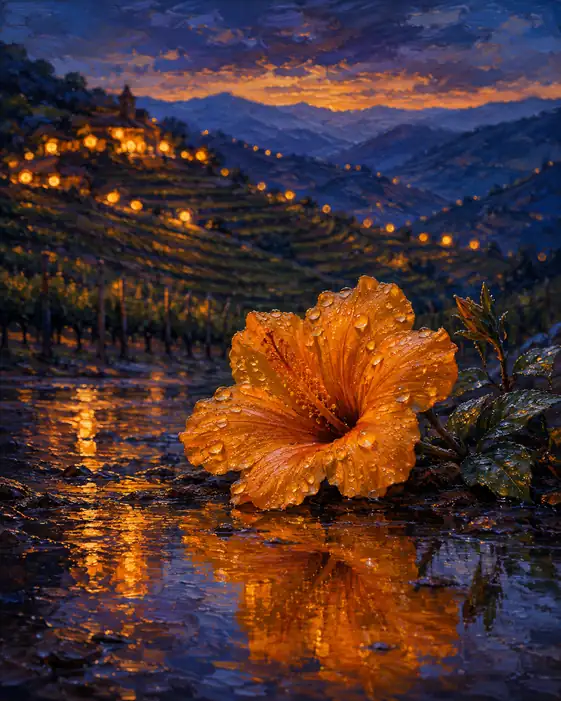 A Rain-Kissed Hibiscus Holds the Vineyard Sunset
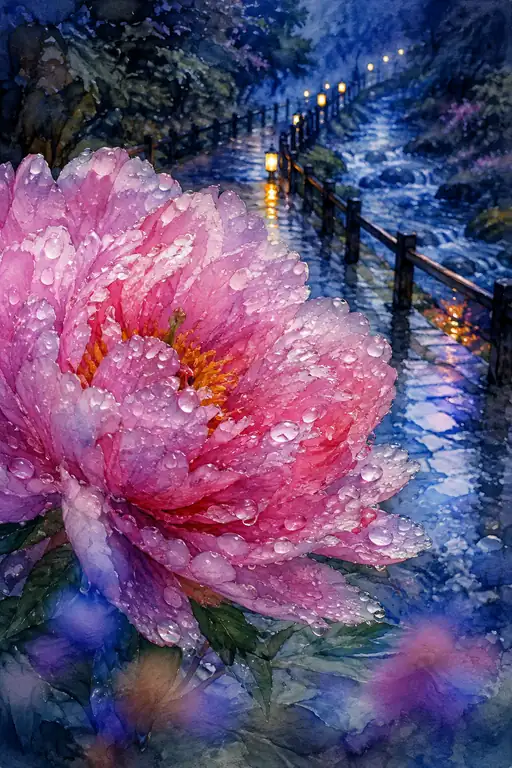 The Peony Wears a Necklace of River Rain
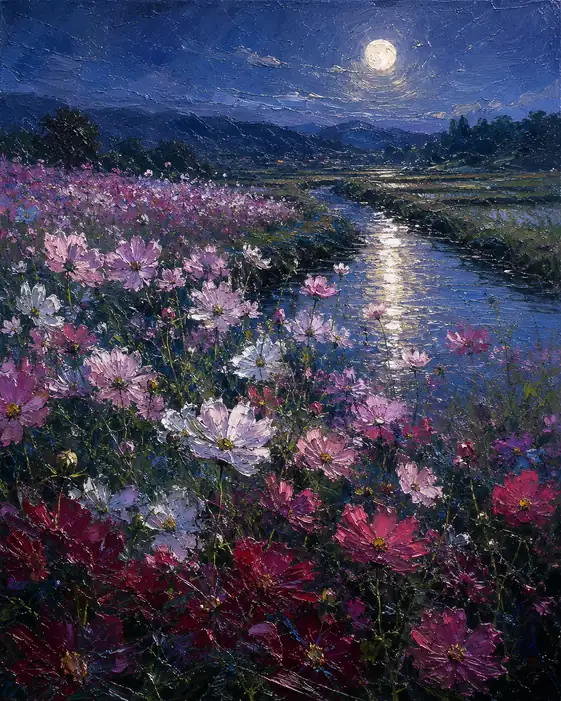 Cosmos Swaying Along the Moonlit Stream
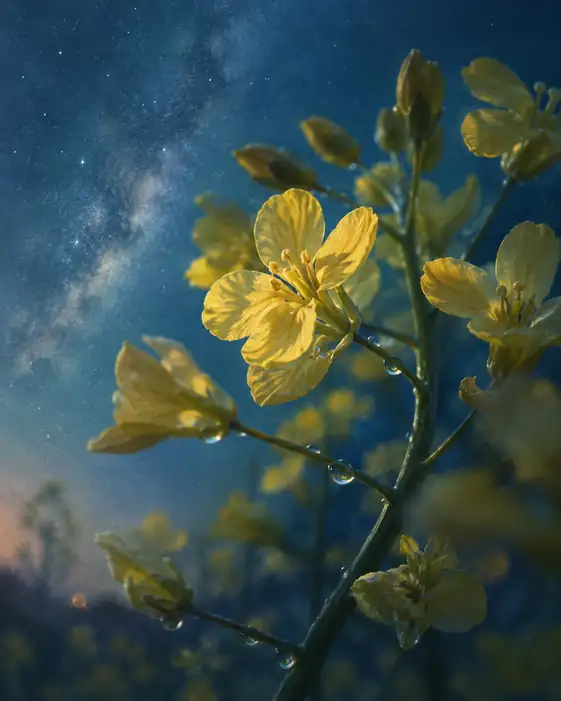 Canola Blossom Beneath Starry Skies
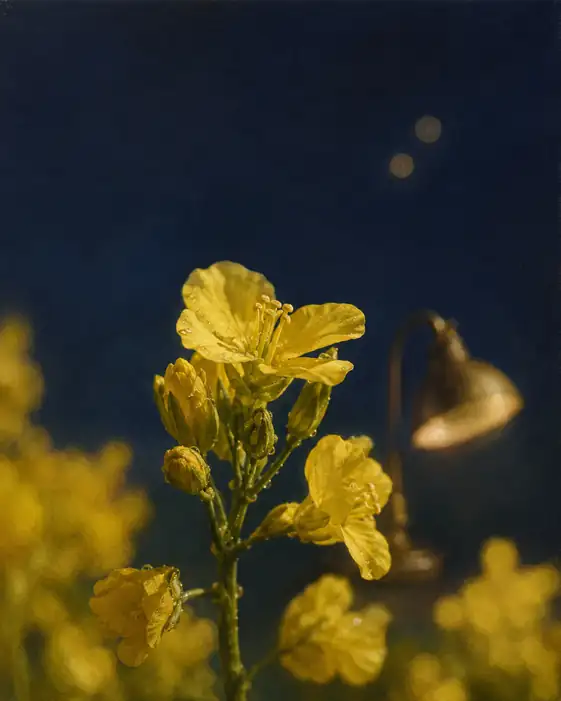 Canola Flower by the Brass Lamp
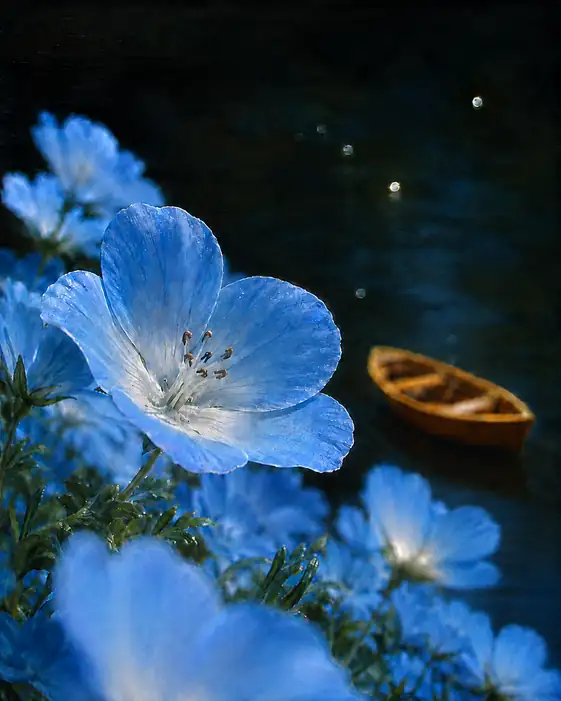 Blue Nemophila and the Lonely Boat