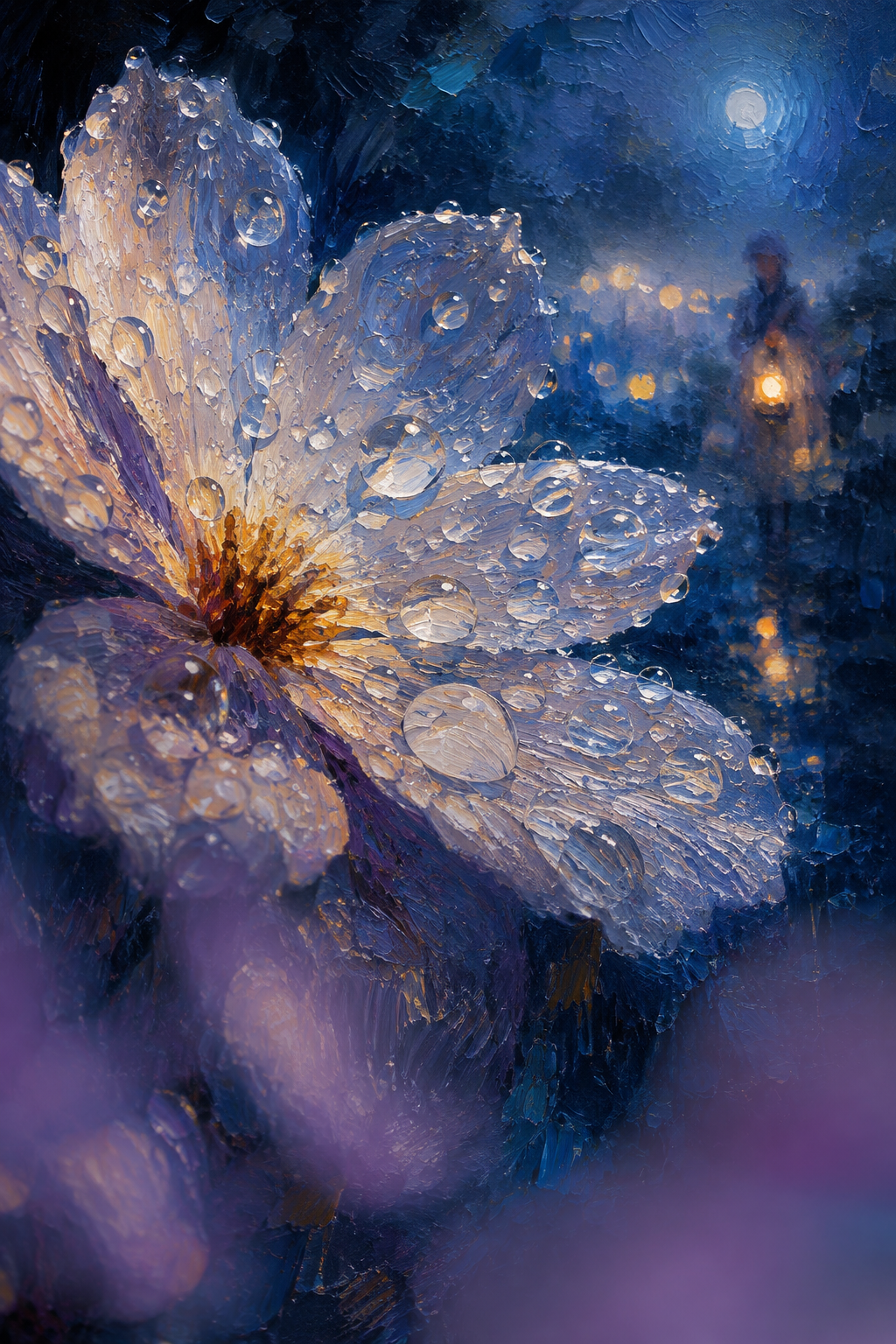
Moonlit Dew Crowns the Midnight Flower
Critique
Introduction This nocturnal close-up enlarges a pale flower covered with raindrops against a moonlit road. Its surface turns weather into a lens for perceiving distant human movement. Description The flower fills most of the left and lower frame, opening broad white petals around a dark amber center. Lavender shadows tint the lower petals. Dozens of spherical droplets cling to ridges and margins, from pinpoints to one large bead near the lower center. Behind, deep blue foliage and sky surround a pale moon. A blurred figure carrying a warm lantern stands or walks at right, while smaller amber lights recede along a path and reflect below. Violet blossoms blur across the bottom. Analysis The enormous foreground flower reverses normal landscape scale, making the distant traveler comparatively minute. Droplet circles repeat moon, lantern, and bokeh lights, connecting botanical and human worlds through shape. Their refraction introduces tiny inverted tonal fragments into the petals. Cool cobalt and violet dominate, while amber concentrates at the center and lamps. Sharp near droplets contrast with thick, blurred background strokes, creating powerful depth. Interpretation and Evaluation Rain burdens the petals yet also gives them optical agency: each bead receives, bends, and redistributes surrounding light. The flower becomes both subject and viewing instrument. The distant lantern bearer suggests human persistence on the same wet night, but remains secondary to nonhuman perception. Shared circles of water and light imply continuity across immense differences of scale. Conclusion The painting transforms vulnerability into heightened receptivity. Petal, droplet, moon, lamp, traveler, and road participate in one network of reflected light. Its strongest insight is that close attention to a fragile surface can enlarge, rather than narrow, awareness of the wider world.
Same Subcategory
 The Violet Hour Beaded with Rain
Similar Artworks
 Blue Petals Gather the Moon's Tears
 A Rain-Crowned Camellia Watches the Lantern Path
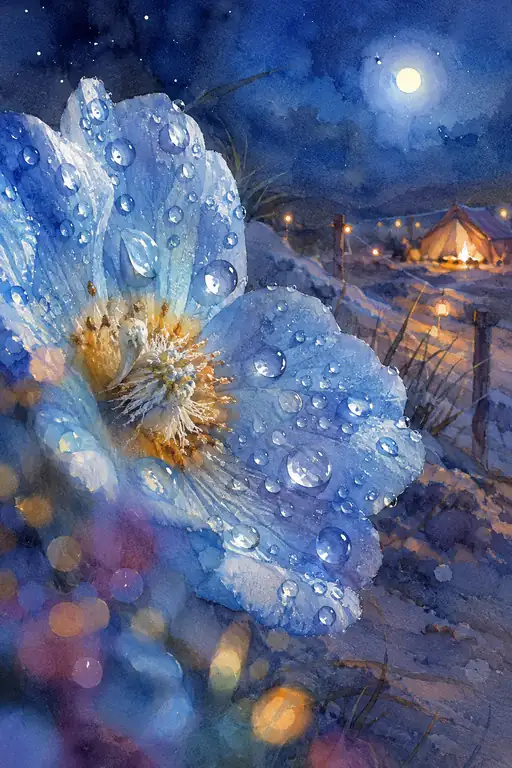 Moonlit Dew on the Azure Petals
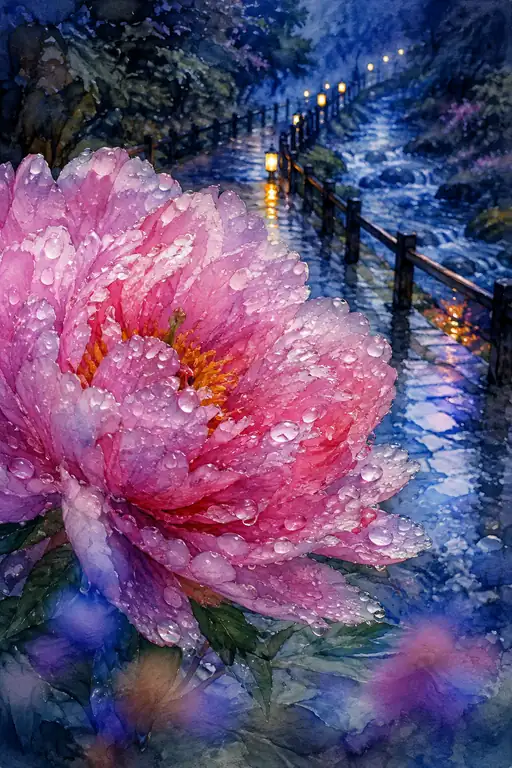 The Peony Wears a Necklace of River Rain
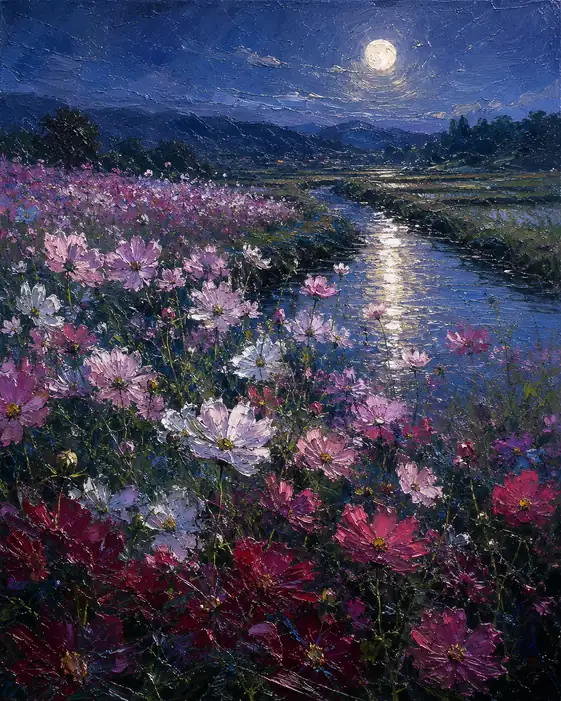 Cosmos Swaying Along the Moonlit Stream
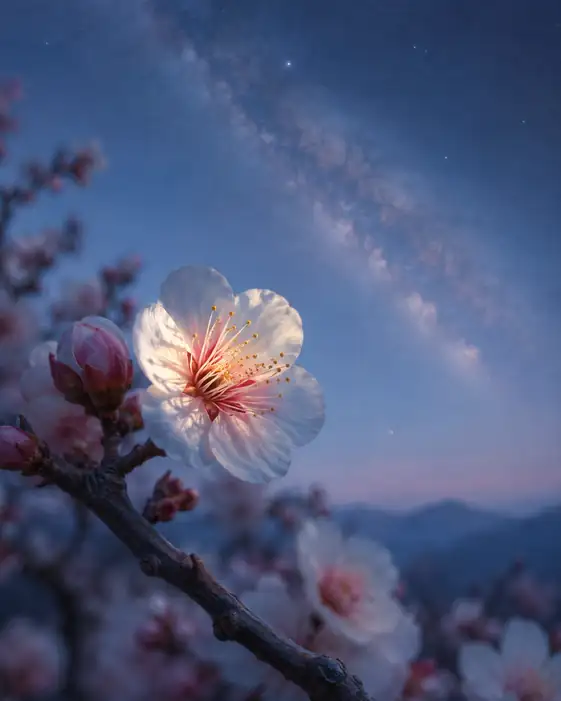 White Plum Beneath the Milky Way
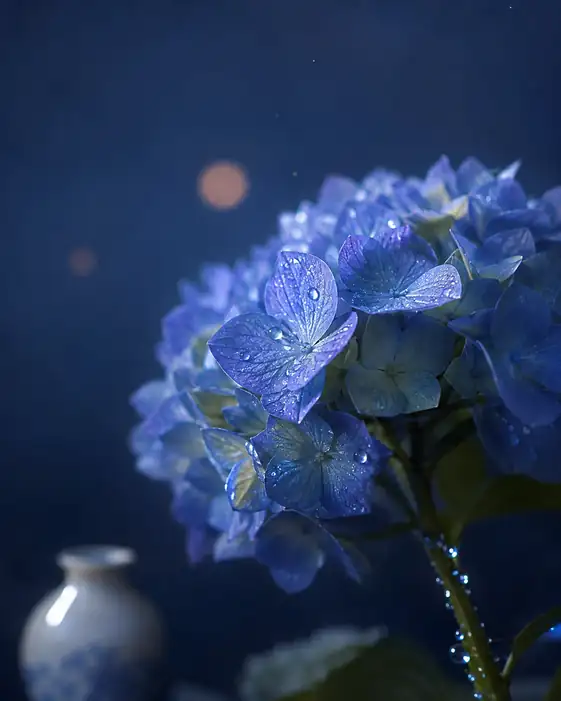 Moonlit Solitude with White Porcelain
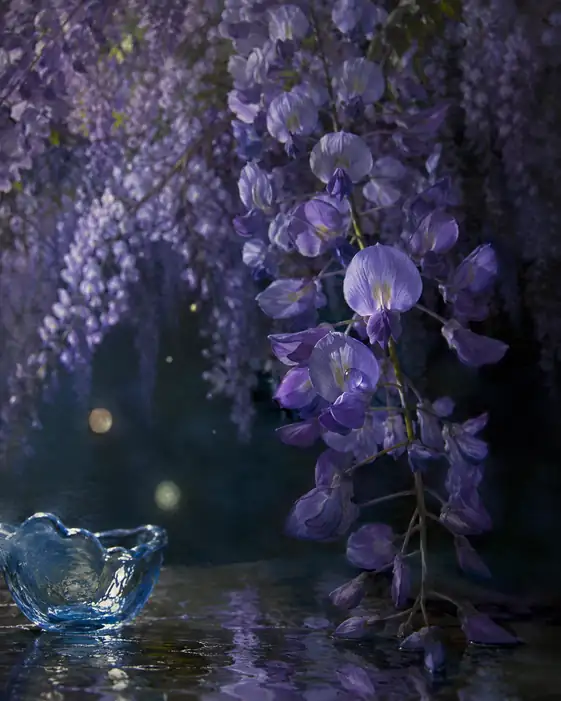 Sapphire Glass and Falling Violet Petals
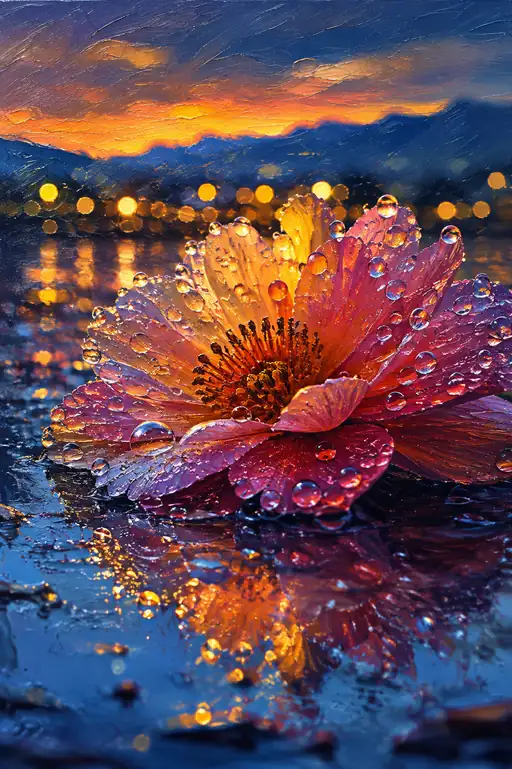 A Rain-Jewelled Blossom Mirrors the Burning Sky
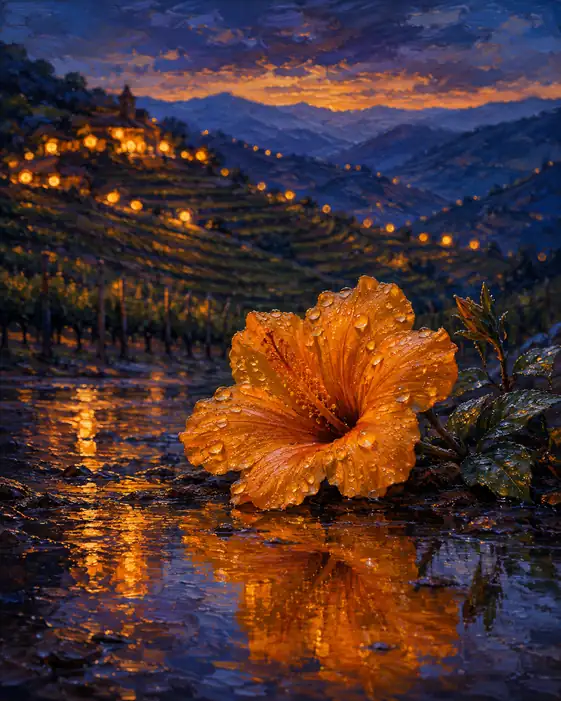 A Rain-Kissed Hibiscus Holds the Vineyard Sunset