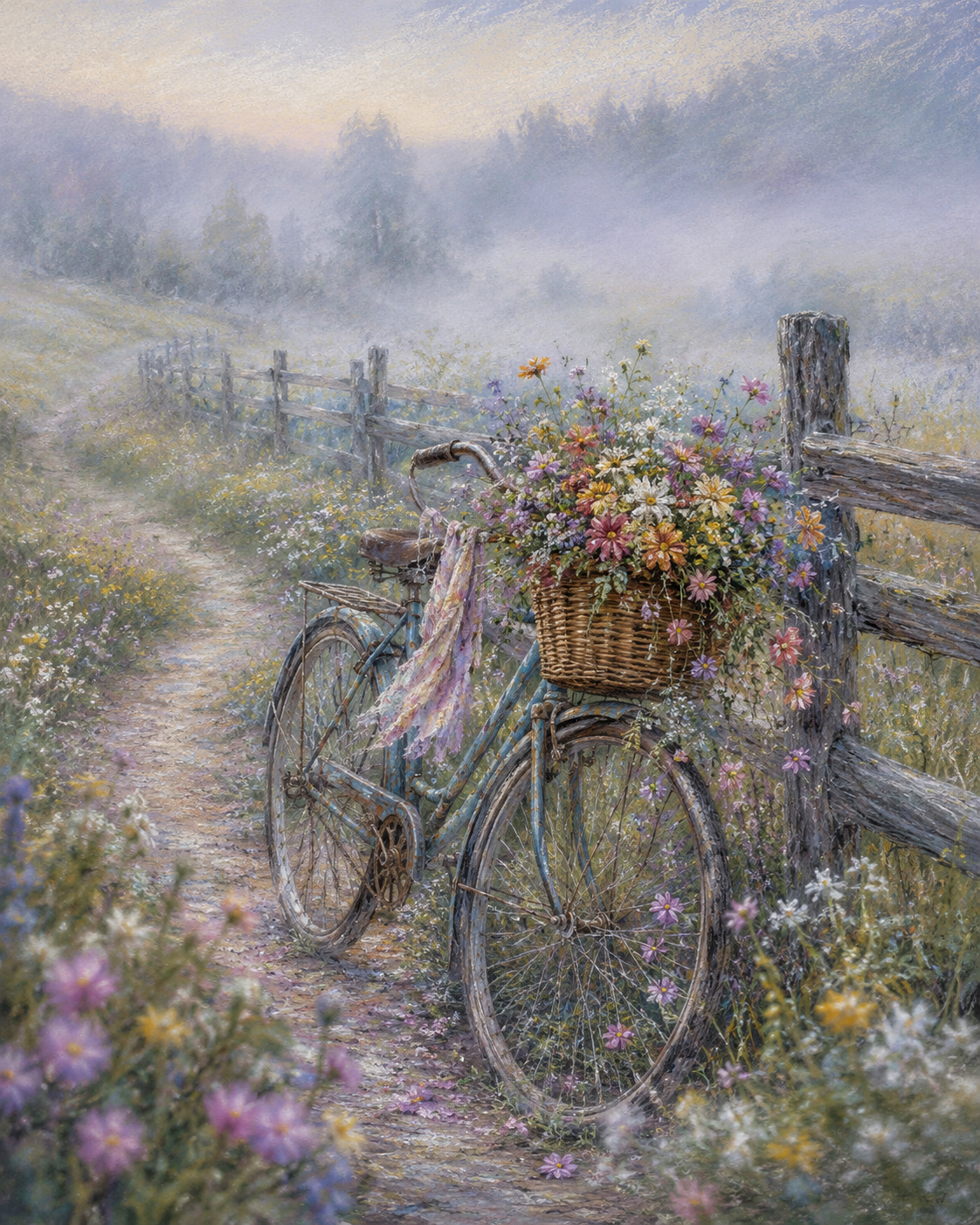
The Blue Bicycle at the Edge of Dreaming Fields
Critique
Introduction This country scene places a weathered bicycle along a misty path. Its overflowing basket and scarf transform a utilitarian vehicle into a record of movement, gathering, and presence. Description The bicycle occupies the lower right-center, leaning beside a rough wooden fence. Its pale blue frame is chipped and rusted; two thin wheels, spokes, chain, curved handlebar, worn saddle, and rear rack remain visible. A rectangular wicker basket overflows with daisies, pink cosmos, violet flowers, yellow blooms, and fine white sprays. A patterned lavender and cream scarf hangs from the handlebar across the frame. The dirt path curves left through wildflower meadows toward trees nearly erased by blue-gray fog. Analysis The front wheel forms the clearest circle and anchors the foreground, while the frame's triangles contrast with the bouquet's radial growth. Fence rails and path create separate diagonals that converge into mist. The scarf introduces a flexible vertical movement between rigid frame members. Muted blue, gray, and green unify bicycle and atmosphere, allowing flower colors to carry visual emphasis. Blurred foreground blossoms deepen space and repeat the basket at a larger, softer scale. Interpretation and Evaluation The bicycle's wear suggests repeated journeys; the fresh bouquet records one particular season and perhaps one recent stop. The scarf implies an absent rider more intimately than the machine alone, preserving touch, taste, and bodily scale. Flowers may be cargo, gift, or spontaneous harvest. Because the bicycle rests within the same vegetation it carries, collection appears reciprocal rather than extractive. Conclusion The work turns temporary abandonment into presence. Frame, scarf, flowers, fence, and road hold human traces without a portrait. Movement and rest become equally meaningful phases of belonging.
Same Subcategory
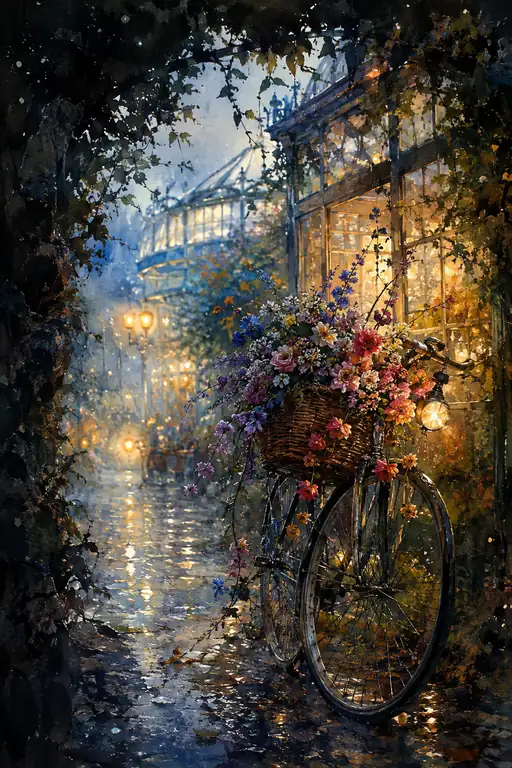 A Bicycle Overflows with the Greenhouse Evening
Similar Artworks
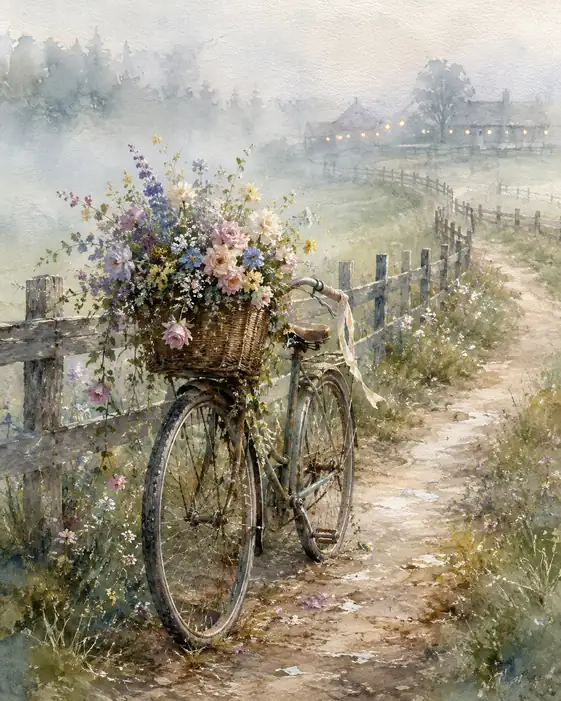 A Bicycle Bringing Roses Home Through Mist
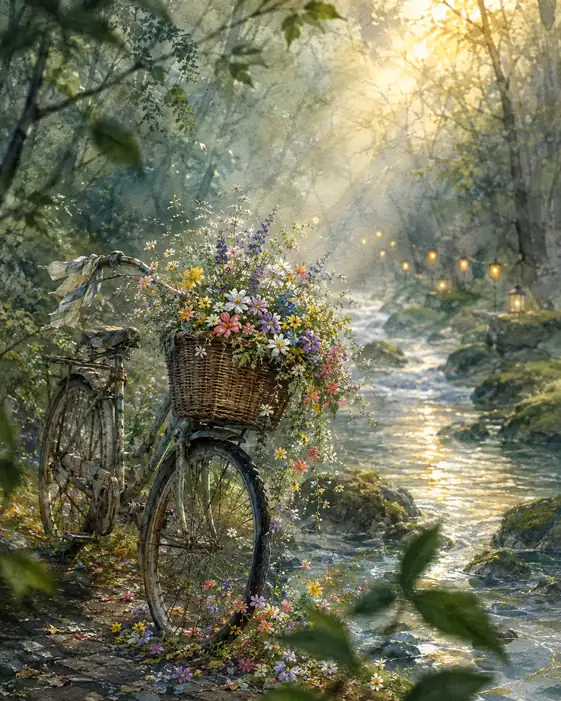 The Flower Bicycle Finds a Road of Water
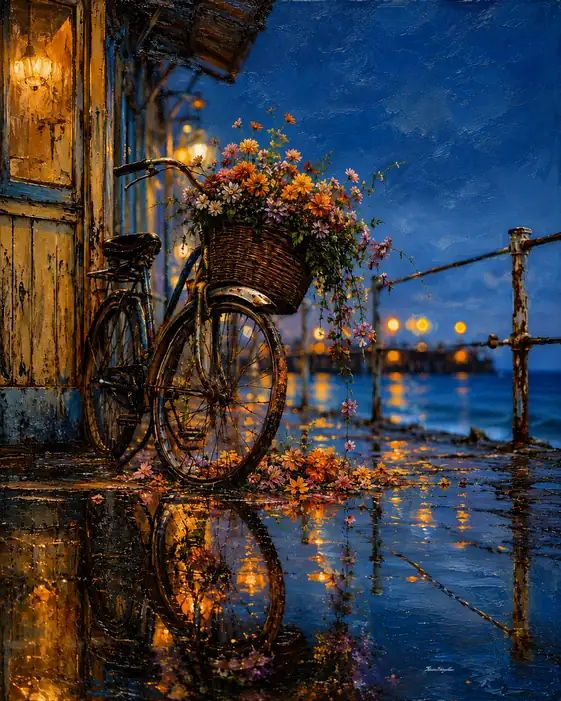 The Flower Bicycle Waits beside the Evening Sea
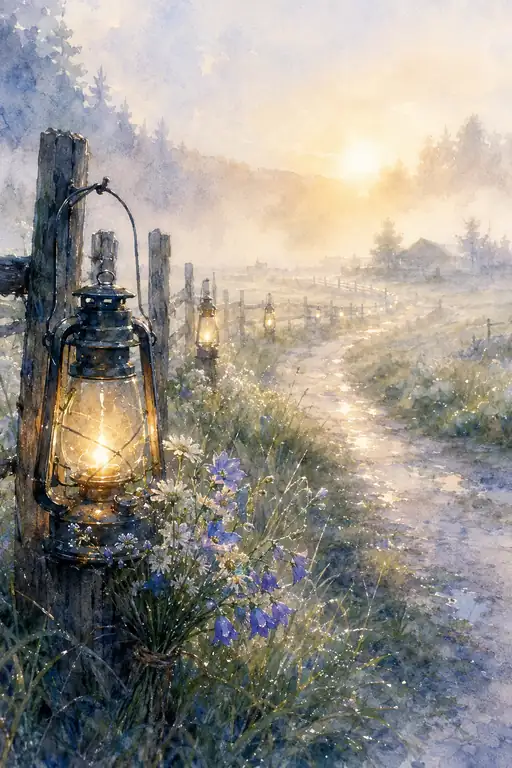 Lanterns Lead the Dawn Down a Country Lane
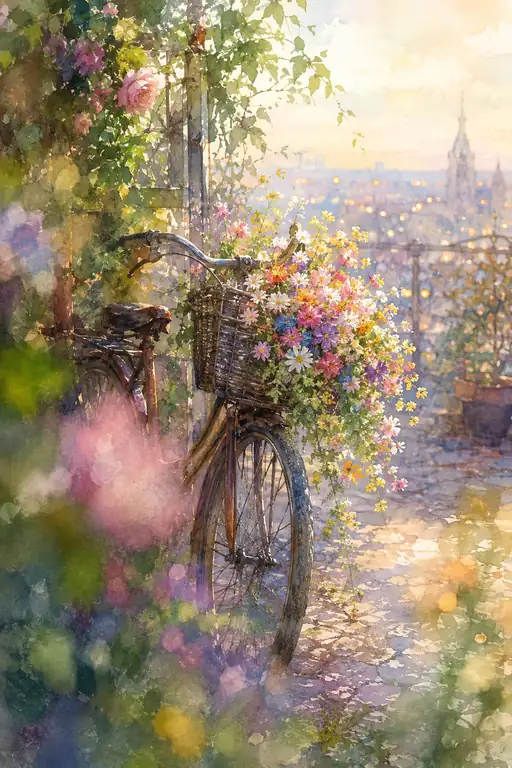 A Bicycle Brings Spring to the Rooftops
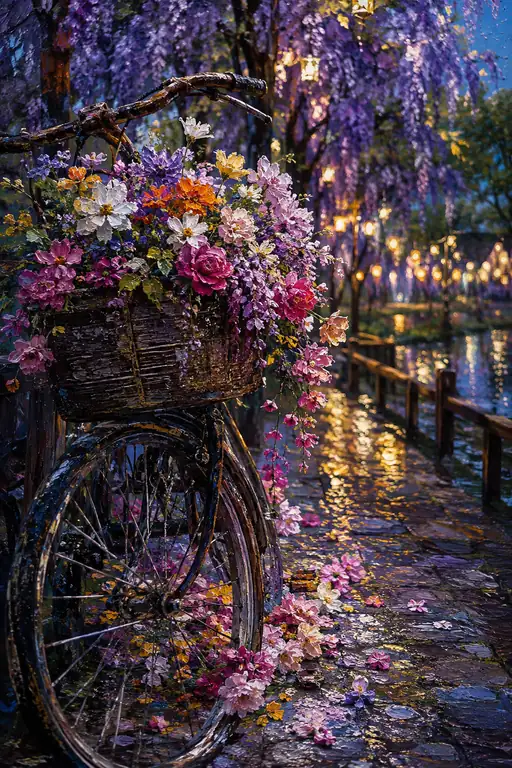 A Bicycle Overflows into the Lantern Rain
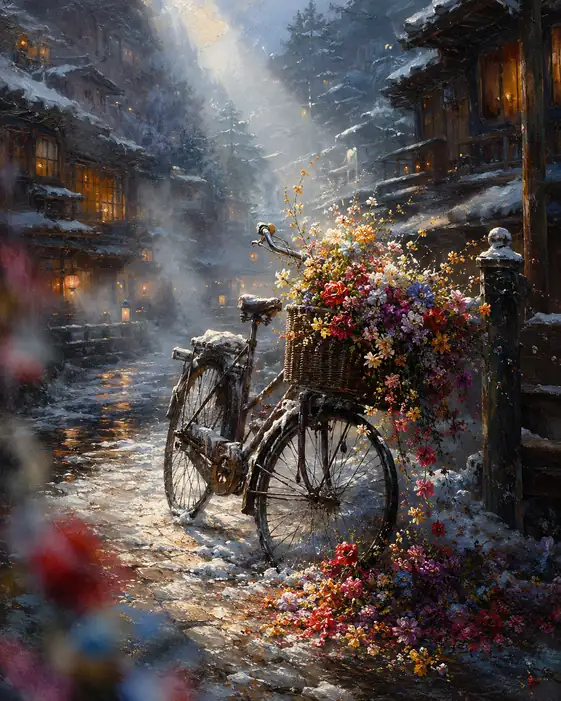 A Bicycle Brings Summer Flowers into Winter
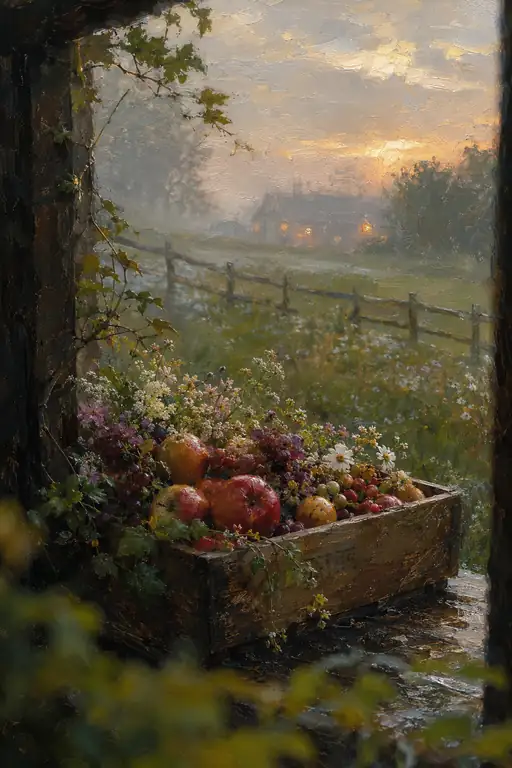 The Harvest Waits at the Threshold of Evening
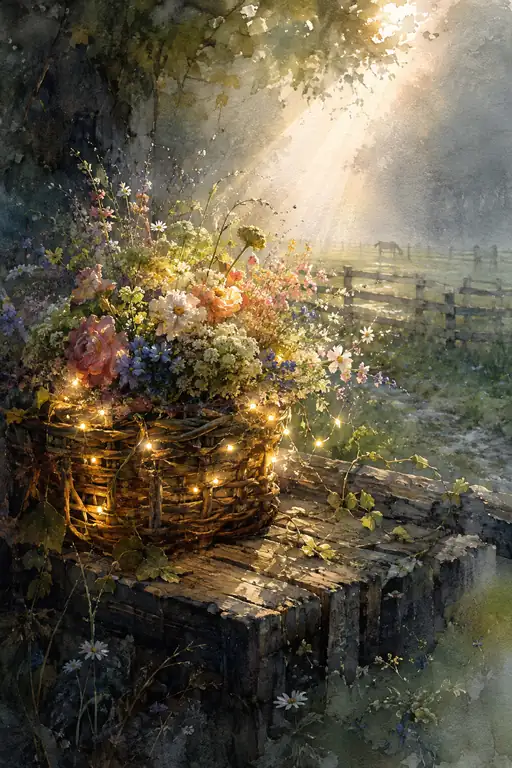 The Meadow's Secret Glows Among the Flowers
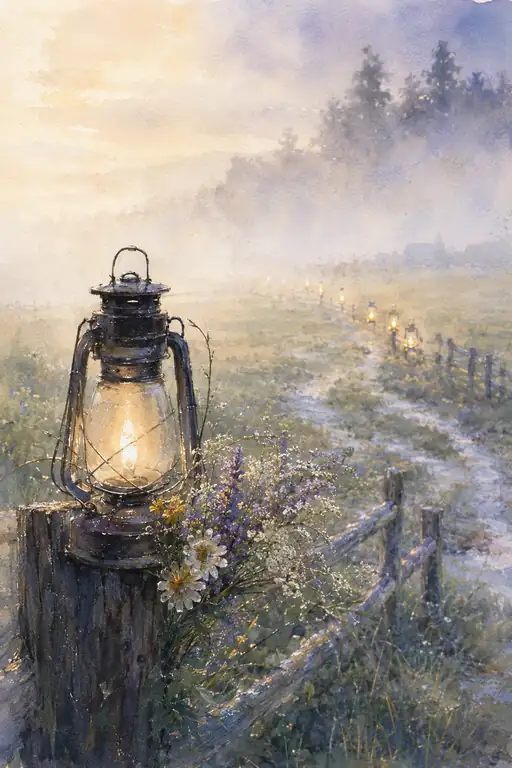 The Lanterns Know the Way Through Morning Mist