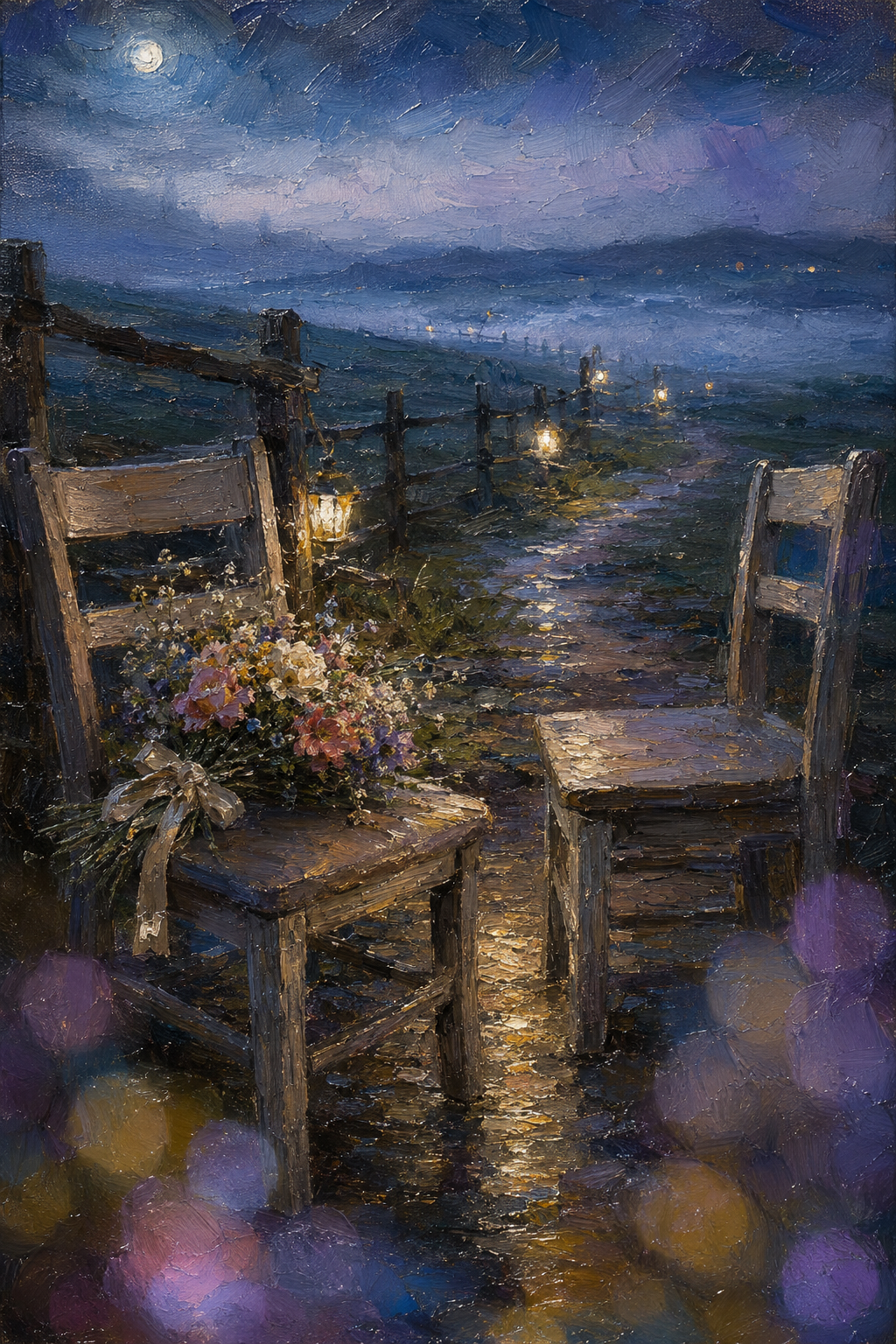
The Empty Chairs Remember a Moonlit Promise
Critique
Introduction This moonlit hillside places two weathered chairs before a lantern-marked path. A bouquet turns the empty pair into remembrance, invitation, and possible companionship. Description Two rough wooden chairs dominate the lower foreground, angled toward each other and the road beyond. The left seat holds a tied bouquet of pink, violet, white, and yellow flowers; broad ribbon tails spill over its edge. A wet track begins between the chairs and winds through dark fenced hills. Small lanterns hang or stand at intervals, casting gold patches across mud and grass. Layered blue mountains and mist fill the distance beneath heavy indigo clouds and a pale moon. Blurred flowers veil both lower corners. Analysis The paired chairs create a gateway around the path's central recession. Their vertical backs echo fence posts and lantern supports, while the open interval between them becomes the strongest directional channel. Dark timber anchors the foreground against a broad field of blue-violet. Sparse amber lights establish measured depth and provide complementary warmth. The bouquet introduces asymmetry, softness, and concentrated color, countering the empty right seat and rugged landscape. Interpretation and Evaluation The chairs suggest people through use and orientation without depicting bodies. One bouquet may commemorate an absent companion, reserve a place, or await a recipient. Because both seats remain accessible and face the same journey, loss and anticipation coexist. Weathering prevents the arrangement from feeling staged; these objects appear to have participated in repeated meetings and long exposure. Conclusion The work gives emptiness hospitality. Moon, lamps, flowers, chairs, and path let memory coexist with future encounter. Refusing to specify farewell or reunion lets viewers place their own relationship within the waiting seats.
Same Subcategory
Similar Artworks
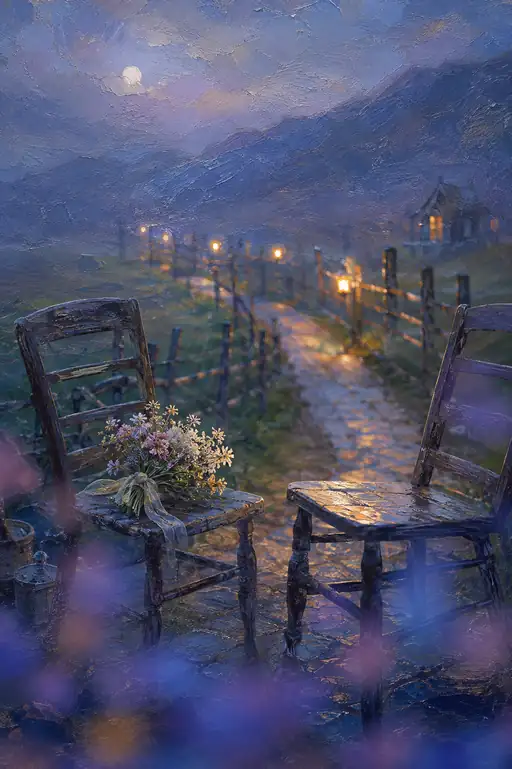 Two Chairs Waiting at the Moonlit Turning
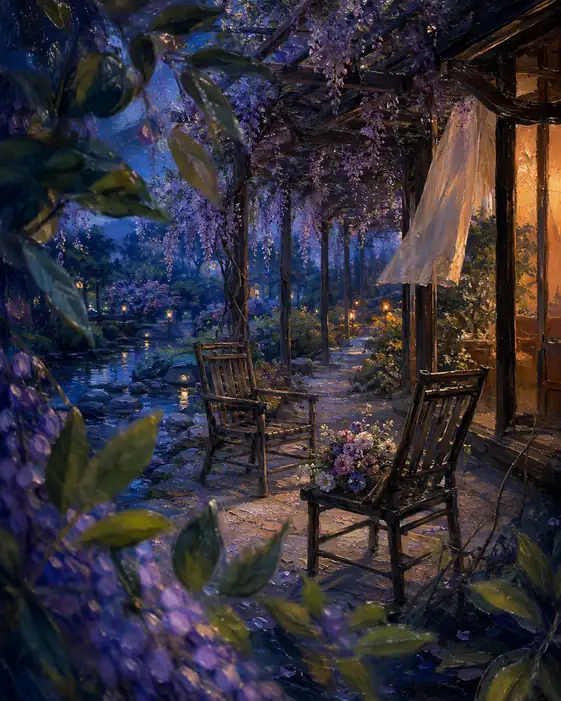 Two Chairs Keep the Garden's Evening Secret
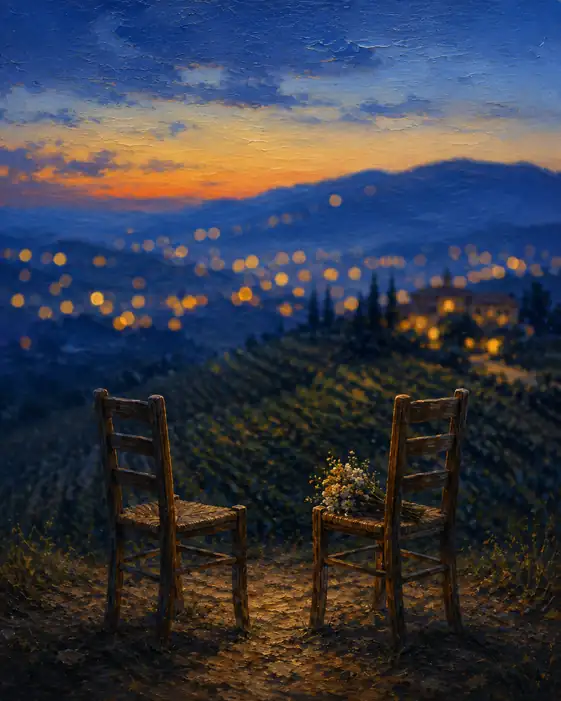 Two Chairs Await the Valley's First Stars
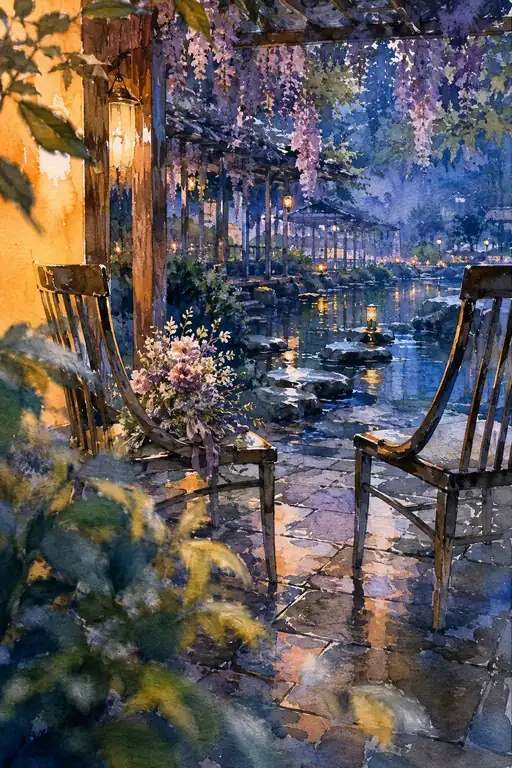 Two Empty Chairs Await the Wisteria Night
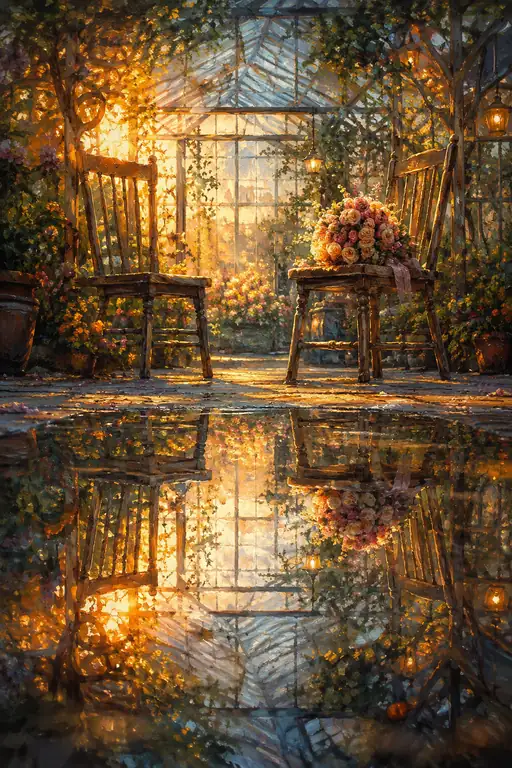 The Bouquet Kept a Chair for the Sun
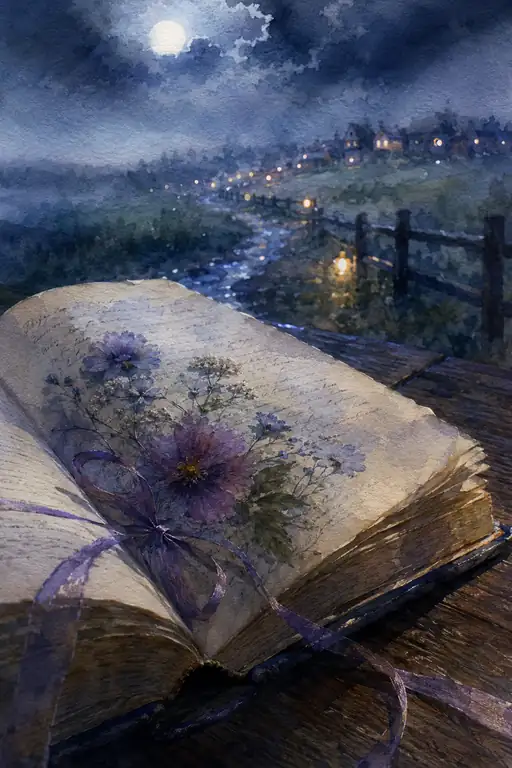 The Moon Reads the Flowers Between the Lines
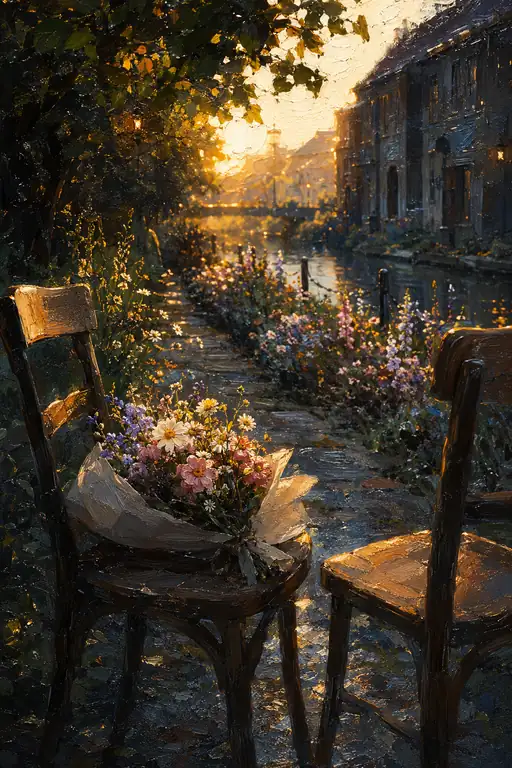 The Flowers Came Before You
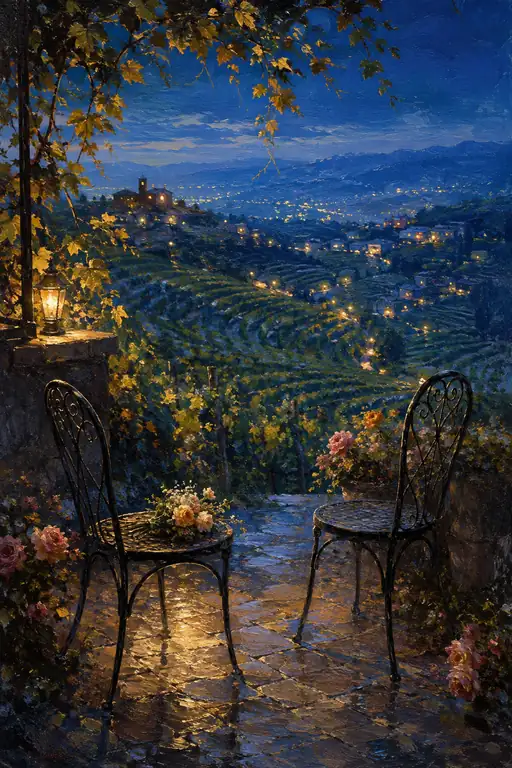 Two Garden Chairs Share the Valley's Blue Hour
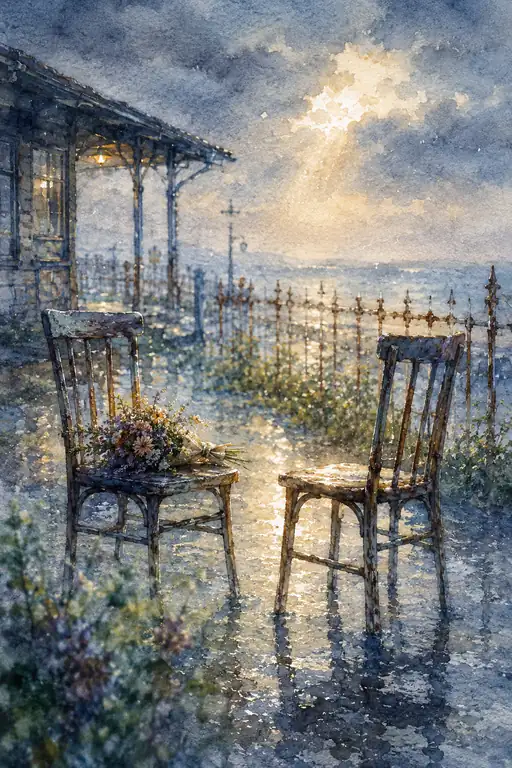 Two Chairs Face the Sea after the Rain
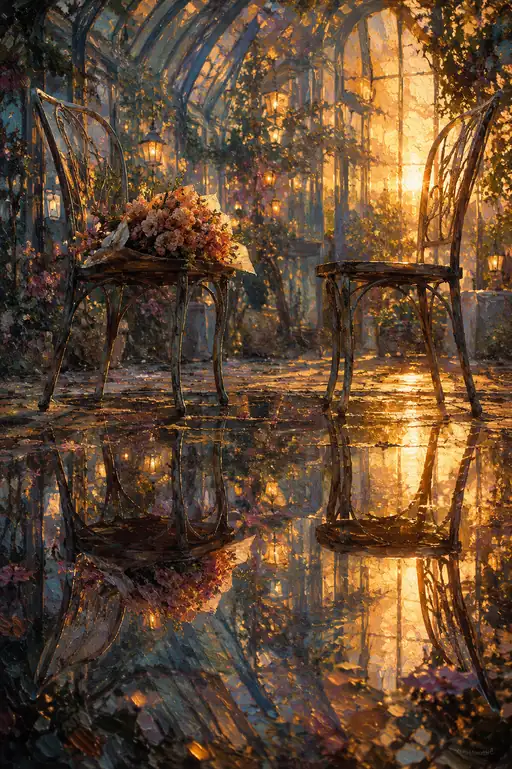 Two Chairs Hold the Sunset Between Them