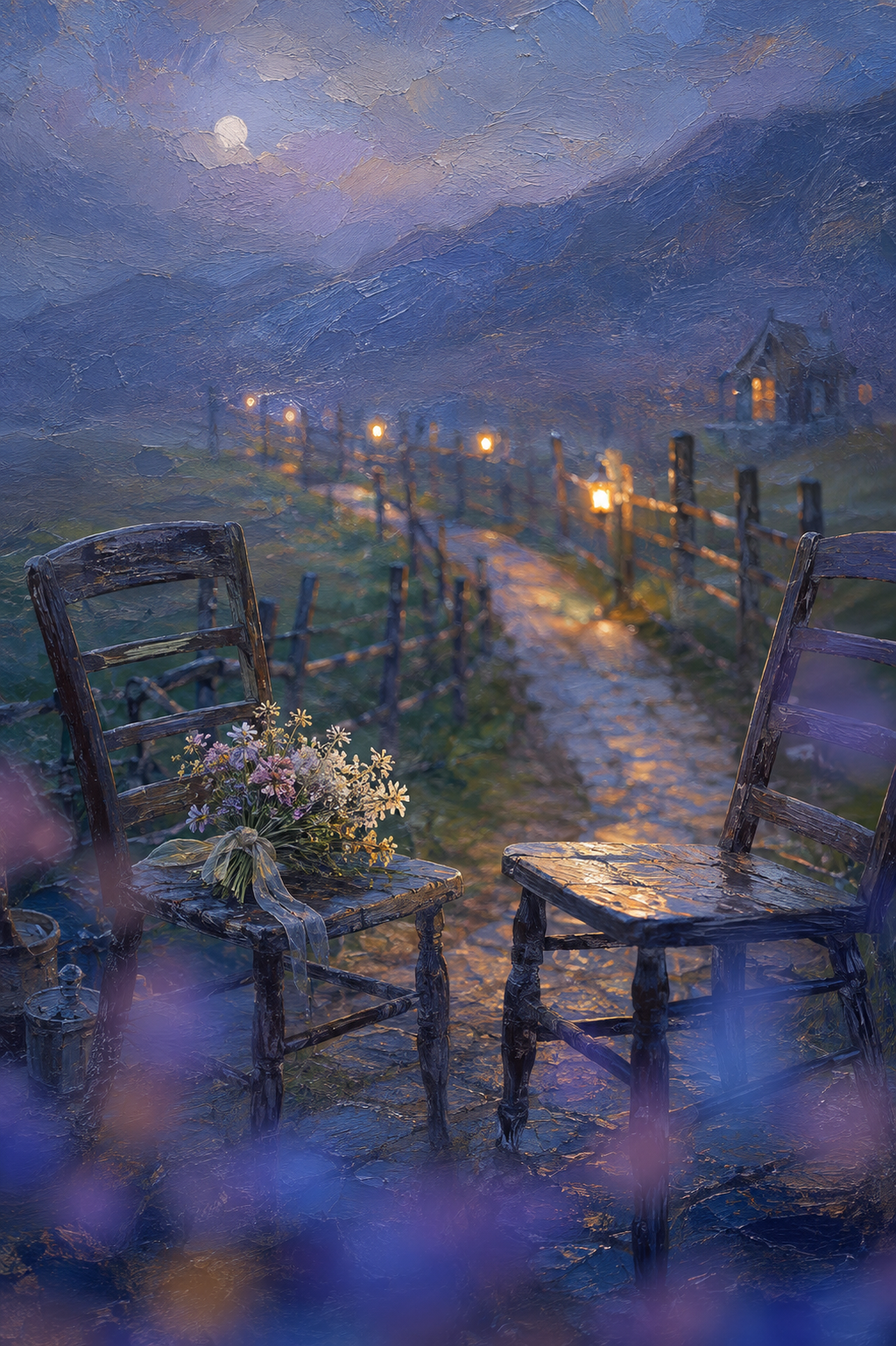
Two Chairs Waiting at the Moonlit Turning
Critique
Introduction This moonlit scene places two chairs beside a lamp-lined path, with a bouquet on one seat. The empty pair transforms absence into invitation, memory, and shared contemplation. Description Two dark ladder-back chairs occupy the lower foreground, angled slightly toward each other and the view. The left chair holds a tied bouquet of violet, white, and pale yellow wildflowers, its ribbon trailing over the seat. A damp path begins between the chairs and winds uphill through rough fences and amber lamps toward scattered houses. Layered blue mountains rise beneath a lavender sky and pale moon. Blurred purple flowers veil the lower corners, and wet wood and ground catch warm highlights. Analysis The chairs create a strong paired frame around the path's central recession. Their upright backs echo fence posts and distant lamps, while the open space between them becomes the composition's primary route. Dark wood anchors the cool foreground; amber points step rhythmically toward the houses. The bouquet supplies delicate asymmetry and repeats blurred flowers below. Moonlight establishes broad cool illumination, while lamps create local warm intervals across the landscape. Interpretation and Evaluation Empty seating can signify loss, but the chairs' orientation and accessible path also suggest imminent arrival. The bouquet personalizes one place without defining who left or will receive it. Two seats imply companionship, conversation, or remembrance, while the moonlit road extends private feeling into a wider journey. Their weathering suggests repeated use rather than theatrical staging. Conclusion The work gives absence a hospitable form. Chairs, flowers, path, lamps, houses, and moon organize a space where memory and future meeting can coexist. Its emotional openness comes from refusing to decide whether the scene marks farewell, waiting, or reunion.
Same Subcategory
Similar Artworks
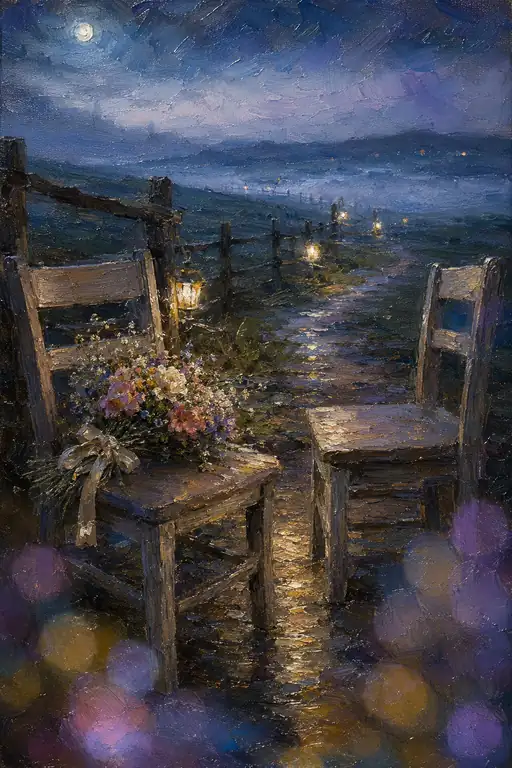 The Empty Chairs Remember a Moonlit Promise
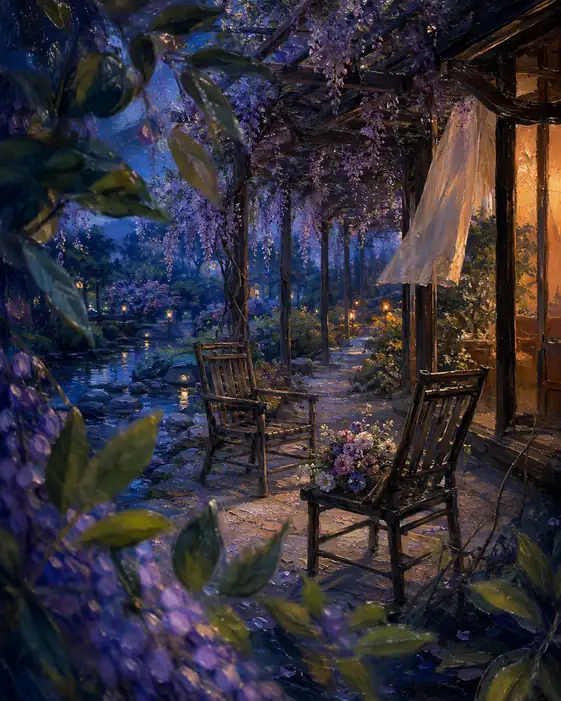 Two Chairs Keep the Garden's Evening Secret
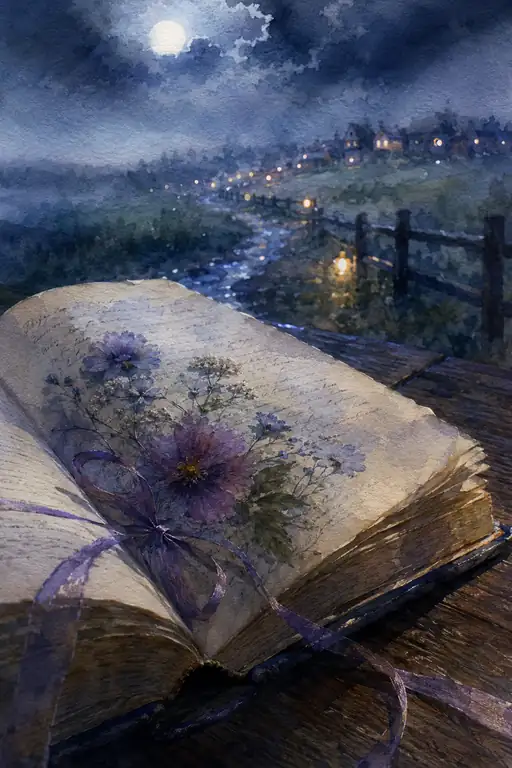 The Moon Reads the Flowers Between the Lines
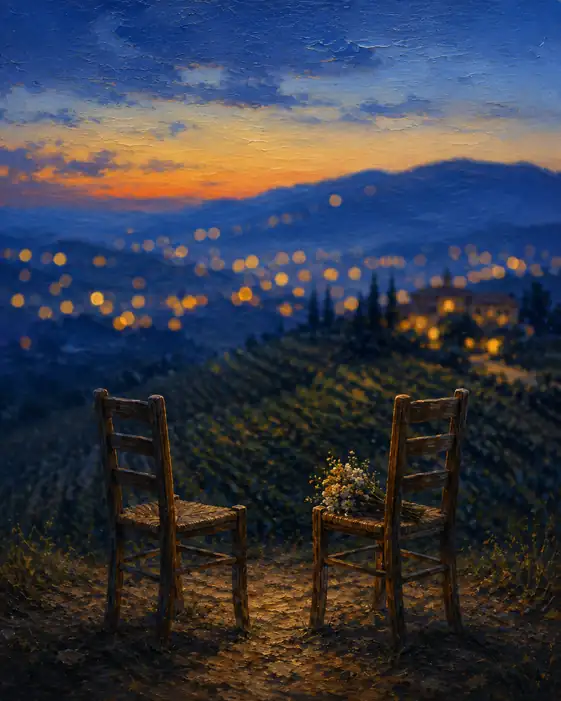 Two Chairs Await the Valley's First Stars
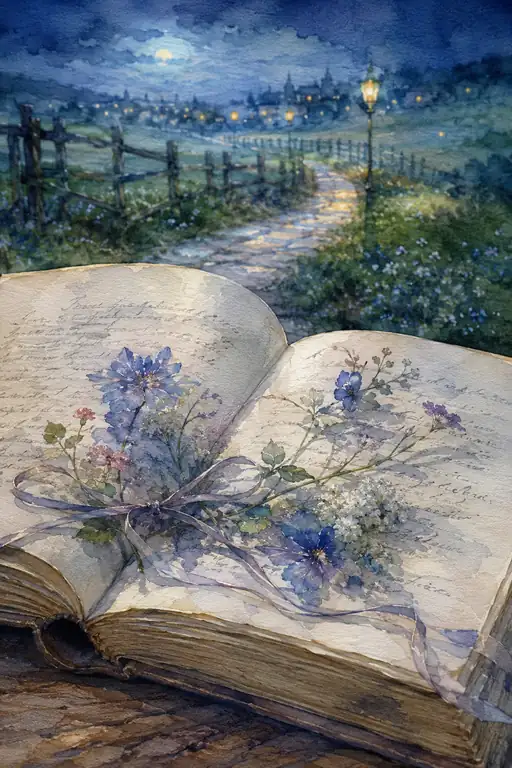 Pressed Flowers Dream Beyond the Moonlit Page
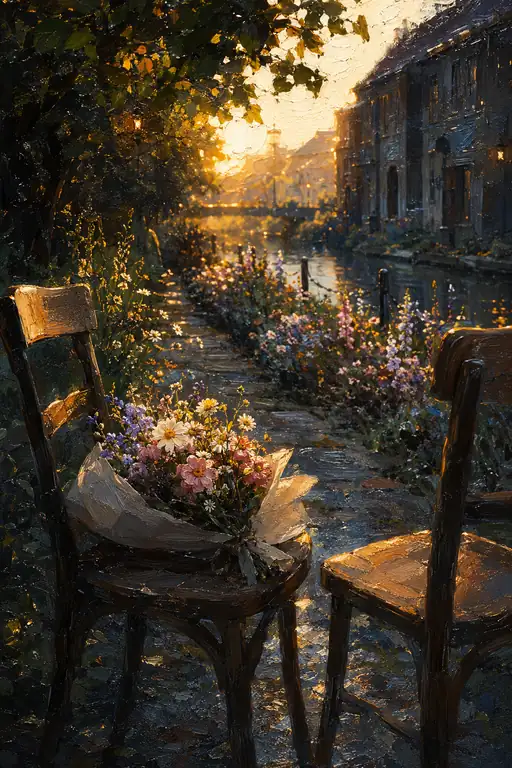 The Flowers Came Before You
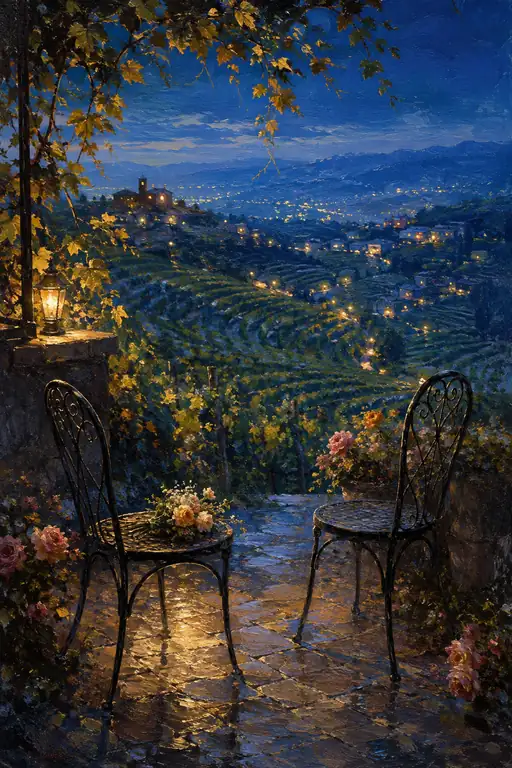 Two Garden Chairs Share the Valley's Blue Hour
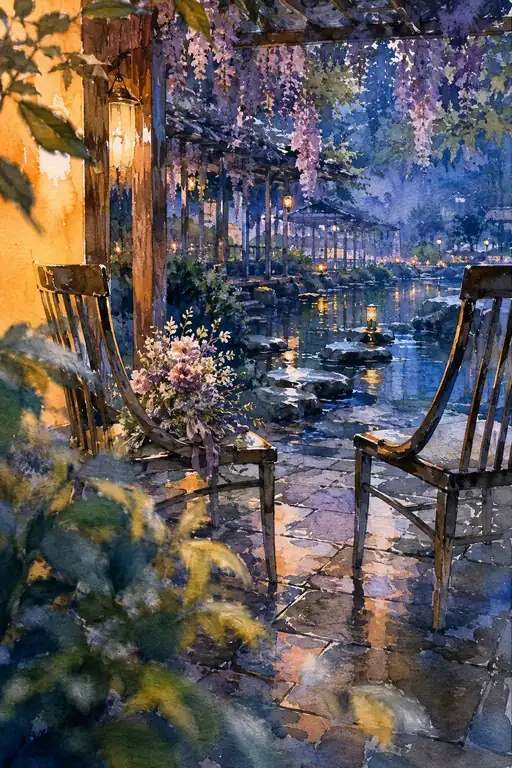 Two Empty Chairs Await the Wisteria Night
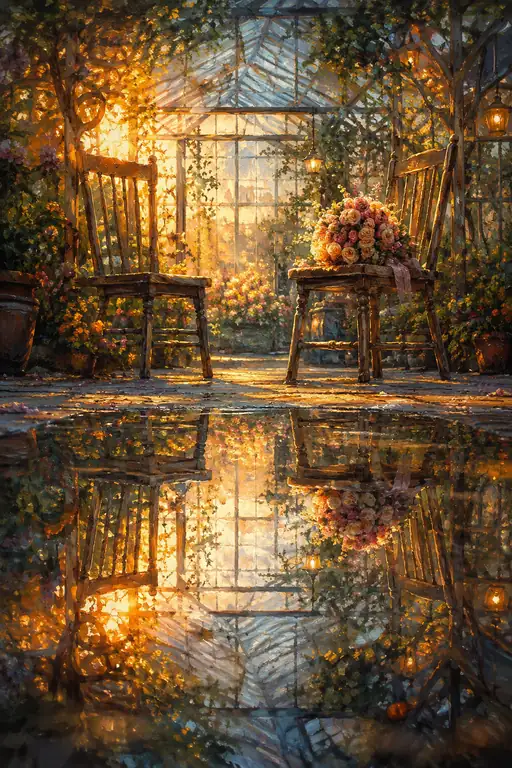 The Bouquet Kept a Chair for the Sun
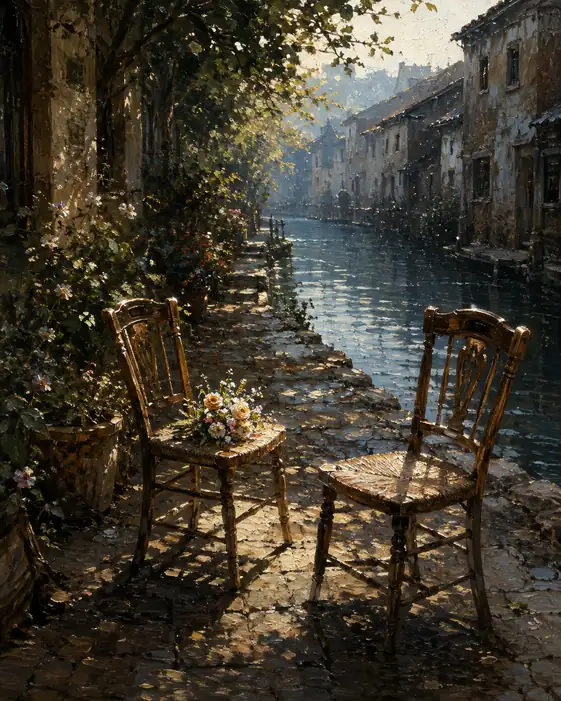 One Bouquet Between Two Empty Chairs