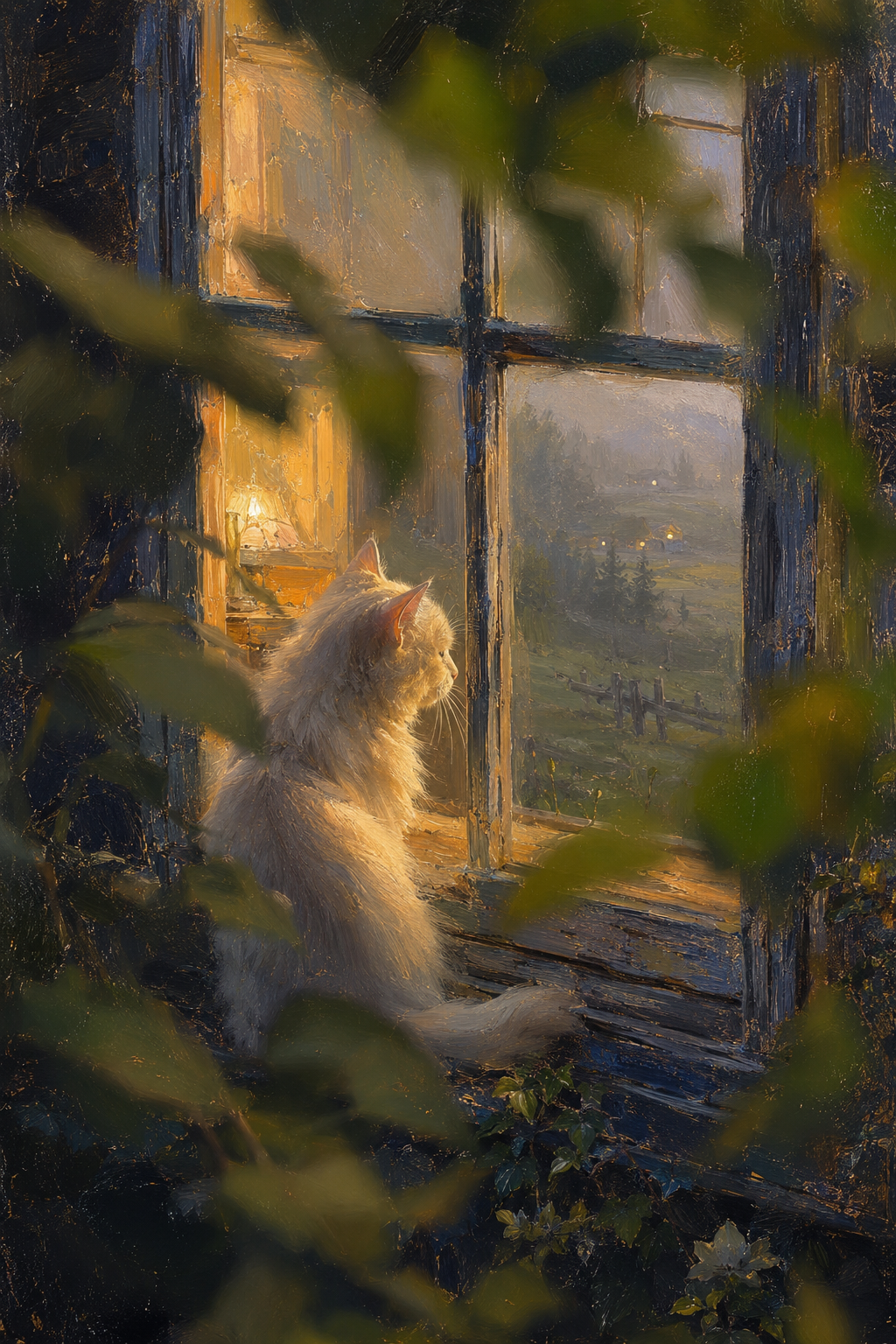
The Cat Who Watched Evening Cross the Fields
Critique
Introduction This backlit portrait shows a white cat at a window overlooking a dim valley. Foreground leaves frame quiet vigilance between domestic shelter and expansive dusk. Description The cat sits left of center on a worn blue-gray sill, its long body upright and tail resting along the lower ledge. It faces right in profile toward fields, fences, scattered trees, and a few distant house lights. Amber interior light rims its ears, cheek, chest, and back. Dark window bars divide the view into large rectangles. Broad green leaves blur across the upper, left, right, and lower edges, while small plants grow from cracks below the sill. Analysis The cat's pale vertical form anchors the dark lower half and stands against the window's rectilinear grid. Strong rim light separates fur without flattening its volume. Warm gold occupies the interior and animal edge; cool green-blue controls the valley, frame, and foliage. The exterior fence repeats the window bars at smaller scale, linking near architecture with distant land. Heavy foreground occlusion creates depth and makes the central view feel privately discovered. Interpretation and Evaluation The animal is sheltered but not disengaged. Its erect posture and forward gaze show active attention to a landscape that remains inaccessible through the frame. Domestic light reaches across the fur but stops short of illuminating the valley, preserving a meaningful distinction between known interior and unknown distance. The plants growing at the sill soften that boundary and suggest nature's gradual return. Conclusion Watching becomes participation. The cat does not enter the field, yet sustained attention connects home to distant life. Warmth, darkness, foliage, and architecture hold curiosity safely at a threshold.
Same Subcategory
Similar Artworks
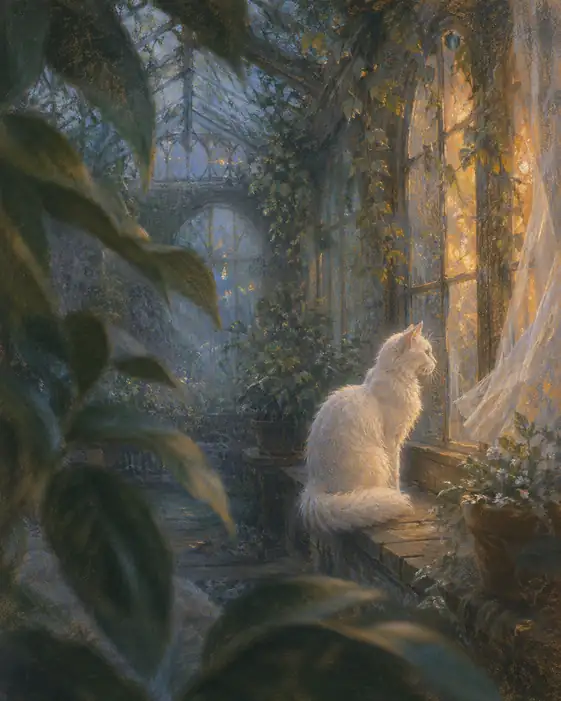 The Greenhouse Cat Waits for the Curtain of Light
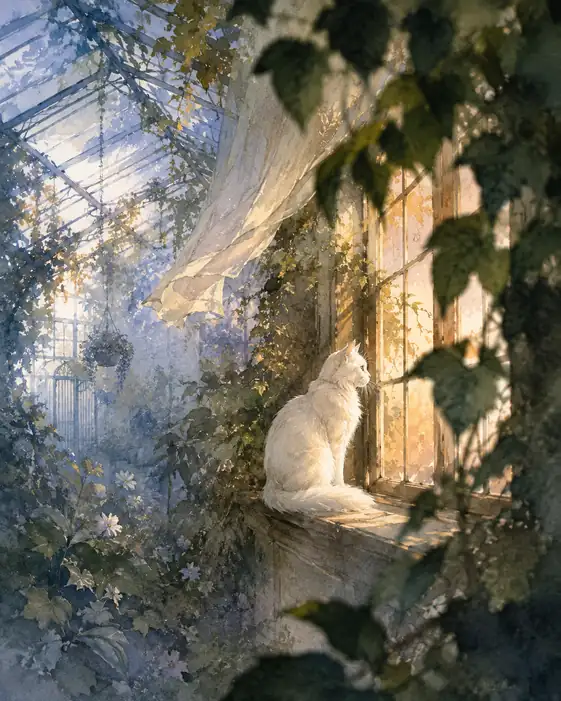 The White Cat Watches Morning Enter the Glasshouse
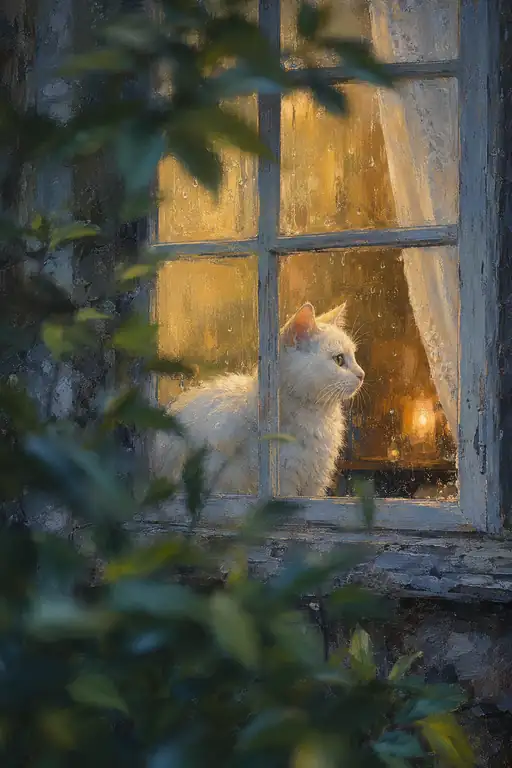 The White Cat Listening to the Rainlit Window
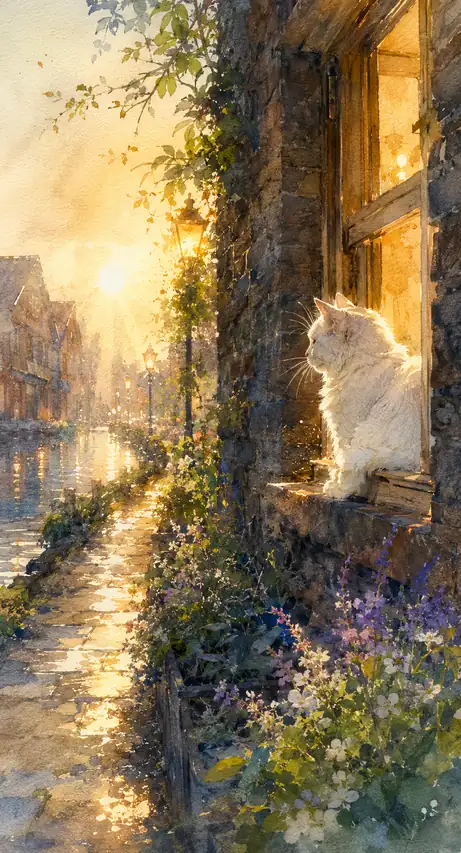 Sunset Finds the Cat at the Canal Window
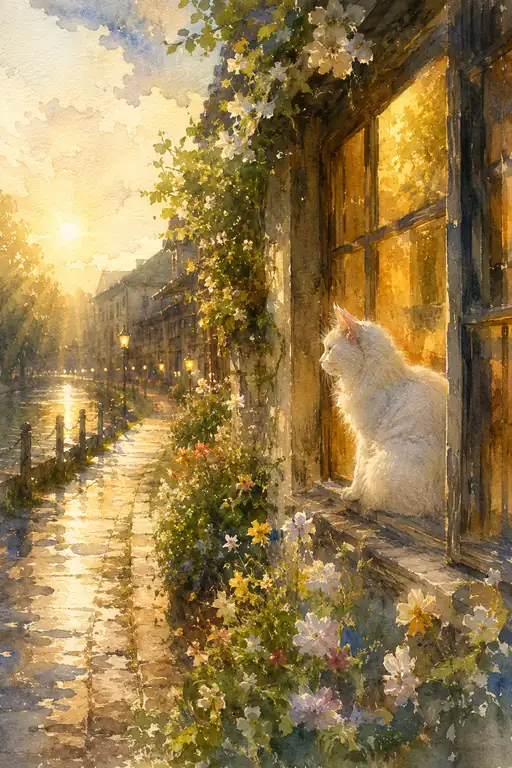 The White Cat Who Watches Morning Arrive
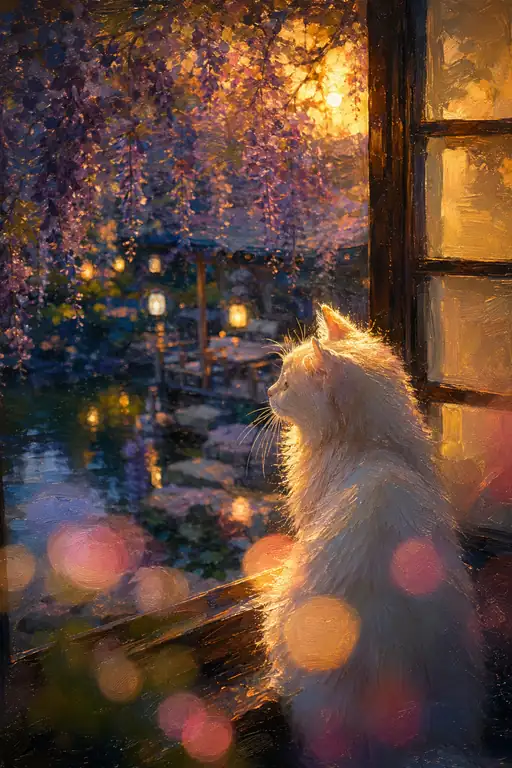 The White Cat Waits for Wisteria Twilight
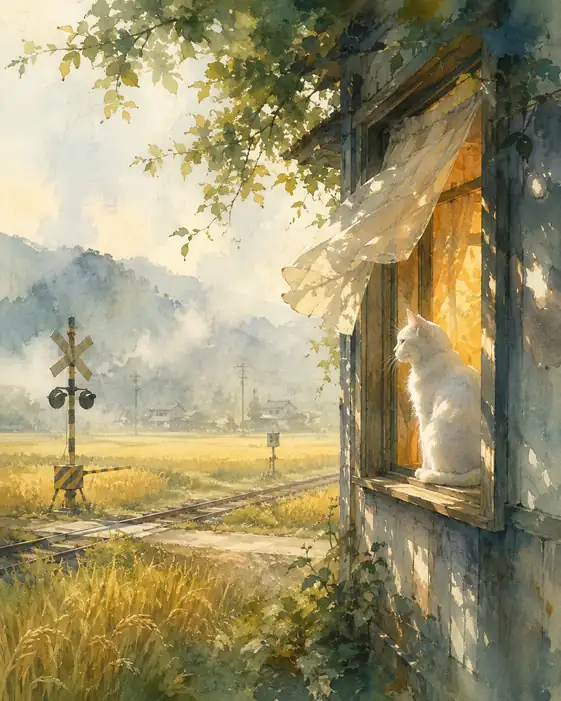 White Cat Watching the Morning Train Pass
 The White Cat Waits for Sunlight over the Vines
 Sunset Comes Home to the Watching Cat
 Pure Devotion on Quiet Paws