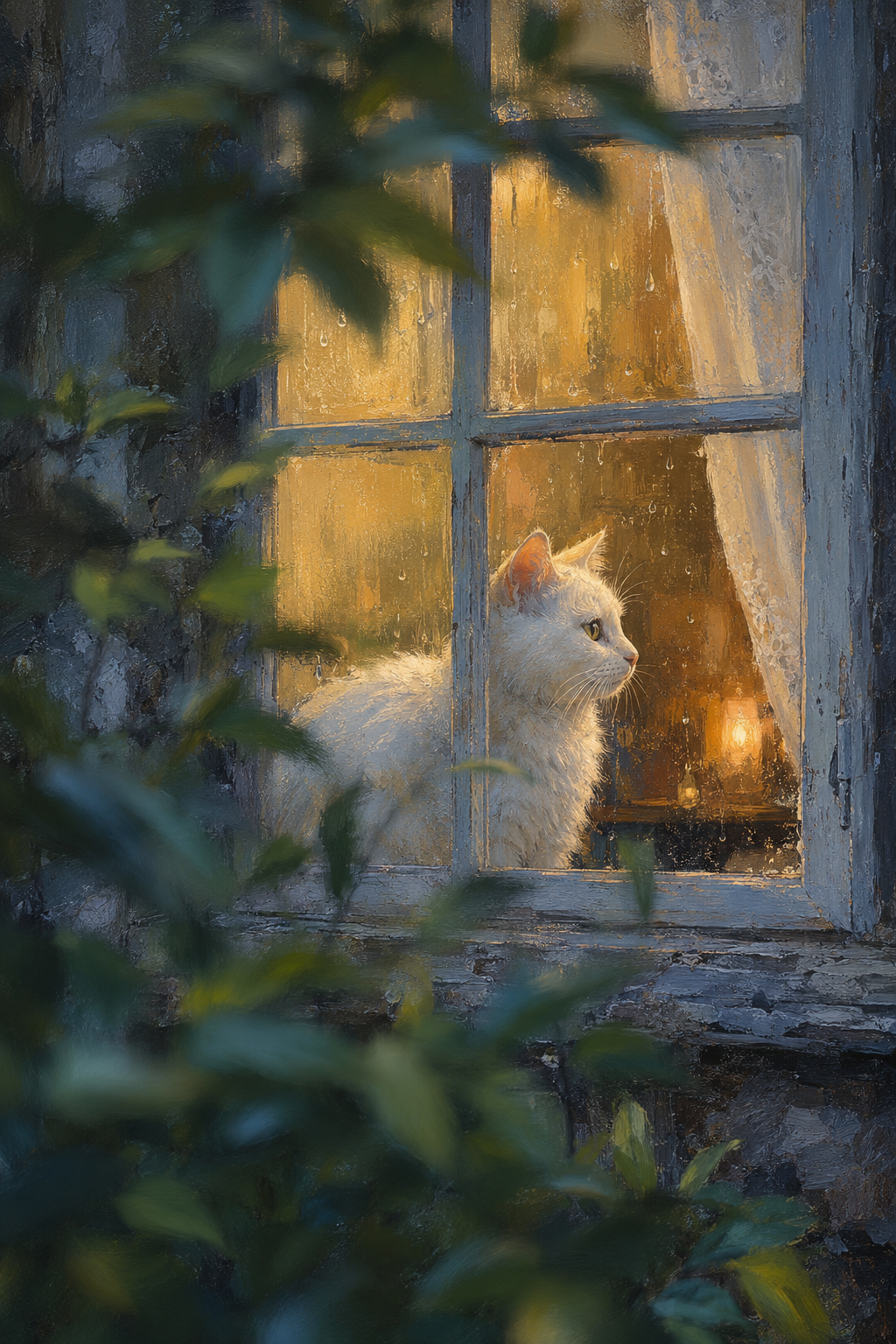
The White Cat Listening to the Rainlit Window
Critique
Introduction This exterior view finds a white cat behind a rain-streaked, warmly lit window. Leaves partly conceal it, making observation reciprocal: viewers watch the cat watching beyond the frame. Description The weathered blue-gray window fills the composition, divided by thick bars. Droplets and trails cover the glass. A fluffy white cat sits in lower panes, shown in right-facing profile with pointed ears, a green-gold eye, and fine whiskers. Amber light silhouettes its fur. A small lamp and lace curtain appear inside at right. Dark green branches blur across the foreground, obscuring sill and wall. Analysis The window grid supplies a rigid geometric structure around the cat's organic silhouette. Its profile crosses a vertical muntin, reinforcing the boundary between visible and hidden body. Warm gold behind the animal contrasts with cool blue timber and green foliage. Raindrops repeat the cat's fine whisker and fur highlights on a different surface. Shallow focus converts leaves into a soft screen, intensifying the sense of looking from a sheltered or secret position. Interpretation and Evaluation The cat occupies domestic safety yet directs attention outward, reversing the usual image of a creature seeking entrance from rain. Glass permits vision while preventing contact, and droplets make that separation tangible. The obscuring leaves protect the intimacy of the scene rather than merely blocking it. Because the object of the cat's gaze remains unseen, the viewer shares alert expectancy rather than receiving a completed narrative. Conclusion The window becomes a layered threshold among warmth, weather, animal attention, and human observation. Its restraint is effective: posture, profile, and light suggest a rich unseen event.
Same Subcategory
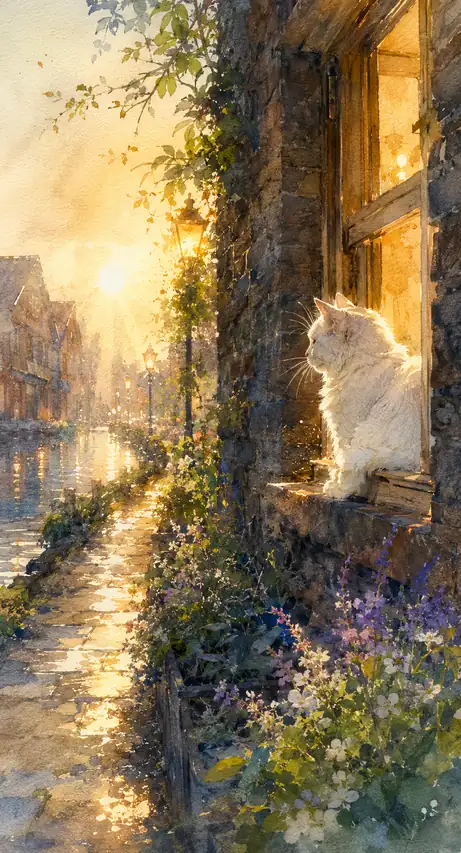 Sunset Finds the Cat at the Canal Window
Similar Artworks
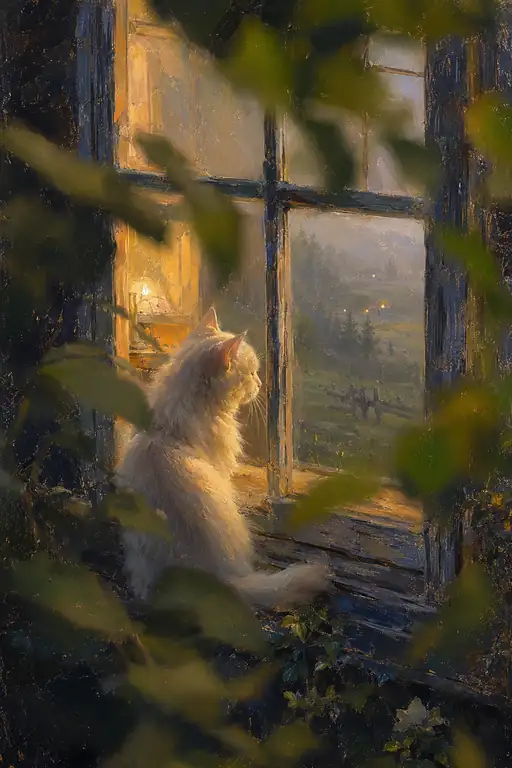 The Cat Who Watched Evening Cross the Fields
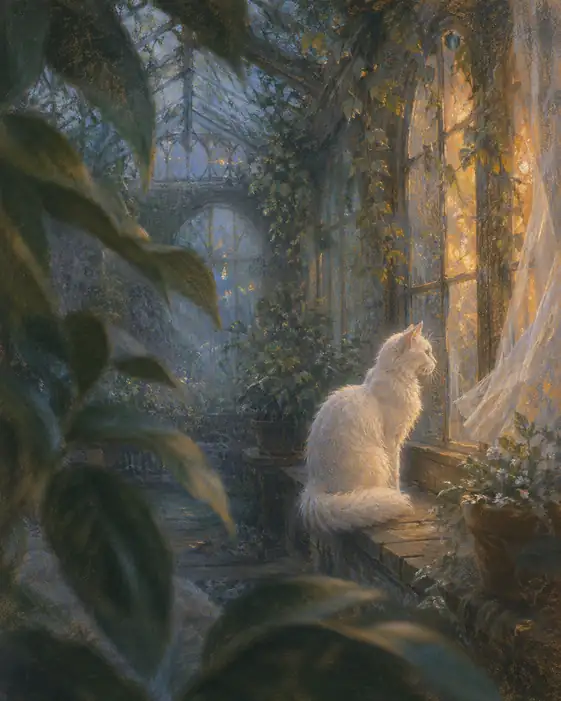 The Greenhouse Cat Waits for the Curtain of Light
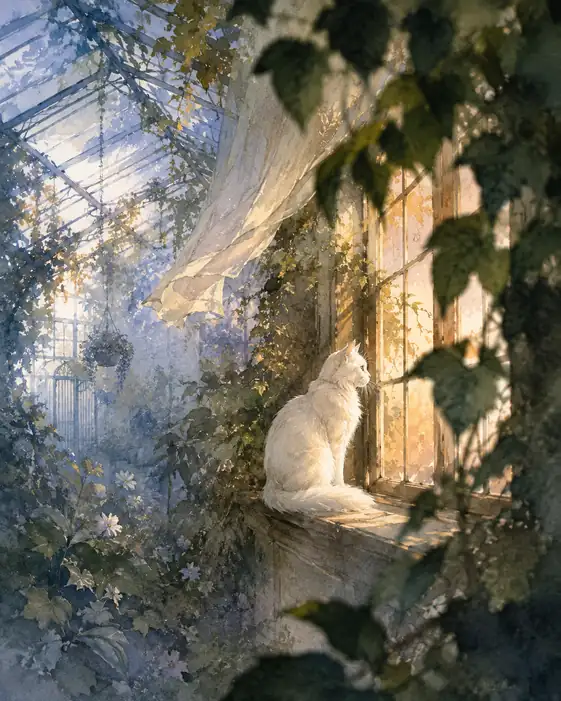 The White Cat Watches Morning Enter the Glasshouse
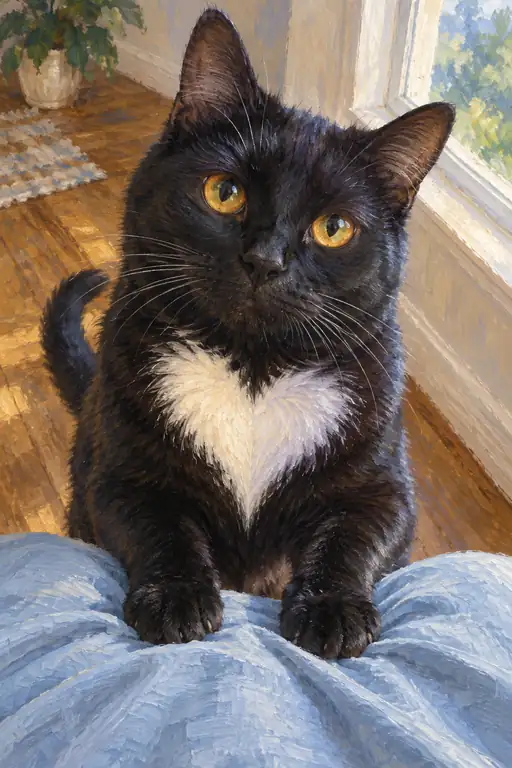 Pure Devotion on Quiet Paws
 Golden Gaze with a Heart of White
 Heart on My Chest, Love in My Eyes
 Peeking Through the Linen Fold
 Warmth Nestled in the Sound of Rain
 The White Cat Counts the City's Evening Lights
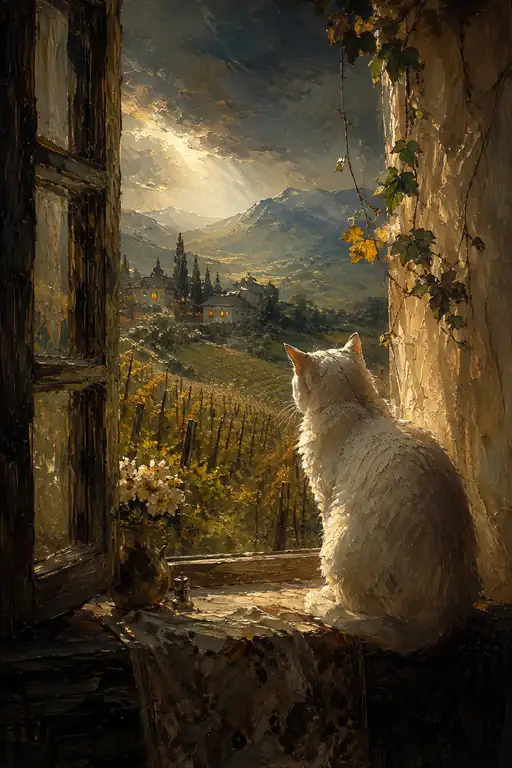 The White Cat Waits for Sunlight over the Vines