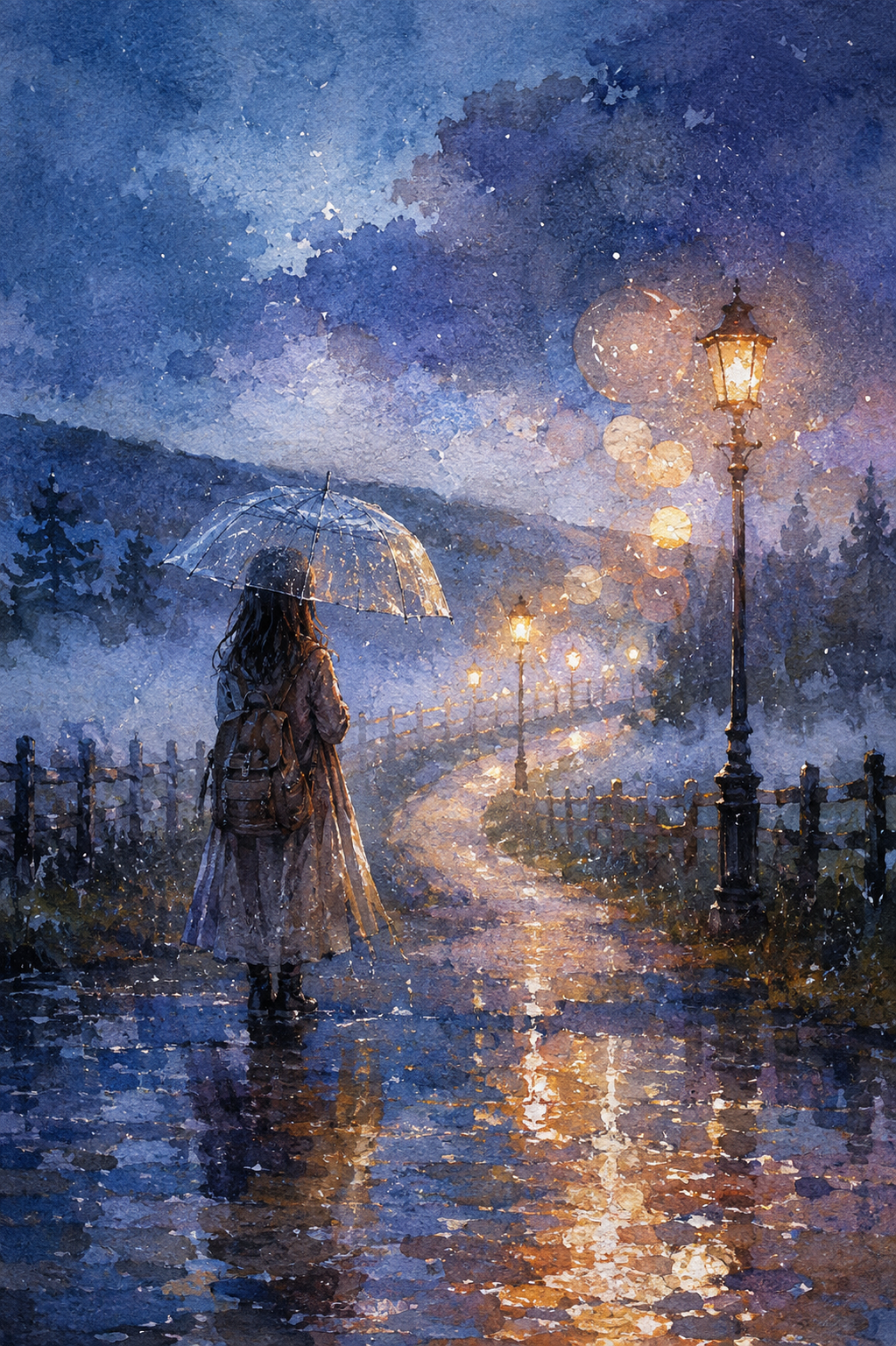
The Road of Lamps Beyond Her Umbrella
Critique
Introduction This rainy mountain road shows a traveler under a clear umbrella facing ascending lamps. Difficult weather and uncertain distance become a study of endurance, guidance, and chosen movement. Description The figure stands left of center in a long brown coat, dark boots, and a backpack, holding a clear umbrella that catches gold reflections. A large black streetlamp rises at right, with smaller lamps climbing the fenced, curving road toward trees and mountains. Rain-dark pavement fills the foreground, carrying broad amber, violet, and blue reflections. Dense indigo clouds open to paler blue at upper left. Large translucent circles gather around the nearest lamp like droplets, lens flare, or floating orbs. Analysis The road's diagonal ascent begins near the figure and bends toward the center-right distance. Alternating lamps create a pulse of shrinking verticals, while their reflections extend the rhythm downward. The traveler and nearest lamp establish an asymmetrical pair, human scale against civic structure. Cool blue dominates sky, mountain, and pavement; amber concentrates around guidance points. The umbrella's delicate ribs echo fence lines, and large soft circles mediate between precise lamps and turbulent clouds. Interpretation and Evaluation Facing uphill, the traveler appears to consider effort rather than simply endure rain. The route does not reveal its destination, but repeated lamps make progress imaginable in stages. Transparent shelter suggests resilience through permeable protection: weather remains visible and sensorially present. The glowing circles add ambiguity, allowing ordinary rain to verge on the wondrous without breaking the scene's emotional credibility. Conclusion The painting presents courage as orientation, not conquest. One need not see the entire road to take its next lit section. Wet weight, umbrella, rising path, and lamps give uncertainty disciplined hope.
Same Subcategory
Similar Artworks
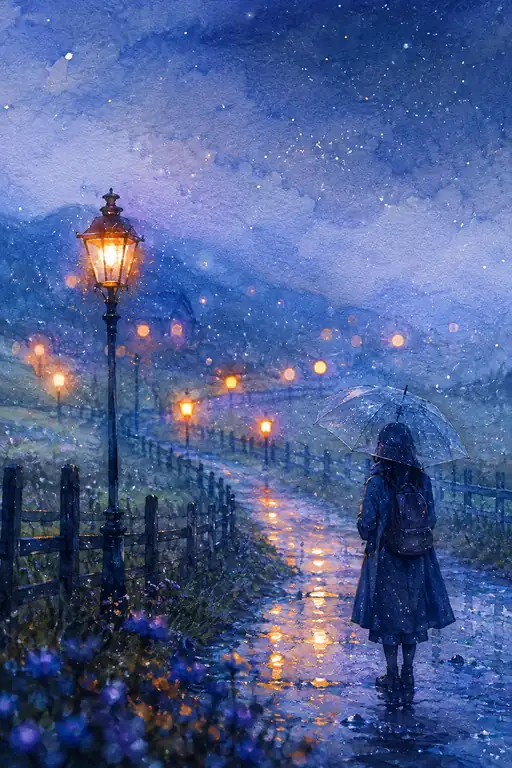 She Paused Where Rain Became Starlight
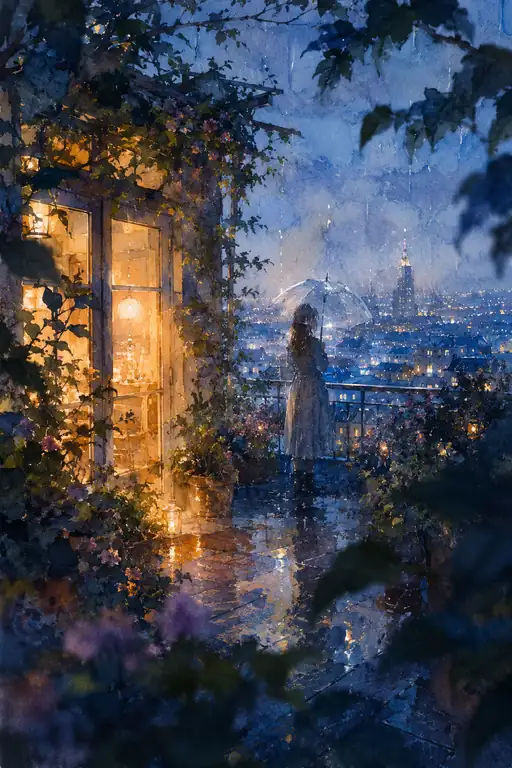 She Waits Where Warm Windows Meet the Rain
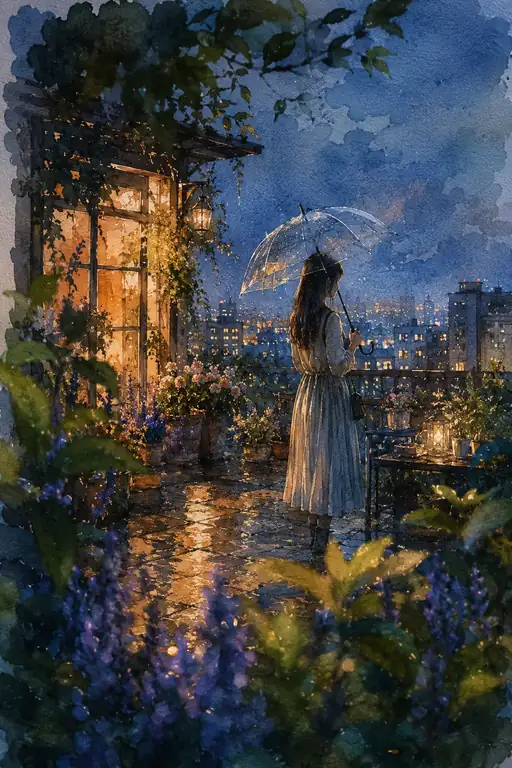 She Stands between Rain and a Thousand Windows
 She Waits Where Moonlight Meets the Tide
 She Waits Where Rain Meets the Evening River
 Golden Reflection toward the Lighthouse
 Warm Luminescence Rising in Darkness (No. 89)
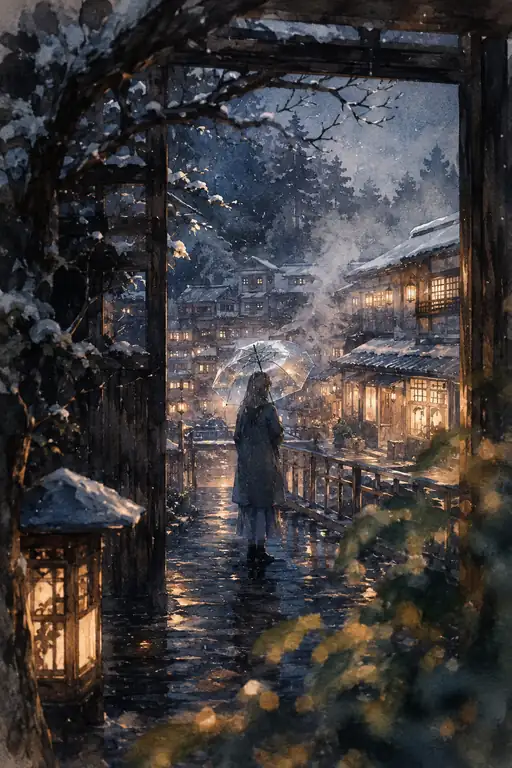 She Pauses Where Snow and Lamplight Meet
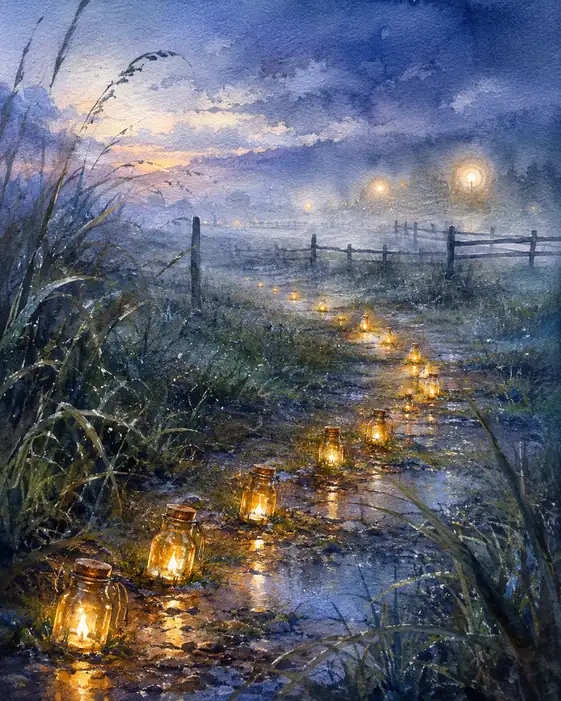 A River of Little Flames Crosses the Wet Meadow
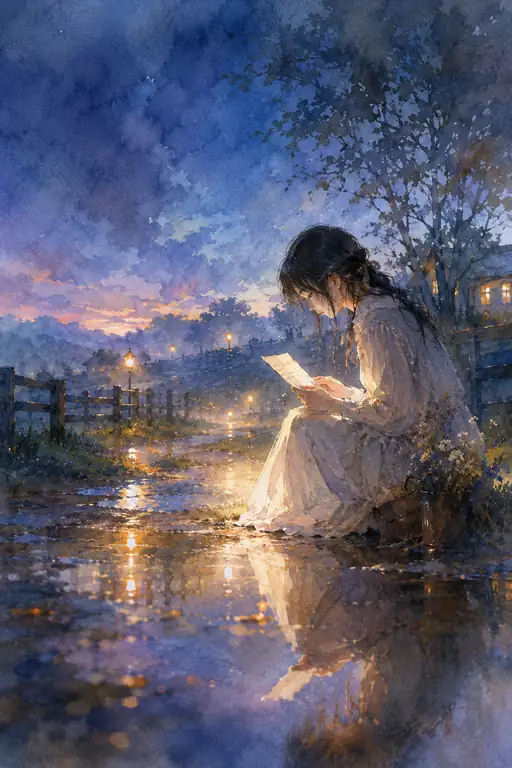 Her Letter Shines After the Rain