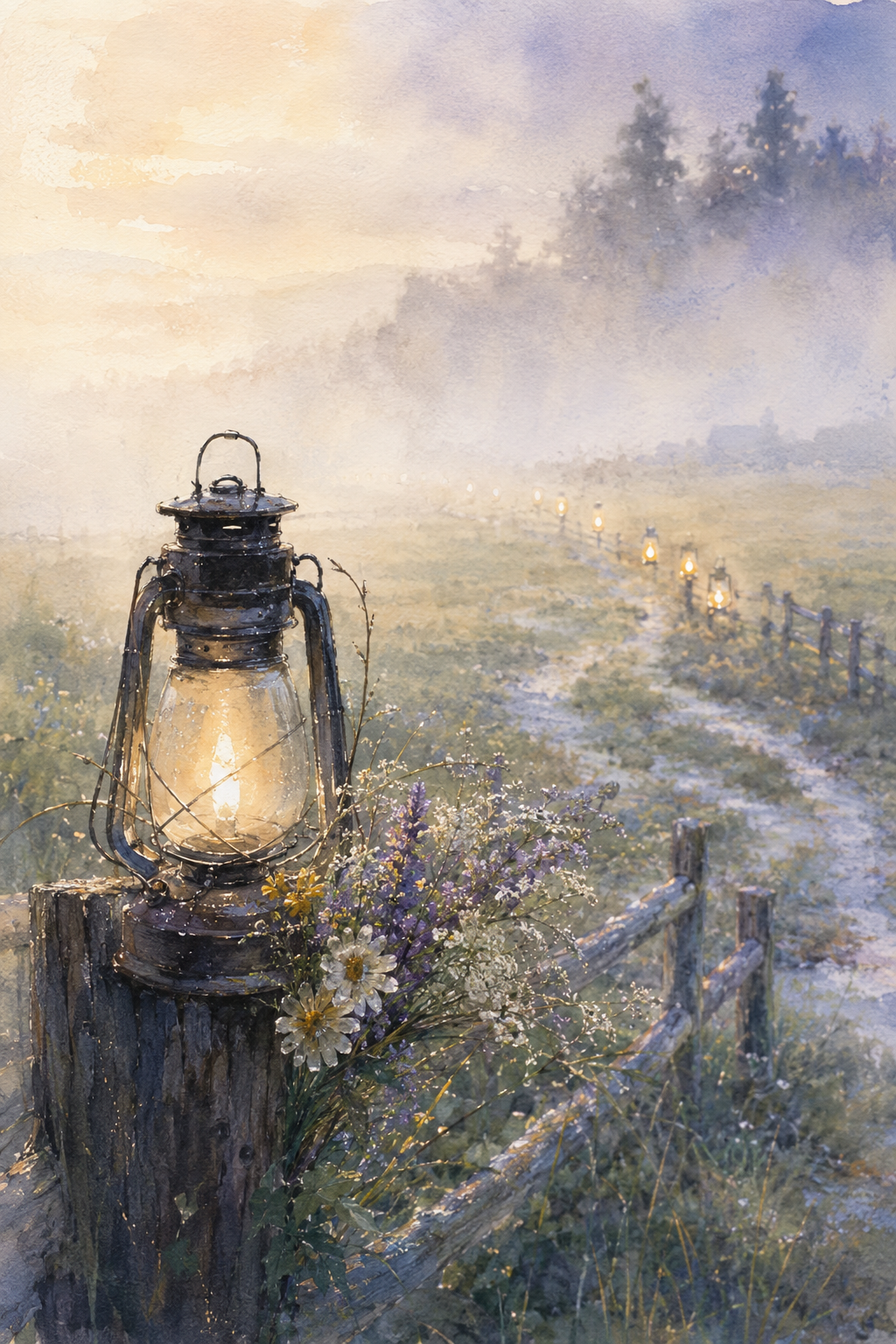
The Lanterns Know the Way Through Morning Mist
Critique
Introduction This mist-filled rural scene sets a kerosene lantern and wildflower bouquet on a foreground fence post, then repeats small lights along a curving track. The image turns wayfinding into an intimate dialogue between individual care and expansive landscape. Description The large lantern occupies the lower left-center, its black frame surrounding a warm flame in speckled glass. White daisies, violet spikes, and fine pale blossoms are tucked beside its weathered post. A rough rail fence angles from the foreground toward a pale path, with smaller lanterns glowing at intervals into fog. Low grassland leads to dark conifers and faint structures beneath cream and blue-violet clouds. Moisture catches light across stems, rails, and ground. Analysis The nearest lantern provides a strong vertical anchor against the path's diagonal recession. Repetition of progressively smaller flames creates depth even where mist erases conventional landmarks. Warm amber is sparse but strategically distributed through a high-key field of cream, gray-green, and lavender. The fence supplies angular structure, while grasses and flowers create fine irregular movement. The dark foreground metal sharply contrasts with soft atmospheric transitions beyond. Interpretation and Evaluation In fog, guidance must be offered in increments rather than as one distant destination. Each lantern reveals only the next portion of the route, making trust a sequence of modest assurances. Flowers beside the first light add affection to utility and imply an unseen caretaker. The composition therefore values dependable local attention over heroic illumination. Conclusion The work gives uncertainty a welcoming form. Mist prevents complete knowledge, but repeated tended lights make movement possible. By pairing rugged fence construction with fragile flowers and flame, the painting presents resilience as a combination of structure, beauty, and continuing care.
Same Subcategory
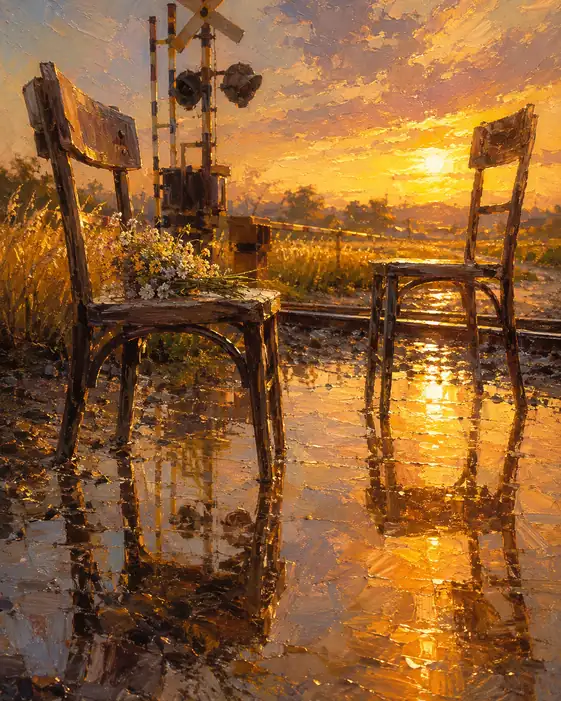 Sunset Soliloquy at the Rural Crossing
Similar Artworks
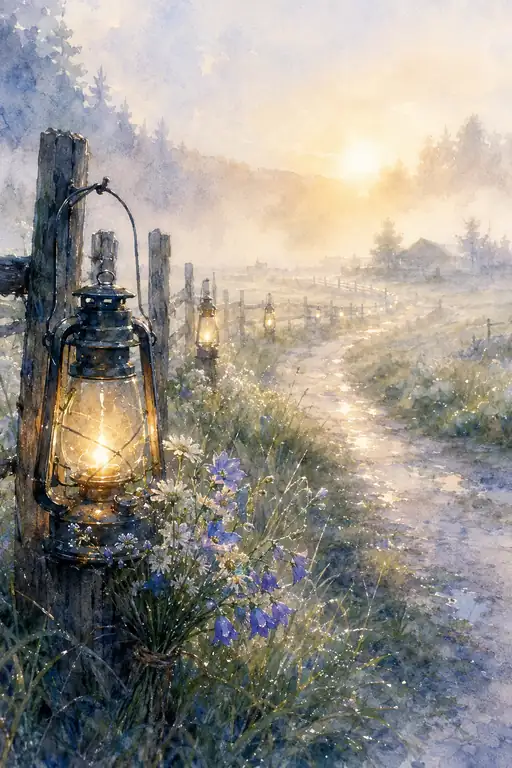 Lanterns Lead the Dawn Down a Country Lane
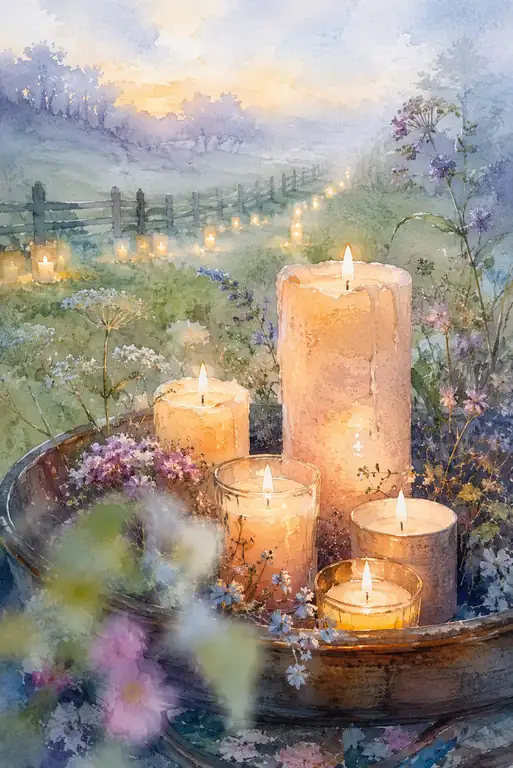 Five Candles Welcome the Meadow Morning
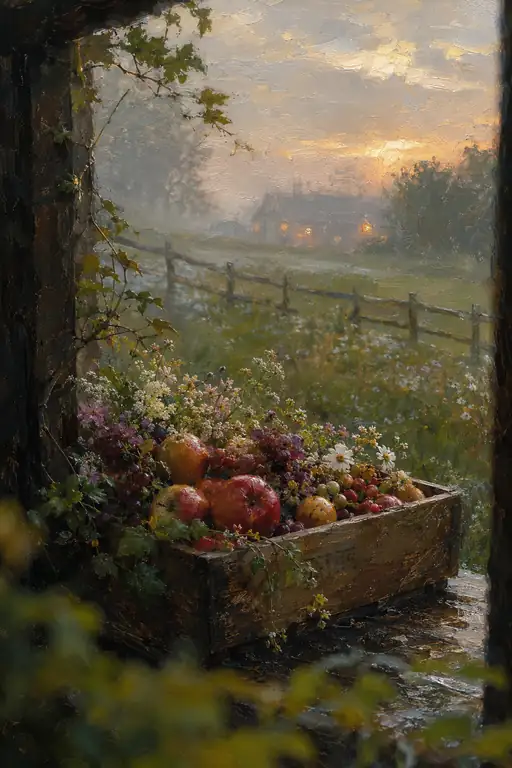 The Harvest Waits at the Threshold of Evening
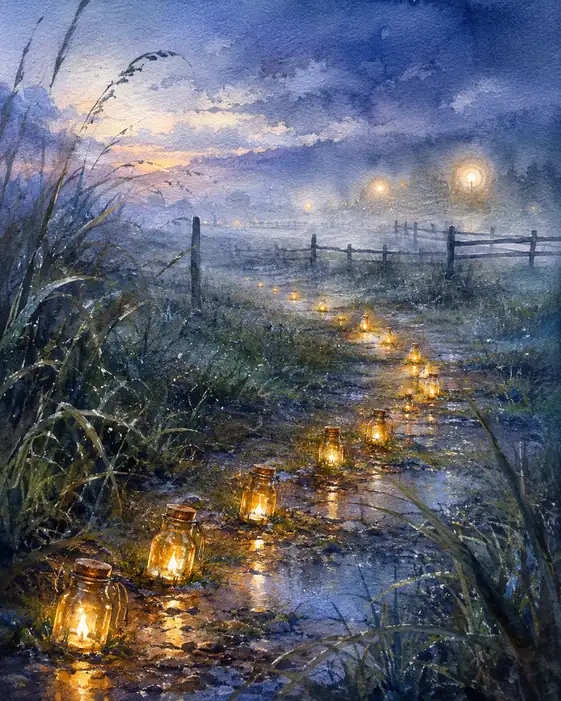 A River of Little Flames Crosses the Wet Meadow
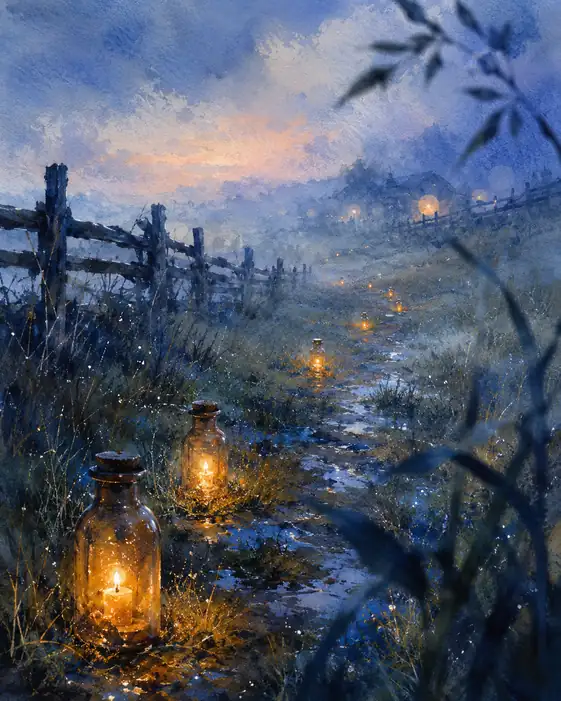 Bottled Flames Climb Toward the Distant House
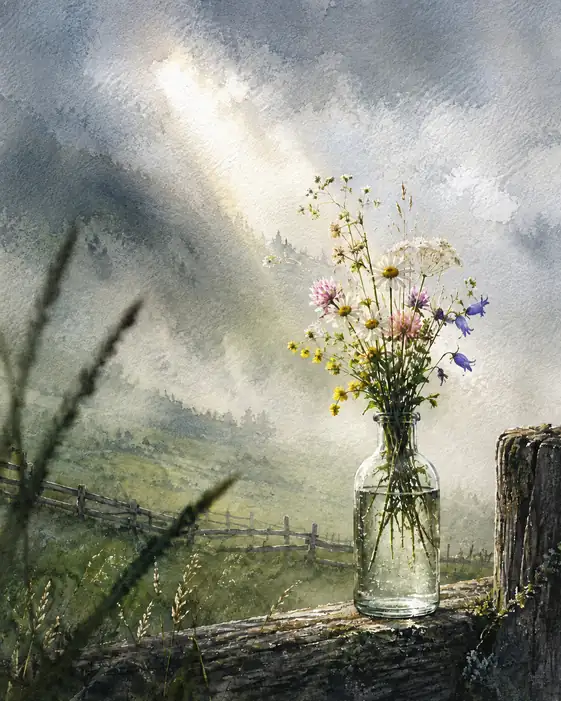 The Sky Opens for a Bottle of Meadow Flowers
 Wildflowers Holding Open the Storm
 A Sunbeam Chose the Wildflower Vase
 A Bicycle Bringing Roses Home Through Mist
 The Meadow's Secret Glows Among the Flowers