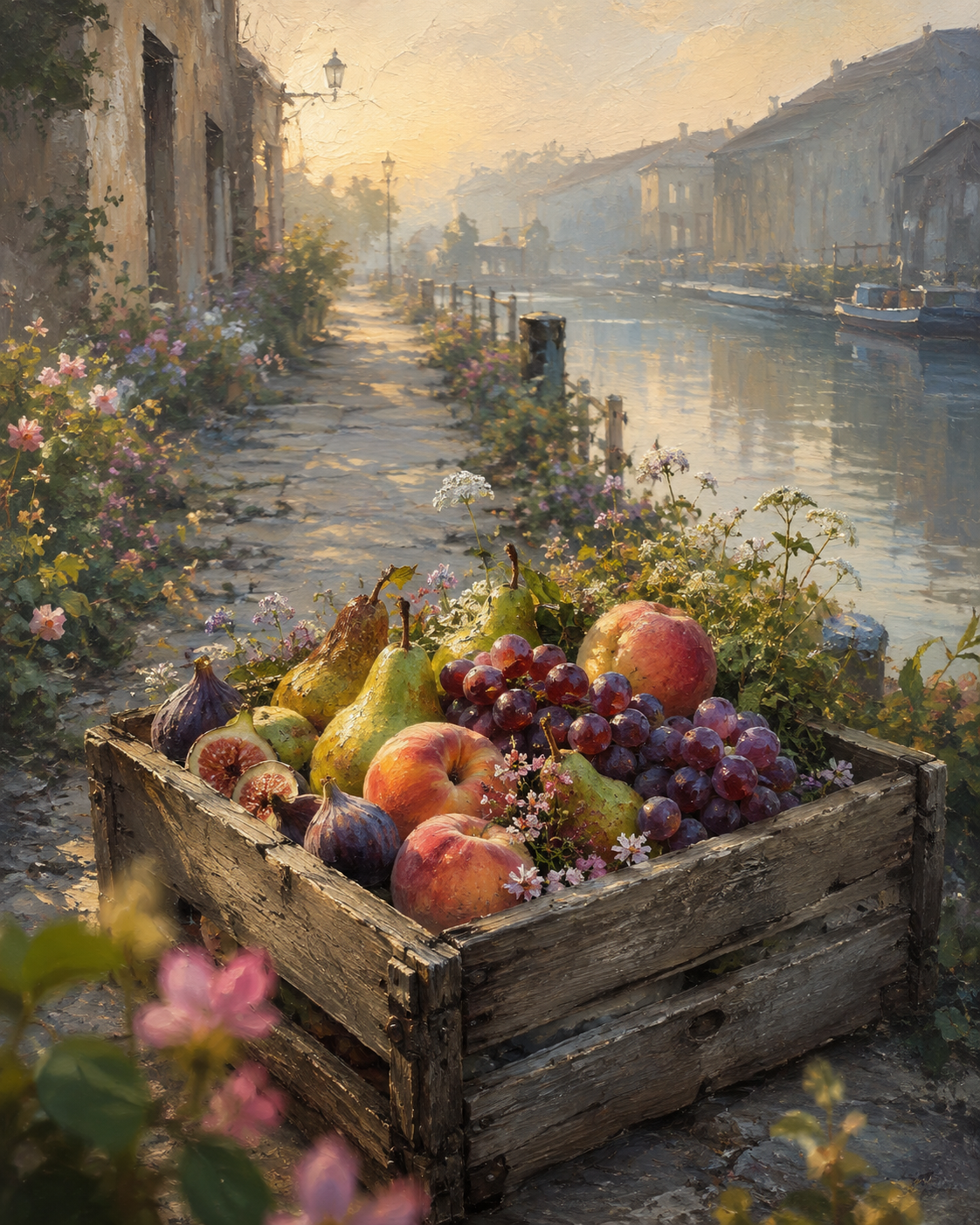
Morning Ripens in a Crate by the Canal
Critique
Introduction This canal still life fills a rough crate with pears, apples, grapes, figs, and flowers. Waterside abundance joins harvest, trade, and neighborhood life. Description The weathered slatted crate dominates the lower foreground. Inside are green and russet pears, red-gold apples, a large cluster of purple grapes, whole dark figs, two cut figs, and scattered pink and white blossoms. Blurred flowers frame the bottom edge. A stone walkway lined with mixed blooms recedes at left beside calm water. Old buildings, railing posts, lamps, a distant shelter, and a moored blue-and-white boat dissolve into pale golden haze. Analysis The crate establishes a heavy rectangular base, while rounded fruits create a dense counter-rhythm within it. Grapes provide numerous small spheres between the larger apples and pears. Cut figs expose crimson interiors, adding focal contrast and evidence of ripeness. Rough gray-brown wood offsets saturated fruit skins, and small flowers bridge produce with the planted canal border. Path and water converge gently toward the luminous center, balancing foreground weight with atmospheric depth. Interpretation and Evaluation The crate suggests movement between garden, market, kitchen, and shared street. Its contents are abundant but imperfectly arranged, emphasizing seasonal plenty rather than luxury display. Flowers mixed among fruit collapse distinctions between useful crop and ornamental growth. The open path and waiting boat extend the still life into circulation: harvest belongs to a local network of labor, exchange, and hospitality. Conclusion The work makes nourishment inseparable from place. Fruit carries sunlight in color and volume, while weathered boards register repeated use. By setting the harvest beside the canal rather than indoors, the painting celebrates abundance as something transported, shared, and woven into everyday communal space.
Same Subcategory
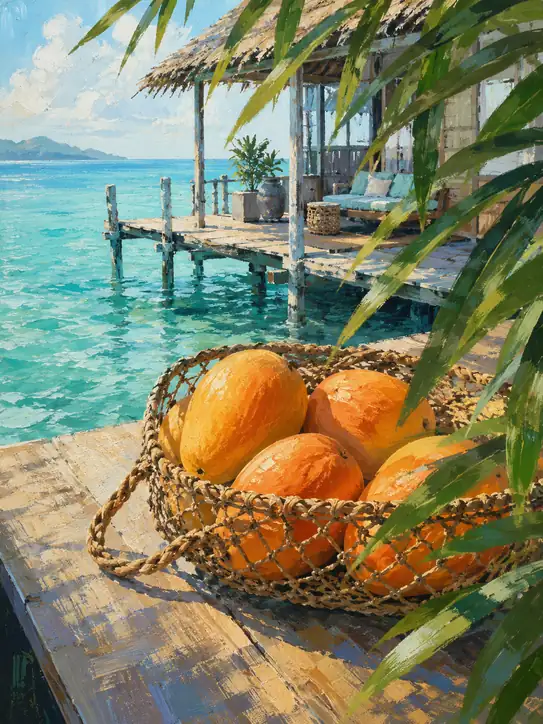 Sunlight Formed in Paint
Similar Artworks
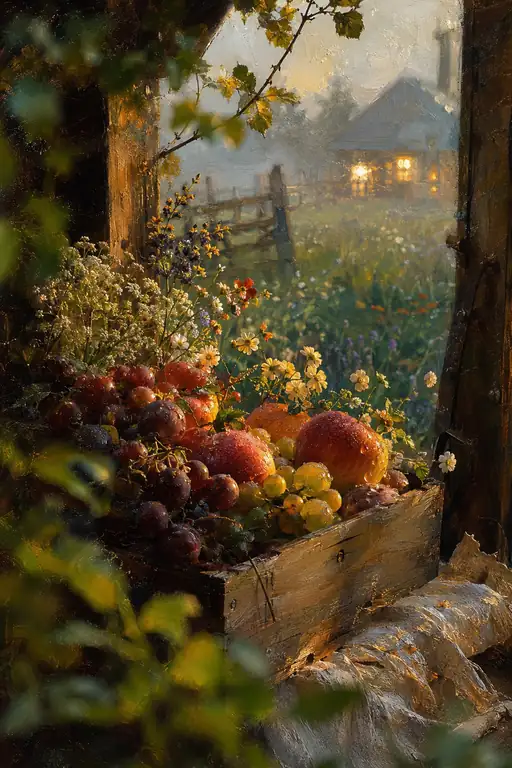 Autumn's Sweetness at the Lighted Door
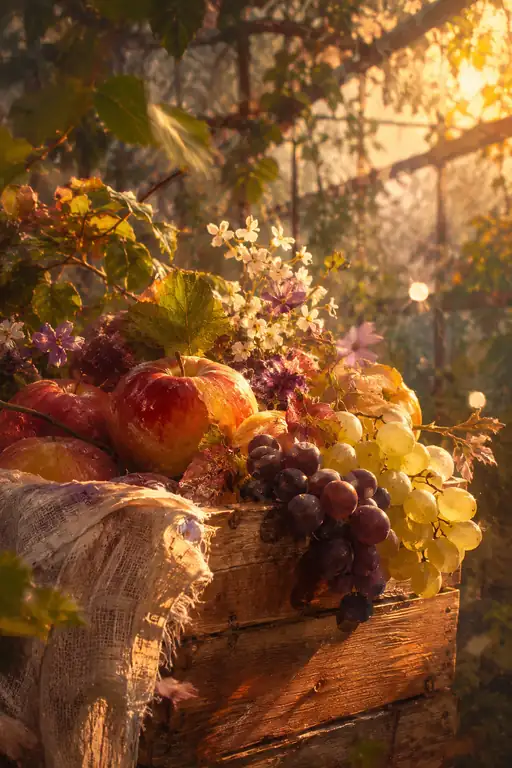 The Harvest Blushes in Greenhouse Gold
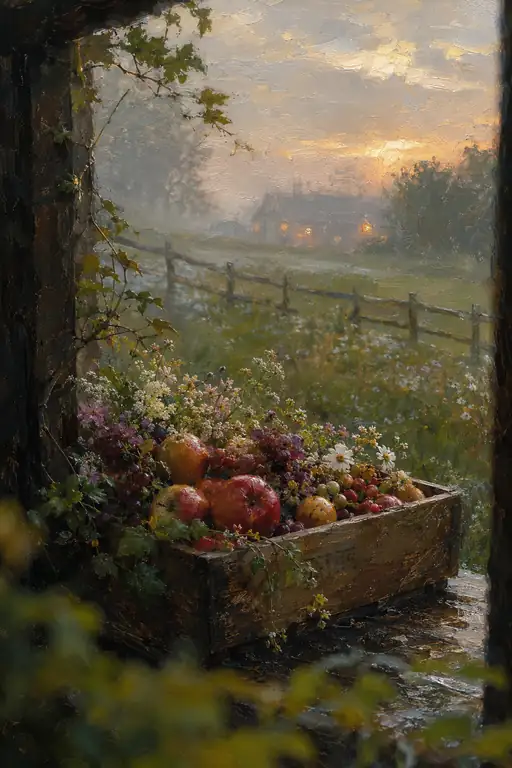 The Harvest Waits at the Threshold of Evening
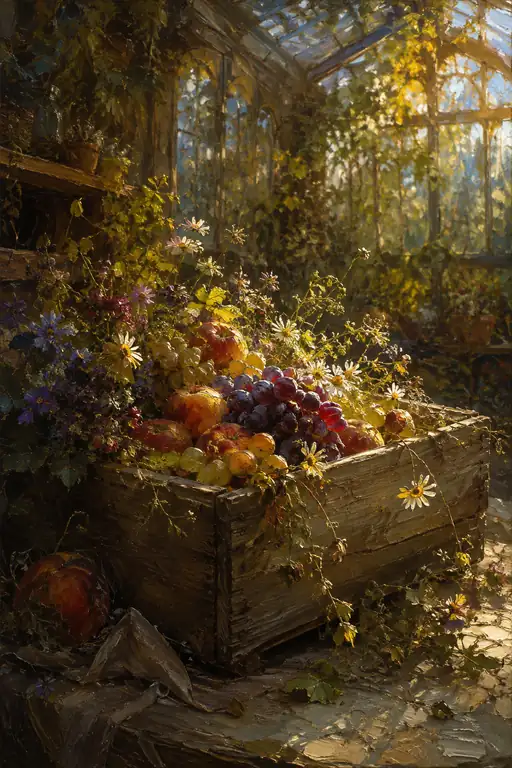 Autumn Overflows the Forgotten Crate
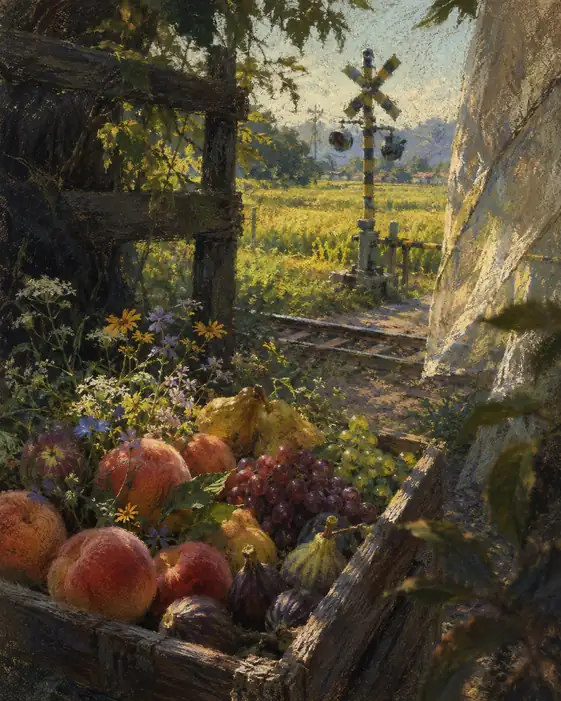 Autumn Harvest Beside the Rural Crossing
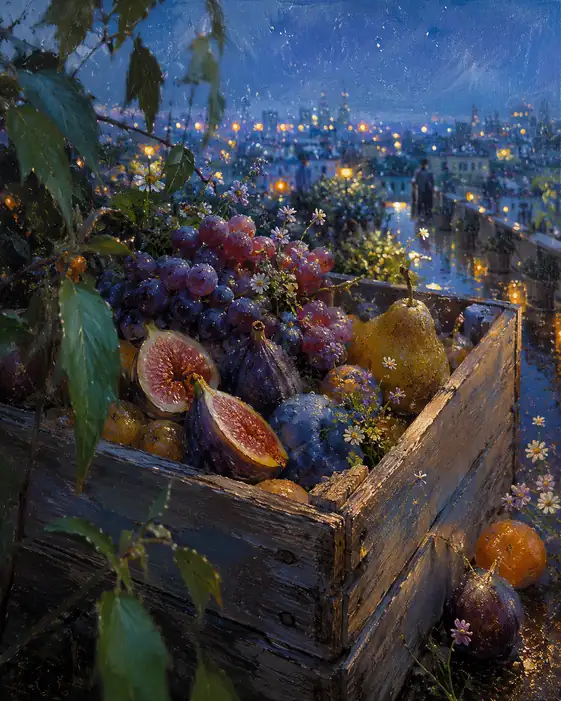 The Rain Harvests Figs beneath the City Lights
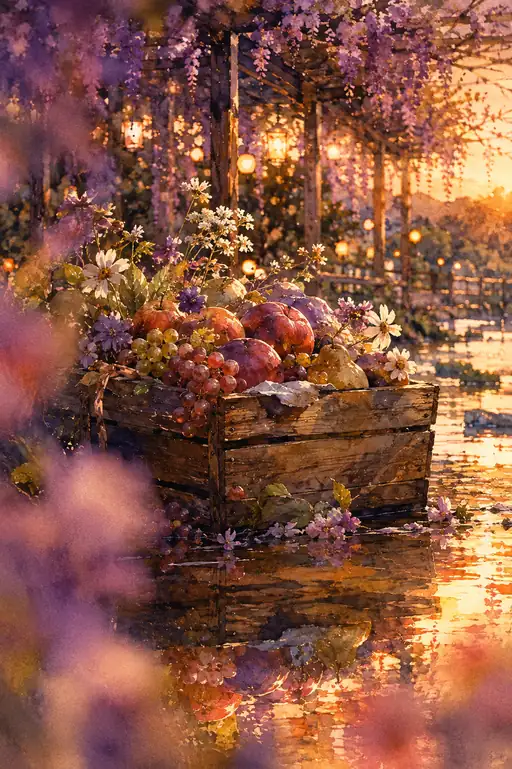 A Crate of Fruit Receives the Wisteria Sunset
 Candles Bloom Where the Sun Says Farewell
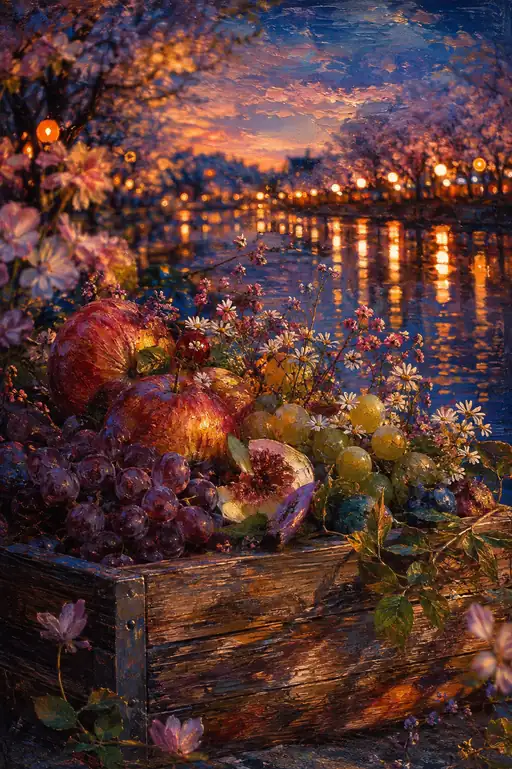 Twilight Harvest by the Blossomed Riverside
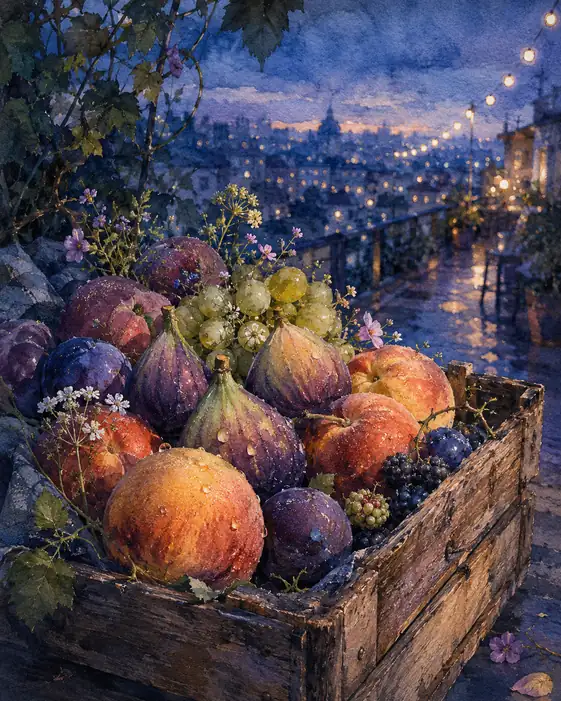 Night View from the Rain-Washed Terrace and a Fruit Box Filled with Figs