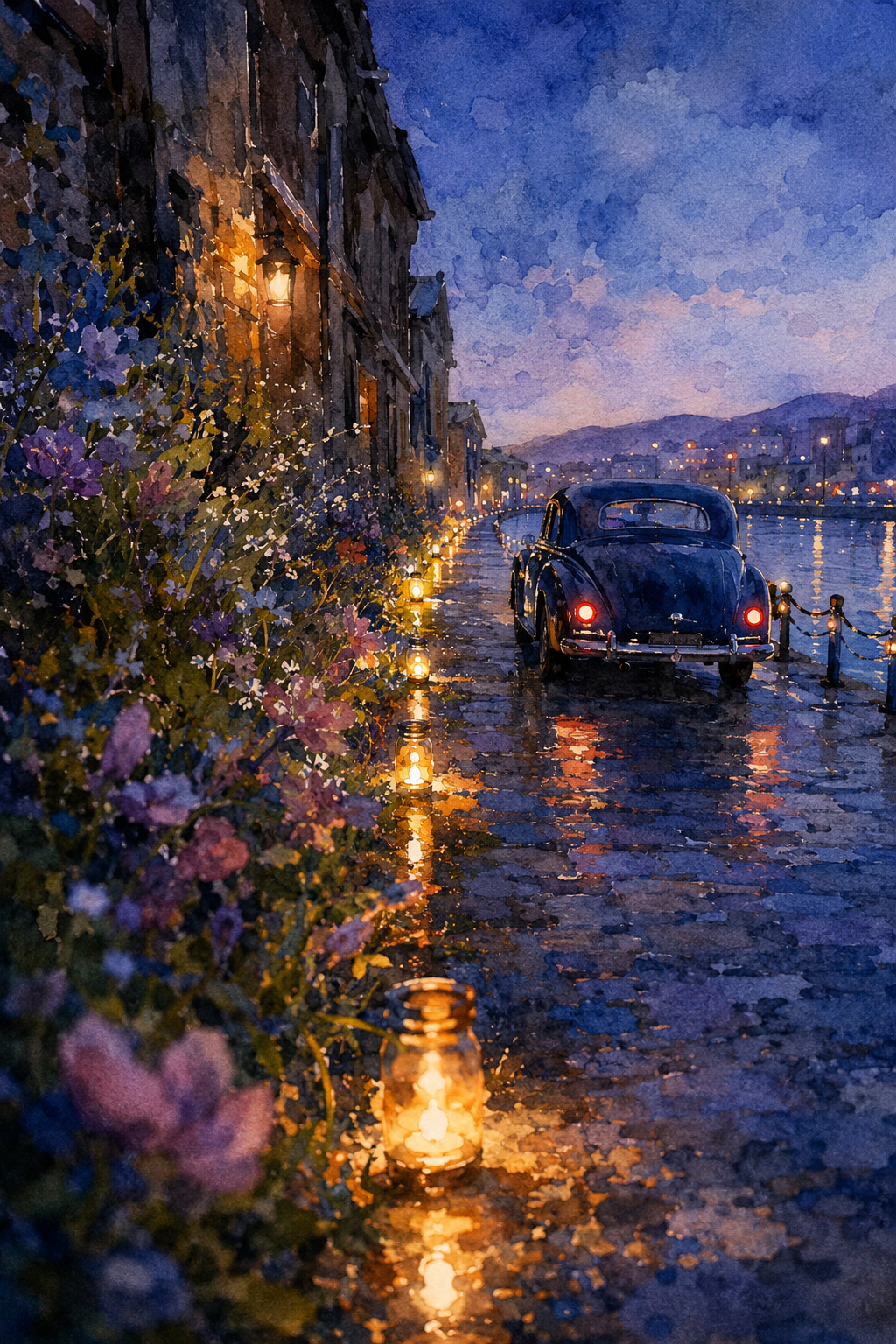
The Last Car Along the River of Lanterns
Critique
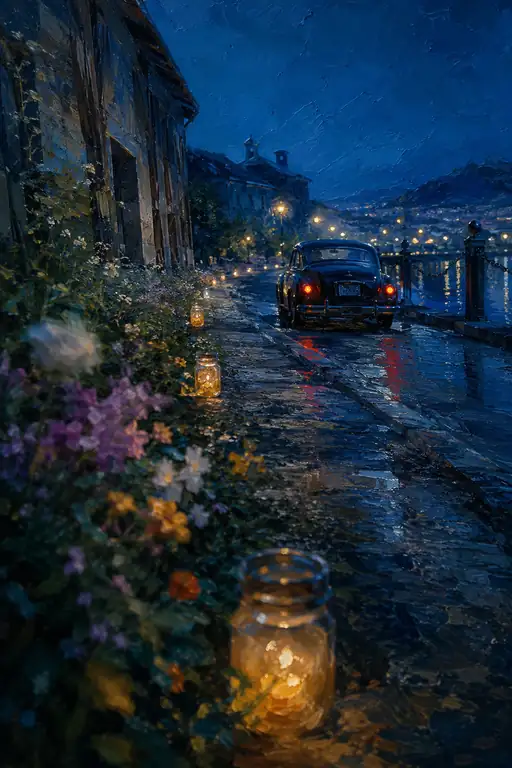
Introduction This nocturnal canal view places a vintage coupe beside jar candles and flowering walls. Stillness and repeated lights turn a roadside pause into guidance and belonging. Description The coupe is seen from behind near the center-right, with two circular red tail lamps glowing. Its rounded roof, split rear window, chrome bumper, and black tires catch cool reflections. On the left, dense violet, blue, pink, and white flowers rise beneath old stone buildings and a wall lamp. Small glass jars containing candles recede along the curb from a large foreground vessel. The canal, chained posts, distant town, low mountains, and violet-blue sky occupy the right and upper distance. Analysis The car interrupts the central perspective corridor but also points along it. Candle jars form a bright dotted diagonal whose decreasing scale establishes depth more emphatically than the architecture. Red tail lights and their wet reflections distinguish the vehicle from the amber lamp system. The flower bank supplies a broad irregular counterweight to the open canal. Dark blue unifies car, pavement, water, and sky, while gold marks articulate usable space. Interpretation and Evaluation The stopped or slowly moving automobile holds private travel within a public network of care. Ground-level candles are too modest to command the landscape individually, yet together they guide both pedestrian and driver. Flowers make that guidance generous rather than purely functional. The rear view withholds the occupants and destination, allowing the scene to represent many departures, returns, or moments of hesitation. Conclusion The painting gives infrastructure emotional texture. Curb, lamps, wet stones, and car show that movement is anticipated and protected. Small tended lights make an uncertain night route feel inhabited.
Same Subcategory
Similar Artworks
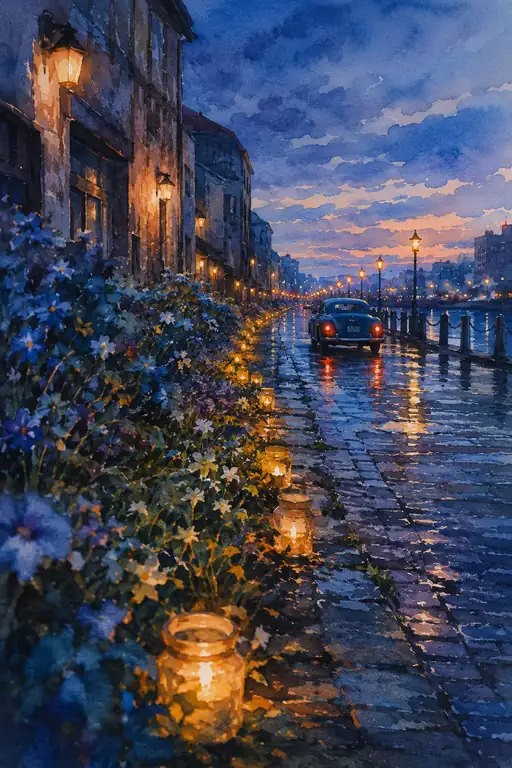 Little Lanterns Guide the Blue Car Home
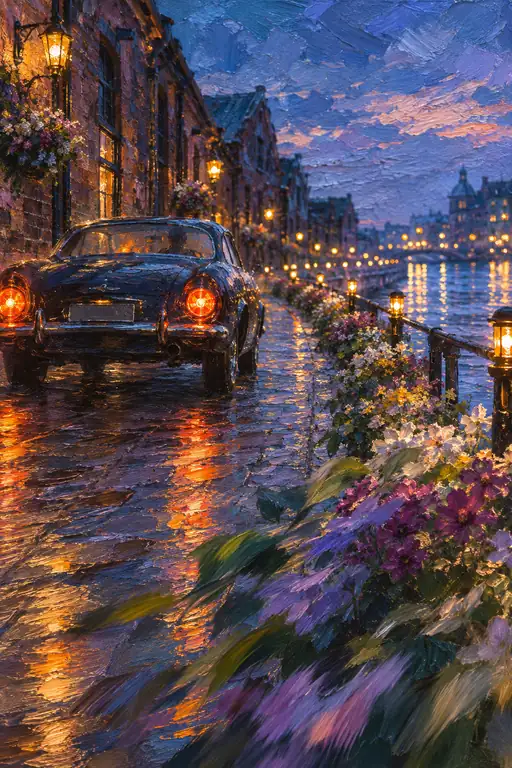 The Road Shines Before the Midnight Drive
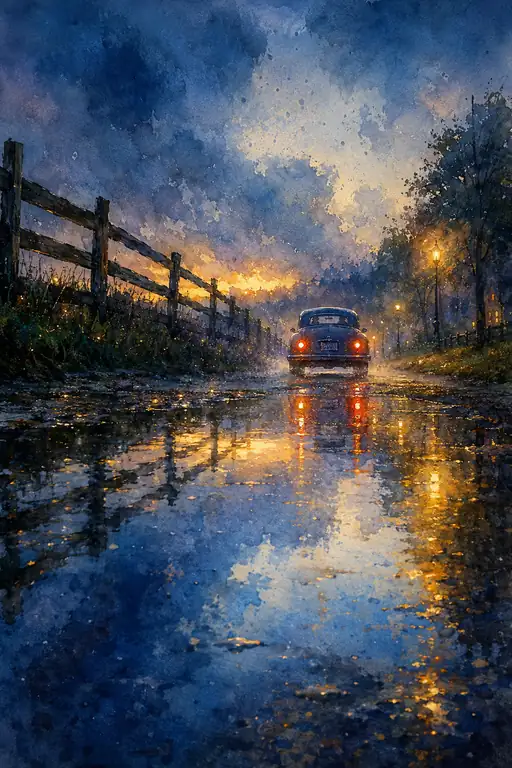 Rain Carries the Last Car Toward Sunset
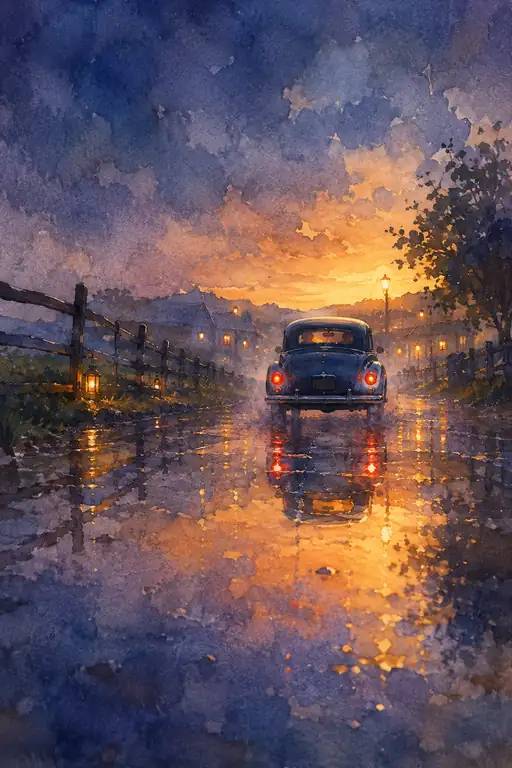 The Blue Car Drives into a Burning Sky
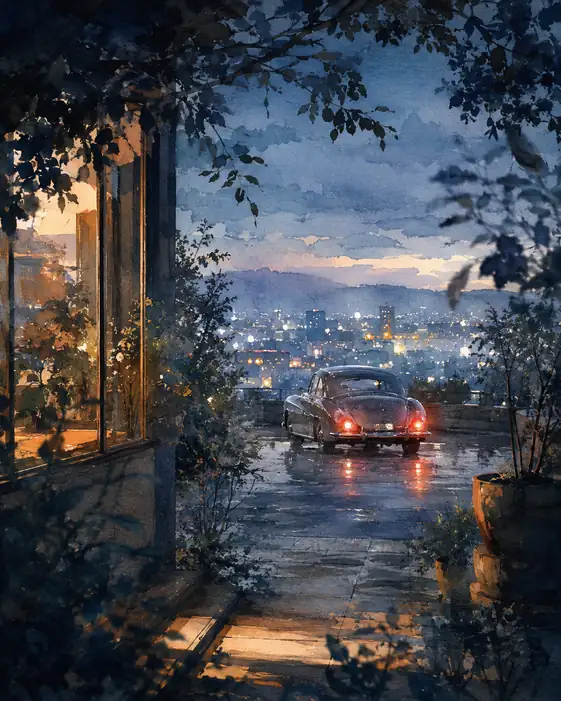 The Old Car Pauses between Home and the City Stars
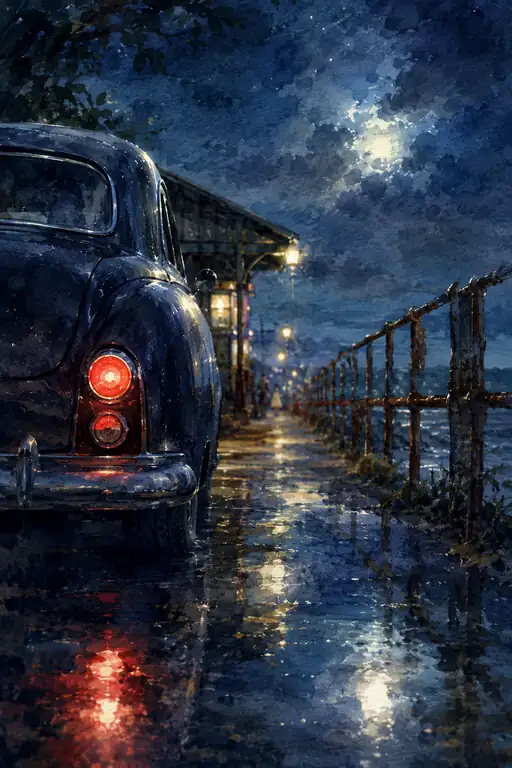 The Last Train Waits beneath a Rain-Washed Moon
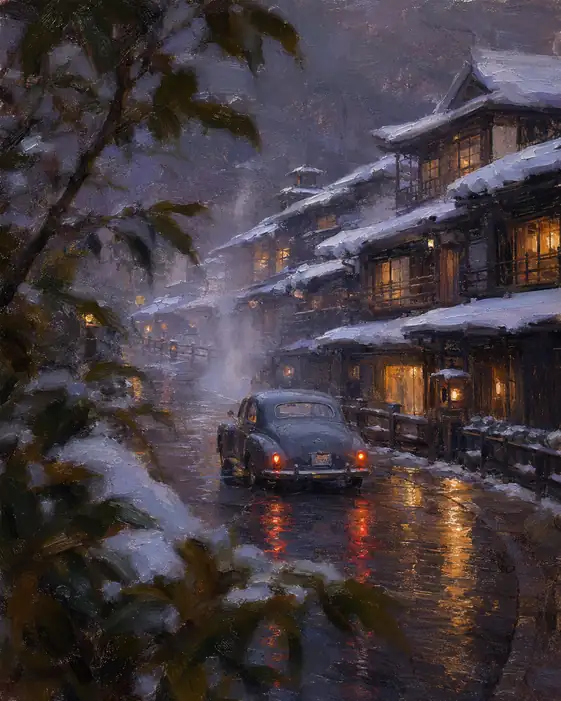 The Last Car Leaves a Trail of Emberlight
 A Quiet Ride into Yesterday
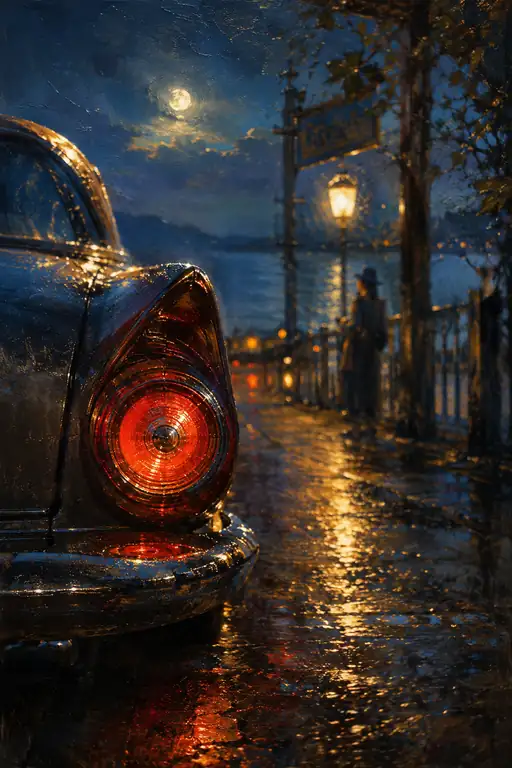 One Red Lamp Remembers the Moonlit Farewell
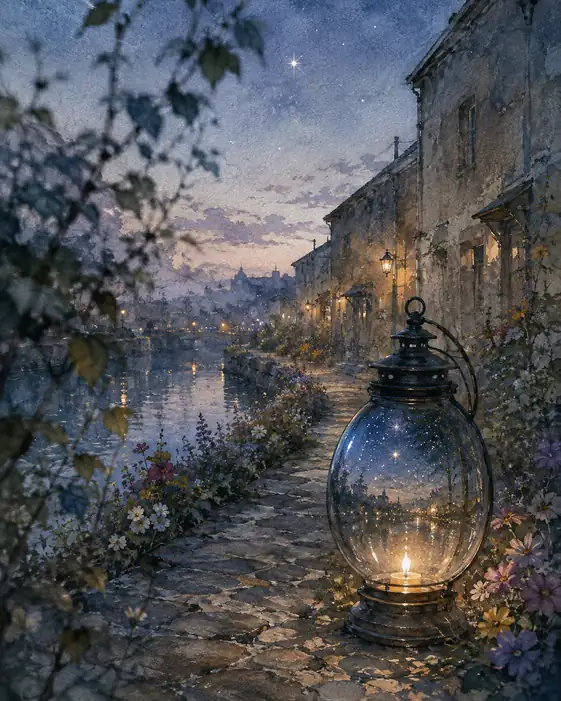 The Lantern That Gathered a Fallen Star