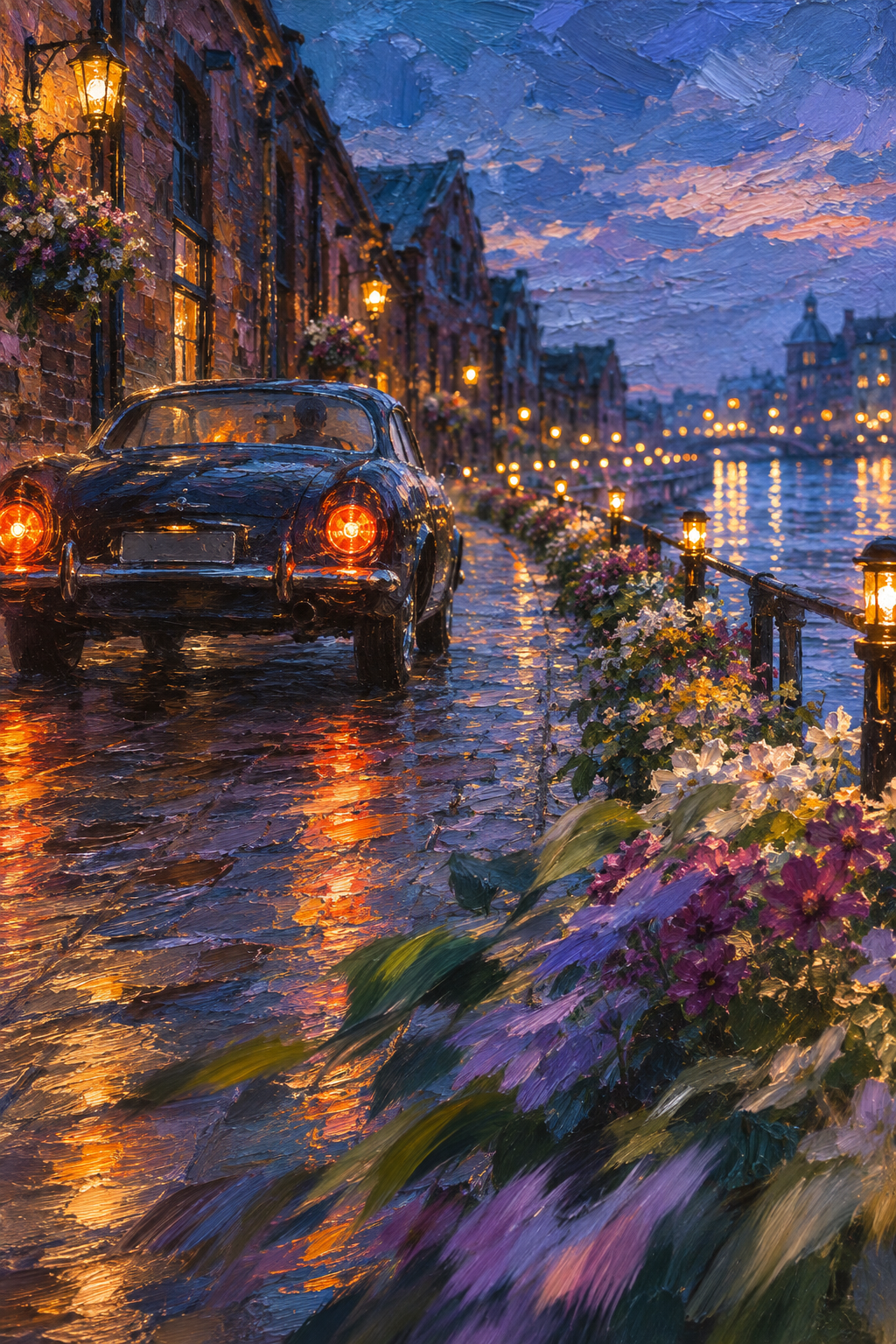
The Road Shines Before the Midnight Drive
Critique
Introduction This rainy canal scene brings a vintage coupe close amid lamps and flowers. Mechanical elegance, domestic warmth, and wet atmosphere meet, making arrival feel ceremonial. Description The car occupies the left foreground at a slight angle, facing outward with two round amber headlights lit. Rain glistens across its curved hood, windshield, chrome bumper, and wet tires. A faint driver silhouette appears inside. Brick houses with glowing windows and wall lamps recede along the left, while flower beds and low lanterns border the canal at right. Violet clouds cross the blue evening sky, and orange reflections stream across pavement and water toward a distant bridge. Analysis The coupe's broad dark mass anchors the lower left and interrupts the walkway's rapid perspective recession. Its paired headlights create a strong symmetrical focus within an otherwise asymmetrical composition. Curved bodywork contrasts with angular masonry and railings, while glossy paint merges visually with rainwater. Amber points repeat from headlights to lamps, windows, and reflections, linking vehicle and town. Large blurred foreground flowers counterbalance the car and soften its metallic presence. Interpretation and Evaluation The automobile introduces mobility and private agency into a setting defined by inherited architecture and public passage. Yet it does not appear disruptive: rain, reflected light, and flower color absorb it into the canal environment. The visible driver and outward orientation suggest a pause before departure or a recent arrival. This suspended moment gives the machine emotional rather than merely decorative significance. Conclusion The painting makes modern movement compatible with old-town intimacy. Light passes among headlamps, homes, wet stone, and canal, forming one evening network. The result is cinematic yet grounded in weather and place.
Same Subcategory
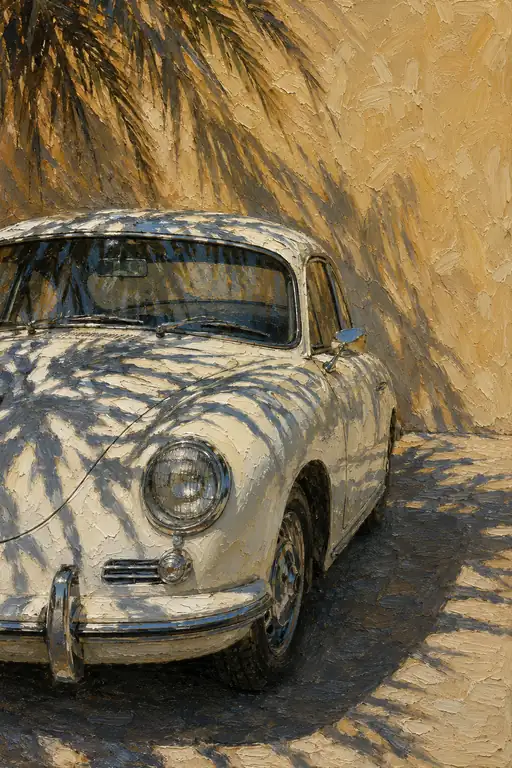 Where the Light Lingers
Similar Artworks
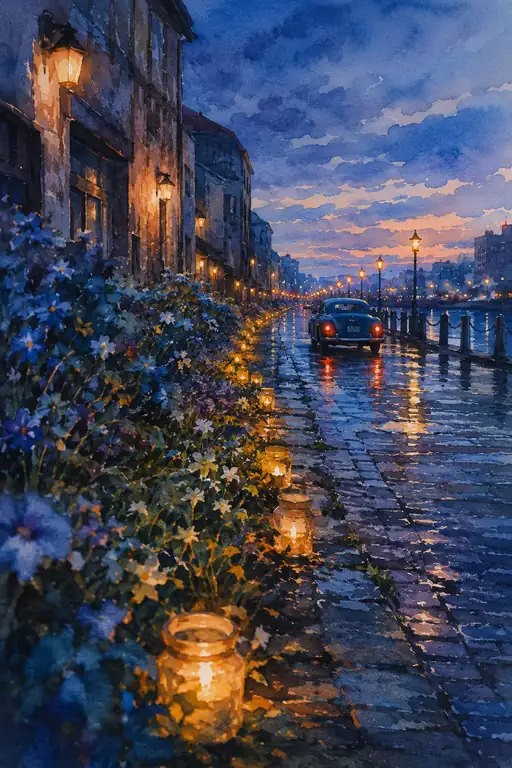 Little Lanterns Guide the Blue Car Home
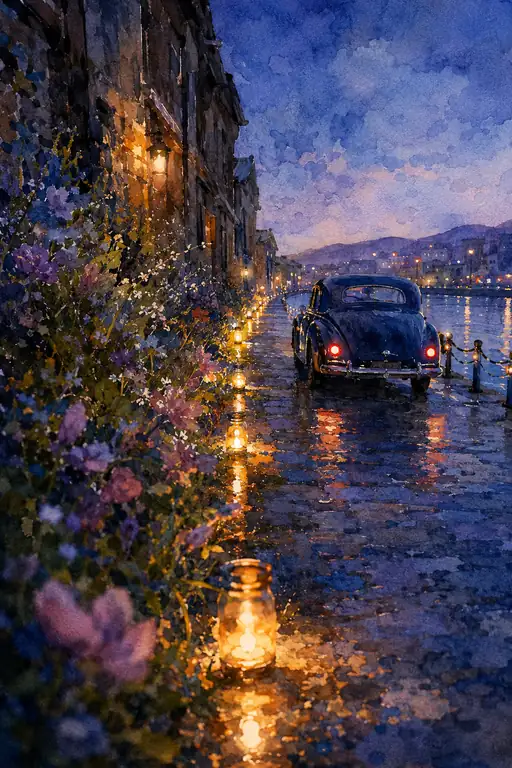 The Last Car Along the River of Lanterns
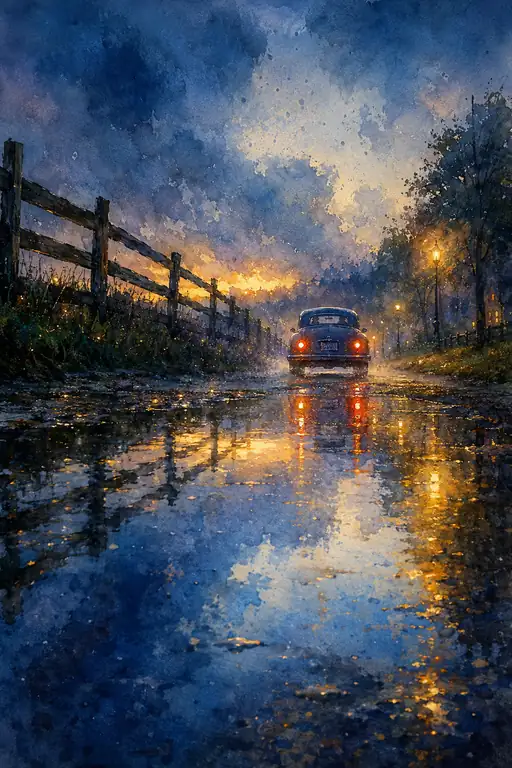 Rain Carries the Last Car Toward Sunset
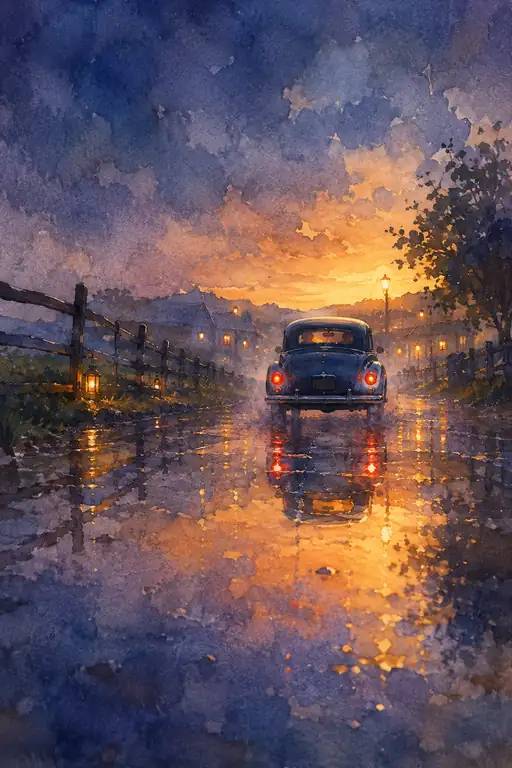 The Blue Car Drives into a Burning Sky
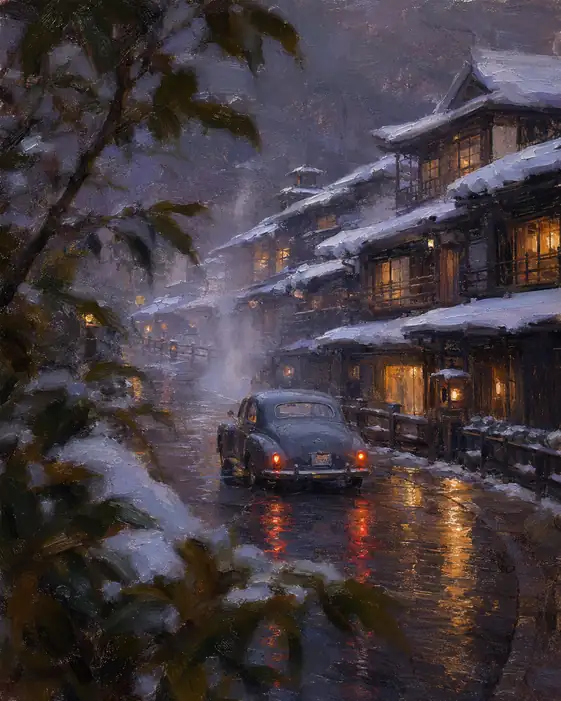 The Last Car Leaves a Trail of Emberlight
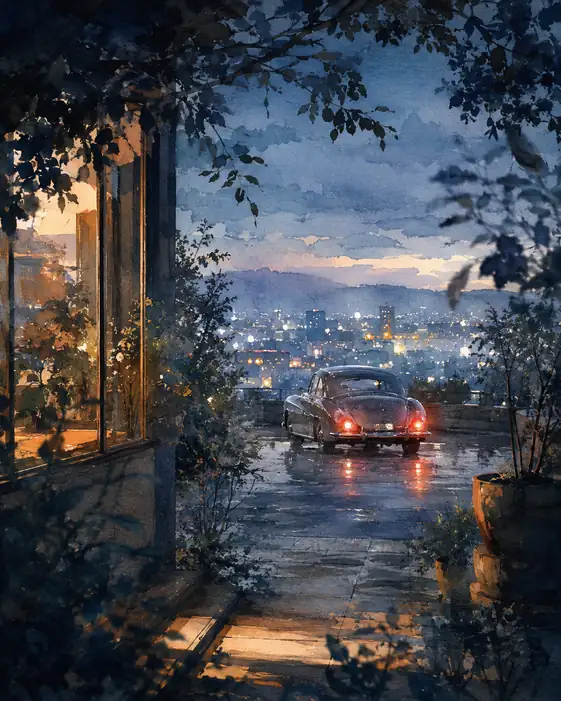 The Old Car Pauses between Home and the City Stars
 The Old Car Follows Lanterns into the Forest
 The Old Car Drives into a Lavender Dawn
 One Red Lamp Remembers the Moonlit Farewell
 The Last Train Waits beneath a Rain-Washed Moon