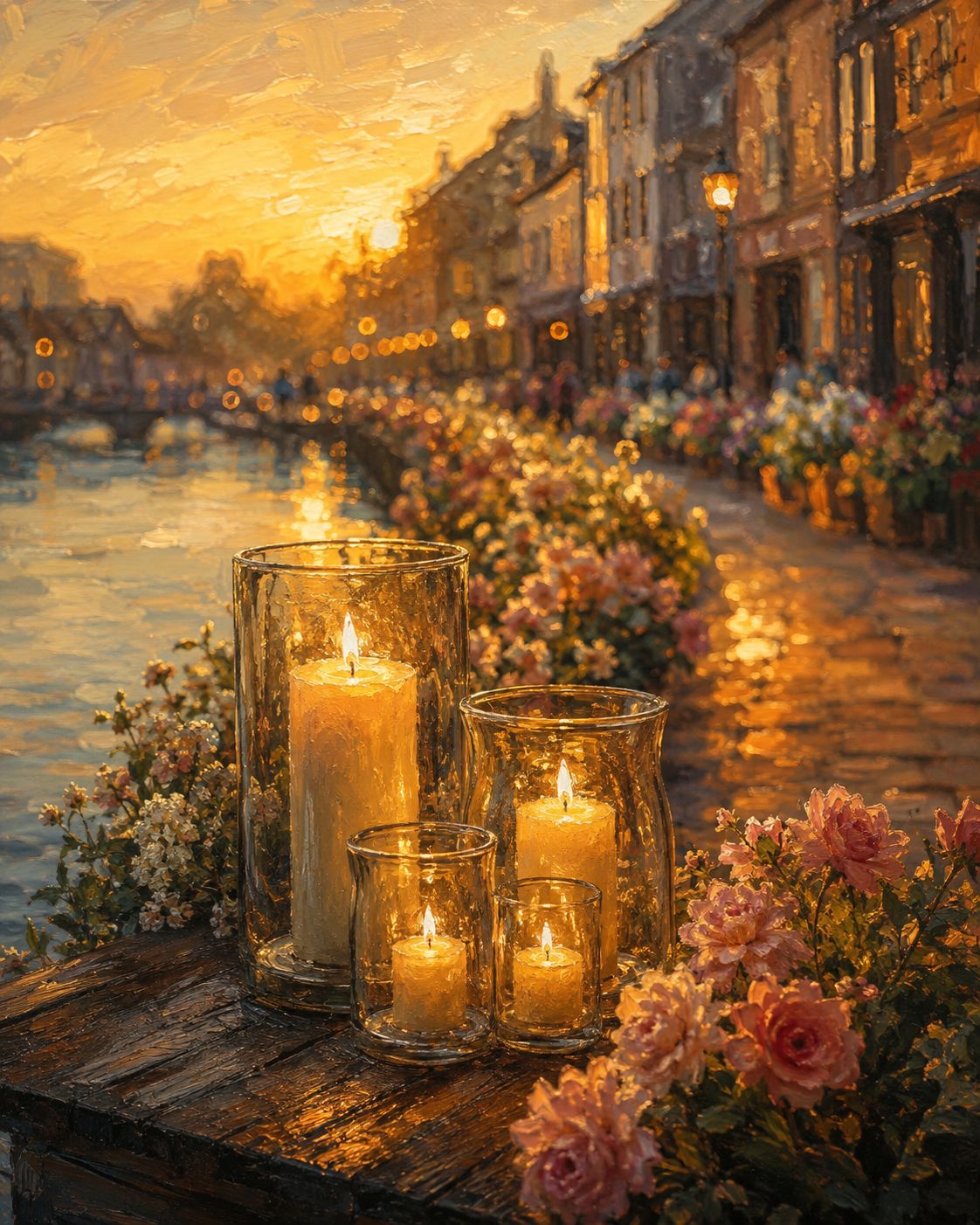
Four Flames Keeping the Golden Canal
Critique
Introduction This canal view places four glass-encased candles among foreground roses. The arrangement and flower-lined town transform sunset into a ceremony of domestic, civic, and natural light. Description Four candles stand on a dark wet wooden ledge: a tall cylinder at left, a curved medium vessel behind, and two smaller glasses in front. Their flames illuminate wax and irregular glass. Pink roses crowd the lower right, while tiny white blossoms edge the water at left. The canal recedes toward a bridge beneath an orange sky. Houses, pedestrians, streetlamps, potted flowers, and wet paving extend along the right bank, softened by luminous haze. Analysis The candle group forms a descending arc that counterbalances the rising mass of roses. Transparent cylinders overlap without losing their individual silhouettes, and repeated rim ellipses establish order. Gold unifies flames, sky, windows, paving, and water, while restrained blue-gray shadows keep the scene legible. The ledge fixes a strong foreground horizontal; beyond it, canal and walkway converge toward the center-left. Selective blur changes distant lamps and flowers into rhythmic points rather than descriptive clutter. Interpretation and Evaluation These candles act as a small human answer to the setting sun. Their scale is modest, but alignment with public lamps and glowing windows lets private care participate in the life of the town. Roses associate this act with affection and hospitality rather than mere utility. The visible pedestrians further prevent the scene from becoming isolated reverie: its beauty belongs to a shared route. Conclusion Illumination becomes relational: sunset, candle, streetlamp, window, and reflection reinforce one another. The tactile foreground invites stillness while the promenade preserves movement, balancing personal pause with communal evening.
Same Subcategory
Similar Artworks
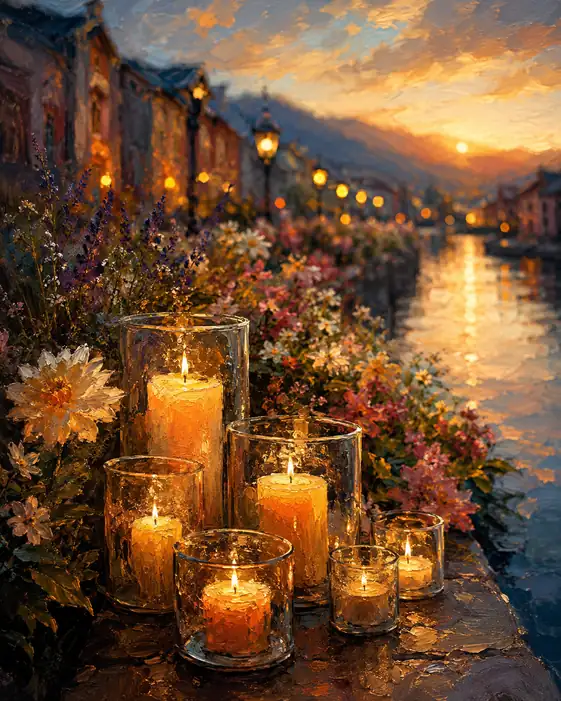 Candles Bloom Where the Sun Says Farewell
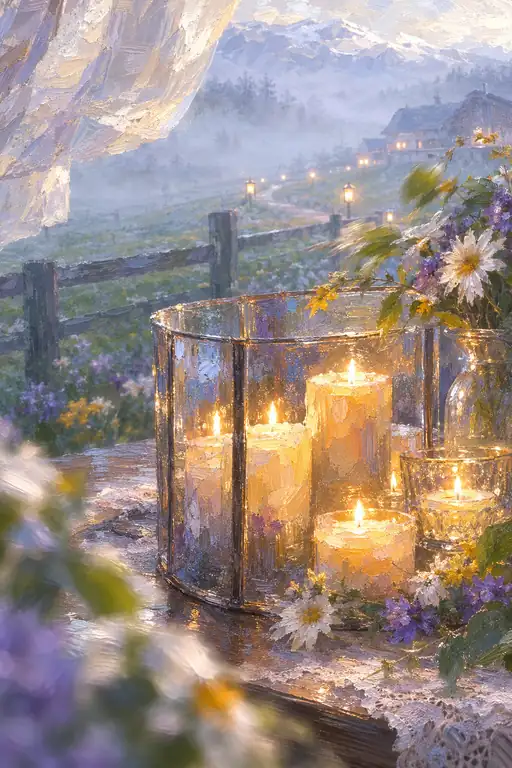 Candles Welcome the Mist Home to the Mountains
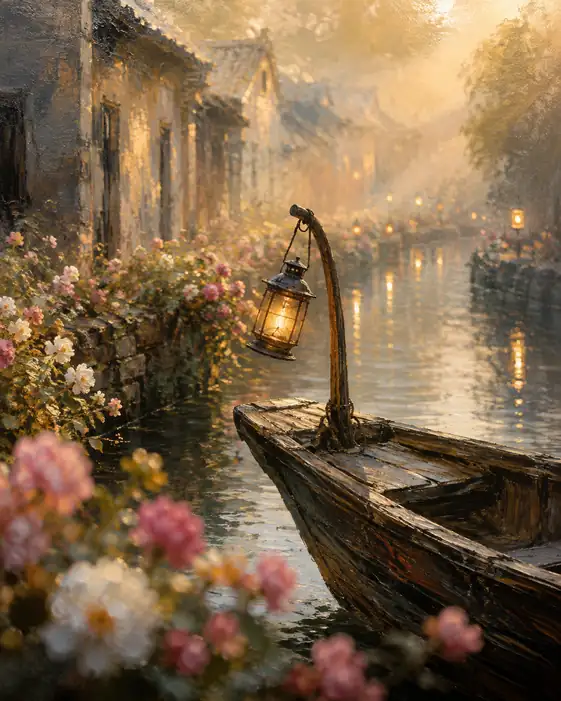 The Boat That Borrowed Dawn's Lantern
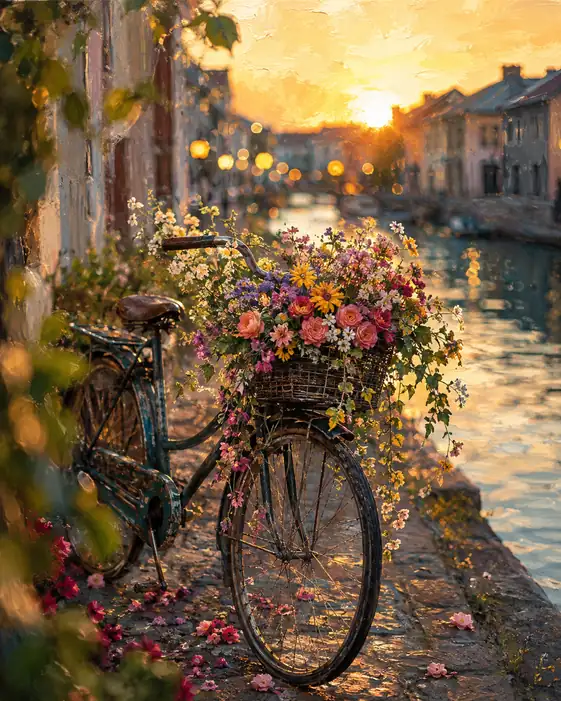 Sunset Rests in the Bicycle's Basket
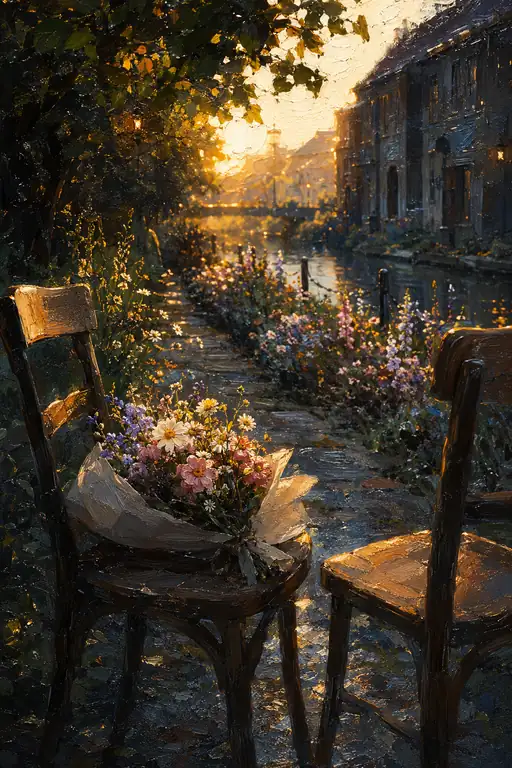 The Flowers Came Before You
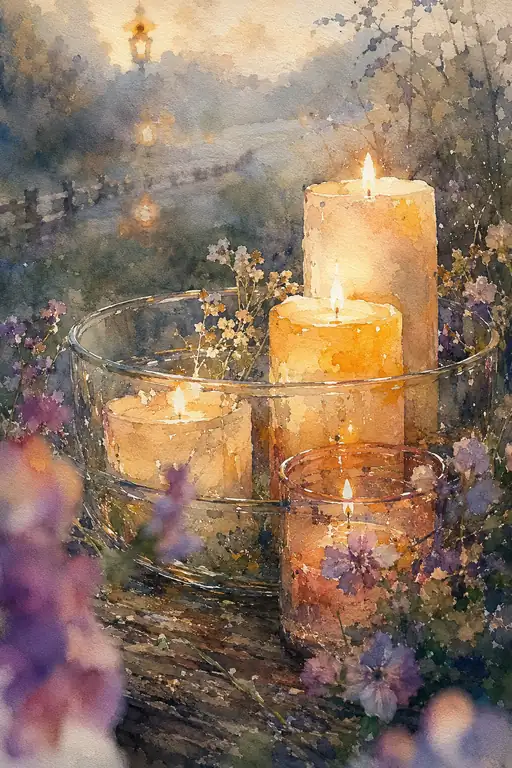 Four Flames Bloom Beside the Evening Path
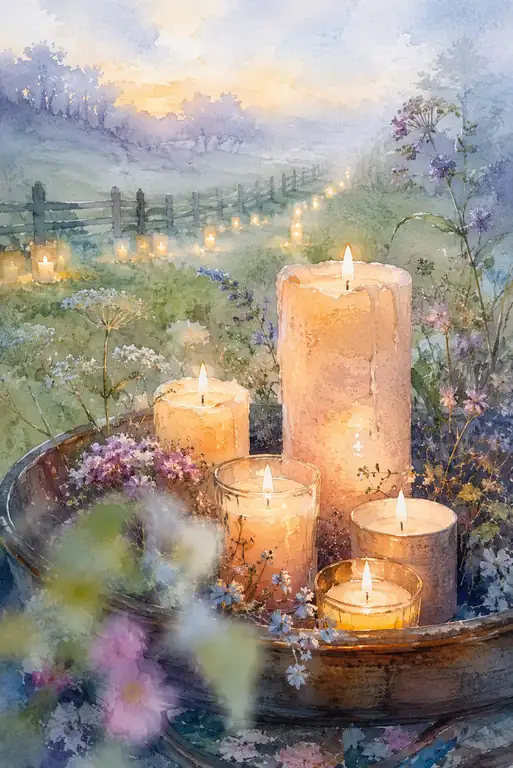 Five Candles Welcome the Meadow Morning
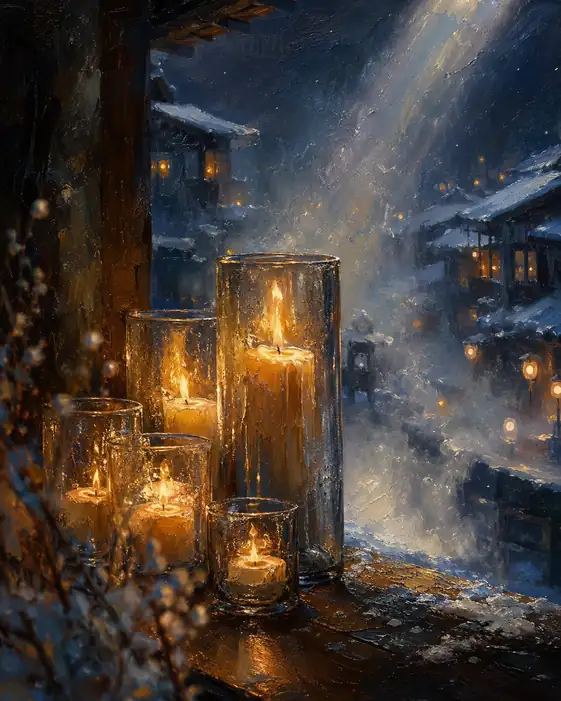 Five Flames Keep Winter from the Window
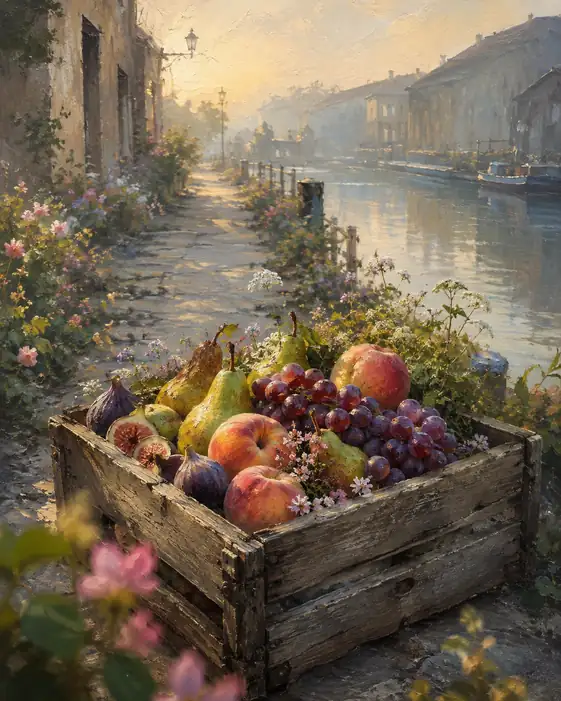 Morning Ripens in a Crate by the Canal
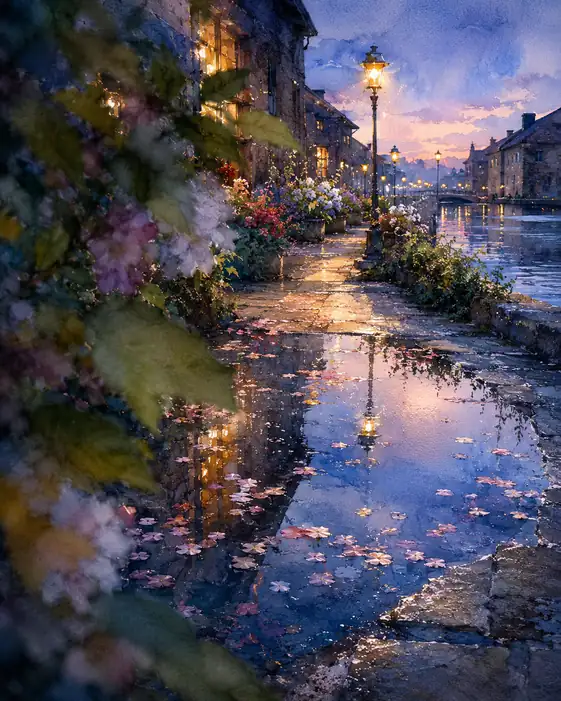 Twilight Poured into a Flower-Strewn Puddle