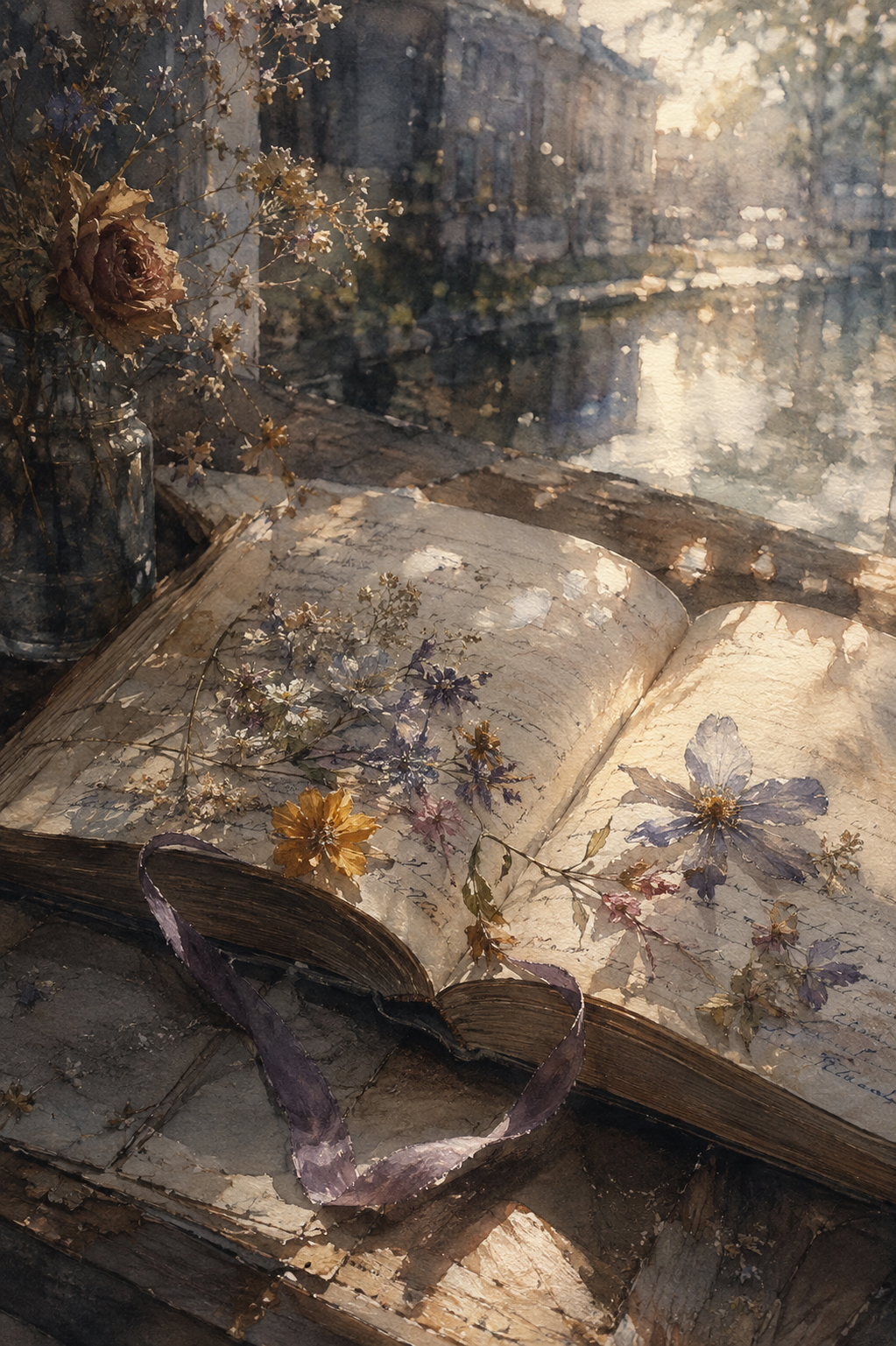
Flowers Remember What the Letter Said
Critique
Introduction This still life opens a weathered book beside dried flowers and a sunlit canal. Reading, botanical preservation, and place become fragile forms of memory. Description An open volume occupies the foreground on worn wood. Faded handwriting crosses cream leaves holding purple, yellow, pink, and white flowers. A violet ribbon loops toward the bottom edge. At left, a dark jar contains a dried rose and branching seed heads. Beyond the ledge, canal buildings and trees dissolve into silver-gold water light. Analysis The book forms a broad diagonal wedge whose central gutter points toward the distant canal. Its warm pages bridge the nearly black vase and the high-key water. Flowers interrupt the written lines with irregular color, while the ribbon supplies a longer curving movement across the rigid page geometry. Strong backlight breaks into scattered pale marks on paper, architecture, and water, visually connecting near objects with atmosphere. Shallow focus preserves tactile foreground detail while turning the town into memory-like haze. Interpretation and Evaluation Writing and pressed plants are parallel archives: one retains thought, the other a season's material form. The dried bouquet extends this meditation by showing preservation at a later stage, beautiful but visibly altered by time. Because the canal remains present beyond the book, recollection is not sealed from life; it is renewed by looking outward. The unfinished ribbon and loosely arranged specimens make remembrance appear active rather than museum-like. Conclusion The painting gives reflection physical weight. Paper, stems, glass, wood, and sunlight hold time differently. Aligning book and canal suggests memory is both a record of the world and a route back into it.
Same Subcategory
Similar Artworks
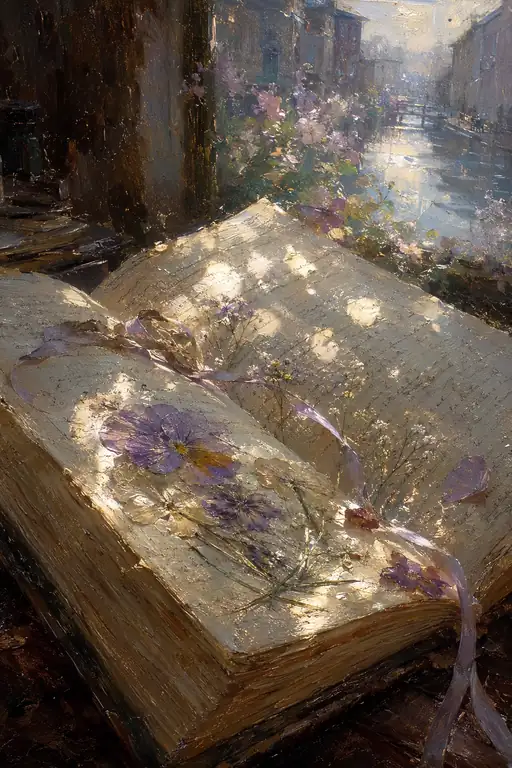 The Canal Pressed Between Beloved Pages
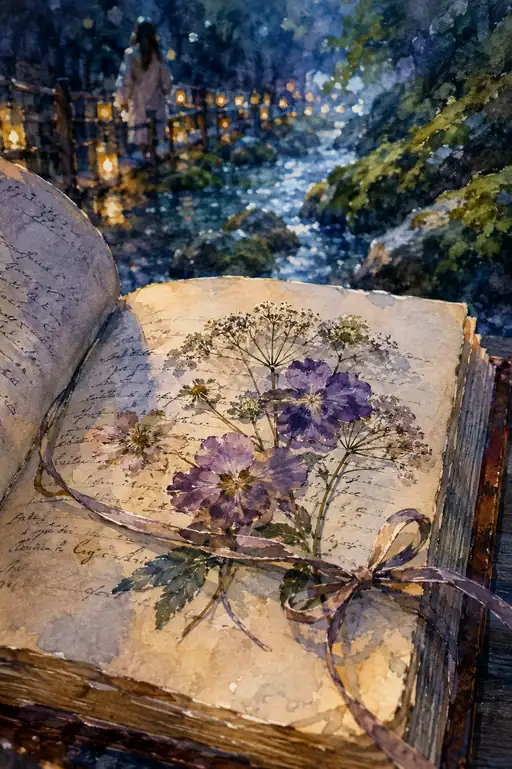 Pressed Flowers Keep the Night Walker's Story
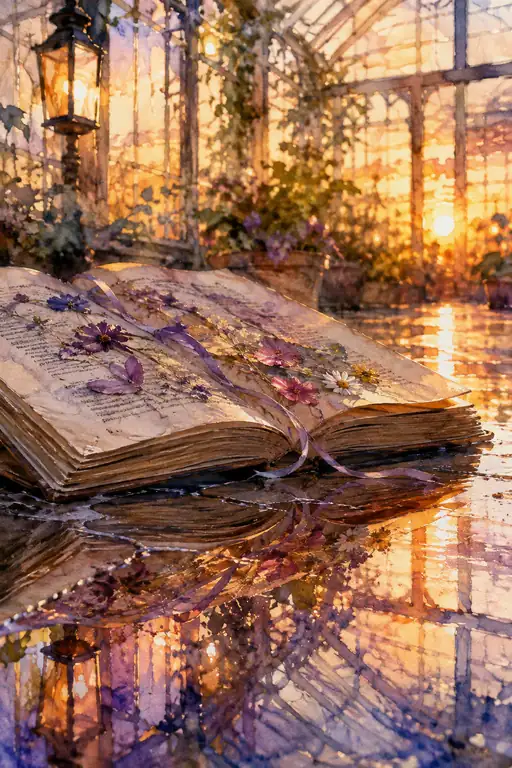 Sunset Reads the Greenhouse Book of Flowers
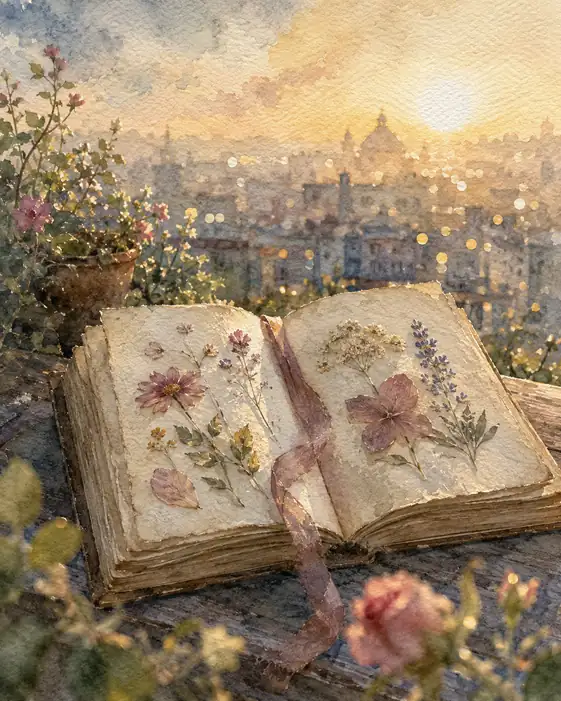 Pressed Flowers Dream beneath the Golden Dome
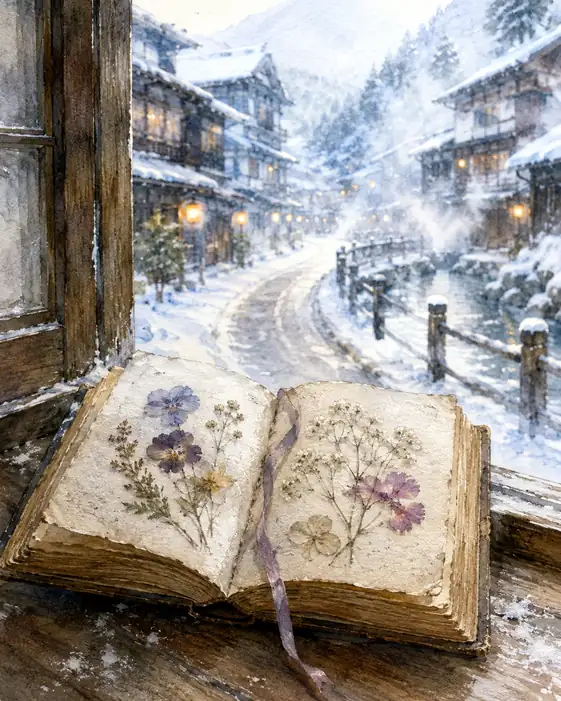 Winter Reads the Flowers' Secret Diary
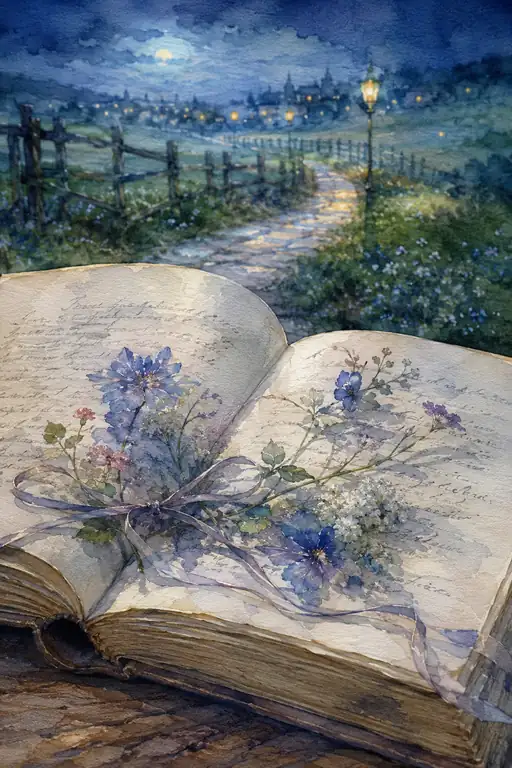 Pressed Flowers Dream Beyond the Moonlit Page
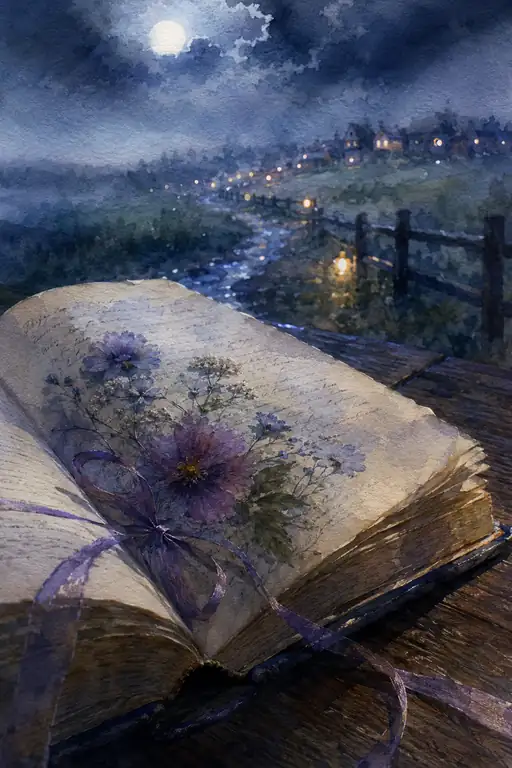 The Moon Reads the Flowers Between the Lines
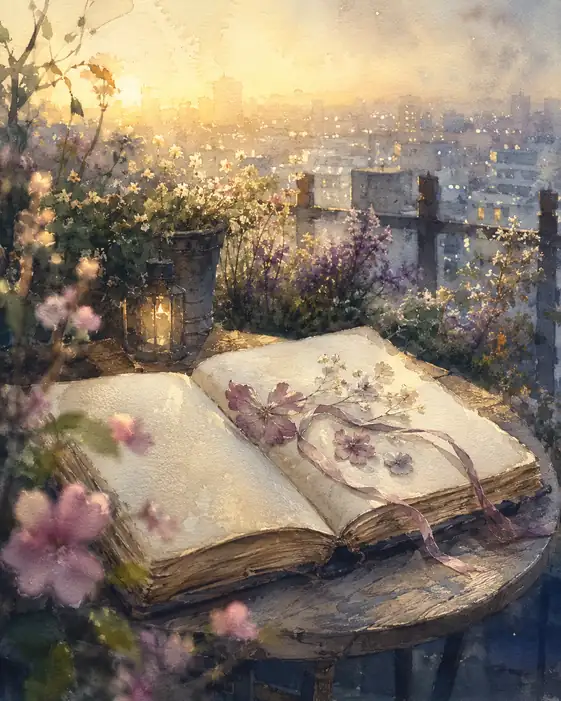 The Blank Page Waits for the City's Morning
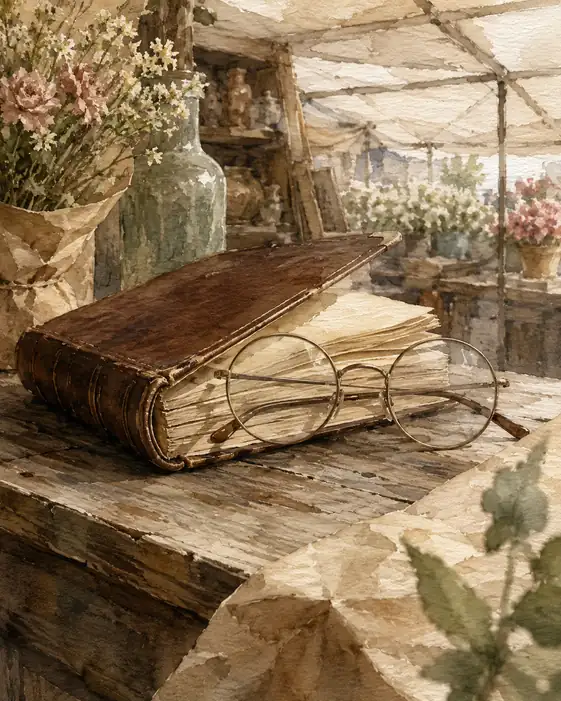 The Afternoon Left Between the Pages
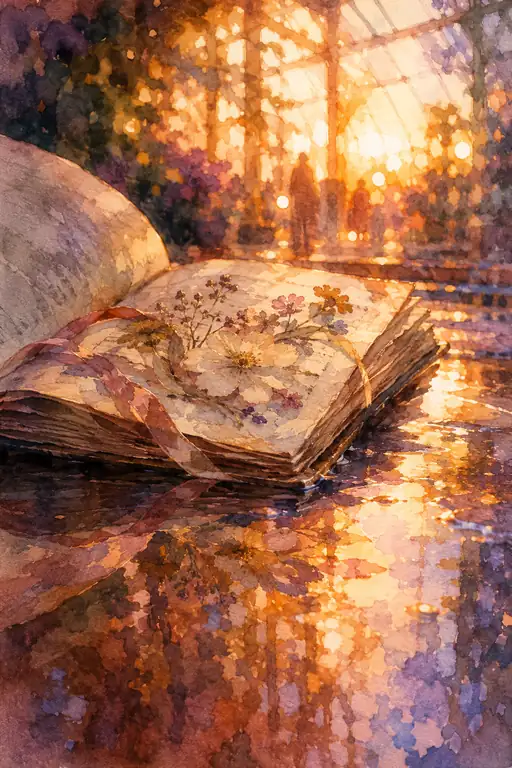 Reflections of a Forgotten Tale