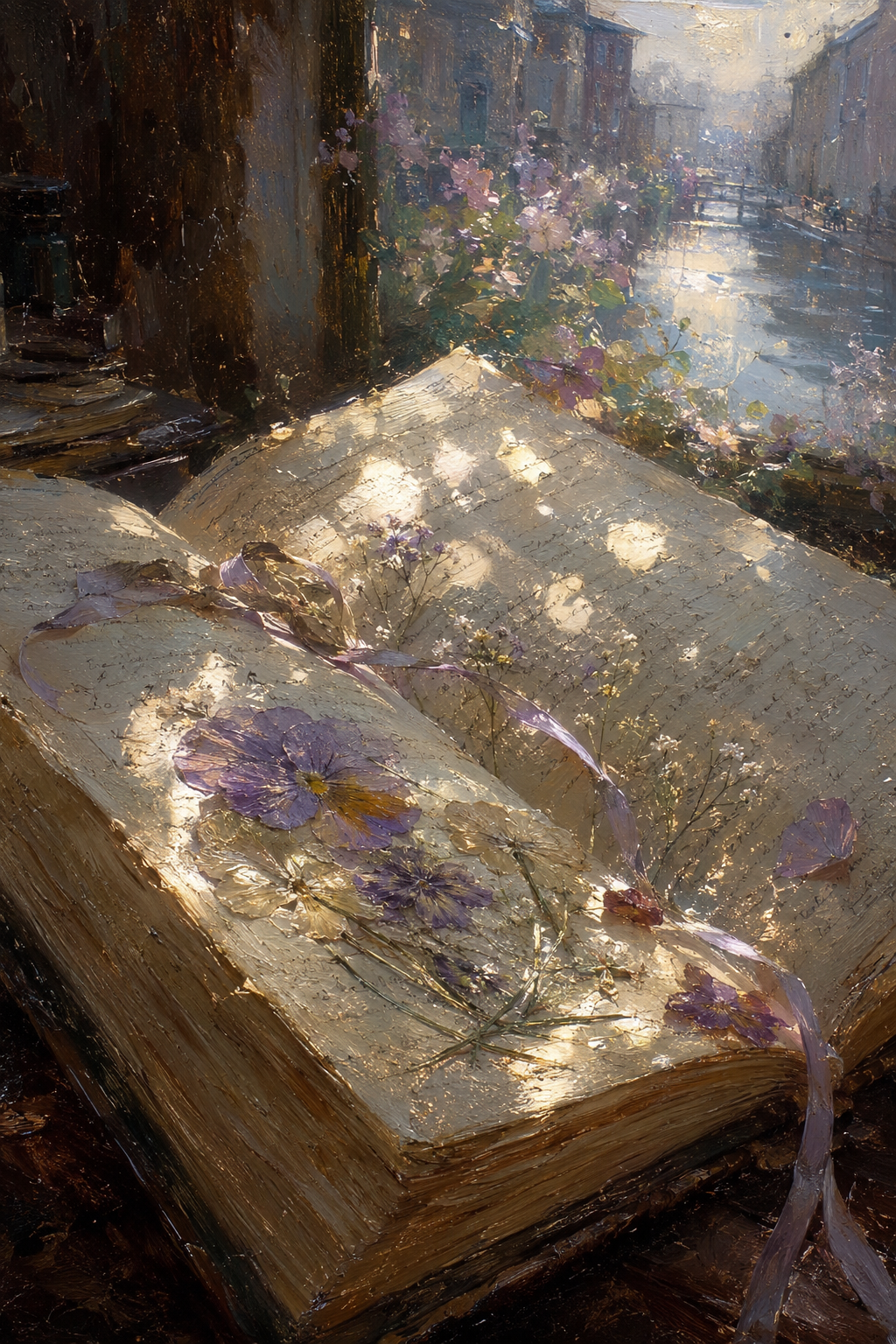
The Canal Pressed Between Beloved Pages
Critique
Introduction This intimate still life opens a thick old book beside a sunlit canal and lays pressed flowers and a violet ribbon across its pages. Reading, collecting, and observing place become intertwined forms of preserving experience. Description The large book fills the foreground, its yellowed pages thick, uneven, and covered with faint handwriting. Purple pansies, tiny white sprays, stems, and loose petals lie across the central fold. A lavender ribbon loops from the upper left and trails beyond the lower right edge. Sunlight breaks into bright patches across paper and flowers. Behind, a dark interior opens toward a narrow canal, footbridge, old houses, and abundant pink blossoms. Analysis The book's spread creates two broad diagonal planes that guide attention toward the canal. Its central gutter echoes the waterway's recession, joining near object and distant setting. Impasto-like highlights make paper surprisingly luminous, while dark shelves and walls deepen contrast. Purple petals and ribbon establish a sinuous rhythm across the cream surface. Fragmented light visually resembles scattered leaves, blurring the distinction between illumination and collected nature. Interpretation and Evaluation Pressed flowers ordinarily arrest decay, while writing stores thought; placing both on the same pages joins botanical and verbal memory. The canal beyond suggests the source of these materials and makes the book less an escape from place than a method of attending to it. The untied ribbon implies an interrupted reading or unfinished act of arrangement, keeping preservation active rather than sealed. Conclusion The work treats memory as layered, tactile work. Paper, pigment, petals, handwriting, and sunlight each hold traces differently. By aligning the book's fold with the canal, it elegantly connects private reflection to the lived world outside.
Same Subcategory
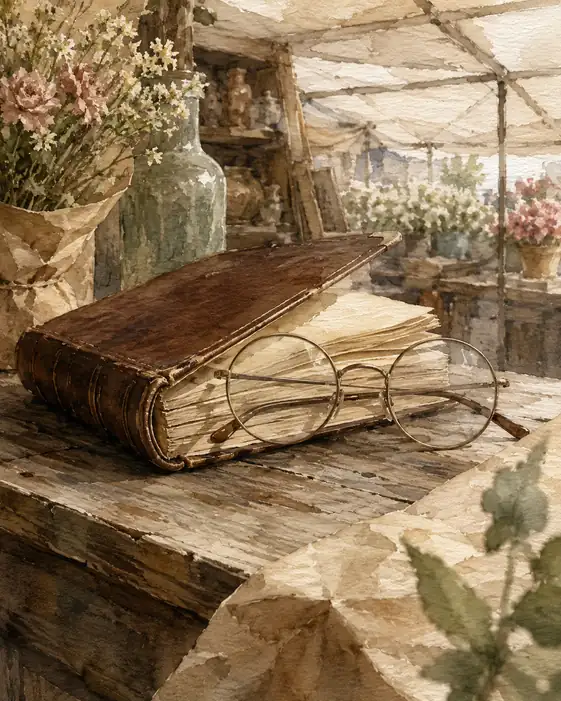 The Afternoon Left Between the Pages
Similar Artworks
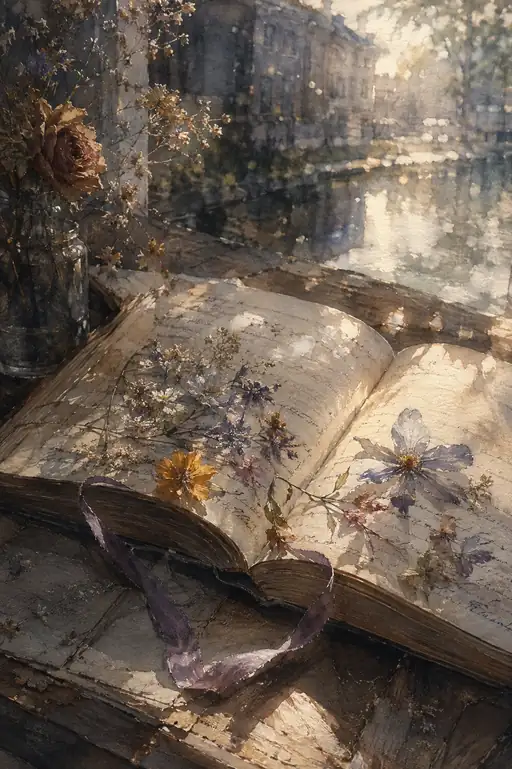 Flowers Remember What the Letter Said
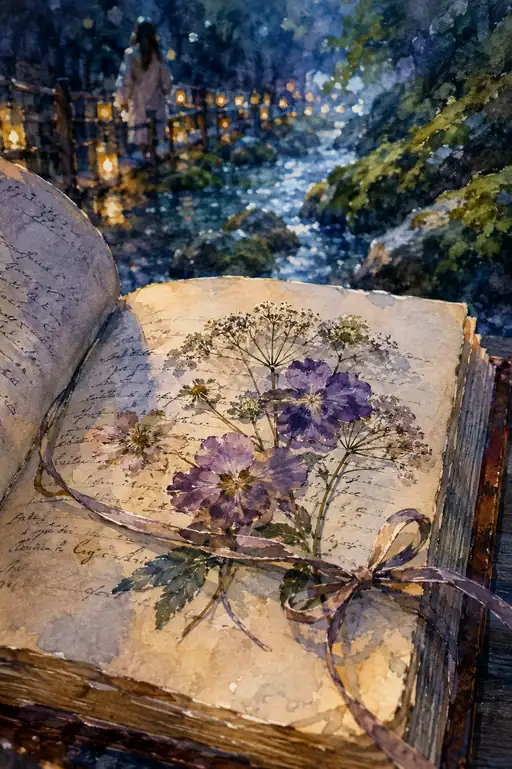 Pressed Flowers Keep the Night Walker's Story
 Pressed Blossoms Dream beside the Lantern Stream
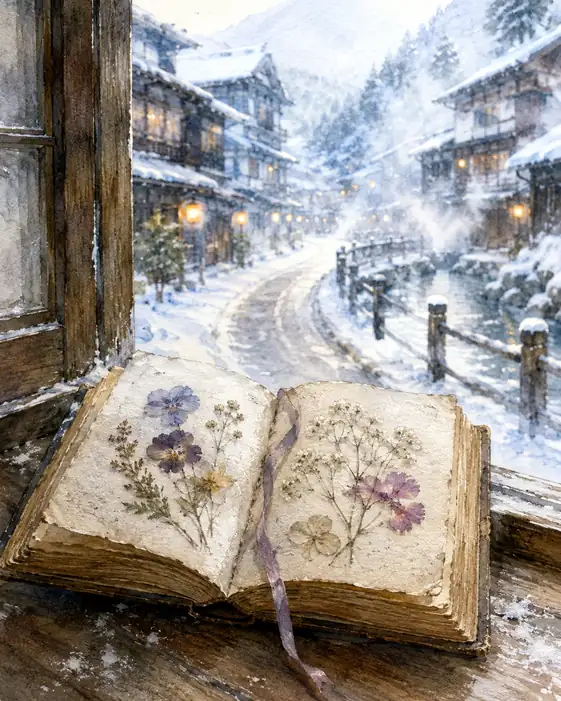 Winter Reads the Flowers' Secret Diary
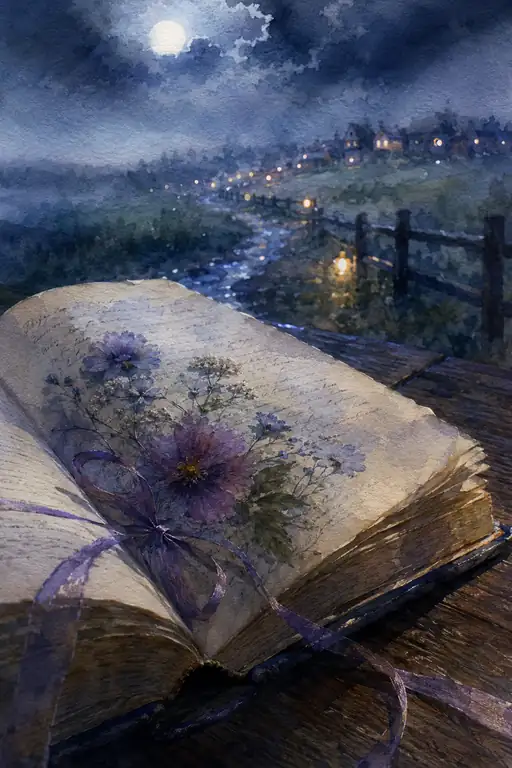 The Moon Reads the Flowers Between the Lines
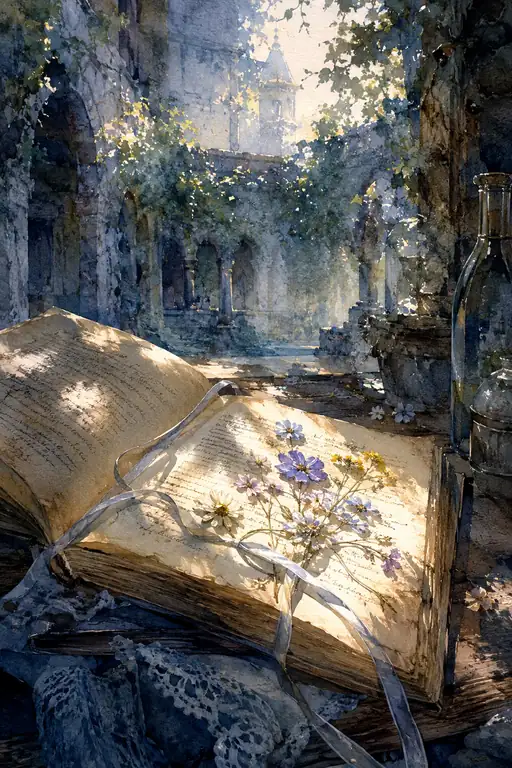 Forgotten Verses and Dried Wildflowers
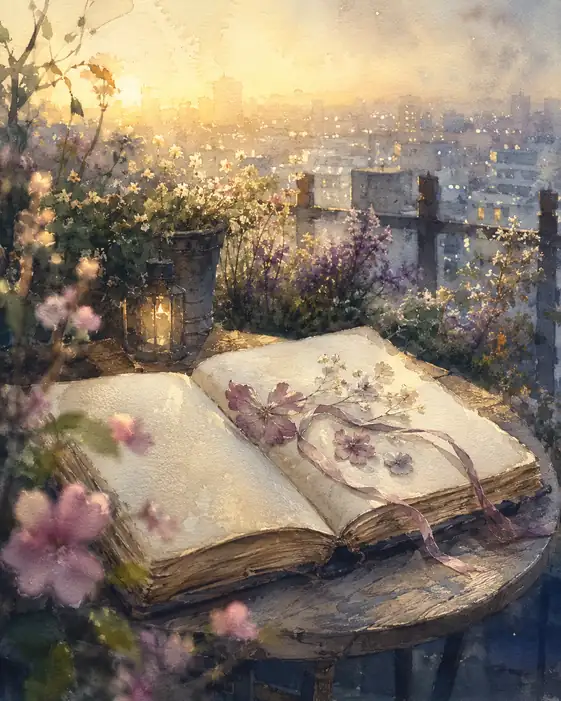 The Blank Page Waits for the City's Morning
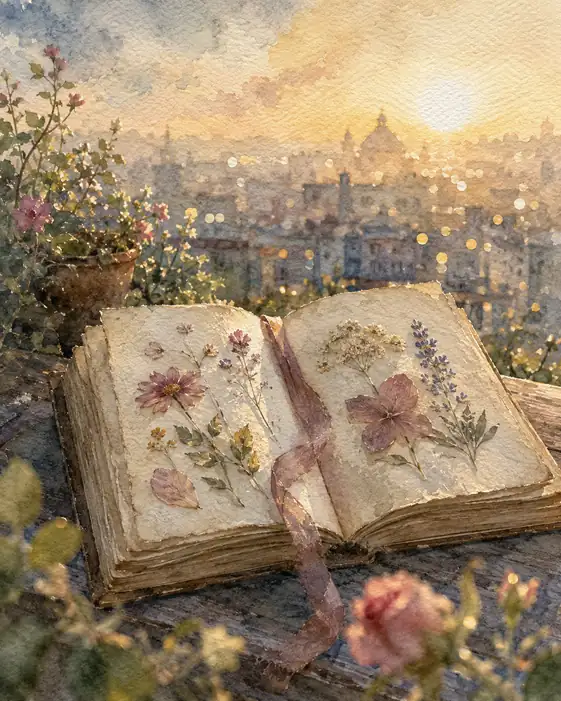 Pressed Flowers Dream beneath the Golden Dome
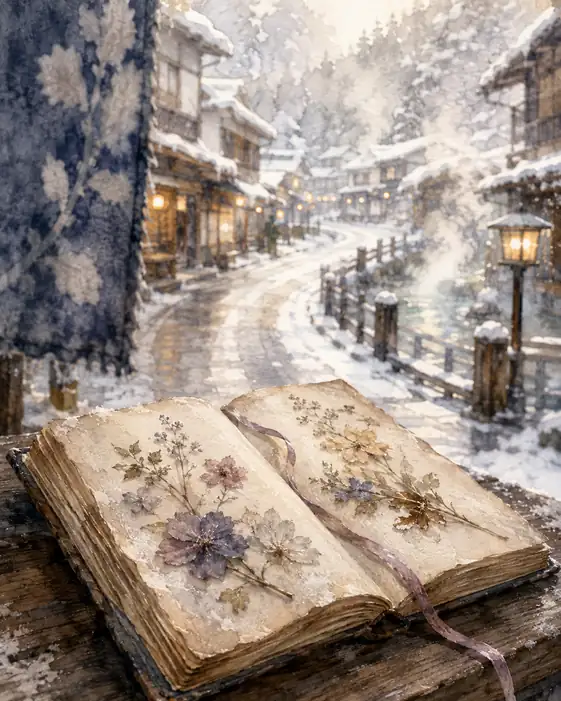 Pressed Flowers Remember a Warmer Season
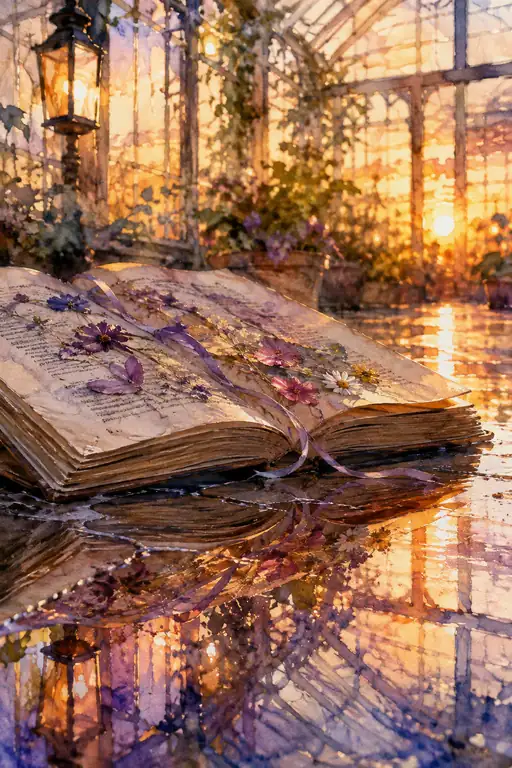 Sunset Reads the Greenhouse Book of Flowers