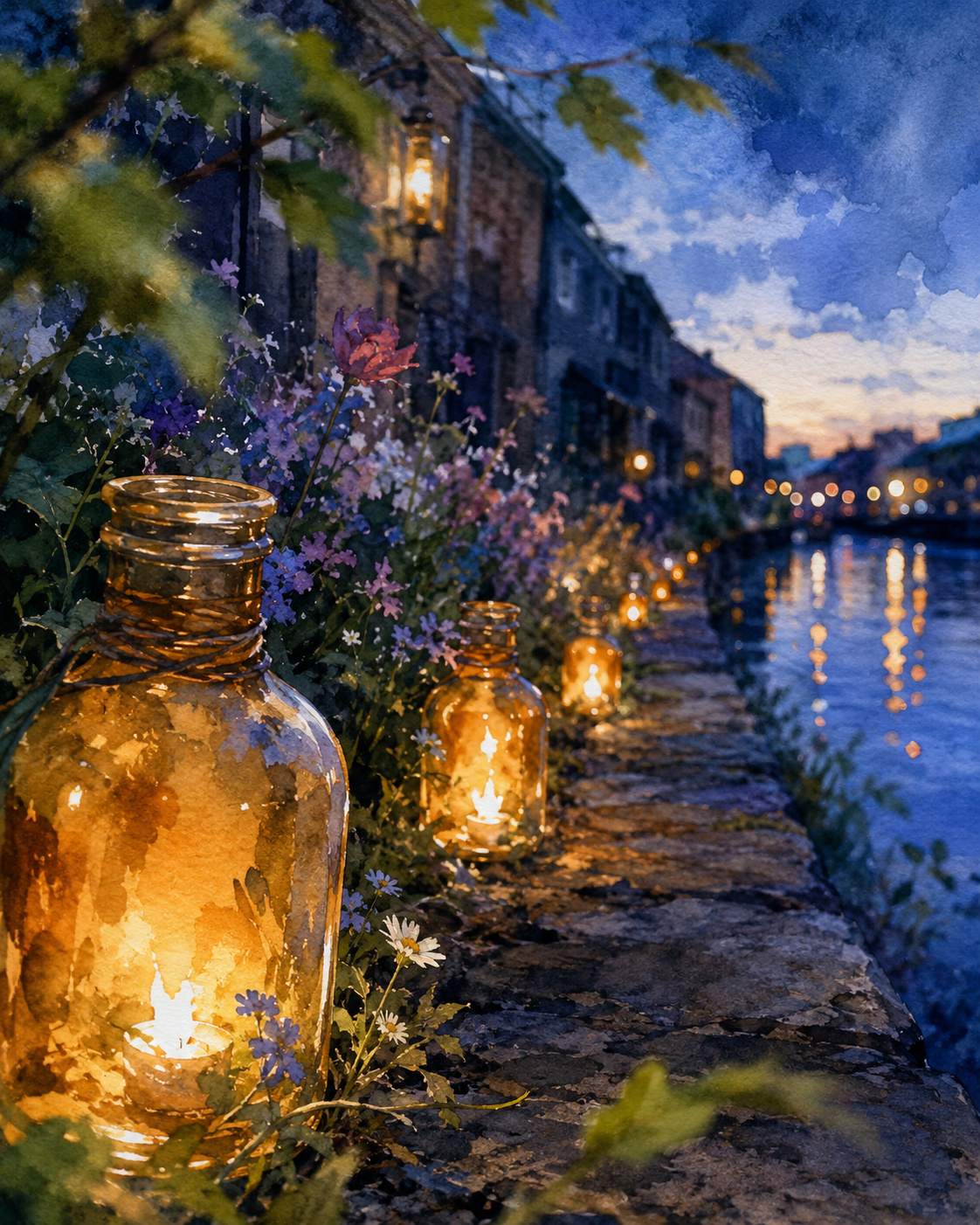
The Canal Follows a Trail of Little Suns
Critique
Introduction This twilight canal scene places a row of bottle lanterns among abundant flowers on a narrow stone embankment. Practical guidance and garden-like pleasure merge, turning an ordinary waterside route into a carefully tended communal invitation. Description A large clear bottle glows in the lower left, its threaded neck and irregular glass sharply visible. Smaller illuminated bottles diminish along the path toward a bridge. Daisies, violet sprays, red blossoms, and dense leaves press around them beneath dark stone houses and wall lamps. The canal occupies the right side, reflecting elongated gold marks beneath a clouded blue sky. Foreground leaves partly obscure the view. Analysis The cropped foreground bottle establishes scale and begins a rhythmic perspective sequence. Its amber light repeats in smaller vessels, architectural lamps, and water reflections, unifying several depths. Warm gold contrasts strongly with blue masonry, sky, and canal. The rough stone path supplies a diagonal corridor, while flowers soften its edge with irregular color. Shallow focus enlarges the nearest lantern and lets distant lamps dissolve into circular points. Interpretation and Evaluation Reused bottles suggest modest ingenuity: welcome is produced from available objects rather than monumental infrastructure. Because light repeats beside living flowers, maintenance appears both useful and affectionate. The path is made safe, but it is also made worth lingering on. The largest vessel invites entry at the scale of a single act of care before revealing how many such acts create a shared route. Conclusion The painting convincingly presents hospitality as accumulation. No individual flame commands the town, yet the sequence reshapes darkness into direction. Glass, flowers, stone, and reflected water cooperate, making the canal edge feel inhabited even without visible figures.
Same Subcategory
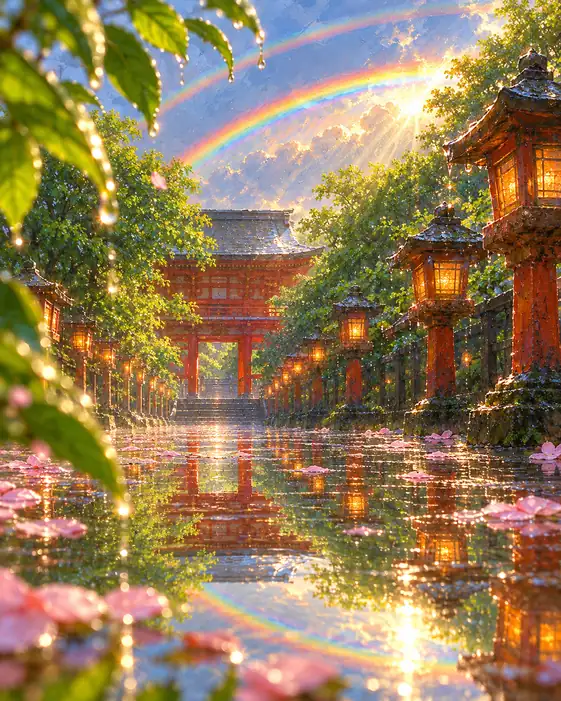 The Lantern Road After the Rain
Similar Artworks
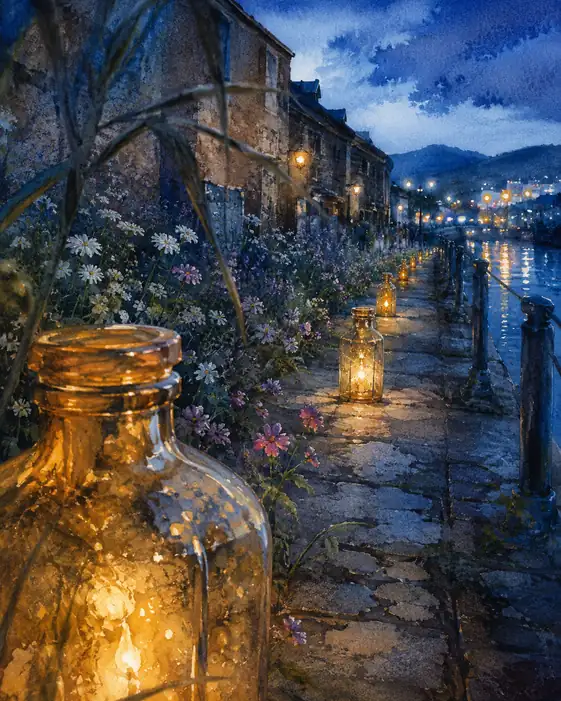 A Path Lit by Bottled Stars
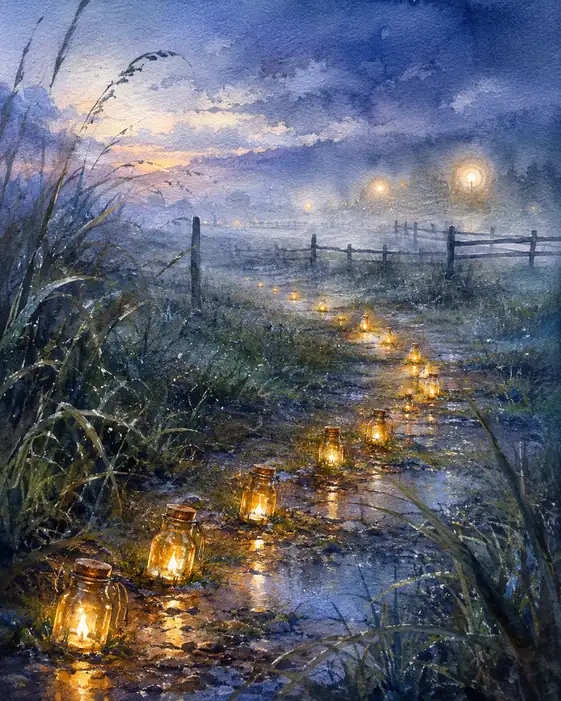 A River of Little Flames Crosses the Wet Meadow
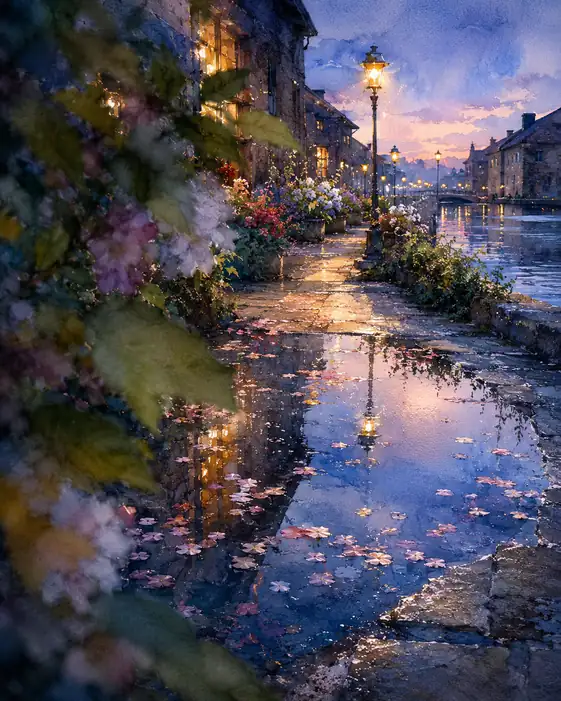 Twilight Poured into a Flower-Strewn Puddle
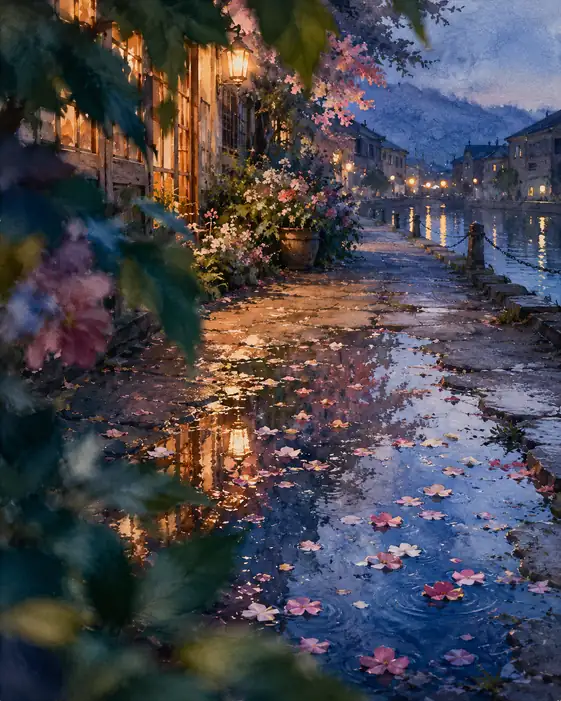 After Rain, the Petals Carry Lamplight
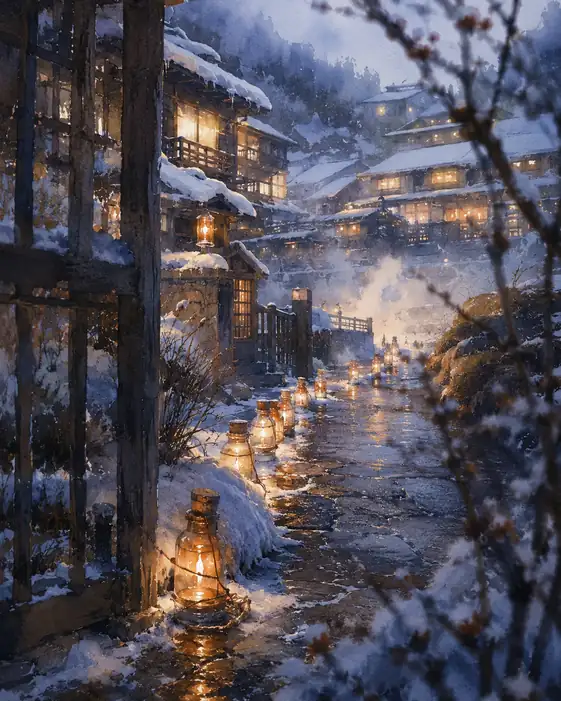 Little Bottles Light the Path to the Springs
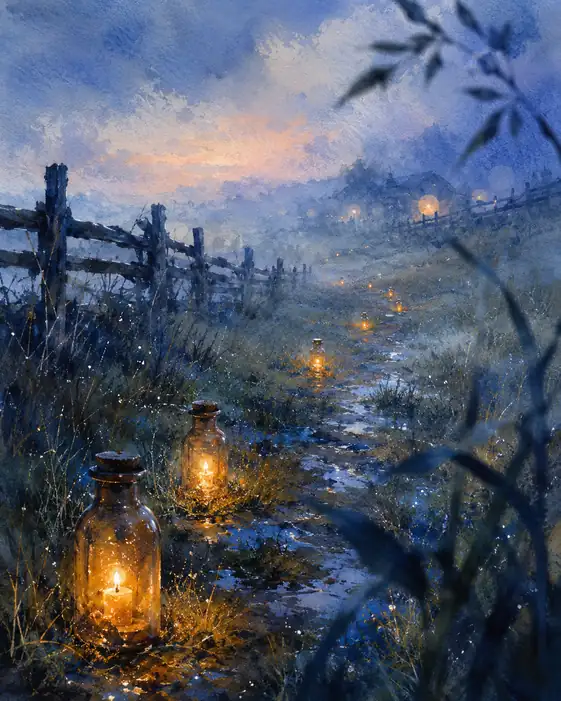 Bottled Flames Climb Toward the Distant House
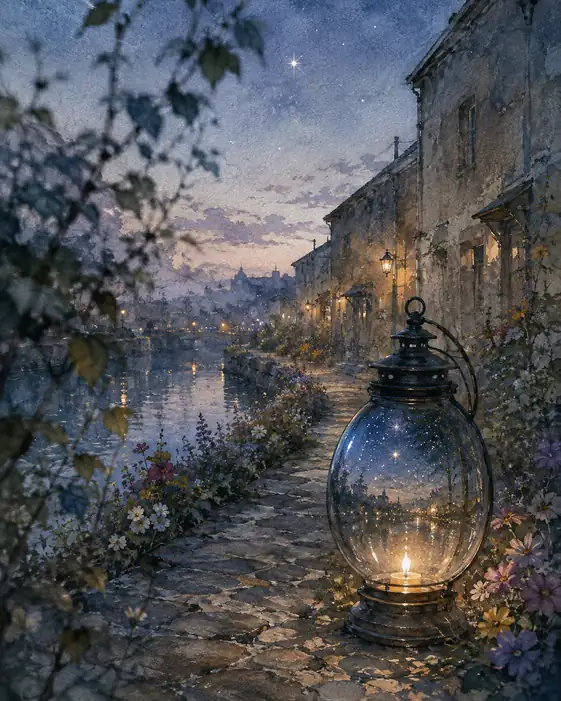 The Lantern That Gathered a Fallen Star
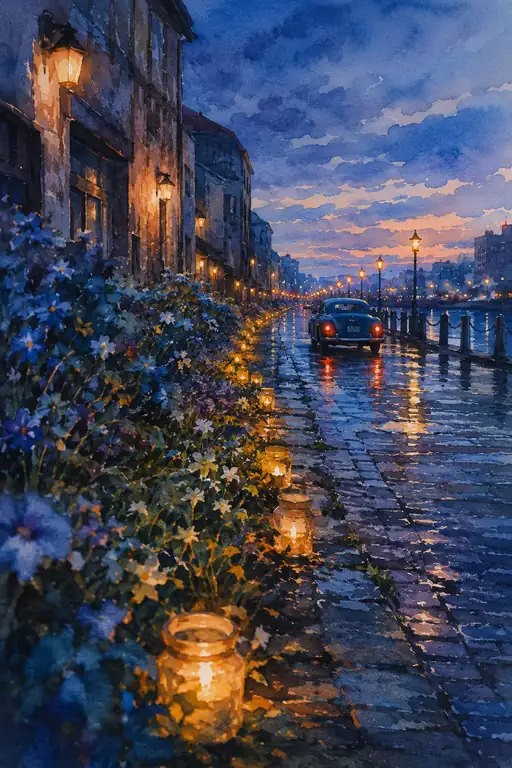 Little Lanterns Guide the Blue Car Home
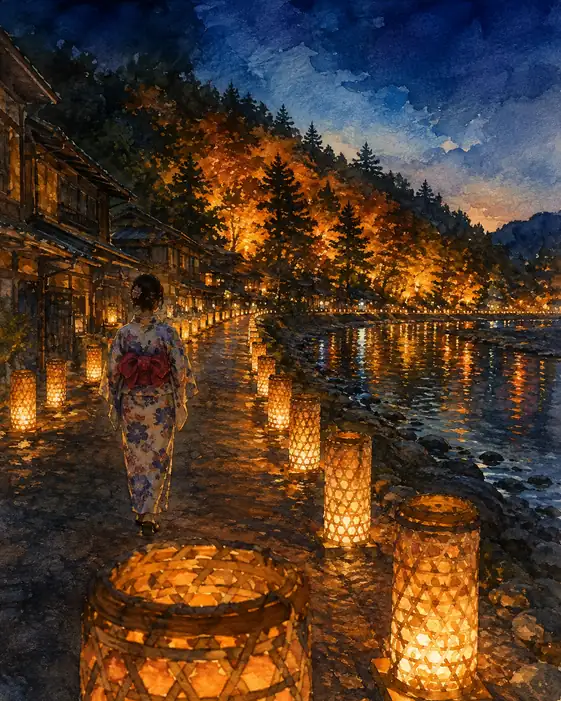 Warm Luminescence Rising in Darkness (No. 51)
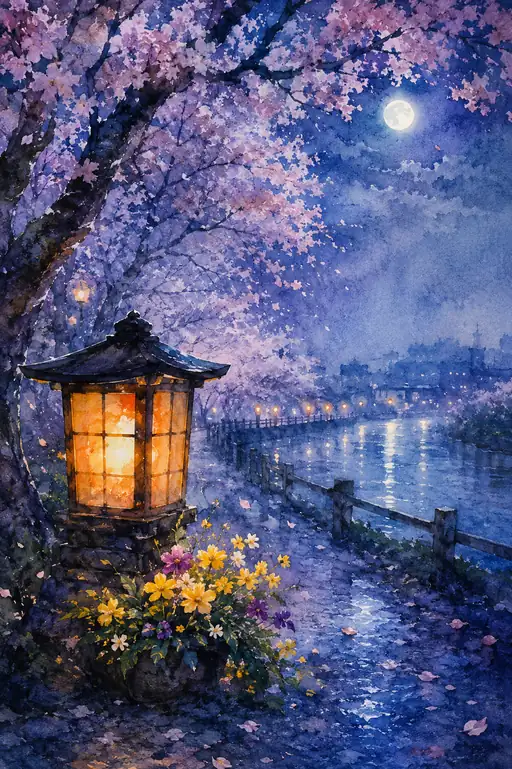 Moonlight Blossoms beside the Riverside Lantern